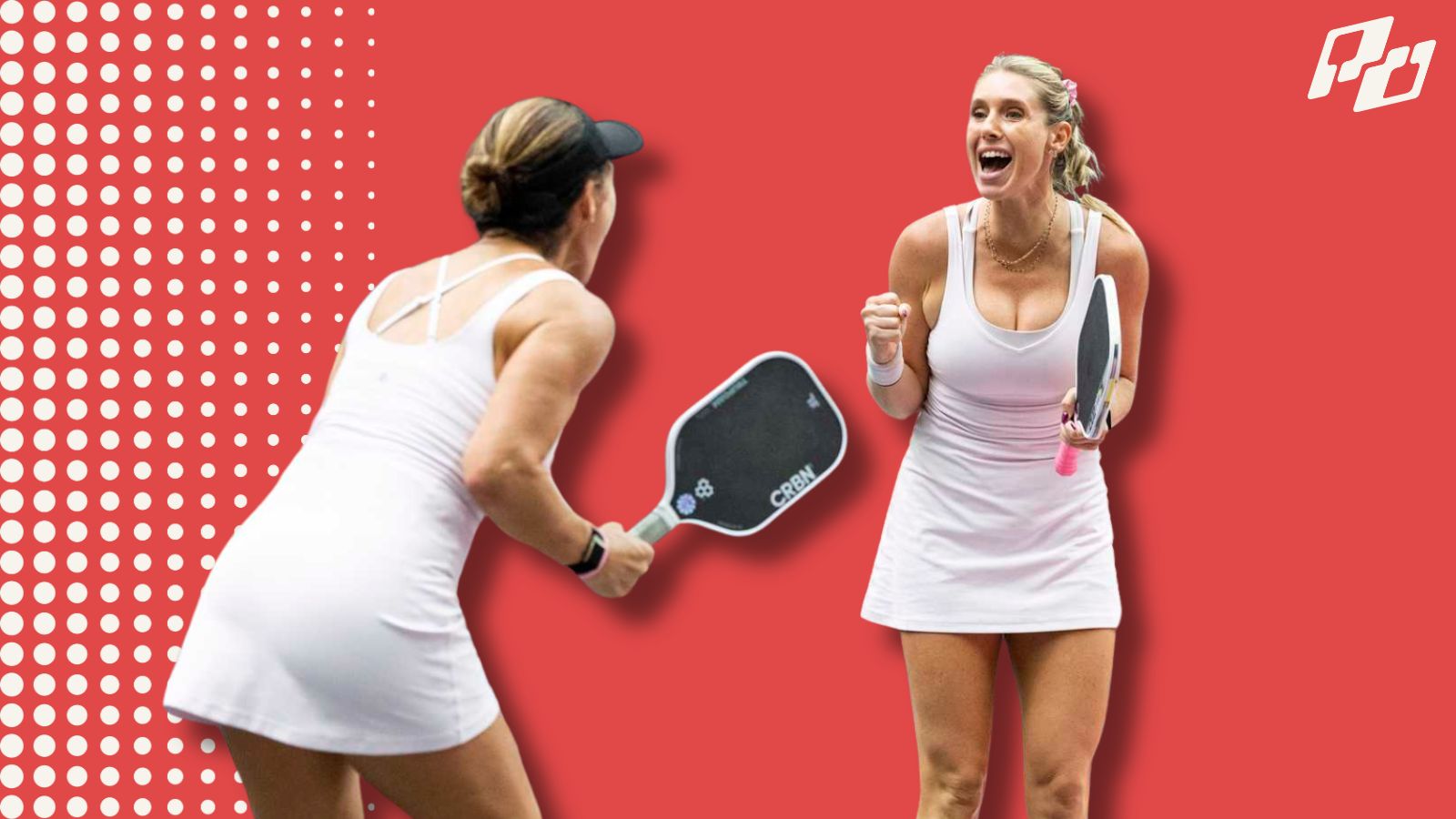
Our own Paul recently talked about this on Instagram — that tricky art of playing with a total stranger in open play — and he made some great points. Because let’s be honest: it’s one of the most underrated skills in pickleball:
Walk into any open play session and you’ll see it right away — the regular duos who never split, the beginners still sorting out the score, and the floaters, those brave souls ready to partner with whoever’s next in line.
That’s where the magic (and chaos) really happens.
When you step on the court with a stranger, you’re not just hitting balls — you’re building communication, chemistry, and confidence in real time. Most people think that’s luck. It’s not. It’s a skill — and we’ve got some great pointers to help you master it.
The Real Challenge of Open Play
Playing with random partners is a rite of passage. It’s also a crash course in patience and problem-solving.
You don’t know your partner’s habits. You don’t know if they drive or drop, poach or hang back, call balls or stay quiet.
And yet — you have to make it work right now.
That’s why players who learn to build quick chemistry tend to look smoother, win more, and get invited back.
So let’s break down how to make any partnership click — even if it starts with an awkward handshake and a confused “who’s serving?”
Start with a 60-Second Game Plan
Most rec players skip this, and it shows. You don’t need a deep conversation — just a quick alignment before the first serve.
Say something like:
“I’ll play left unless you prefer it — my forehand’s solid in the middle.”
“Let’s call the middle balls early — whoever’s forehand’s closest takes it.”
“Let’s keep our serves and returns deep. I’ll say ‘mine’ or ‘yours’ if it’s close.”
That 15-second chat prevents 80% of the confusion you’ll see in open play. It also sets a tone: you’re focused, friendly, and organized.
Bonus tip — smile. Nothing builds trust faster than relaxed energy before the first rally.
Survive the First Two Points
Forget the scoreboard for a second. Your first two rallies aren’t about winning — they’re about reading.
Use those early exchanges to figure out:
- Does your partner move up with you or linger near the baseline?
- Do they dink naturally or drive everything?
- Are they confident at the kitchen, or do they freeze under pressure?
Once you know their rhythm, you can adjust. If they hang back, play a little more middle to cover gaps. If they charge forward, stay patient and keep the ball low.
It’s not just about “chemistry” — it’s about adaptability.
Find Patterns That Work with Anyone
You don’t need to invent new strategy for every partner. There are a few universal patterns that work in almost every random pairing.
- Deep, Deep, Down. Serve deep, return deep, and aim your third shot softly down the middle. That’s the safest pattern in pickleball, and it buys you time to settle in.
- The Middle Wins. In open play, you’ll win more points simply by targeting the center. It forces hesitation — “yours or mine?” — and that split-second pause earns you easy rallies.
- The Block-Then-Bite Rule. When you’re under fire, don’t swing harder. Block softly into the kitchen. If the next ball floats, then attack.
These might sound simple, but they’re the backbone of “low-risk pickleball” — the kind that wins with any teammate.
When Skill Levels Don’t Match
This happens all the time. You step onto a court and realize your partner’s still learning, or maybe they’re clearly stronger than you.
Here’s how to handle both.
If you’re the stronger player:
- Set your partner up for success. Hit deep, safe shots and avoid leaving them hanging on fast drives.
- Take a little more middle coverage, but do it subtly — not by crowding, but by closing the seam early.
- Encourage, don’t instruct. “Nice try,” works better than “You should’ve dropped that.”
If your partner’s stronger:
- Keep things simple. Deep returns, consistent drops, and early communication.
- Let them take the initiative. Cover what’s left, and focus on not feeding errors.
Remember, the best partnerships don’t rely on equality — they rely on balance.
Master Quick Communication
The best duos don’t talk a lot — they talk early and clearly.
A few simple habits make a world of difference:
- Call “mine” or “yours” loud and early.
- Say “up, up” when moving forward together.
- Use small phrases like “switch” or “stay” for quick coverage decisions.
If you want to level up your teamwork, try adding simple hand signals before the serve:
- Fist = stay in your current positions.
- Open palm = switch sides after the return.
You don’t need to look like a pro team — just act like one for a few seconds.
Never Coach Mid-Game
This is one of the most common mistakes in open play — and the fastest way to ruin chemistry.
You might mean well when you say “you should’ve moved up sooner,” but during a game, it sounds like criticism, not coaching.
If your partner’s struggling, keep it encouraging:
“Nice setup — we’ll get the next one.”
“Great drop idea, just a little lower next time.”
Save tactical suggestions for after the game — or not at all. People come to open play for fun, not feedback.
Stacking and Adapting — When It’s Worth It
At the intermediate level, you’ll see more teams stacking (keeping forehands in the middle). If you’re playing with a stranger, use it only if it simplifies coverage — not if it confuses things.
A quick rule of thumb: if your partner’s eyes glaze over when you suggest stacking, skip it.
But if they’re familiar, one quick signal — open hand (switch), fist (stay) — can keep your court positioning clean and consistent.
Keep Your Cool, Build Your Reputation
Every open play group has that one person who always finds partners easily. It’s not because they’re the best player — it’s because they’re the easiest to play with.
Here’s how to be that person:
- Rotate fairly and welcome new faces.
- Compliment effort, not just winning shots.
- Don’t make every loss a post-game autopsy.
- Bring good energy — even when you’re losing.
Your reputation spreads faster than your DUPR rating. If people like playing with you, you’ll never have trouble finding a partner again.
The Quick Chemistry Formula
If you remember nothing else, remember this: chemistry isn’t random — it’s built through rhythm, tone, and trust. Here’s the simple framework that works every time.
The R.A.L.L.Y. Rule
- Read your partner early — body language, pace, confidence.
- Align on one basic plan (deep shots, early calls, safe targets).
- Lead with energy — stay upbeat after errors.
- Listen — to their cues, timing, and shot patterns.
- Yield when needed — share the middle, not control it.
It’s not about perfection. It’s about harmony. Players who follow this rhythm feel like they’ve known each other for weeks — even if they just met five minutes ago.