Walk onto any rec court and you’ll hear the same complaints:
“He only bangs.” “She dinks everything short.” “They can’t handle lobs.”
But here’s the real truth: matches at the 3.0–4.0 level aren’t usually lost because one player hits harder. They’re lost because someone served into the wrong place. Serving isn’t just about getting the ball in—it’s the first chance to put your opponent on the defensive and shape the entire rally.
The secret? Spotting the little clues that give away your opponent’s weakness, then serving into it so your next ball is easier to attack.
Why Weakness Starts at the Serve
Think of your serve not as a free point, but as a reconnaissance tool. When you deliver the ball to someone’s weaker zone, three things happen:
- Their return gets rushed (shorter backswing, more errors).
- Their shot choices shrink (a weak backhand return rarely sets them up to attack).
- You dictate the 3rd shot (a floating return means your team gets to drop, roll, or drive on your terms).
The serve isn’t about aces—it’s about asking a tough question your opponent doesn’t want to answer.
Spotting Weakness in the First 5 Points
Most players think they need an entire game to figure out an opponent’s tendencies. The truth? If you pay close attention, the first five points often tell you everything you need to know.
Weaknesses don’t hide well under pressure—especially early when nerves and habits are at their peak.
Here’s what to watch for:
1. Paddle Face at Contact
Watch their paddle angle on returns. An open face under pressure usually floats the ball high, begging for a 3rd-shot drive or roll. A closed, wristy flick tells a different story—they’re likely to speed up recklessly, even when it’s not the right ball.
Once you catch this pattern, you’ll know when to expect a pop-up and when to get ready for a surprise counter.
2. Footwork Under Stress
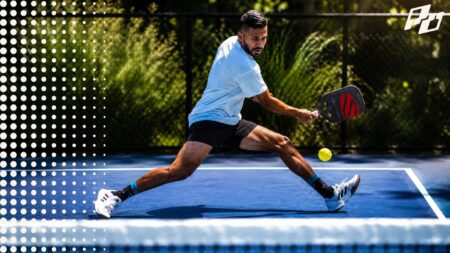
Do they backpedal for lobs or pivot correctly? Do they lunge with long, desperate steps instead of taking small, balanced shuffles? These little habits reveal how they’ll handle being stretched wide or jammed in transition.
If they’re late with their feet, serve to pull them even further off balance—it’s almost guaranteed their return will be short or high.
3. Background Clues
You can often spot someone’s sports background in the first few strokes. Tennis converts tend to crush drives but struggle to stay patient in dink exchanges—they get antsy and want to end points fast.
Table tennis players, by contrast, usually have soft hands and good touch, but they overuse the backhand roll and get exposed if you feed their forehand instead.
Even former racquetball players can be spotted—they often stand upright and take giant swings.
4. Body Language and Emotional Tells
Sometimes weakness isn’t mechanical—it’s mental. The mutter after a missed return, the quick shake of the head, the sigh before they serve—these are green lights. Dropped shoulders mean frustration. Over-chatter means they’re rattled.
A calm, steady opponent is tougher to break down, but a frustrated one is practically broadcasting where to attack next.
👉 By the fifth point, you should already know:
- Forehand or backhand? Which side crumbles sooner.
- High or low? Can they handle balls at their shoelaces, or only waist-high?
- Patient or jumpy? Are they willing to grind, or are they hunting for a cheap winner?
The quicker you identify these patterns, the quicker you stop playing “your game” and start playing theirs against them.
Pro Comparisons: What They See That We Don’t
Recreational players often serve randomly, just hoping to start the point. Pros serve with intent.
- Rec mistake: Sending the serve anywhere, then being surprised by the return.
- Pro habit: Building a pattern—pulling wide a few times to stretch an opponent, then sneaking in a deep middle serve when they lean.
Anna Bright, for example, loves serving into the backhand corner not to win the point outright, but to set up the 3rd shot for her partner. James Ignatowich is known for sidespin “screwball” serves that skid into the backhand, not for aces, but to guarantee a weaker reply.
The difference? Pros serve with purpose. Rec players serve with hope.
Mini-Science: Why It Works
Serving into weakness is grounded in biomechanics.
- The backhand return uses smaller muscle groups (forearm extensors, less rotational leverage), making it harder to generate pace or disguise direction.
- A deep serve pushes the returner’s contact point later in their swing. Even half a second less prep time is huge—it shortens their backswing and disrupts rhythm.
- A wide serve forces extra lateral steps, which delay shoulder rotation. The later the shoulders turn, the weaker and less accurate the return.
- Targeting the inside foot often forces awkward open stances, robbing players of balance and power.
Small differences—a fraction of a second, a few inches of footwork—compound into returns that float or sail long.
Beyond the Obvious: Advanced Hidden Clues
Once you get past the basics, start looking for subtle tells:
- The Chicken Wing Tell: Opponents who hate balls jamming their paddle-side shoulder often grip too tightly there. Serve deep middle and watch their return float.
- Return Depth Hesitation: Players who step inside the baseline but still push short are mistiming the bounce. A deep, driving serve pins them back.
- Grip Between Points: Watch how they hold the paddle while waiting. Paddle face angled down often signals discomfort with high, pacey balls.
- Return Stance Height: Upright stance = late prep. Crouched stance = they’re planning aggression. Adjust accordingly.
These are the clues that separate “just playing” from actually outsmarting.
Partner Layer: Making It a Team Weapon
Serving into weakness isn’t just a solo tactic—it’s a doubles strategy.
- If you serve into the backhand corner, your partner should expect a shorter, higher return to pounce on.
- If you jam the chicken wing, your partner should slide middle, anticipating a floater.
- Use quick signals before serving: a finger cue behind your back to show where you’re aiming.
And here’s the detail many rec teams miss: the server must also expect the likely reply. If you serve wide, be ready to step forward yourself. Your partner can’t cover everything—your positioning after the serve is part of the trap.
The serve sets it. The partner springs it. Both must be tuned in.
Data Box: Why This Matters
📊 Rec-level serving impact (observed in drills & match tracking):
- 68% of points after a serve to the backhand ended with a neutral or defensive return.
- 54% of points after a serve to the inside foot led to an attackable 3rd shot.
- Only 22% of serves placed randomly produced errors or weak returns.
The numbers are clear: serve placement changes the odds dramatically.
Quick Drill to Train It
Grab a partner and try this:
- Game 1: Serve only to your opponent’s backhand corner. Track how many returns float or shorten.
- Game 2: Serve randomly. Compare how predictable the next ball feels.
- Game 3: Mix targeted serves (backhand, inside foot, deep middle) and have your partner call out what return they expect.
You’ll quickly feel how serving into weakness makes the 3rd shot easier—not just for you, but for your team.
Bonus Tip: It’s Not Just the Serve—It’s the Next Ball
Your serve is just the opening move. What matters is how you prepare for the 3rd.
- If you’ve pulled them wide → expect a short return. Step in and drop soft.
- If you jammed their chicken wing → expect a floater. Roll or punch early.
- If you deep-served their weaker player → their partner may shade middle. Anticipate and aim wide.
Think chess, not checkers. The serve is the opening gambit; the 3rd shot is where you win the exchange.
Playing Chess on a 44-Foot Court
Serving into weakness isn’t about humiliating your opponent—it’s about playing smarter. Every opponent leaves a trail of clues. Some show up in their grip, others in their footwork, and some in their body language. The players who learn to read those clues—and then aim their serve at the softest spot—don’t just win points. They control the entire rhythm of the match.
At the rec level, that’s the leap: stop serving with hope, start serving with intent. Because when you do, your serve isn’t just a ball in play—it’s the first step in dismantling your opponent’s game, one subtle clue at a time.