If you’ve ever watched Riley Newman play, you know the shot I’m talking about.
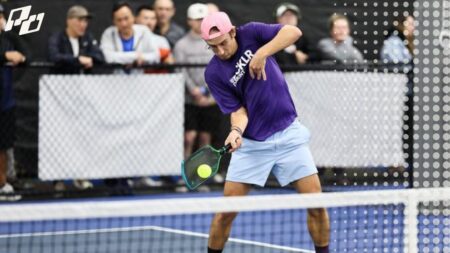
That vicious, lightning-quick two-handed backhand speed-up off the bounce—the one that seems to appear out of thin air, jams his opponent, and tees up an easy finish. It’s not just fast—it’s intentional, deceptive, and timed with surgical precision.
That’s exactly how Riley Newman racked up points at last weekend’s MLP St. Louis tournament:
So what makes Riley’s backhand attack so dangerous—and how can you steal it for your own game?
Let’s break it down together, from mechanics to mindset. We’ll start with Riley’s top three tips and then dive deeper into the footwork, timing, disguise, and targeting that make this shot pure pickleball gold.
Riley’s Top 3 Tips for a Backhand That Bites
When asked how he lands this shot so consistently, Riley boils it down to three deceptively simple (but technically loaded) principles:
1. Drop the Paddle Tip Early
Before he even thinks about speeding up the ball, Riley dips the tip of his paddle just below it. Why?
- It sets up topspin. The low-to-high motion naturally brushes the ball, making it dip and skid.
- It disguises the shot. That paddle tip drop looks almost identical to a dink or soft roll. So the opponent has to guess: “Is he going to dink again… or is this about to come flying at me?”
That half-second of uncertainty is all Riley needs.
2. Contact the Ball at the Apex
Ball timing is everything with this shot.
Riley waits until the ball reaches its highest point after the bounce—the apex—then strikes. Not before, not after.
- Hit too early? You’ll mistime it or pop it up.
- Hit too late? You’ll lose your leverage and give away your advantage.
By taking the ball at its peak, Riley maximizes his ability to generate pace without over-swinging. It’s like loading a spring at just the right moment—controlled, explosive power.
3. Use an Abbreviated Follow-Through
This shot isn’t about muscling the ball. Riley’s follow-through is short, snappy, and compact.
He’s not swinging for the fences—he’s striking just enough to create speed and topspin while staying ready for whatever comes next.
And that’s key: he doesn’t just rely on winning the point off the speed-up. He’s already balanced, in control, and loaded for the counterpunch.
The Mechanics Behind Riley’s Backhand Speed-Up
Let’s go deeper. Here’s how Riley turns a routine dink exchange into an offensive weapon with a few subtle cues and some elite-level timing:
1. Grip & Setup: Locked and Loaded
- Two-Handed Grip: Riley uses a tennis-style grip—his left (top) hand provides the acceleration and spin, while his right (bottom) hand offers structure and control. This gives him the paddle head speed of a forehand, with the stability of a two-handed backhand.
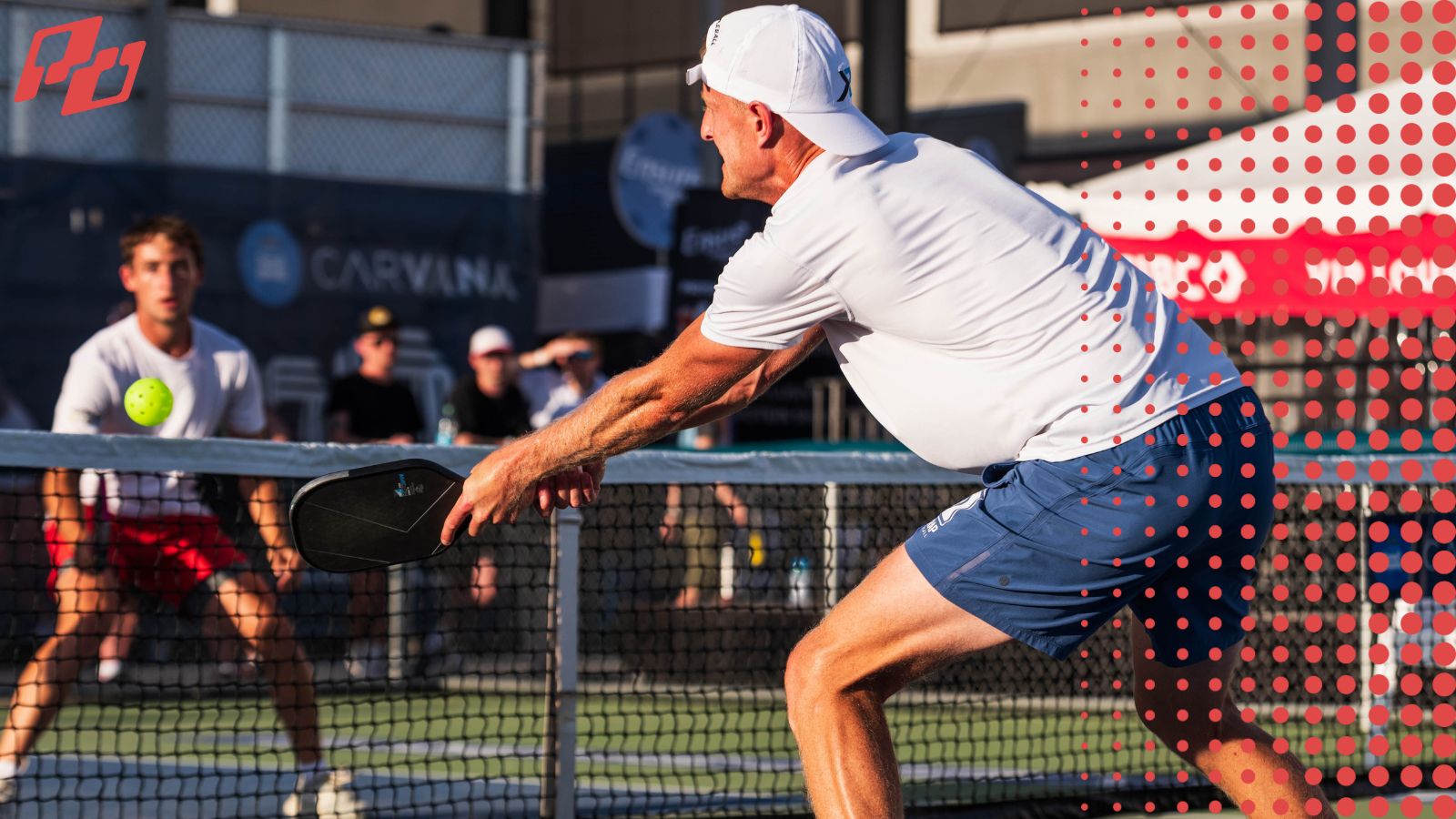
- Compact Ready Position: His paddle stays tight to his body, elbows in. He’s balanced, neutral, and unreadable. From this position, he could dink, roll, or attack—his opponents have no clue what’s coming.
2. Patience & Timing: Wait for It… NOW!
Riley doesn’t rush. He waits.
He lets the ball bounce and rise… then strikes it right at the apex. That patience gives him:
- Better ball reading
- More time to disguise his shot
- A stronger strike point without overcommitting
That’s what separates good players from great ones: not just hitting the ball well—but knowing when to hit it.
3. Deception: The Calm Before the Storm
Right before the speed-up, Riley stays chill.
- Body language is relaxed
- Paddle face looks neutral
- Stance is identical to his normal dink motion
Then—boom. The attack comes out of the exact same posture, catching his opponent flat-footed.
He even adds a subtle pause—just holding the paddle for a beat before swinging. That micro-delay freezes the defender, forcing hesitation or a mistimed counter.
4. The Speed-Up: Snappy, Spinning, Sneaky
At the last second, Riley uses a compact, low-to-high brushing motion to rip the ball.
- The topspin makes it dip quickly over the net
- The quick acceleration adds just enough pace to jam his opponent
- The tight motion keeps him centered and balanced for the next shot
There’s no big wind-up. No exaggerated motion. Just a tight, efficient strike that’s all about spin + placement.
5. Targeting: Inside Hip Crosscourt—The Kill Zone
This is where Riley really shows his pickleball IQ.
Instead of blasting it straight or going for the sideline, he targets the inside hip of his crosscourt opponent—usually on their backhand side.
Why?
- It jams their hands
- It’s hard to counter with pace
- It creates awkward footwork and poor paddle positioning
It’s a brutal target—especially against right-handed opponents on the left side.
Pro Tip: Even if they do get a paddle on it, the return is usually weak—setting you up for the easy putaway.
Recap: Riley’s Backhand Speed-Up, Step-by-Step
| Element | What Riley Does |
|---|---|
| Grip | Two-handed, tennis-style grip |
| Setup | Paddle close to body, neutral posture |
| Timing | Waits for the bounce, strikes at the apex |
| Motion | Compact low-to-high brushing for topspin |
| Follow-Through | Short, snappy, keeps balance |
| Target | Crosscourt, inside hip (usually backhand side) |
How to Add This Weapon to Your Game
You don’t need Riley Newman’s hand speed (though it helps). What you do need is:
✅ A consistent, two-handed grip you trust.
✅ The discipline to wait for the bounce and disguise your intent.
✅ A compact strike zone and short follow-through.
✅ Targeting with purpose—not just swinging wildly.
And remember: the speed-up isn’t the point-winner. It’s the setup. The bait. The move that puts your opponent on their heels and sets up the real kill shot.
So when you add this to your game, don’t expect magic on the first try. Work on the setup. Drill it. Refine your timing. And when you get it down?
You’ll go from neutral dinks… to point-ending patterns. Just like Riley.