Pickleball Union earns a commission on purchases made through links in this article, at no extra cost to you. Our reviews are editorially independent – brands do not see or approve content before publication.
The age-old question rattled around in my head as I tested a new take on pickleball nets: can you really build a better mousetrap? Maybe that one’s still up for debate, but I can tell you this—someone has built a better portable pickleball net. And I’ve been putting it through its paces for the past three weeks.
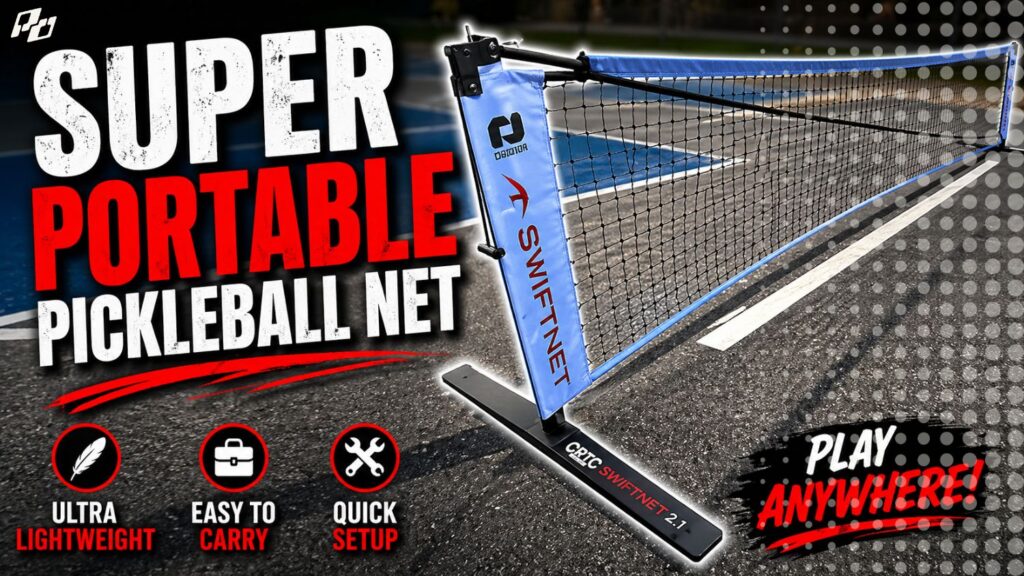
Meet the CRTC Swiftnet 2.1 Portable Pickleball Net. It’s not just a tweak on the standard steel pole setup—it’s a complete redesign, and in my view, a major upgrade in every possible way. After testing it, I’m confident giving it my highest mark: a solid 5-ball rating.

- Always Regulation Height – 34" center / 36" sidelines, no sagging
- Fast Setup – Just 5 parts, under 3 minutes
- Ultra-Lightweight – Only 17 lbs, easy to carry
- Durable Build – Aluminum + aerospace carbon fiber, built to last
- Portable & Strong – Folds down easily, resists wind and impact
Quick Video
By The Numbers
| Feature | Details |
|---|---|
| Regulation Size | 22 ft length × 34” center × 36” ends |
| Version | Second evolution (v2.1) |
| Weight | 17 lbs |
| Components | 7 parts + carrying bag |
| Setup Time | ~3 minutes (solo setup) |
| Price | $369.99 |
Nuts And Bolts
- Recycled high-end carbon fiber from the space program
- Aero grade aluminum
- Polyethylene net
- Infinite tension pull-cord adjustment system
- 1 year warranty on all components except the tension pull-cord
- Auto adjusting height to meet regulations
- Heavy-duty cordura carrying bag
The Trouble with Portable Nets
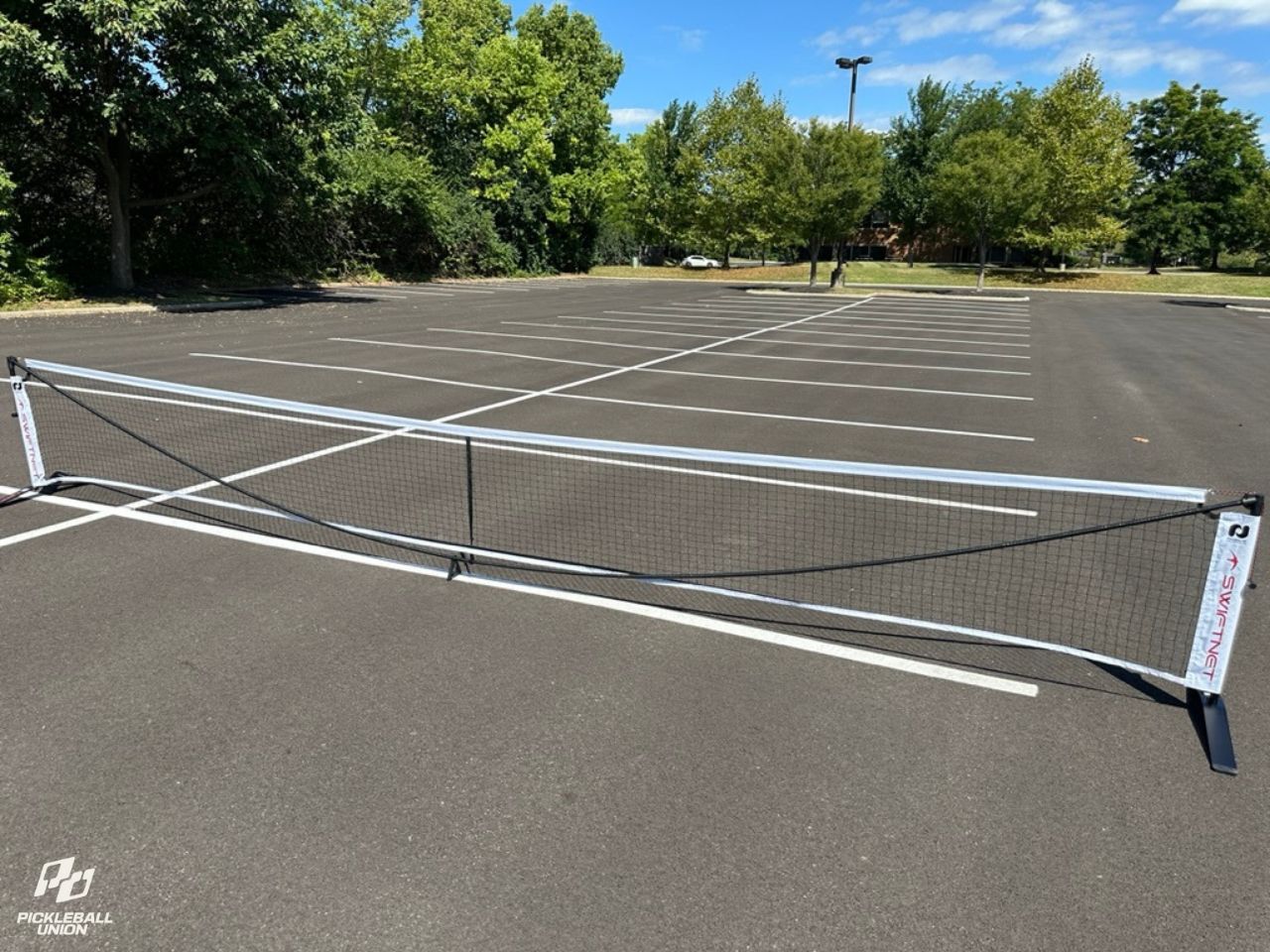
In the rec league I’ve been co-leading for the past three years, we’ve relied on portable nets. That means hauling them out, digging through the carry bag, and wrestling with the pieces. They’re heavy steel, the top tape sags, and regulation height is always questionable. So yes—I’ve been impatiently waiting for a real upgrade.
Over the last year, companies like Shockwave (Menace Net) and Srikel launched “scissor-style” expanding nets meant to solve these problems—quicker setup, fewer parts, consistent height, and better stability. But based on social media feedback and some info from the companies, both have struggled with quality control and durability.
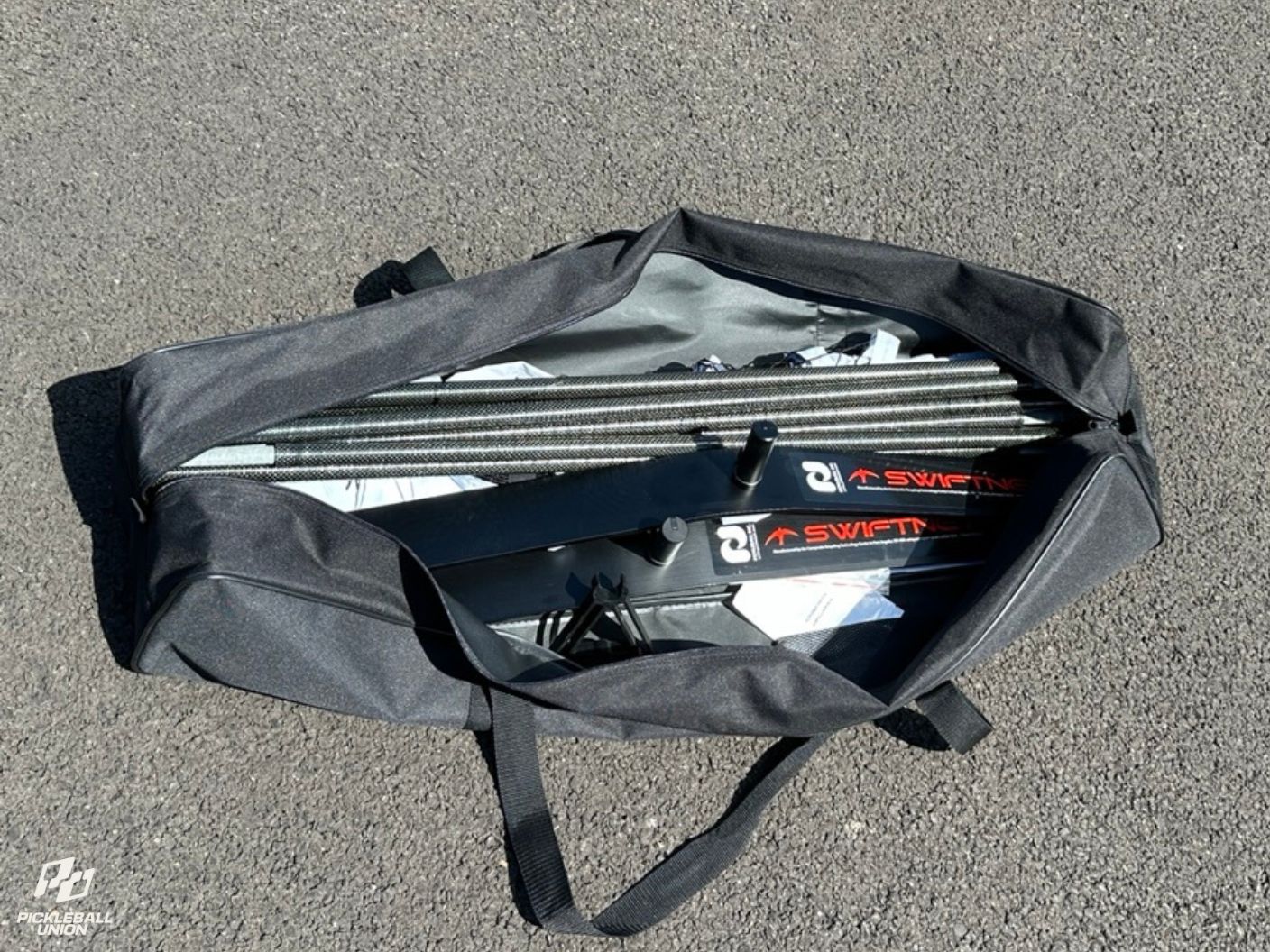
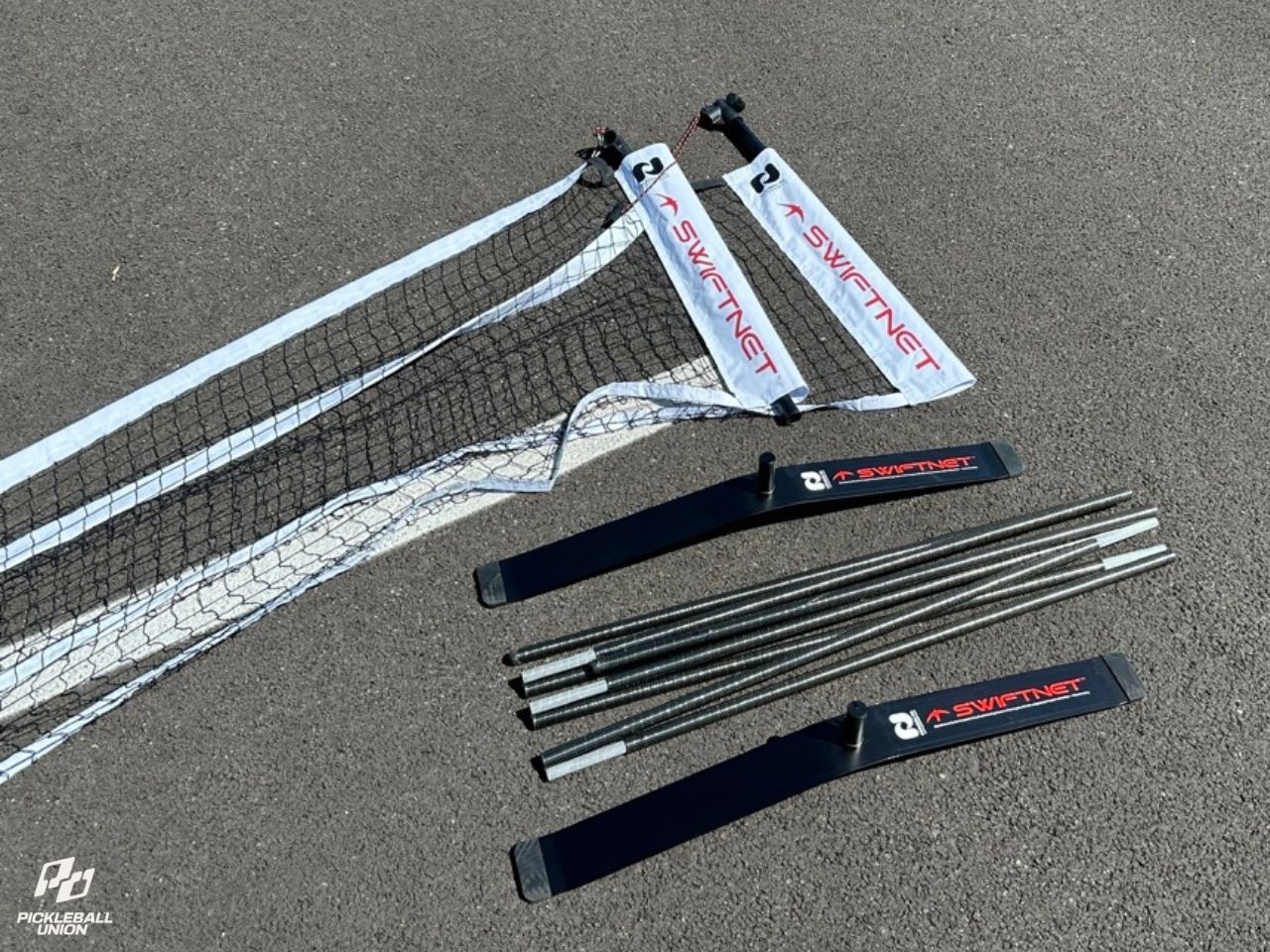
The Swiftnet 2.1 made a different first impression. Pulling the pieces from its oversized, heavy-duty carry bag, I noticed how roomy and sturdy the bag itself was—finally, a bag designed to actually fit the parts without a perfect repack. The aluminum bases, carbon-fiber boom pole, and reinforced poly net all looked solid. The tension rope and latch system? Just as intuitive. Time to put it together.
CRTC – A Unique Company Doing Good
The Composite Recycling Technology Center (CRTC), based in Washington state, isn’t your typical manufacturer. It’s a nonprofit that gives community members a hand-up through employment while building products from recycled carbon fiber—much of it sourced from the aerospace industry.
Every year, over 50 million pounds of carbon fiber ends up in landfills. CRTC is the world’s first facility dedicated to recycling uncured carbon fiber scrap, turning it into products like the Swiftnet 2.1.
Lighter and stronger than steel, it’s the perfect material for the 26-foot boom pole at the heart of this net.
Assembly
After skimming the instructions (and a quick YouTube demo), I rolled the net out on my driveway for its first setup. One initial step—using the included Allen wrench to attach the bases to the vertical poles—was quick and easy.
Stopwatch in hand, I laid out the pieces and slid together the eight carbon fiber boom sections, joined by a shock cord. My first attempt to shortcut the process failed, but I quickly learned: insert the boom poles into the plastic end fittings before attaching the vertical supports. Lesson learned, follow the directions.
From there, setup flowed: snap the triangular foot to the center of the boom, flex the pole into the ends, slide the verticals into the aluminum bases, then tension the side cords until the boom curves and the foot rests lightly on the court—your sign the height is perfect. The ratchet system locks the tension cleanly, and a simple strap secures the middle.
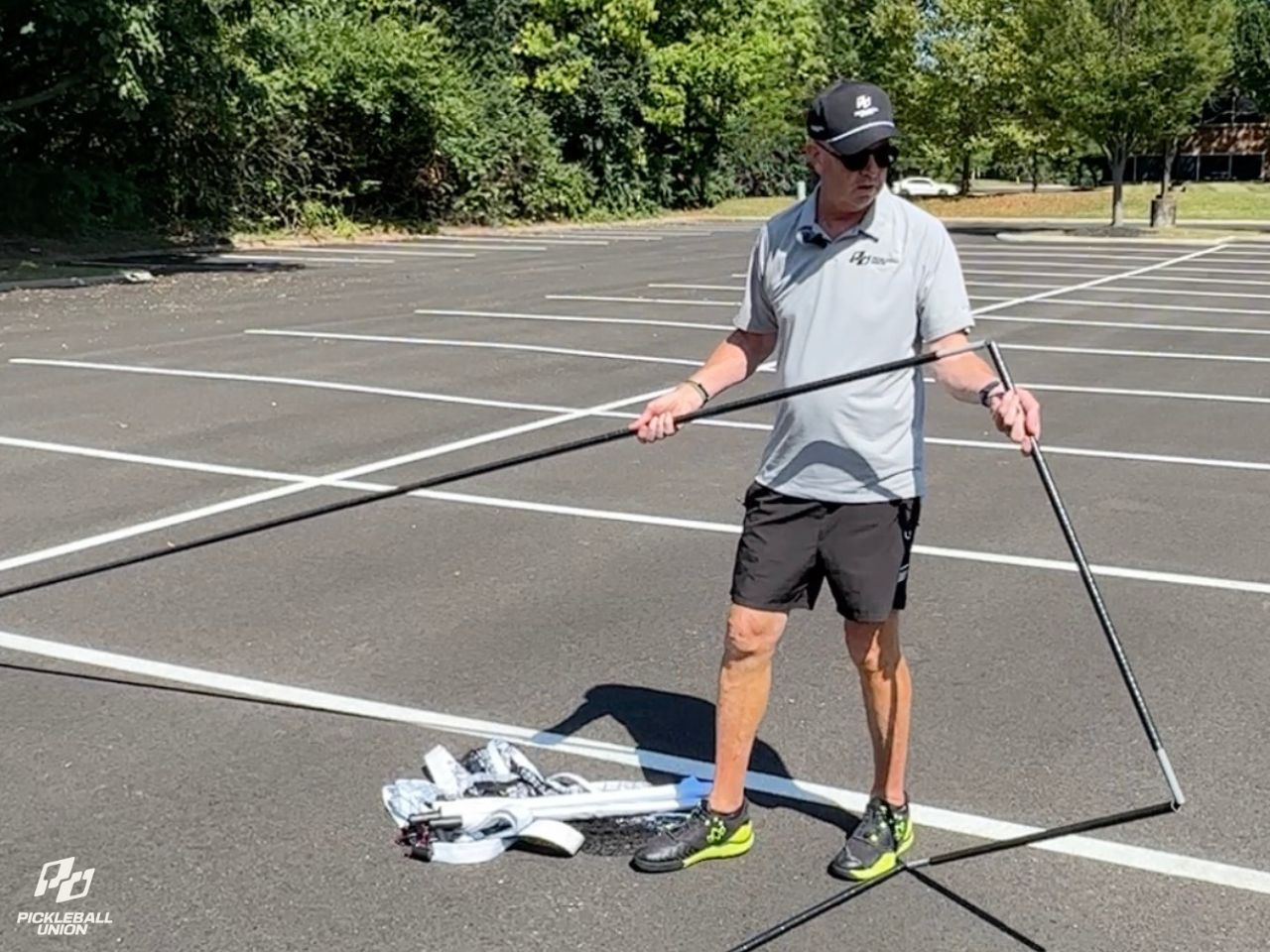
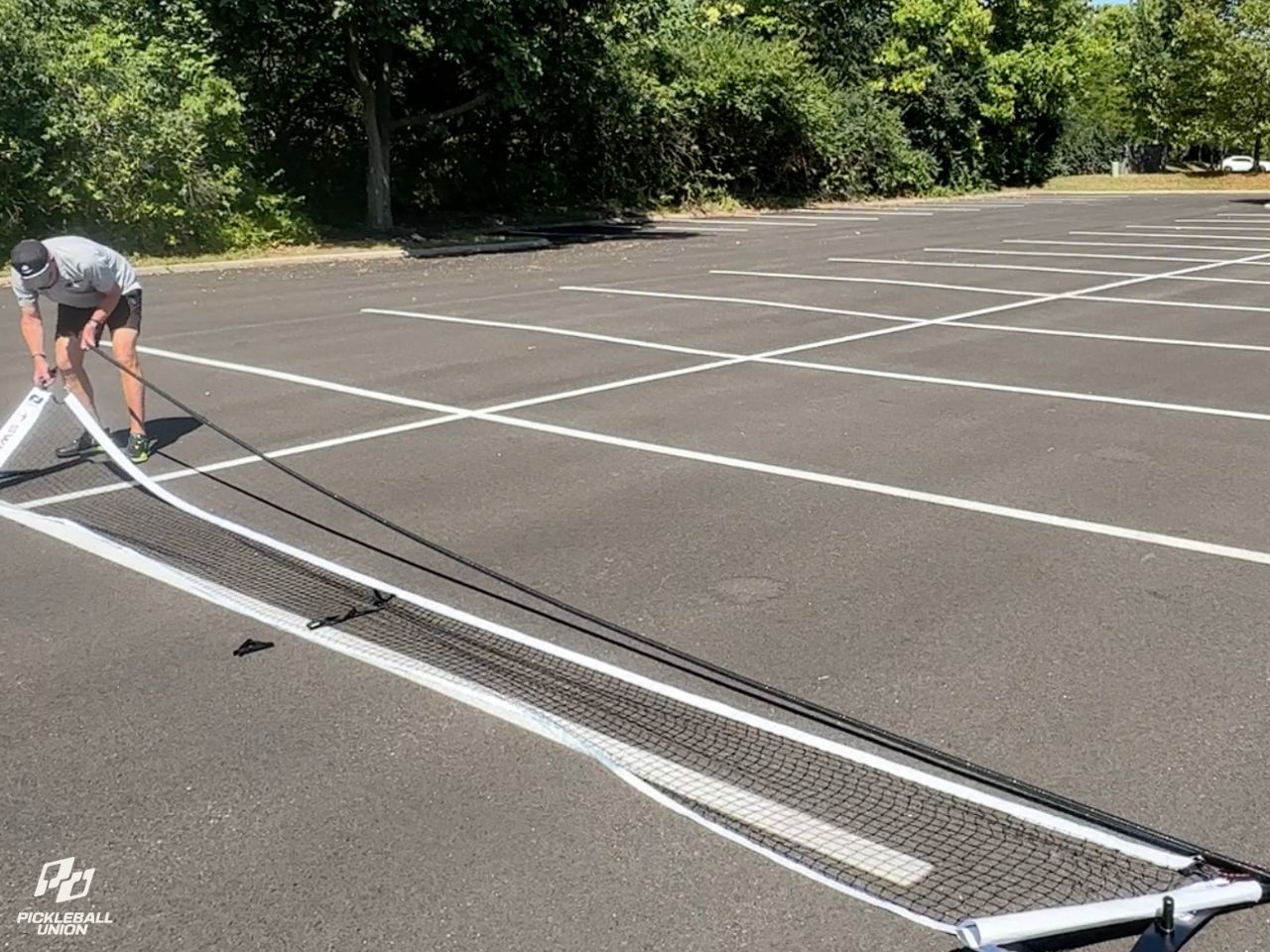
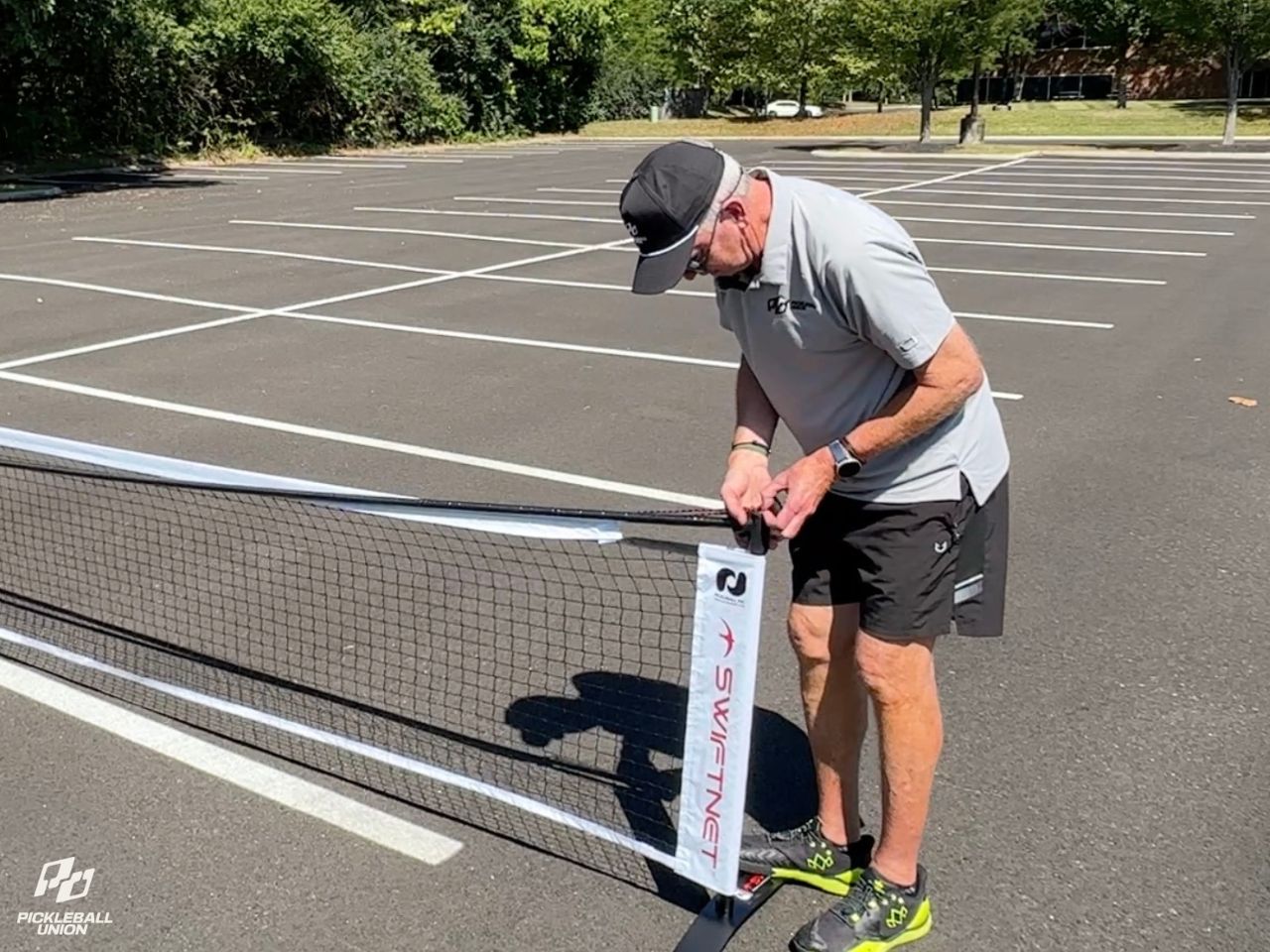
I stopped the clock at just over four minutes for my first go, with net heights measuring a perfect 34” center and 36” ends. Tear-down was even faster at about 2:30. Not bad at all.
Game time!
Game On: Play Testing
My first real test came at Wednesday night rec play in the gym. Stopwatch ready, I timed myself again—unzipping the carry bag to full setup took just under three minutes, right in line with CRTC’s claim.
When my fellow players arrived, the reaction was immediate. After years of playing on budget Amazon nets—heavy, slow to set up, and rarely at true regulation height—this one stood out. Stable, professional-looking, and with sturdy vinyl tape on top and bottom, it looked more like a permanent club net than a portable.
The only “complaint” sparked laughter: the reinforced top tape was so strong it didn’t give way to many lucky let-cords. Unlike our usual flimsy nets that practically invited “net balls” to dribble over, this one played tough and true.
After several games, the verdict was unanimous—two thumbs up. Players especially noticed the spot-on height (34” middle, 36” ends) and appreciated the clearance at the bottom, which made it easy to roll balls under between points. Breakdown with two people? Less than two minutes.
Pros and Cons of the Swiftnet 2.1
✅ Pros
- Lightweight: 3–5 lbs lighter than traditional steel-frame nets.
- Fast setup: Just 3 minutes solo.
- Simplified design: Fewer parts, connected with shock cords for easy assembly.
- Smart tensioning: Quick ratchet system locks in consistent height automatically.
- Stable play: Holds steady during rallies, no sagging tape.
- User-friendly: One-person setup and easy tear-down.
- Thoughtful storage: Oversized, durable bag fits all parts without cramming.
- Mission-driven: Built by a nonprofit supporting community employment.
- Eco-friendly: Boom pole crafted from recycled carbon fiber.
⚠️ Con
- Price: At $369, it’s roughly double the cost of most steel portable nets. (But the quality is twice as good and you are supporting a worthy cause.)
The Final Score
| Category | Rating |
|---|---|
| Design | 🎾🎾🎾🎾🎾 (5/5) |
| Build / Finish | 🎾🎾🎾🎾🎾 (5/5) |
| Setup / Tear-down | 🎾🎾🎾🎾🎾 (5/5) |
| Function | 🎾🎾🎾🎾🎾 (5/5) |
| Price / Value* | 🎾🎾🎾🎾¾ (4.75/5) |
| OVERALL | 🎾🎾🎾🎾🎾 (5/5) |
This net system turned out to be everything I hoped for when I first spotted it on my social feed. If a top-tier portable net matters to you, the $370 price tag is well worth it. It checks every box—lightweight, quick to set up, rock-solid stability, and automatic regulation height adjustment.
And the best part? It’s made by a nonprofit that not only helps people in the community but also keeps carbon fiber out of landfills. That’s performance with a purpose.
Pickle on my friends, pickle on…