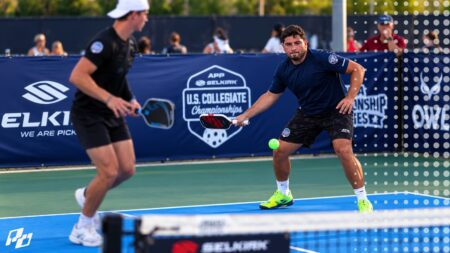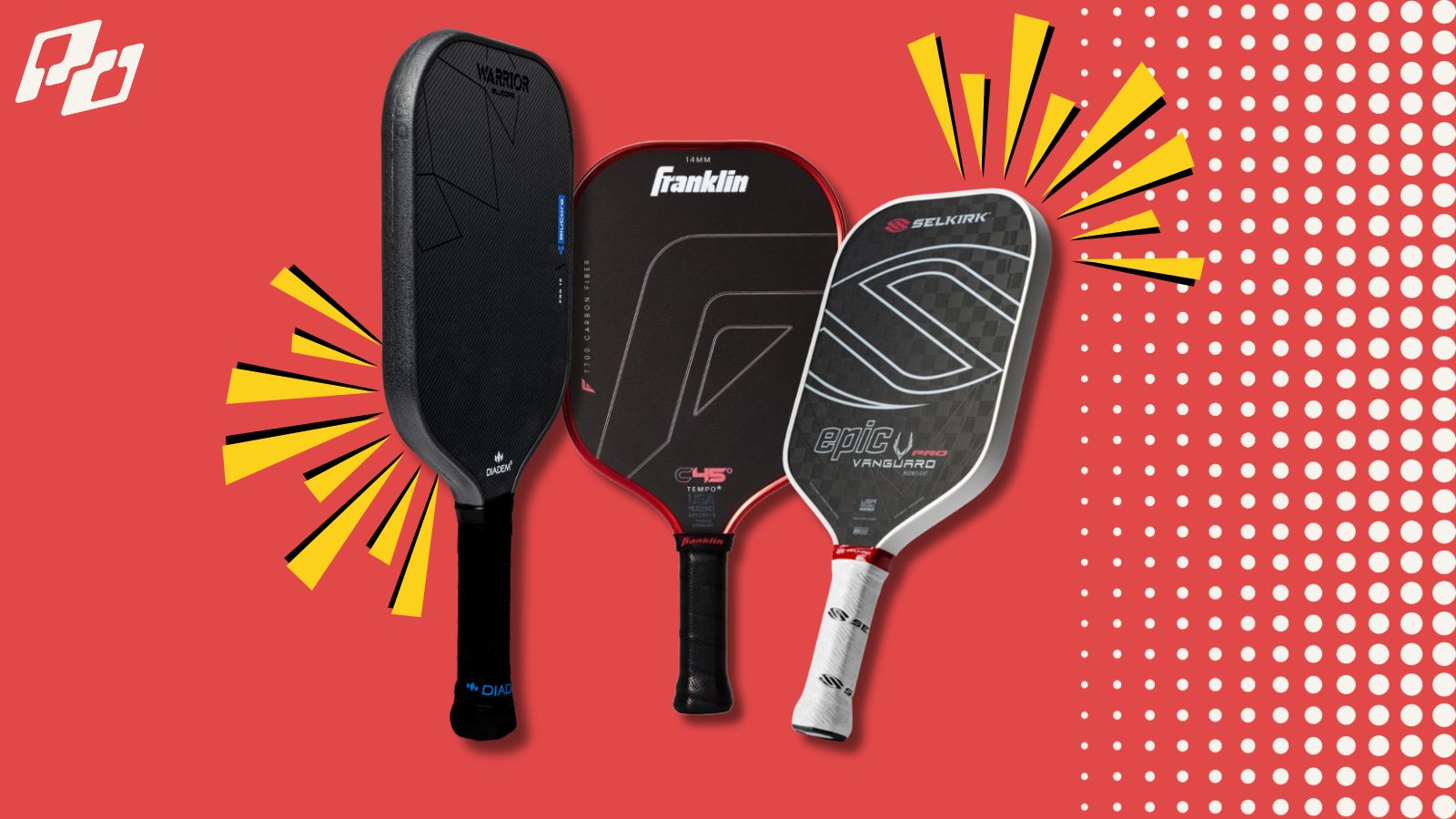
We recently published an article on how many players overpay for pickleball paddles — dropping $280 or more for gains that are often microscopic.
But let’s flip that coin: what if you do invest in a higher-end paddle? The question isn’t just “is it worth it?” — it’s “are you actually using all of what you paid for?”
The truth is, most players only tap into about 75–80% of their paddle’s capability. The other 20% — the spin, power, and precision the lab data promises — stays locked away. And here’s the kicker: often it’s not the paddle’s fault. It’s ours.
Lab vs. Court: The Big Disconnect
In the lab, paddles are tested like race cars — robotic arms, ball machines, and high-speed cameras. Out on court, well, you’re not a robot.
| Paddle | Lab Spin (RPM) | Club Player Avg (RPM) | Performance Left Unused |
|---|---|---|---|
| JOOLA Perseus 16 | 1750 | ~1420 | ~19% |
| CRBN 1X 14mm | 1650 | ~1360 | ~17% |
| Selkirk Labs 003 | 1720 | ~1380 | ~20% |
| $180 Mid-Range Carbon | 1600 | ~1300 | ~19% |
*Source: Pickleball Central lab + club-level tracking data
That’s hundreds of RPMs missing. Same for serve speed:
- Lab-tested max: 59–60 mph
- Club player reality: 47–52 mph
That’s a 15–20% gap. The paddle can produce more, but most of us never tap into it.
Why Players Leave Performance on the Table
So what’s happening between the spec sheet and your Saturday morning doubles game?
- Contact Point Drift – Lab strikes are dead-center, clean, repeatable. You? You’re brushing edges, hitting late, or reaching across your body. Every inch off-center costs speed and spin.
- Technique vs. Tech – Paddles magnify good mechanics, but they don’t create them. A flat drive stays flat, no matter how gritty the face.
- The Confidence Throttle – Many players baby their shots with new paddles, worried about sailing balls long. The result: holding back instead of unlocking what the paddle can do.
- Fatigue & Reality – Game three of open play isn’t a lab test. Your legs are slower, your grip gets lazy, and your serve drops from 55 mph to 49.
The paddle isn’t broken — you’re just human.
Unlocking Paddle Potential: The “Skill Multipliers”
Here’s the fun part: you can close the gap and tap into that hidden 2% — but not by buying more carbon fiber. You do it with what I call “skill multipliers”:
- Footwork Multiplier – Arriving early and balanced expands the sweet spot instantly. A rushed step erases tech advantages.
- Timing Multiplier – Clean, early preparation lets you use the paddle’s spin surface instead of deflecting the ball off the edge.
- Grip Multiplier – Relaxed, consistent grip pressure unlocks touch. Death-gripping a paddle kills feel, no matter the price.
- Confidence Multiplier – Swinging through the ball fully activates trampoline cores. Fearful half-swings waste it.
When all four line up, suddenly your paddle feels like the beast the marketing copy promised.
Unlocking Spin Potential
The gritty face is only step one. To actually reach the RPM ceiling of your paddle:
- Brush, Don’t Slap – Brushing up and across the ball engages the surface texture; flat contact does not.
- Use Wrist Lag – A delayed wrist release at contact can add 200–300 RPM compared to a stiff, locked wrist.
- Test It – Drop-feed 20 topspin dinks crosscourt. If half of them aren’t dipping aggressively, you’re not yet near your paddle’s spin ceiling.
Watch our friend and pickleball coach Nicholas Wade break down the wrist lag technique and show how to put it into action:
Unlocking Power Potential
Lab numbers love max serve speed, but few players touch it. Here’s how to tap into your paddle’s trampoline effect:
- Leg Drive First – The strongest serves in testing all began with full lower-body load, not just an arm swing.
- Relaxed Acceleration – Tension kills paddle rebound. Loosen the shoulders and let the core whip through.
- Check the Radar – If your serve speed hasn’t gone up even 2–3 mph compared to a cheaper paddle, you’re not using its full power profile yet.
Unlocking Control Potential
Control is where players lose the most hidden performance, especially under pressure:
- Reset Test – Drop 20 balls from midcourt with your paddle. Count how many land within a paddle’s width of the kitchen line. If you’re below 70%, the paddle’s sweet spot isn’t being used fully.
- Grip Pressure Drills – Switching from “death grip” to “3 out of 10” pressure often shrinks error rates by 15–20%.
- Soft Hands, Early Prep – Lab tests don’t measure “feel,” but control comes from letting the paddle absorb the ball rather than fighting it.
How to Know If You’ve Maxed Out Your Paddle
A simple checklist to test whether you’ve unlocked its potential:
| Category | Signs You’ve Not Maxed It Out | Signs You’re Close |
|---|---|---|
| Spin | Your rolls and slices float; RPM doesn’t match specs. | Your topspin dinks dip hard; opponents complain about “heavy” spin. |
| Power | Serves/counters feel flat; no jump in ball pace. | You’re adding 2–3 mph consistently over your old paddle. |
| Control | Resets pop up; volleys sail. | You can aim small targets under pressure. |
If you’re still missing all three columns on the right, the paddle isn’t maxed out — you haven’t unlocked it yet.
The Hidden 2% in Match Play
Here’s something fascinating from rec play stats:
- Players hit ~300 shots per match.
- Only 10–15 of those shots truly require “max paddle potential” — the drive through a narrow gap, the counter in a firefight, the deep reset under pressure.
- If you waste your paddle’s advantages on the other 285 routine shots, you’re leaving wins on the table.
The trick is not just owning a paddle with hidden potential — it’s being able to bring it out on those specific pressure points. That’s what separates good club players from advancing to the next level.
Myth-Busting: “This Paddle Has No Power/Spin”
Ever heard someone at the courts say: “This paddle has no spin”? What they’re really saying is “I haven’t unlocked the spin yet.”
Spin doesn’t live in the carbon grit — it lives in how you accelerate and brush the ball. Power doesn’t live in foam walls — it lives in how you load your legs and transfer energy through your core.
The paddle is the amplifier. You are the signal.
Weak signal = weak output.
A Challenge for Your Next Game
Want to test if you’re using all of your paddle’s juice? Here’s a fun one:
- Borrow a buddy’s older $100 paddle.
- Play one game with it, tracking whether you miss resets, struggle to finish points, or lose pace in hand battles.
- Switch back to your high-end paddle. Notice what actually changes.
Chances are, the paddle matters far less than how intentionally you play. That’s the real hidden 2%.
From My Paddle Bag to Yours
I’ll admit it — I’ve bought paddles hoping they’d give me instant upgrades. But the truth is, the paddle only shows its full potential when you do.
That “hidden 2%” isn’t locked in the carbon; it’s unlocked in how you move, swing, and trust your game.
Bonus Tips to Unlock Your Paddle’s Full Potential:
- Film yourself once a month — it’s the fastest way to spot sloppy footwork stealing your paddle’s sweet spot.
- Practice intention drills — 20 serves at full speed, 20 dinks at feather-light touch. This teaches you to explore the paddle’s full range.
- Warm up with your “backup” paddle — then switch to your gamer. You’ll instantly feel what it’s actually giving you.
- Set a one-match challenge — pick one area (spin, resets, or power) and consciously test how far you can push your paddle in just that category.
Because here’s the thing: the paddle helps, but you are still the biggest upgrade in your bag.