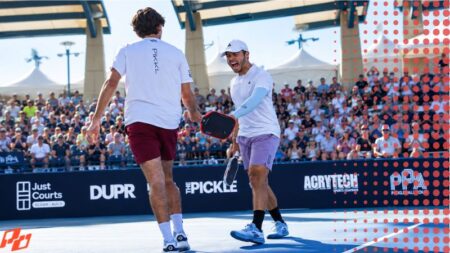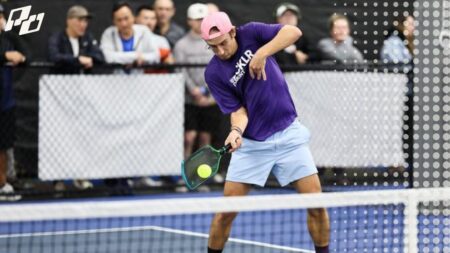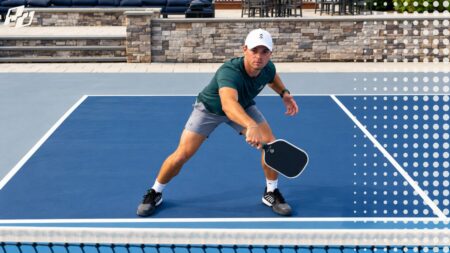

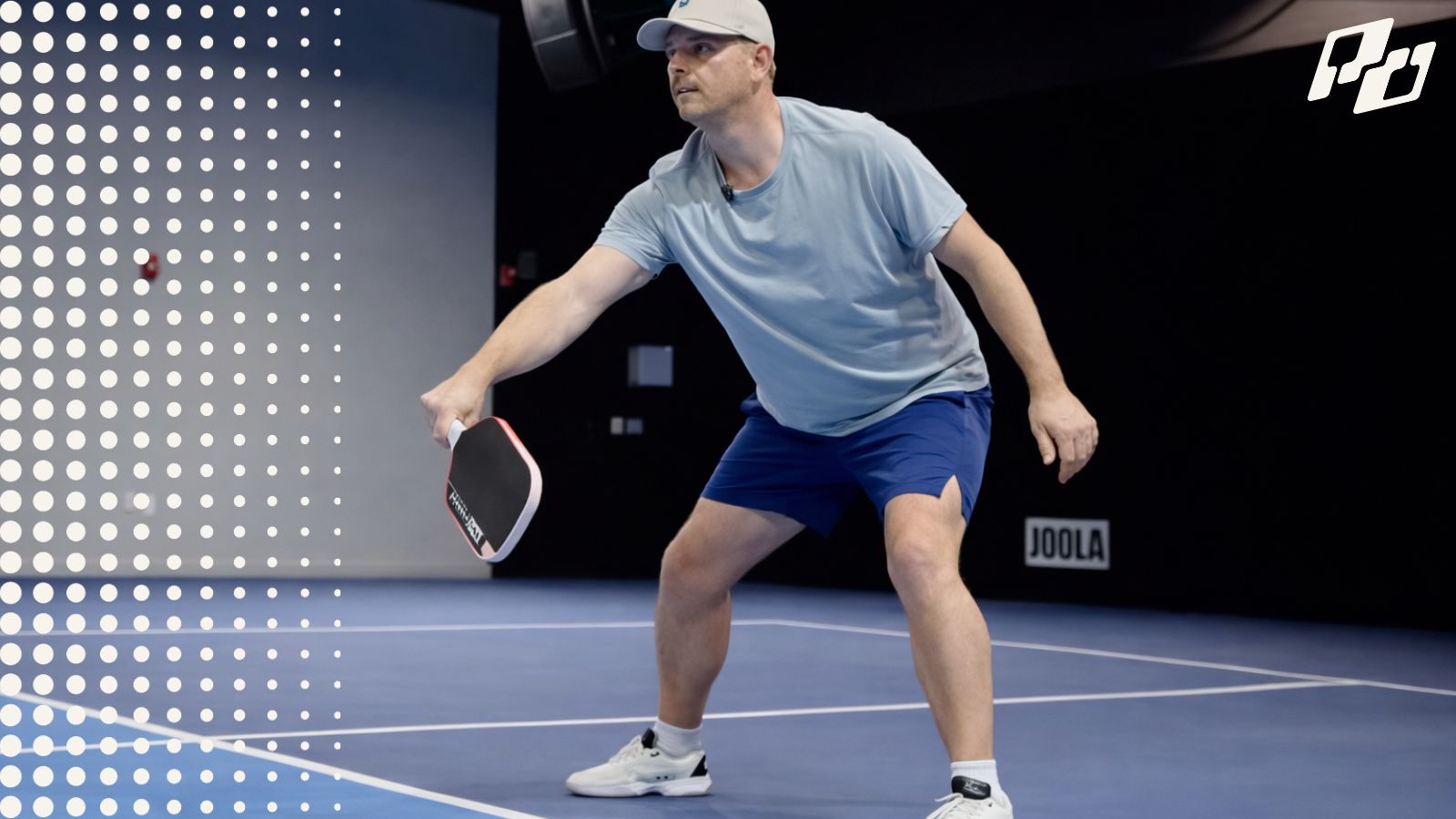
I had the privilege of working with RPO coaches these last few weeks. First at JOOLA Headquarters and then in Austin with Collin Johns. Here’s what I learned about the 3.0 to 4.0 platteau.
If you are stuck between 3.0 and 4.0 in pickleball, you have probably asked yourself the same question I have: what am I missing?
You drill your third shot drop.
You work on your dinks.
You try to speed up your hands.
You invest in a better paddle.
And yet you plateau.
At Pickleball Union, our mission has always been to help players improve with structure. We focus heavily on the 3.0 to 4.0 journey because that is where most recreational players stall. The goal is not just to hit better shots. The goal is to understand the game at a deeper level so improvement becomes repeatable.
Recently, I had an experience that completely reframed how I think about pickleball coaching and player development.
Before we get into the lessons, here’s a behind-the-scenes look at the week that reshaped how I see coaching and improvement:
It started with a 20 minute drill session.
The Mid-Court Mistake I Did Not Know I Was Making
A few weeks ago I was in Washington DC filming at Joola headquarters with several coaches from racketpro. Racketpro, often referred to as RPO, is building a modern coaching curriculum for pickleball instructors and competitive players.
One of the coaches I worked with was Eric White. He has been playing pickleball for over a decade and coaching for nearly as long.
We stepped on court for what was supposed to be a short session focused on mid-court and kitchen play. Within minutes he identified a consistent pattern in my game.
In transition and at the kitchen line, I was letting balls bounce that I should have taken out of the air. I was not necessarily playing poorly, but I was giving my opponents time. Time to reset. Time to recover. Time to anticipate my next shot.
Instead of volleying and taking time away, I was reacting late.
Eric did not tell me to swing harder. He did not tell me to change my grip. He told me I was not anticipating early enough.
That conversation introduced a framework that has completely changed how I think about pickleball strategy and improvement.
The Hierarchy of Assessment That Explains How to Improve in Pickleball
One of the core concepts inside the RPO curriculum is what they call a hierarchy of assessment. It is a simple structure but it forces players and coaches to diagnose performance in the correct order.
The hierarchy is:
- Anticipation
- Court position
- Shot selection
- Execution
Most recreational players focus almost entirely on execution. We think improvement means cleaner mechanics, better contact, more spin, or faster hands.
But execution is the fourth step, not the first.
If you do not anticipate correctly, you move late.
If you move late, your court position suffers.
If your court position suffers, your shot options shrink.
If your shot options shrink, execution becomes much harder.
In my case, because I was not fully reading what was likely coming next based on opponent positioning and rally pattern, I was arriving to the ball just slightly late. That delay forced me to let balls bounce that I could have attacked in the air.
Once I started thinking in this order, mid-court play felt different almost immediately.
Why Anticipation Is the Most Underrated Skill in Pickleball
If you search how to improve in pickleball, most results focus on drills, paddle upgrades, or mechanics. Very few focus on anticipation.
Anticipation improves:
- Reaction time
- Court positioning
- Volley confidence
- Shot selection under pressure
- Kitchen line stability
- Transition game control
When you anticipate well, the game slows down. When the game slows down, execution becomes simpler.
This is especially important for players trying to move from 3.0 to 4.0. At that level, most players can hit the ball. The difference is decision speed and court awareness.
Mid-court and kitchen exchanges punish hesitation. If you wait to confirm what is happening instead of reading it early, you lose control of the rally.
That is what Eric helped me see in real time.
Watching Colin Johns Teach From First Principles
A week later I was back on court filming curriculum sessions with Colin Johns, founder of racketpro and one of the most strategic minds in professional pickleball.
We were filming long form breakdowns of baseline backhand drives, both one handed and two handed.
Before he demonstrated a single swing, he spent five to ten minutes explaining context.
Where are we in the rally?
What shot just happened?
What is the opponent expecting?
Why are we choosing this drive instead of a drop?
Again, anticipation came first.
Then court position.
Then shot selection.
Only after those layers were clear did he move into execution and mechanics.
Watching him build a lesson this way made something obvious. The hierarchy of assessment is not a marketing phrase. It is baked into the structure of the curriculum.
This level of intentionality is what separates random tips from a true coaching system.
What Makes the Racketpro Curriculum Different
Pickleball is growing fast. That growth has created a wave of coaching certifications and instructional programs. Some are strong. Some are surface level.
What stood out to me about RPO was structure.
Racketpro describes its curriculum as a living document. It is designed to evolve, expand into advanced play, and eventually into pro level training. But the foundation remains consistent.
Everything starts with anticipation and context.
For players looking for a serious coaching pathway, this type of structured system matters. It gives coaches a repeatable diagnostic process. It gives players a framework they can apply outside of lessons.
Instead of chasing isolated tips, you build a way of thinking. That is a major difference in modern pickleball coaching.
Why Structured Coaching Matters for the Future of Pickleball
Golf has the PGA of America. Tennis has long established teaching pathways and national standards. Pickleball is still developing that infrastructure.
If the sport is going to mature long term, it needs:
- Clear coaching standards
- Structured curriculum pathways
- Professional development systems
- Diagnostic frameworks that scale
A system like the racketpro coaching curriculum points in that direction. It prioritizes thinking before mechanics and structure before shortcuts.
For recreational players, that trickles down into better lessons, better development, and more sustainable improvement.
How This Changes Our Approach at Pickleball Union
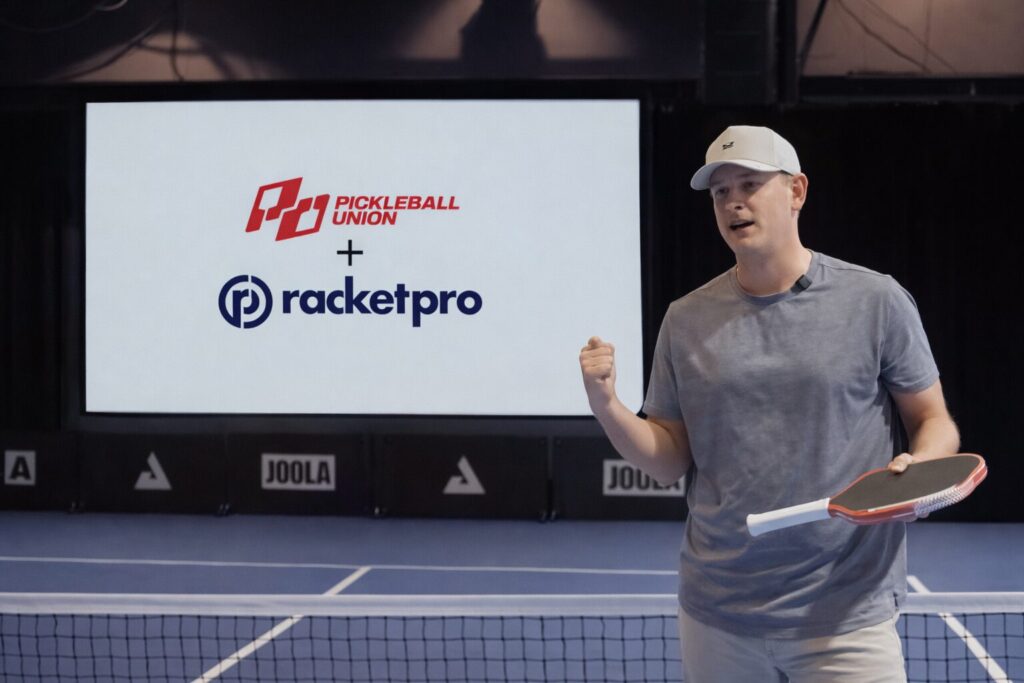
At Pickleball Union, we have always focused on helping players improve with clarity and purpose. These experiences reinforced something important for us.
Going forward, you will see more content built around:
- Anticipation training and court awareness
- Decision making under pressure
- Structured breakdowns of rally patterns
- Strategy before mechanics
- Coach features that highlight teaching philosophy
We will still teach drills. We will still break down technique. But we will start higher in the hierarchy.
Because if you are serious about improving your pickleball game, especially if you are stuck between 3.0 and 4.0, the real unlock is not cleaner execution.
It is better sequencing of thought.
The Real Takeaway
The 20 minutes I spent drilling with Eric White changed how I approach mid-court and kitchen play. The time I spent filming with Colin Johns changed how I think about improvement as a whole.
Great coaching does not begin with mechanics. It begins with understanding.
If you are looking to improve your pickleball game, start by asking a different question during your next rally: what am I anticipating right now?
That question alone might move you closer to 4.0 than another hundred reps of the same drill.
And as we continue building Pickleball Union, that lens of structured, first principles coaching will guide how we create content, highlight coaches, and help you improve.