To break a pickleball plateau, stop relying on open play alone. Use small-group coaching, focused drills, stronger practice partners and paused competitive games with immediate feedback. That combination helps new skills transfer under pressure, exposes bad habits and improves decision-making faster than simply playing more games.
If you’ve been stuck at the same level for months, here’s the uncomfortable truth: you’re probably playing too much—and practicing too little.
That sounds ridiculous.
After all, how can playing more pickleball make you worse?
It doesn’t.
But it can keep you exactly where you are.
Many recreational players think improvement comes from logging more open-play games. The problem is that open play mostly reinforces your current habits—good and bad. If your third-shot drop floats, your resets pop up or you attack too early, you’ll simply repeat those mistakes hundreds of times.
Top coaches consistently point out that improvement happens when players combine focused repetition with realistic game situations, not when they simply accumulate games.
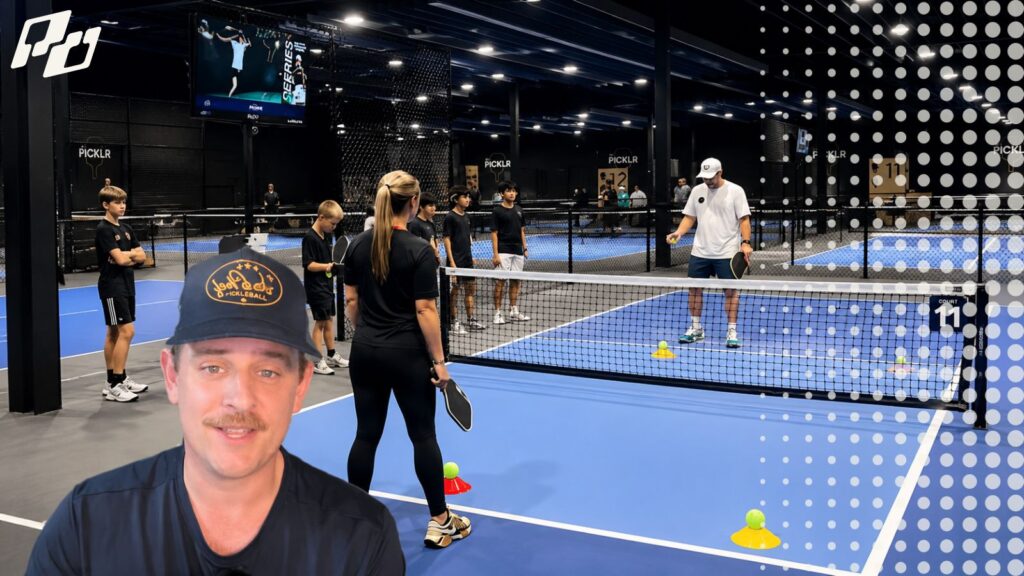
If you’d rather watch than read, Pickleball Union founder Paul walks through this exact concept in the short video below. He explains why simply playing more games isn’t enough—and how one simple change to your practice routine can help you improve much faster.
Why Most Players Plateau
Recently we asked our newsletter subscribers what was holding them back from improving. Three answers came up again and again:
- “I can’t use what I learn in games.”
- “I don’t have better players to practice with.”
- “I don’t have enough time.”
At first glance, those sound like three completely different problems. They’re actually symptoms of the same issue.
You don’t have an environment that forces improvement.
Open play is great for exercise, meeting people and enjoying the game. But it isn’t designed to help you fix weaknesses. If you play with the same group every week, you’ll usually see the same shots, the same tendencies and make the same mistakes.
That’s why simply playing more games rarely leads to dramatic improvement.
The Best Money You’ll Spend Isn’t Another Paddle
Here’s the advice that surprises people. Instead of buying another $250 or $300 paddle…split the cost of a small-group coaching session with three or four players.
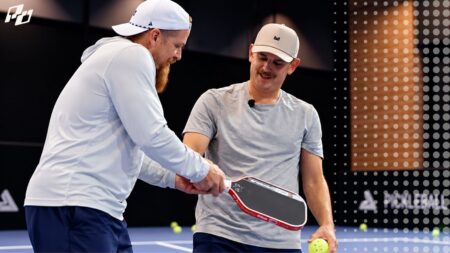
Many clubs call these 3 & Me sessions or semi-private lessons. The format varies, but the idea is the same: one coach, a small group of players and lots of personalized feedback.
Not sure where to find a coach? Start with your local indoor pickleball facility or club. Most employ teaching professionals and offer private, semi-private and small-group lessons. If that comes up empty, search the official IPTPA (International Pickleball Teaching Professional Association) instructor directory, which lets you find certified coaches by state or region.
You can also:
- Ask your local USA Pickleball Ambassador for recommendations—they usually know the area’s most respected instructors.
- Join local Facebook pickleball groups and ask who players recommend, rather than simply searching Google.
- Check whether nearby parks and recreation departments or pickleball clubs offer clinics, then ask the instructor if they run private or semi-private sessions.
- If you’re an intermediate or advanced player, look for local tournament competitors with strong results. Many high-level players coach privately even if they don’t advertise it. You can find them by browsing recent local tournament results on DUPR Events, PickleballTournaments.com, or your local club’s tournament pages.
Choose the Right Group
This is where many players make a mistake. Don’t invite the same friends you always play with just because they’re available.
Instead, look for players who:
- are at or slightly above your skill level
- genuinely want to improve
- are willing to receive coaching and constructive feedback
- won’t spend half the session chatting instead of learning
Everyone should have the same goal: getting better.
If four players are splitting the cost of the session, everyone should be committed to making the most of every minute.
Structure the Session for Maximum Improvement
The biggest mistake players make is turning these sessions into another version of open play. Instead, divide the session into three parts.
Part 1: Assessment
Spend the first 15 to 20 minutes simply playing. Don’t try to impress the coach. Play your normal game.
This allows the coach to identify the biggest leaks in your game, whether that’s shot selection, positioning, movement, decision-making or technique.
Many players think they know why they’re losing points.
Often, they’re wrong.
A coach sees patterns you don’t.
Part 2: Short, Focused Drills
Now fix one or two things.
Not six.
Not ten.
Just enough repetition to build confidence. Maybe it’s:
- third-shot drops
- transition resets
- backhand dinks
- attacking from the kitchen
- defending speed-ups
The goal isn’t to master a shot. It’s to become comfortable enough to use it during competition.
Part 3: Play Competitive Games—and Stop
This is where the biggest improvements happen.
- Play real games.
- Keep score.
- Compete.
But don’t just roll into the next rally. Stop after important points. Ask questions like:
✔️ Why did we lose that point?
✔️ Was that the right shot?
✔️ What were my better options?
✔️ What did you see from your side?
✔️ Should I have attacked that ball?
Those 30-second conversations are incredibly valuable because they’re happening immediately after the decision was made.
You’re learning in context.
That’s much more effective than watching another YouTube video days later and hoping you remember it next weekend.
Why This Works Better Than Open Play
Open play rewards comfort. Structured coaching rewards improvement.
In open play you naturally fall back on your favorite shots and familiar patterns. You avoid situations that expose your weaknesses.
A coach won’t let you do that.
Instead, they’ll encourage you to use the new backhand dink, trust your reset, or attack the right ball—even if you don’t execute it perfectly the first time.
That’s how skills transfer from practice into competition.
Not through more games. Through immediate feedback followed by immediate application.
No Coach? You Can Still Do This
If you don’t have access to a coach, don’t give up on the idea.
- Create your own improvement group.
- Find three players who genuinely want to improve.
- Choose one topic for the day.
Examples include:
- defending speed-ups
- third-shot decisions
- transition resets
- middle-ball communication
- crosscourt dinking
⮕ Play games.
⮕ Pause after important rallies.
⮕ Discuss the decisions.
⮕ Film yourselves if possible.
⮕ Then play again.
Even without a coach, intentional feedback is far more valuable than another two hours of mindless open play.
Stop Using Equipment to Avoid the Real Work
A new paddle creates a powerful illusion of progress. It feels like you’re changing your game without having to expose the habits that are actually holding it back.
Equipment can change launch, spin, forgiveness and feel. But it cannot fix late recognition, poor spacing, rushed decisions or the tendency to attack from the wrong contact point.
Those problems live in your perception and movement patterns, not in the paddle face.
Structured coaching is less exciting because it makes your mistakes visible. That is also why it works. Feedback helps you identify the decision or technical breakdown behind the miss, then correct it before repetition turns it into a stronger habit.
Buy a new paddle when you can clearly explain what limitation it solves.
Until then, invest in better feedback.