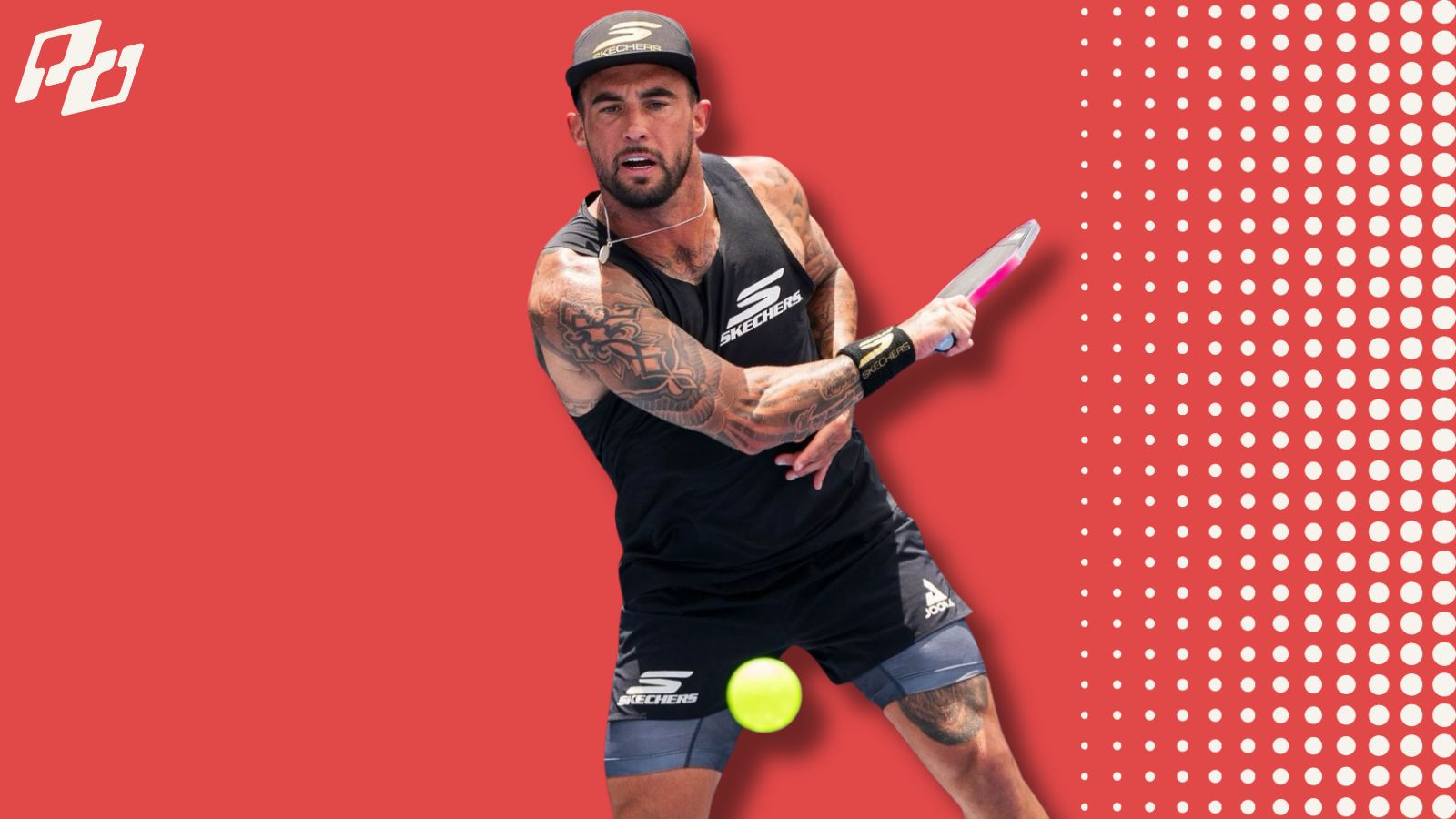
Tyson McGuffin’s forehand is more than just a cleanly struck ball—it’s a high-octane, precision-engineered statement of intent. Nicknamed the “Ferrari Forehand,” it’s fast off the mark, powerful under pressure, and remarkably controlled at top speed. Think of it like a sports car launching out of a tight corner: explosive, balanced, and always ready to accelerate again.
What makes this shot so special isn’t just the raw power—it’s the way Tyson blends athleticism, technique, and aggression into a forehand that dictates rallies from the baseline.
Key Ingredients:
- Kinetic Chain Power: Leg push → hip rotation → core torque → paddle whip
- Topspin-Fueled Speed: Slightly closed paddle face brushing up on the ball
- Compact Motion: Short backswing for lightning-fast prep
- Relentless Intent: Dictates the pace—even on a second or reset ball
Check it out:
Who Should Copy It—And Why
If you’re an intermediate player looking to add a weapon to your game—something that puts opponents on defense, creates space, and builds pressure—McGuffin’s forehand is a masterclass. It’s especially valuable for:
- Singles players who want to dominate with baseline drives
- Aggressive doubles players looking to punish short returns
- Former tennis players seeking a compact, explosive stroke with less backswing
- Players with strong legs and good balance who can rotate and strike from open stances
The Ferrari Forehand teaches you how to hit big without losing control—how to weaponize your athleticism into something reliable, repeatable, and match-winning.
Anatomy of the Shot: Inside McGuffin’s Mechanics
Learn the 10 keys to hitting a fast, powerful, and balanced Ferrari Forehand—step by step:
We break it down even further with key mechanic tips to help you master each step and make the Ferrari Forehand your own:
1. Kinetic Chain Activation: Ground → Core → Paddle
- Leg drive initiates power, followed by hip rotation that co‑initiates the shoulder turn, creating torque.
- The elbow leads the swing; the paddle lags behind—this “lag” stores rotational energy and delivers a whip-like explosion at contact.
2. Paddle Face & Spin
- Paddle tilts slightly closed, brushing upward on the ball to generate topspin—dipping trajectory and depth with pace.
- Precision spin allows aggressive swings with margin for error.
3. Core Rotation vs. Arm Swing
- Minimal arm-only motion; energy flows from legs and torso. This reduces shoulder strain and maximizes consistency.
- Overuse of the wrist is avoided; rotation is smooth and controlled.
4. Balance, Timing & Contact
- Hitting at apex of bounce gives maximum control and depth.
- Staying balanced—even in open stance—facilitates faster recovery; no over-rotation or leap-and-smash.
Forehand Execution Table
| Element | McGuffin Method | Pro Tip for Intermediates |
|---|---|---|
| Stance & Prep | Low, knees bent; paddle set early | Always start from athletic ready position |
| Unit Turn | Torso rotates ~90° before swing | Use shadow swings focusing on hip–core lead |
| Lag & Elbow Lead | Elbow leads, paddle delays | Practice static shadow drills with delayed paddle |
| Contact Timing | Strike at apex zone (above waist) | Train to hit at upper bounce zone |
| Paddle Face Angle | Slightly closed for topspin | Aim for spin-rich contact rather than flat hit |
| Follow-through | Controlled, balanced finish | Finish high and stay poised for the next shot |
On-Court Scenarios: How & When Tyson Hits the Ferrari Drive
Scenario 1: Running Around Backhand in Singles
- Ball lands in your backhand corner → Step around to fire inside-out forehand cross‑court.
- Why: Tyson uses his forehand on roughly 96% of third-shot drives in singles—especially from the ad side. This shot allows him to create angle, apply pace, and immediately take control of the point.
Scenario 2: Attack Short Returns (Singles/Doubles)
- Opponent’s return lands short or hangs high → Step in, load early, drive hard.
- Why: Steals time, applies offensive pressure, often wins the point.
Scenario 3: Power Relay at Transition Zone
- You’re in “Land of Opportunity” (mid‑court)—opponent hits medium pace ball.
- Decision: Take it on the rise or at apex—rotate body, drive through ball, step forward.
- Why: Earn position at net quickly, disrupt opponents before they set.
Shot Placement: Turn Power into Purpose
Once you’ve dialed in the mechanics of the Ferrari Forehand, the next step is learning where to aim—and why.
Break the court into three primary forehand targets:
| Zone | Target Type | When to Use |
|---|---|---|
| Zone A | Cross-court deep (inside-out) | Best for resets, 3rd shot drives, or stretching the opponent wide. |
| Zone B | Down-the-line or inside-in | Use when the opponent cheats or over-anticipates cross-court. |
| Zone C | Mid-body or transition gap | Great for jamming players or catching them in movement. |
Instructional Tip: Think one shot ahead. Don’t just hit hard—place your forehand to set up your next opportunity. Watch how Tyson uses his forehand not always to finish the point, but to take control of it.
Top Errors in Ferrari Forehand Execution
| Mistake | How It Harms | Tyson’s Fix |
|---|---|---|
| Arm‑only swing | Weak pace, erratic control | Use legs + hips + core before arm action |
| Stepping too early/incorrect timing | Off balance, mishits | Hit at apex for solid foundation |
| Over-rotation or spinning out | Poor recovery and footwork | Stay grounded, controlled rotation |
| Late preparation | Scrambled swing, slow paddle prep | Turn shoulders early, paddle ready |
| Predictable placement | Easy read/dig by opponent | Alternate inside-out and down-the-line lines |
Drill Your Way to the Ferrari Feel
Drill 1: Short Return Attack
Goal: Simulate stepping into and driving weak opponent returns.
- Feed soft balls to service line zone.
- Step in, load early, drive aggressively.
- Add pressure by including a net player challenging placement.
Drill 2: Lag + Rotation Practice (Cincola method)
Goal: Build the arc swing rhythm for effortless speed.
- From ready, rotate torso ~90° while keeping feet still.
- Pull elbow forward; let paddle lag behind.
- Rotate through and swing.
- Start with drop feeds → progress to live balls
Drill 3: Placement Decision Drill
Goal: Train inside‑out vs. down-the-line execution under pressure.
- Partner feeds deep balls to your forehand corner.
- You rotate and choose inside‑out or inside‑in mid‑swing.
- Call your shot choice “cross” or “line” to mimic match pressure.
Mental Cues McGuffin Uses
- “Elbow forward, lag paddle”
- “Brush up, finish high, stay ready”
- “Decide inside‑in or inside‑out while rotating”
- “Use green zone only: hit above waist, not knee low or chest-high”
Comparing Tyson McGuffin’s “Ferrari” Forehand to Other Top Pros
Tyson McGuffin’s forehand truly stands apart from elite players like Ben Johns and Federico Staksrud. What sets it apart is his consistent reliance on an open stance, where his shoulders and hips face the court—allowing him to rotate more freely and generate topspin from wider positions.
This approach, while more athletic and dynamic, is less common among the pros who often favor a more compact stance.
Ben Johns and Federico Staksrud, by contrast, more often use closed or semi-closed stances. They emphasize compact mechanics and disguise, blending topspin and control in tighter motions.
Tyson breaks that mold: he generates power via leg drive and core torque even while facing forward, delivering speed and spin from open positions while maintaining balance and recovery
Make It Yours!
Tyson McGuffin’s Ferrari Forehand is about combining mechanical precision with ruthless shot selection. He doesn’t just swing; he plans the explosion in every rally.
If you’re ready to level up:
- Practice drills deliberately,
- Focus on your kinetic chain,
- Embrace topspin, and
- Time your strikes with purpose.
Soon you won’t just be copying Tyson—you’ll have your own version of the Ferrari Forehand, one that’s fast, unstoppable, and big-fun to play.
Ready to dive deeper or tailor drills for your game? Let’s make it happen.