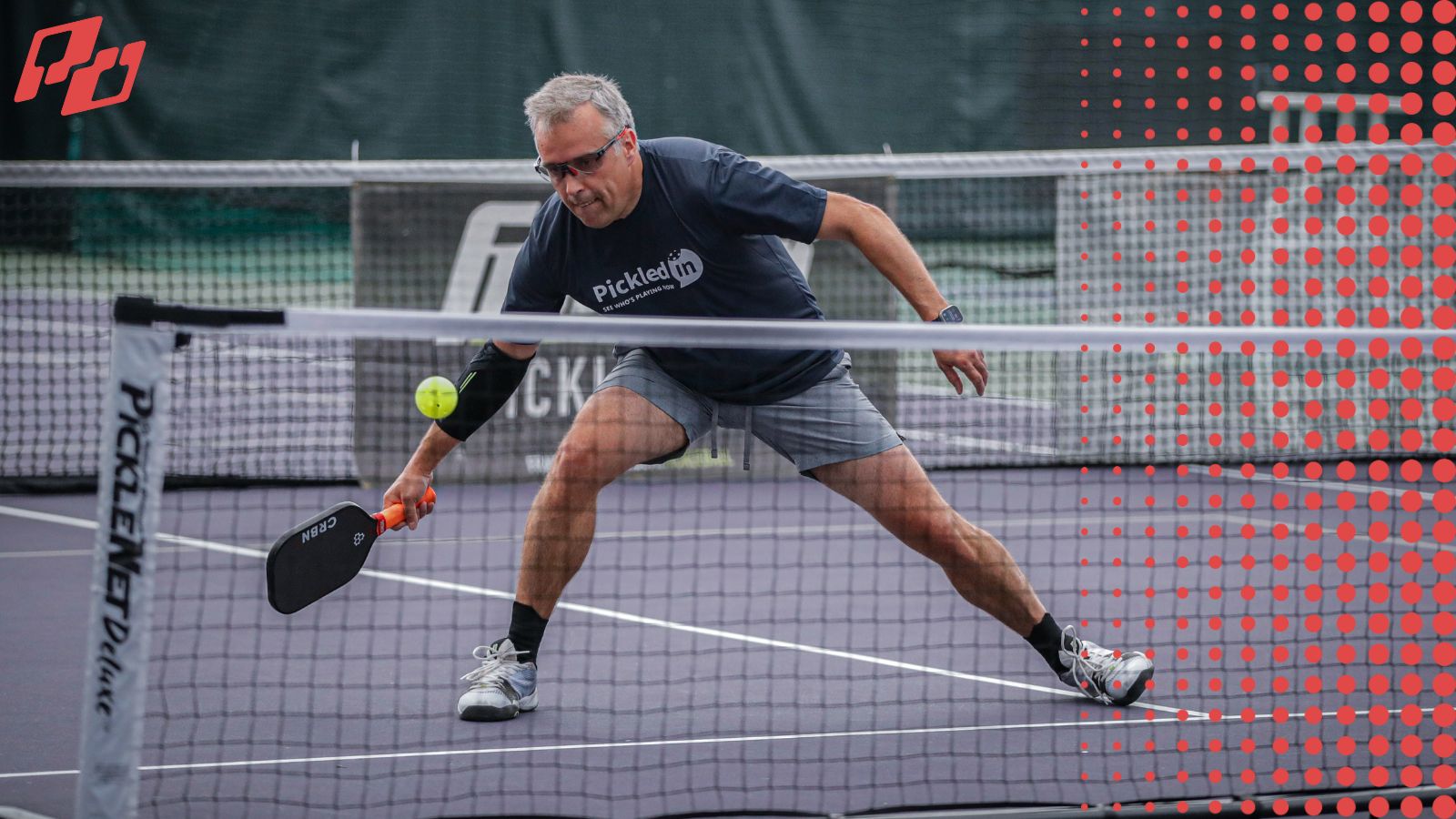
In high-level pickleball, the 4th shot doesn’t just keep you in the rally—it defines whether you stay on offense or concede control. At its best, the 4th shot neutralizes drives, punishes drops, and keeps the serving team pinned or off-balance. At its worst, it gives away time, space, and momentum.
Let’s break down the technical side of the fourth shot: where to hit it, how to structure it based on incoming shot type, and how to manipulate time, court geometry, and opponent positioning.
The Core Objective of the 4th Shot
The fourth shot must do one of three things, depending on context:
- Sustain your positional advantage at the kitchen line
- Exploit a poor third shot (drive or drop) to force an error or pop-up
- Transition to a neutral zone if your opponents executed a perfect drop
Your shot selection, contact point, spin profile, and depth must all align to execute that objective. Let’s dissect how.
Start With Input Variables: Read Before You React
Before deciding what to hit, assess what’s incoming. Consider:
- Ball speed (drive vs. drop)
- Trajectory and spin (heavy topspin, flat, or slice)
- Your contact zone (above net, net-level, or below net)
- Opponent movement (are they crashing, hesitating, or split?)
- Opponent positions (is one still deep while one moves in?)
This gives you a situational map to decide whether you’re in a position to punish, reset, or hold.
Against a Drive: Compress Time, Create Chaos
If you’re facing a third shot drive, your job is simple but technical: compress the time your opponents have to react while maintaining a compact, controlled strike.
Best Targets:
- At their feet: Ideally just beyond their feet to force a tough out-of-air contact
- Body jam: Aim hip or shoulder-high, especially if they’re on the move
- Wide angle: Especially to the non-dominant side if they’re recovering off-balance
Technique Tips:
- Compact swing: Think punch volley, not full stroke
- Stable base: Slight split step on contact, strong lateral balance
- No wrist flick: Keep the wrist firm and paddle face stable
- Weight transfer: Drive through the ball using hip rotation, not just arm
I recommend adjusting your contact point slightly in front of your dominant hip and using your hips and shoulders for pace—not your wrist.
Against a Drop: Decide to Reset or Pressure
The most complex decision comes against a well-hit third shot drop. Do you:
- Take it early and apply pressure
- Let it bounce and attack the peak
- Reset it softly and neutralize the rally
The answer lies in your contact height and opponent movement.
High Contact (Above Chest):
You’re in green zone. This is attackable. Hit with pace or spin.
- Option A: Drive hard and low into the body
- Option B: Chariot whip forehand (if shoulder-height and not overhead range)
- Option C: Hard angle roller to pull them wide or force a pop-up
Chariot Whip: A term Ben Johns uses to describe a topspin forehand finish with a whipping motion across the body to keep the ball in while applying pace.
Check it out:
Mid-Level Contact (Waist to Chest):
You’re in the yellow zone. Risk-reward is 50/50.
- Best play: Controlled topspin roll to the feet or angle
- Avoid: Full swing drives (high error rate)
- Use: Peripheral vision to assess if they’re crashing or holding
This is where the game gets subtle. If they’re still deep—go deeper. If they’re crashing—aim at the on-the-move player’s transition zone.
Low Contact (Below Knees):
You’re in the red zone. Time to neutralize.
- Option A: Reset short into the kitchen (ideal if they’re rushing in)
- Option B: Soft neutral drop toward middle or crosscourt
- Never: Force a low drive—this turns over the point
Pro player Catherine Parenteau advises not to force your fourth if you’re in the red zone. “Sometimes you just have to invite them in,” she says—and when you do, be ready to battle at the net.
Targeting & Court Geography
Against Two Players Back:
- Hit deep to either player’s feet—especially just beyond their position
- Keep the shot low with shape to reduce their prep time
- Mix in change of pace or spin to keep them guessing
Against a Crasher and a Stayer:
- Target the player still deep
- Avoid floaters that cross the net player’s poach path
- Add topspin dip to prevent volleys from midcourt poachers
Spin Profiles: Why Topspin Rules the 4th Shot
Topspin is your best friend on the fourth shot for three reasons:
- Trajectory control: You can swing aggressively while still pulling the ball down
- Bounce behavior: The ball kicks higher or wider—harder to handle
- Margin for error: You can clear the net and still hit a dipping ball
Whether using a forehand roll or the “Chariot whip,” the goal is to finish up and across your body while keeping the paddle face slightly closed at contact. That gives you both shape and penetration.
Watch this forehand roll executed to perfection:
Pro Player Principles (from Ben Johns)
- Move laterally to reach ideal contact zones instead of adjusting wrist mechanics mid-swing
- Visual scan using your lead shoulder to track opponent movement while preparing the shot
- Out-in-front contact always beats jammed-side contact
- Use height to your advantage: The higher the ball, the more aggressive your options
- Forehand first: Shift your feet to take forehand if it’s in the middle zone
Shot Decision Chart
| Contact Height | Opponent Position | Best Shot | Tactical Goal |
|---|---|---|---|
| Above chest | Both back | Hard drive / angle / chariot whip | Force error or weak volley |
| Waist to chest | Split (one up, one back) | Topspin roll to feet or sideline | Target deepest player |
| Below knees | Crashing both | Soft reset into kitchen | Neutralize, prepare to dink |
| Waist-high off bounce | Deep opponent hesitant | Peak-topspin roll or jam to body | Keep them back or jam |
| Mid-low out of air | Crasher close to net | Fast low drive at feet | Disrupt volley timing |
The 4th Shot Is About Pressure + Precision
The fourth shot is not just a reflex response—it’s a deliberate strike designed to either keep opponents back or punish their transition. It’s the shot that tells your opponents: “You’re not getting to this kitchen for free.”
Whether you’re using a topspin roll, body jam, Chariot whip, or soft reset, the magic happens when you:
- Read the input
- Move to ideal contact
- Hit the right shot for the right reason
You don’t just want to keep the point alive—you want to control how it continues.