If you’ve ever stood across the net from a player who flicks the ball past you before your brain can say “attack zone,” you’ve probably asked yourself the same question:
“How did they generate that much pace or angle with such a small motion?”
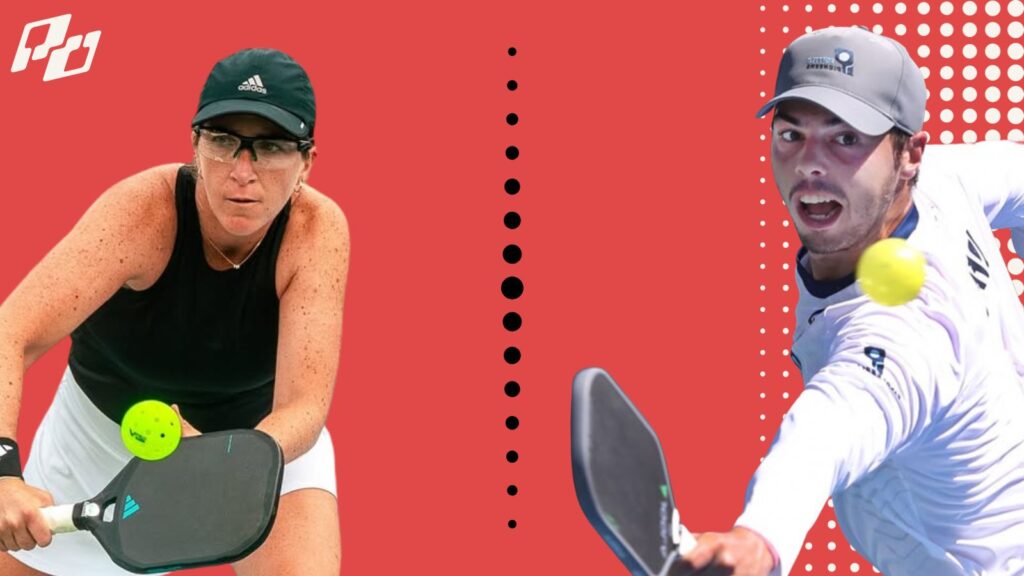
We’ve already broken down Mari Humberg’s deceptive wrist flick in one article and dissected Ben Johns’ powerful roll flick in another. But today, we’re taking it a step further.
Instead of spotlighting one style, we’re putting them head-to-head—wrist-driven vs. shoulder-driven, precision vs. pressure, snap vs. swing.
This isn’t just about preference—it’s about what each flick actually does on the court: which one’s faster to execute, which one is safer for your body over time, and how each flick fits into different match scenarios.
Let’s break it down flick by flick—and help you decide which one (or both!) should be part of your game plan.
The Mechanics: Shoulder vs. Wrist
| Attribute | Shoulder Flick (Ben Johns) | Wrist Flick (Mari Humberg) |
|---|---|---|
| Primary Driver | Shoulder + upper arm rotation | Wrist snap + forearm pronation |
| Muscle Load | Deltoid, biceps, upper traps | Wrist flexors/extensors, pronator teres |
| Swing Path | Arcing roll with full-body coordination | Short, low-to-high whip motion |
| Recovery Time | Moderate—requires full reset | Very quick—minimal movement |
| Flick Distance | Ideal for midcourt or aggressive counters | Best for short-range misdirection |
Which Is Faster?
Let’s clarify: we’re not just asking about ball speed, but also flick speed—how fast the paddle moves and how quickly the shot is executed.
✅ Paddle Speed
- Wrist flicks accelerate faster over a shorter distance. Think of it like snapping a towel: all the energy is compressed into a tight, explosive moment.
- Shoulder flicks ramp up more slowly but carry more mass and rotational force.
So if we’re talking paddle head speed over short distances, wrist flicks win. They’re snappier, harder to track, and land quicker.
✅ Shot Speed
- Ben’s shoulder-driven flicks tend to generate more ball velocity, especially when he adds torso rotation and drives through the contact.
- Mari’s flicks, by contrast, are often spin-heavy and pace-light, relying on arc, dip, and misdirection—not brute force.
Pro insight: Ball speed isn’t everything. Faster execution and shorter telegraphing time often mean more forced errors than pace alone.
Take a closer look at this expert breakdown of Mari Humberg’s jaw-dropping backhand flick:
Which Is Safer (For Your Body)?
This isn’t just about injury risk—it’s also about repeatability and strain on joints.
Shoulder Flicks: High Risk, High Return
- Use more muscle groups, meaning more fatigue over time.
- Repetitive loading on the rotator cuff and deltoid can lead to overuse injuries, especially if form breaks down under pressure.
- Mis-timed shoulder flicks often turn into big, loose swipes that pop up for easy counters.
Wrist Flicks: Precision Over Power
- Much less upper-body strain—great for longevity.
- But risky for players with weak wrist mobility or preexisting wrist issues.
- Can become inconsistent if overused or performed without stability from the legs and core.
Winner? For long-term safety and economy of motion: wrist flicks (if executed properly). But they demand more technical finesse and timing.
Watch Ben Johns flick with unreal precision and power:
Tactical Applications: When to Use Each Flick
Let’s dig into how these flicks actually show up in real match situations.
Shoulder Flick (Ben Johns-Style)
Best Used When:
- You’re attacking a pop-up or floaty third.
- You’ve got time and space (midcourt).
- You want to punish a dink and push your opponent off balance.
Real Match Example: Ben often uses this on a high third shot reset, catching the opponent in transition. His roll-flick targets the paddle shoulder, forcing a pop-up or error.
Pro Tip: Engage your legs first. Don’t just swing with your arm—load, rotate, and roll for control.
Wrist Flick (Mari Humberg-Style)
Best Used When:
- You’re in a dink exchange and spot your opponent leaning.
- The ball sits just above net height with minimal pace.
- You want to fake a dink and flick unexpectedly to change tempo.
Real Match Example: Mari uses her backhand wrist flick mid-dink, disguising it with her body still and neutral. The ball flips crosscourt with sudden top-spin dip, catching players on the wrong foot.
Pro Tip: Think “last-second decision.” You should be able to decide mid-motion whether to flick or continue the dink.
Side-by-Side Breakdown: Shoulder vs. Wrist Flicks
| Category | Shoulder Flick (Ben) | Wrist Flick (Mari) |
|---|---|---|
| Distance Coverage | 3rd shot / Midcourt | Kitchen line / Short range |
| Power Potential | High | Moderate |
| Deception Potential | Moderate | High |
| Recovery Speed | Slower (more commitment) | Very quick |
| Common Misses | Long, popped-up | Into net, mis-hit |
| Physical Risk Profile | Shoulders, back | Wrist, forearm |
| Setup Requirement | Needs prep/load | Can be spontaneous |
When to Train Which?
You don’t need to choose one forever. But here’s how to know where to focus.
Train Shoulder Flick If:
- You’re struggling to counterattack floaty thirds.
- You want to add a roll shot to your arsenal.
- You have strong shoulder mechanics and decent core strength.
Train Wrist Flick If:
- You want more variety in dink battles.
- You like disguising shots or playing mind games.
- You want to minimize body strain and maximize deception.
Mental Framing: The Psychology Behind Each Flick
- Shoulder flicks say: “I’m going to punish you.”
- Wrist flicks whisper: “You didn’t see that coming, did you?”
This isn’t just about mechanics—it’s about intent. Shoulder flicks project aggression. Wrist flicks project calm until chaos.
If your game style leans assertive and controlling, shoulder flicks feel natural.
If your style is about baiting, countering, and misdirecting, wrist flicks are your secret weapon.
Flick Practice Scenarios (Try These)
- Shadow Reps in Front of a Mirror
- Practice both flick types without a ball.
- Watch for unnecessary shoulder motion during wrist flicks.
- Ensure paddle face alignment at contact.
- Dink-to-Flick Alternation Drill
- Alternate 3 dinks, then 1 flick (shoulder or wrist).
- Your goal? No prep or body language giveaway.
- Flick Tag
- Partner feeds floaty dinks.
- You try to flick to designated zones (hips, sideline, paddle side).
- Switch between flick types each round.
✅ Final Verdict
Which is faster?
– Wrist flicks, in terms of paddle speed and reaction time.
Which is safer?
– Wrist flicks, for most players, due to less upper-body strain.
Which should you use?
– Both. But learn when each one belongs in the rally.
Pro-Level Wisdom:
“Don’t just train the flick. Train the moment you choose it.”
Every high-level coach, ever.
Bottom Line
Your shoulder and wrist are both tools in your pickleball toolbox. The elite players—like Ben Johns and Mari Humberg—don’t just use one or the other. They understand the situation, read their opponent, and deploy the right tool at the right time.
So don’t ask which flick is better.
Ask: Which one helps you win the next three shots?