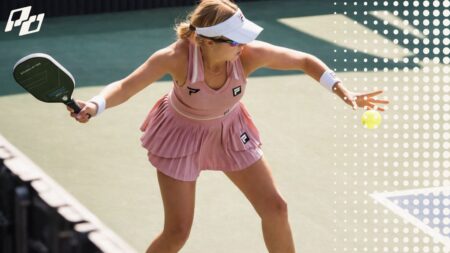

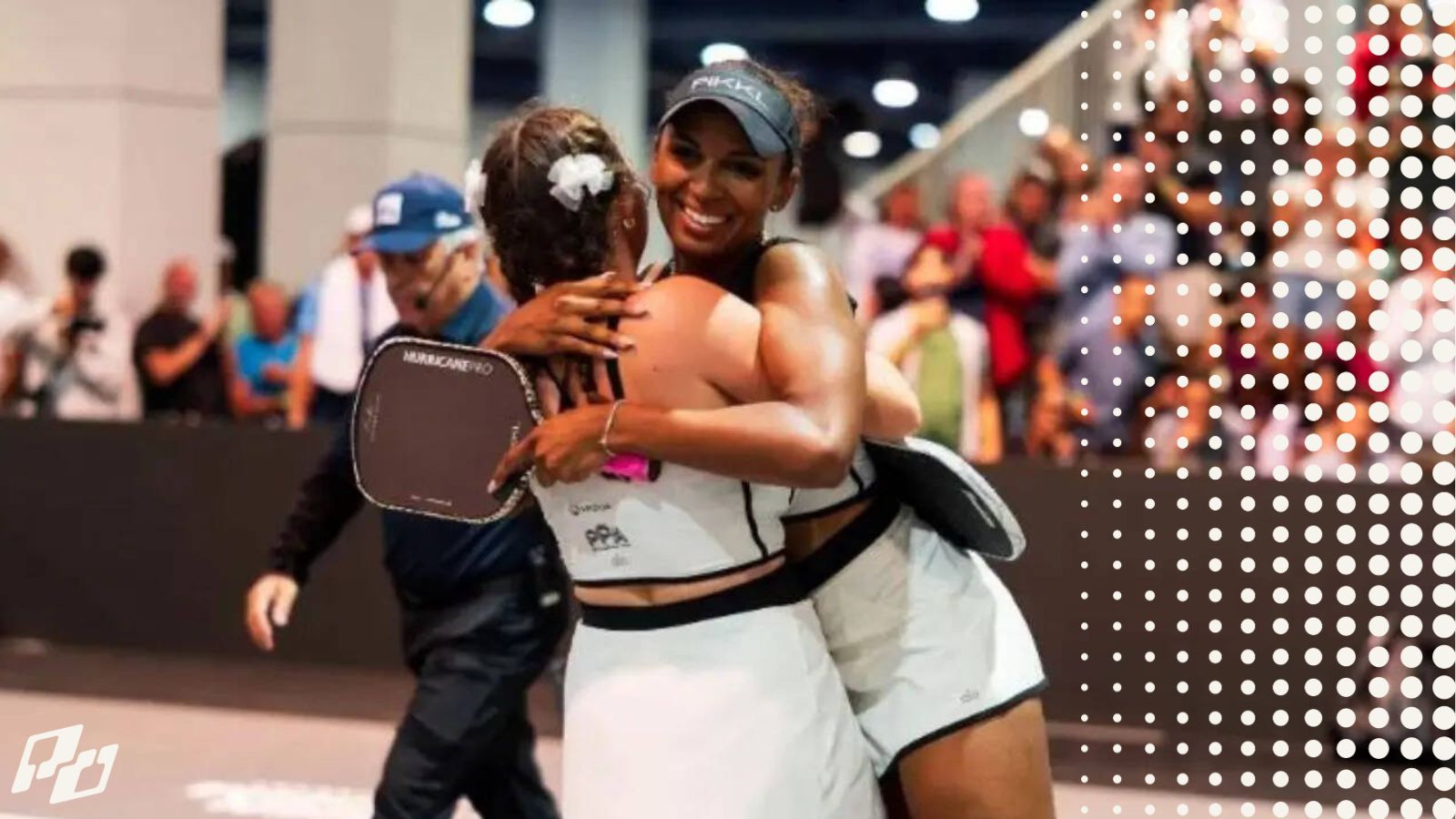
This weekend’s Walgreens Open on the Las Vegas Strip was already buzzing when the women’s doubles semifinals took the court. On one side stood Anna Leigh Waters and Anna Bright — the juggernaut duo and heavy favorites to march into another PPA final. Across from them were Tyra Black and Jorja Johnson, dangerous but not expected to dethrone the queens of pickleball.
What followed wasn’t just a semifinal — it was a statement. Black and Johnson not only stunned Waters and Bright, but they carried that momentum all the way to the title, defeating Parris Todd and Catherine Parenteau in the finals to capture the championship.
The Rally That Defined the Match
Sometimes one rally tells you everything you need to know about a match. In this case, it came midway through the semifinal.
It began innocently: Bright served safely, Tyra sent back a sharp crosscourt return. Bright ran around her backhand to drive a forehand, only for Tyra to block it back with bite. Waters cut middle to punish a floater, but Jorja, already anticipating, retreated to dig it out.
From there, it turned into a tug-of-war. Waters and Bright unleashed volleys, overheads, and roll shots, driving Tyra and Jorja deep behind the baseline. But instead of cracking, the underdogs absorbed the blows, resetting ball after ball until the rally returned to neutral.
At the kitchen, Bright gambled on a surprise down-the-line speed-up. Jorja was waiting — punching it hard at her feet, then attacking Waters on the very next ball. Waters’ reset floated too high. Tyra pounced and ended the point with a forehand putaway.
The crowd erupted. And the momentum tilted:
👉 If you want to watch the full match, you can find it here: Watch on YouTube
Momentum Analysis: The Shift in Control
That rally didn’t just put a point on the board — it flipped the psychology of the match.
- Short rallies favored Waters and Bright early, when their power set the tone.
- Extended rallies, however, consistently leaned toward Tyra and Jorja, who thrived when the exchanges stretched out.
- Defensive patience forced Waters and Bright to take bigger risks, and those risks often produced errors.
From that point on, the favorites looked a little rushed — forcing speed-ups earlier and missing by inches. Tyra and Jorja, meanwhile, grew more confident each time they reset back to neutral and waited for their chance to counter.
Why Tyra and Jorja Won

This wasn’t luck — it was a tactical blueprint executed under pressure:
- Defense as Offense: Their resets didn’t just survive rallies; they flipped them.
- Shot IQ: They avoided unnecessary brawls, picking smarter targets.
- Fearless Counterpunching: When the opening finally came, they struck boldly at the feet.
- Composure: Never panicked, even when pinned deep behind the baseline.
Meanwhile, Waters and Bright leaned a bit too heavily on their power game. Against defenders this disciplined, those forced speed-ups didn’t land often enough.
What It Means for the Favorites
Anna Leigh Waters and Anna Bright are still the standard-bearers in women’s pickleball. One loss doesn’t erase years of dominance.
But this match exposed a truth: the gap is closing. Against top defenders, pure power isn’t enough. Waters and Bright will need to adapt — adding patience, varying their shot selection, and choosing their speed-ups with more discipline.
Broader Context: A New Era Brewing?
This semifinal might be remembered less as an upset and more as a signpost. Women’s pickleball is evolving.
- Long rallies are no longer a weakness for challengers — they’re a weapon.
- Defensive teams are proving they can turn survival into opportunity.
- The dominance of power is being tested, point by point, by smarter counterpunchers.
Tyra and Jorja’s win didn’t just change one bracket. It hinted at where the game is heading.
Final Rally: The Statement in Vegas
Under the Walgreens Open lights, Tyra Black and Jorja Johnson did more than win a semifinal. They cracked the aura of invincibility around Anna Leigh Waters and Anna Bright.
With elite defense, high-IQ decision-making, and fearless execution, they proved that even pickleball’s most dominant team can be pushed to the brink — and beaten.
Waters and Bright will adjust. They’ll evolve. And that evolution — sparked by this Vegas upset — is exactly what keeps women’s pickleball thrilling.