
A lob serve in pickleball is a high, deep serve used to disrupt aggressive returners by changing their timing, eye level, and contact point. When hit with smooth lift and good depth, it can force weaker returns, create easier third shots, and give rec players a smart tactical changeup.
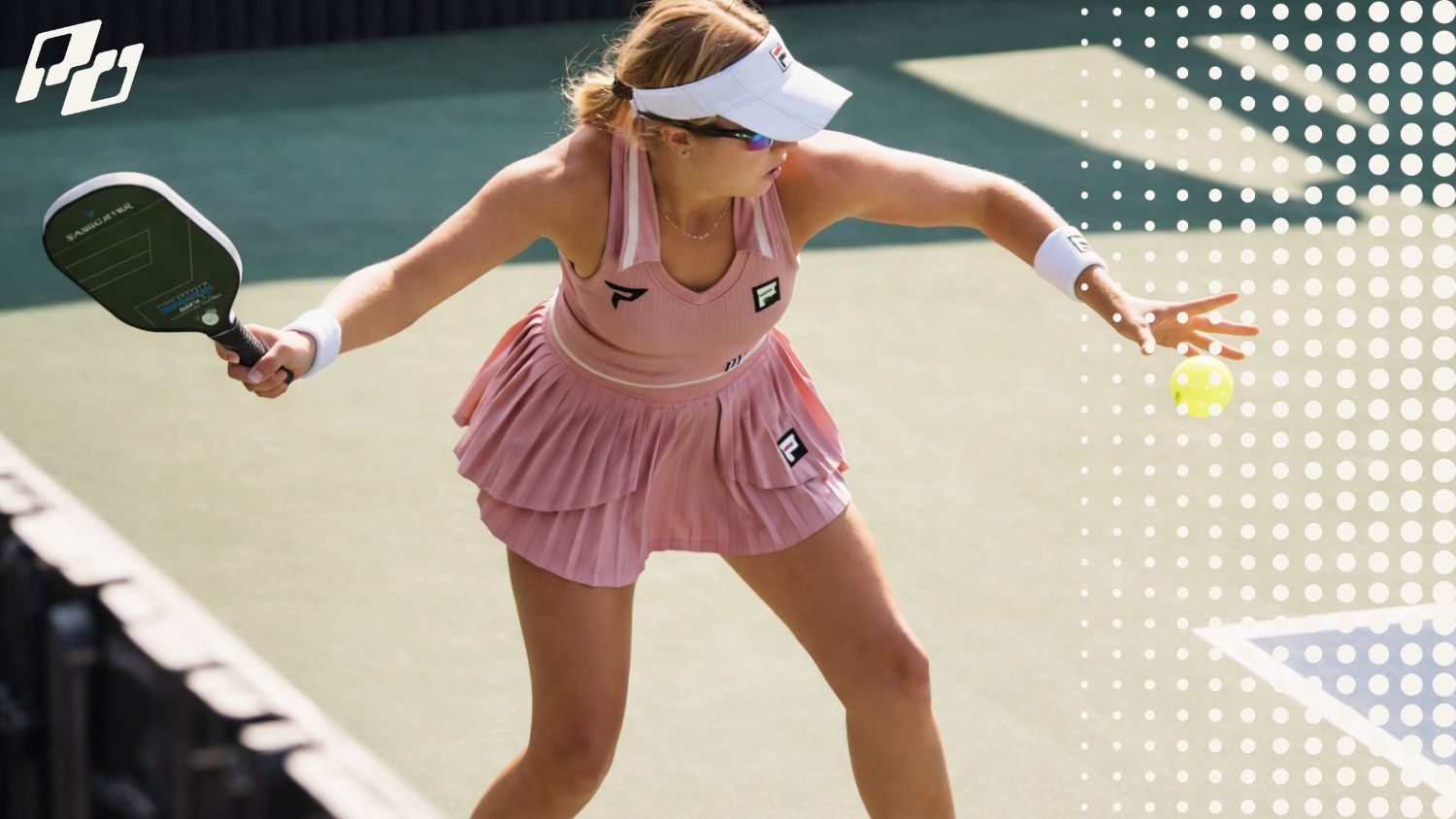
At the beginning of the year, Anna Leigh Waters helped turn one serve variation into one of the most talked-about tactical wrinkles in pickleball: the lob serve.
And no, she was not just doing it to be different.
She was doing it because it solves a real problem. When you play against aggressive returners — especially players who love pace, love to step in, or love to rip heavy topspin or slice returns — a standard serve can make their job too easy. It gives them the look they want, the timing they want, and often the contact point they want.
⮕ The lob serve changes that.
Instead of feeding a returner a flatter, more predictable serve, it sends them a ball with more height, a different trajectory, a different bounce, and often a different contact point. That means they have to adjust. And in pickleball, forcing extra adjustment is often where mistakes begin.
For recreational players, that is what makes this serve so interesting. You do not need to hit the biggest serve on the court to make life uncomfortable for your opponents. Sometimes you just need to stop giving them the same ball over and over.
That is where the lob serve comes in.
Why did Anna Leigh Waters start using the lob serve?
She started using it because it is a smart tactical changeup, not because it looks fancy.
A lot of players think of the lob serve as just a soft variation, or maybe even a gimmick. But that misses the real reason it works. The serve changes eye level, changes timing, and changes where the returner has to make contact. Instead of taking a comfortable return off a more normal trajectory, the receiver now has to decide whether to back up and let the ball drop or try to take it early on the rise.
Neither option is ideal if the serve is good.
That is the hidden value of the lob serve. It forces a decision. And when you force a decision under pressure, especially early in the rally, you often get hesitation, late contact, weak returns, or rushed swings.
That is why Anna Leigh’s use of it got so much attention. She was not just mixing things up for style points. She was creating a less comfortable return environment for her opponents.
For rec players, the bigger lesson is simple:
- A serve does not have to be fast to be effective.
- A serve does not have to look aggressive to create pressure.
- A serve just has to make the return harder.
And that is exactly what a good lob serve can do.
What exactly is a lob serve?
A lob serve is a serve hit with more arc, more height, and ideally plenty of depth, so it lands deep in the box and bounces in a way that makes the return awkward to attack.
That part is important, because a lot of players hear “lob serve” and imagine a loopy, soft, floating ball. That is not really the goal.
A good lob serve is not just high. It is high and deep.
That combination is what matters. The height changes the visual picture and the return timing. The depth pushes the returner back or forces them to deal with the bounce from a less comfortable position. If you can also add topspin, the serve becomes even more effective because the ball can kick through the court instead of just sitting up.
So when we talk about the lob serve, we are not talking about a defensive bunt or a desperation float. We are talking about a deliberate serve variation designed to disrupt rhythm and force a lower-quality return.
A good mental picture is this:
- Too flat: easy to time
- Too floaty: easy to attack
- High and deep: annoying, awkward, and useful
That is the version you want.
Why can the lob serve work so well against rec players?
Because a lot of rec players are much better at attacking familiar balls than solving unusual ones.
Most recreational returners are comfortable when they see a normal serve. They know the bounce, they know the timing, and they know how to load their swing. But when you suddenly change the trajectory, take away easy incoming pace, and force them to hit from a higher or later contact point, the whole return changes.
That is especially true for players who love pace.
Some players are great when you give them a ball they can redirect. They love ripping returns. They love using your pace. They love stepping in and attacking with confidence. But when the serve comes in softer, higher, and deeper, suddenly they have to create more of the shot themselves. That often leads to mistimed swings, mishit returns, and balls that do not come back with the same quality.
You also see this serve work well against players who like to slice or roll their returns heavily. If their contact point changes, and the ball is jumping into a different part of their strike zone than they expected, their usual return shape can break down.
For many rec players — especially older players or less mobile players — that extra height and depth can also create movement problems. Backing up cleanly, judging the bounce, and staying balanced through contact is not always easy. That makes the lob serve more than just a novelty. In the right matchup, it becomes a very practical weapon.
In other words, the lob serve can create all kinds of discomfort:
- it changes eye level
- it changes timing
- it changes contact height
- it changes how much pace the receiver has to generate
That is a lot of disruption from one serve.
How do you hit a lob serve without turning it into a sitter?
You hit it by creating lift with your swing path, not by simply popping the ball up with an open paddle face.
This is where a lot of rec players go wrong. They understand that the serve should be higher, so they try to manufacture height by scooping under the ball. The result is usually a soft floater that lands too short and gives the returner an easy ball.
That is not the serve you want.
The better cue is this: brush up, send it deep, and do not force it.
A quality lob serve still needs structure. The paddle should drop below the ball, your swing should move upward smoothly, and the motion should feel like you are lifting through the ball rather than shoveling it. If you can add topspin while doing that, even better, because that helps the serve carry deep and then kick up after the bounce.
The biggest mindset shift is this: you are not trying to hit it hard. You are trying to hit it well.
That means a relaxed, upward, controlled swing is usually much better than a rushed or violent one. If you chase power, you often lose the very thing that makes the serve useful: shape.
Simple cues to remember
- Brush, don’t scoop
- Lift, don’t fling
- Arc with purpose
- Deep first, fancy second
A simple sequence can help too:
- Start relaxed.
- Drop the paddle below the ball.
- Swing up smoothly.
- Send the ball deep.
- Expect a weaker return.
@sheaunderwood Try These Lob Serve Strategies! #pickleball #selkirksport #selkirk #selkirkedit #wearepickleball ♬ original sound – Shea
That last part matters. The serve is not done when it leaves your paddle. You should already be thinking about the reply you are trying to create.
Where should you stand and what should the motion feel like?
For most rec players, a semi-open stance is the best place to start.
It is comfortable, it gives you some natural rotation, and it helps the serve feel like an actual athletic motion instead of a strange little trick shot. With a semi-open stance, you can use your hips and shoulders to help create the lift and flow you want, rather than relying only on your arm.
The serve itself should feel smooth and connected.
That is a big point. If your lob serve feels stiff, forced, or overly technical, it is probably not going to hold up under pressure. The motion should still feel like a serve — just with a different swing path and a different intention.
A good visual is this: start relaxed, let the paddle drop below the ball, rotate through comfortably, and brush upward toward a deep target. You are not trying to flick the ball. You are not trying to guide it. You are not trying to muscle it over the net.
You are creating arc with rhythm.
That is one reason this serve can be surprisingly effective once you get comfortable with it. When it is done right, it does not feel dramatic. It just feels controlled.
Body-position cues
- Semi-open stance
- Relaxed arm
- Paddle below the ball
- Smooth hip-and-shoulder turn
- Upward path to a deep target
If you are trying to force the ball up with your hand or wrist alone, the motion is probably off.
When should rec players use the lob serve?
Use it as a changeup when your opponent is getting too comfortable with your regular serve.
That is the simplest answer.
If a returner is standing confidently on the baseline, timing your serve well, and ripping solid returns over and over, that is a great time to show them something different. The lob serve is especially useful against players who love pace, crowd the baseline, attack early, or clearly want to take control of the rally off the return.
It is also useful after you have established a pattern.
For example, if you have hit a few flatter serves in a row, the lob serve can be a really smart contrast. Now the returner is expecting one type of ball and gets another. That delay in recognition matters. Even a small hesitation can reduce the quality of the return.
You can also use it when you want to buy a little more time and create a more defensive return profile. If your opponents tend to send back more floaty or conservative returns off a good lob serve, that can set up a much easier third shot for you.
The key is not to use it randomly. Use it with purpose. Use it because the matchup calls for it or because the point pattern suggests it.
Good times to use it
- after several regular serves
- against a player who crushes flat returns
- against someone crowding the baseline
- against players who love using your pace
- when you want a softer, more defensive return
A simple pattern example
Try something like:
- flat serve
- flat serve
- lob serve
Or:
- serve to backhand
- serve to body
- lob serve deep
That is where the lob serve becomes a tactical variation instead of just a random experiment.
When should you avoid the lob serve?
Avoid it when you cannot land it deep.
That is the big one.
A short lob serve is usually a bad serve. If the ball sits up in the middle of the box without enough depth or action, you have basically handed the returner extra time and a better view of the ball. That is not disruption. That is an invitation.
You should also be careful with it in windy conditions, especially if you do not have much margin or spin on the serve. More arc means more time in the air, and more time in the air usually means more opportunities for the wind to mess with your ball.
It is also not the best choice against every returner. Some players are very comfortable taking high balls on the rise. Some are patient enough to back up and reset the contact point. Some have no issue creating their own pace from odd bounces. Against players like that, the serve may lose a lot of its sting.
So the rule is simple: if your lob serve is not deep, or if your opponent clearly likes that kind of ball, do not force it.
A variation only helps if it actually creates discomfort.
Avoid it when:
- it is landing short
- the wind is making it drift
- the receiver loves high balls
- you are using it out of habit instead of strategy
- you do not trust the serve that day
That last one matters more than players think. A serve variation is only useful if you can hit it with conviction.
What third shot are you hoping to get after a lob serve?
You are usually hoping for a weaker, higher, or more defensive return.
That is really the whole point of the serve.
The lob serve is not about aces. It is not about ending the rally with the serve itself. It is about shaping the next ball. You are trying to create a return that is less aggressive, less clean, or less well-positioned than the one your opponent normally hits.
⮕ Sometimes that means they overhit and miss.
⮕ Sometimes it means they rush the return and leave it short.
⮕ Sometimes it means they float it back because they want more time to get to the kitchen.
⮕ And sometimes it means they produce a high return that gives you a very manageable third shot.
This is where rec players can get a lot more strategic. Do not just think, “Did my serve go in?” Think, “What return am I trying to create?”
That is how better servers think. They are not just putting the ball in play. They are trying to influence the rally from the first contact.
So if you hit a good lob serve, be ready for the next ball. Expect something softer, something more defensive, or something that sits up a little more than usual. That anticipation is part of what makes the serve truly valuable.
What you are hoping to see
- a rushed return
- a ball hit on the rise with poor timing
- a floated return
- a shorter return
- a higher return you can attack or control
That is why the lob serve is really a serve-plus-one weapon.
What mistakes ruin the lob serve for most rec players?
The biggest mistake is confusing height with quality.
Just because the serve goes high does not mean it is good. If it is not deep enough, it often becomes easier to return, not harder.
The second mistake is trying to hit it too hard.
A lot of players get nervous that the serve will land short, so they speed up the swing and try to muscle the ball to the baseline. Usually that just wrecks their control. The lob serve works better when it is smooth and shaped, not when it is forced.
The third mistake is scooping under the ball too much.
That creates float without purpose. You want lift, yes, but controlled lift. Ideally the serve still has some bite to it, especially if you can brush up the back of the ball and create topspin.
The fourth mistake is overusing it.
The lob serve is a variation. Variations lose value when they stop being variations. If you hit it over and over, good returners will adjust. They will start reading the bounce better, managing the timing better, and punishing the ball more cleanly.
In other words, do not turn a smart pattern-breaker into a predictable habit.
The most common mistakes
- too high but not deep
- trying to hit it hard
- scooping instead of brushing
- no spin or shape on the ball
- using it too often
- forgetting to anticipate the weaker return
A good self-check cue is this: Did I make them uncomfortable, or did I just give them time?
That question tells you a lot.
Is the lob serve legal under the current rules?
Yes, the lob serve is legal as long as your serve follows the normal serving rules.
That means you still have to respect the serving motion and contact requirements. The serve is not illegal just because it has more arc or more shape. What matters is whether you are striking the ball legally, not whether the serve looks unusual.
That is actually good news for rec players, because it means the lob serve does not depend on trickery. You do not need a funky toss or some weird spin gimmick. You just need sound mechanics and a legal motion.
So if you have been wondering whether the serve is “allowed,” the answer is yes. The important thing is to learn a version that is repeatable, controlled, and within the rules.
So should recreational players add the lob serve?
Yes — most rec players should at least learn it.
That does not mean you need to build your whole serve game around it. And it definitely does not mean you should use it every time. But it is a very useful variation to have, especially if you play against aggressive returners or players who get too comfortable off your regular serve.
The big value of the lob serve is not that it is flashy. It is that it changes the returner’s problem.
And that is a very smart thing to be able to do in rec pickleball.
If you can hit it deep, use it selectively, and understand what kind of return it is meant to produce, it can absolutely help you win more points. If you float it short, use it randomly, or treat it like a magic trick, it will probably hurt you more than help you.
So yes, learn it. But learn the right version of it.
FAQ: What should rec players remember most about the lob serve?
The lob serve works best when it is deep, not just high.
That is the number one thing to remember. Height by itself is not enough. The serve needs depth to create discomfort.
You do not need to swing harder to hit it well.
In fact, most players hit a better lob serve when they relax a little, use a smooth upward path, and focus on shape instead of force.
It works best as a changeup.
If someone is feasting on your normal serve, the lob serve can change the picture and make the return much less comfortable. That is where its value shows up.
It is really about the next shot.
The serve is trying to create a weaker return, not win the point immediately. If you understand that, you will use it more intelligently.
And finally, it is a tool — not a personality.
Use it when the situation calls for it. Practice it enough to trust it. But do not fall in love with it just because a pro made it look cool.
That is probably the best way to think about the lob serve for rec play: not as a trend, but as a useful option when you know exactly why you are using it.
Quick reminders
- High is not enough — it must be deep
- Smooth beats hard
- Use it as a changeup
- Think about the next ball
- Do not overuse it