If you’ve ever tried teaching pickleball to kids, you know how quickly things can go sideways. One minute you’re explaining “grip pressure,” and the next, half your group is sword-fighting with paddles or chasing a rogue ball across three courts.
It’s not that they don’t want to learn — they just learn differently. Adults tend to coach like they were taught: technical, detailed, and progress-focused. But kids live in a world of play, imagination, and instant feedback. When we forget that, we turn what could be their favorite hour of the week into another chore.
After years of watching well-meaning adults (and let’s be honest, doing it ourselves), certain coaching pitfalls come up again and again.
So here are the seven biggest mistakes adults make when teaching kids pickleball — and how to turn each one into a win.
1. You Start With Too Much Technique (And Forget the Fun)
If you’re opening with “continental grip” or “paddle face angle,” stop right there.
Kids don’t want a biomechanics lecture. They want to hit something.
When adults start too technical, kids glaze over faster than a Krispy Kreme donut.
Better way: Let them play first. Mini rallies, balloon pickleball, “how many times can we hit it over without missing?” The goal is movement and laughter — not mastery.
Then sneak in technique through games:
- “Scooping ice cream” = soft dinks.
- “Swatting a bug” = volleys.
- “Push the spaceship” = follow through.
You’ll be shocked how quickly the mechanics fall into place once they’ve had fun first.
2. You Forget That ‘Fun’ Is the First Skill
If your drills look like boot camp, you’ve already lost them. Kids thrive on play — not pressure.
According to Positive Coaching Alliance, the #1 reason kids quit youth sports is simple: it’s not fun anymore.
So instead of endless feeding drills, turn lessons into mini-games:
- “Target Trouble” — place cones, get points for accuracy.
- “King of the Kitchen” — last player to make a dink mistake wins bragging rights.
- “Coach vs. Kids” — they’ll love teaming up against you.
Laughter is a training tool. Use it.
3. You Correct Every Mistake (And Forget to Celebrate the Tries)
Ever catch yourself saying, “No, not like that!” ten times in a row?
Yeah… guilty.
Kids don’t need a constant critic — they need a cheerleader who gives small, specific praise.
Experts say kids respond best when coaches give five positive comments for every one correction.
So instead of “Don’t bend your wrist,” try:
“Nice try! I love how you reached for that one — now see if you can keep your wrist steady.”
Here’s a secret: confidence is the best teacher. The more they feel good about trying, the faster they’ll learn.
4. You Talk Too Long (They Stopped Listening Two Minutes Ago)
Adults love explaining. Kids love doing. By the time you’ve said, “Let’s talk about topspin,” they’re using the net as a hammock.
Keep it short and playful:
- Talk less than a minute.
- Show, don’t tell.
- Let them try right away.
And if they miss? Laugh it off. “That’s the wind’s fault — clearly.”
Even a 20-second demo beats a 3-minute speech. If you must explain, do it while they’re moving. (Bonus points if you walk backward holding a pickleball like a microphone.)
5. You Forget That 7-Year-Olds and 13-Year-Olds Aren’t the Same Species
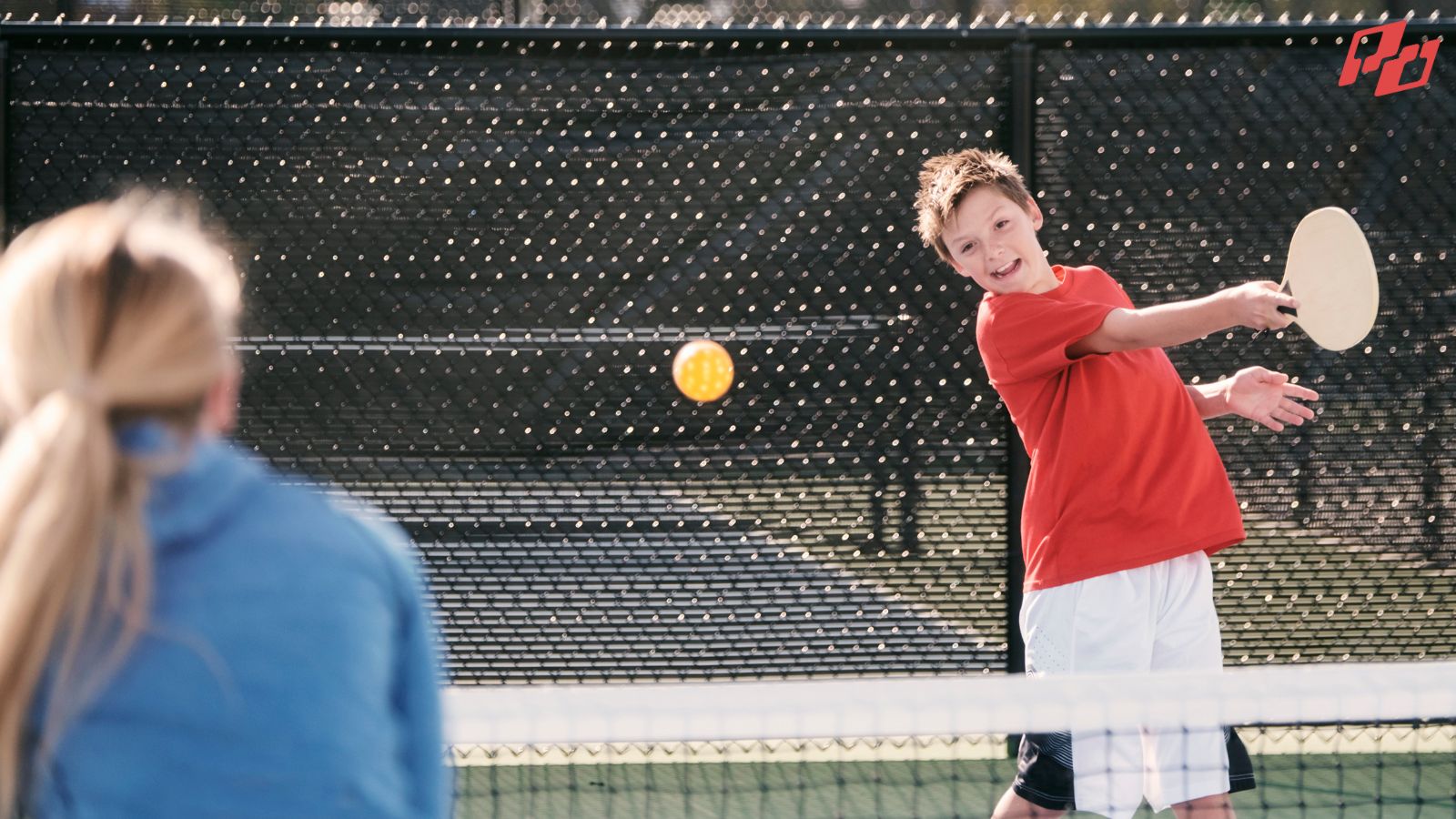
One-size-fits-all is great for hats, not for pickleball. A 7-year-old wants silly games and stickers. A 13-year-old wants to look cool and maybe win.
Younger kids (6–9):
- Use bigger foam balls or slower pickleballs.
- Shorter courts, shorter sessions, sillier games.
- End every session with a “fun shot” — like hitting between cones or aiming for your paddle.
Older kids (10–14):
- Add challenge and scoring, but still reward creativity.
- Ask them what they want to learn.
- Give mini-goals: “Try three clean serves in a row.”
The key? Keep them just outside their comfort zone — enough challenge to feel proud, not defeated.
6. You Make It About Winning Too Soon
I once saw a dad keep official score between two eight-year-olds and yell, “You need to move your feet!”
The poor kids looked like they’d just been audited.
At that age, competition should teach sportsmanship — not stress.
The i9 Sports study found that early over-competitiveness leads to anxiety and dropout.
Better plan:
- Ditch the score for the first few sessions.
- Reward “best effort” or “craziest rally.”
- When you do keep score, rotate partners so no one feels stuck as “the weak link.”
Remember, you’re not raising mini-pros — you’re raising players who love the game enough to come back next week.
7. You Forget the Emotional Safety Net
We all slip sometimes — sarcasm, impatience, even joking criticism. But to a 9-year-old, that can hit harder than any missed serve.
Psychologists call it “psychological safety.” Kids learn best when they feel safe to mess up.
So ditch the tough talk. Replace “You’re doing it wrong” with:
“That one didn’t work — wanna see a trick to fix it?”
Admit your own mistakes, too: “Even Coach whiffs sometimes.” (Bonus: they’ll giggle if you purposely miss one.)
When they feel safe, they’ll experiment — and that’s when real learning starts.
Quick Recap: 7 Mistakes to Avoid
| Mistake | Why It Backfires | The Fix |
|---|---|---|
| Too technical too soon | Boredom, confusion | Start with play, sneak in technique |
| Forgetting fun | Kids tune out | Mini-games > lectures |
| Over-correcting | Kills confidence | 5:1 praise ratio |
| Talking too long | Lost attention | Show, play, move |
| Same drills for all ages | Skill mismatch | Scale up or down |
| Focusing on wins | Pressure, burnout | Reward effort & creativity |
| Harsh tone | Fear of failure | Encourage, laugh, share mistakes |
Bonus: Fun Tricks Kids Love
- “Balloon Rally” – use a balloon and see how long they can keep it up. Great for hand-eye coordination.
- “Pickleball Freeze Tag” – players move with paddles until tagged; freeze until a teammate rallies a ball to “unfreeze” them.
- “Beat the Coach” – every 10 hits in a rally earns one “coach point.” They’ll be begging for rematches.
- “Serve Safari” – kids aim serves at animal targets (drawn on cones). Winner roars loudest.
The sillier, the better. The more they giggle, the more they learn without realizing it.
Keep the Spark Alive
At the end of the day, teaching kids pickleball isn’t about perfect technique — it’s about planting the seed of enjoyment. You’re not just shaping their swing; you’re shaping how they feel about movement, teamwork, and confidence.
When the focus shifts from “Do it right” to “Let’s see what happens,” kids relax, experiment, and improve faster than you’d expect. They stop trying to avoid mistakes and start celebrating progress — and that’s where the real magic of coaching happens.
So keep it light. Keep it playful. And remember: if the kids are laughing, moving, and asking for one more rally, you’re already winning.