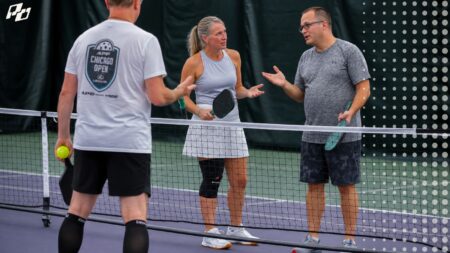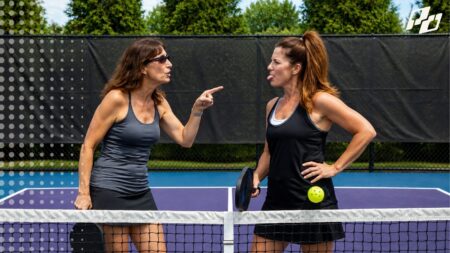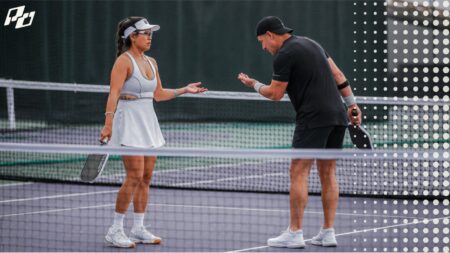


There’s a moment every rec player eventually experiences. You arrive at the courts, paddle in one hand, iced coffee in the other, ready for a chill morning of dinks and laughs. And then… he walks in. Your way-too-competitive friend.
He warms up like he’s stretching for Wimbledon qualifiers. He’s wearing a sleeve. He fist-pumps unforced errors. He calls a let on a rec court with no refs. And worst of all—he takes it just a little too seriously.
Or maybe it’s she—the silent assassin who pretends she’s “just here for fun,” but suddenly morphs into Anna Leigh Waters when the score hits 9–9. The intensity goes up. The tension creeps in. And your “relaxed game” turns into a silent mental war.
If you play rec pickleball, you know these people.
If you don’t think you do… surprise—you might be these people.
So what do you do when the pickleball session stops being fun and starts feeling like a passive-aggressive Olympic trial?
Let’s talk solutions: psychology, boundaries, humor, and how to protect your mental energy—while still playing great pickleball.
Step 1: Accept the Truth—People Show Their Personality Under Pressure
Pickleball exposes people. Friendly people get kinder. Competitive people get meaner. Analytical people get quieter. Drama people get very loud. So when a friend goes full gladiator mode during “just-for-fun” rec play, don’t be shocked.
Competitive intensity isn’t bad—it just needs boundaries.
The key is to control emotional temperature on the court before it boils over. Because once someone is arguing about whether your toenail touched the kitchen, the session is already gone.
Step 2: Diagnose the Type of Over-Competitive Friend You’re Dealing With
You can’t handle all craziness the same way. Identify the species:
| Creature | Behavior | Risk Level |
|---|---|---|
| The Score Lawyer | Stops play every other point for a rules debate | Medium |
| The Line Judge | Calls balls out from 40 feet away | High |
| The Rager | Slams balls, smacks the net, swears loudly | Critical |
| The Silent Try-Hard | Barely speaks but takes every shot personally | Low |
| The Showboat | Trash talker, highlight hunter | Medium |
| The Excuse Machine | “Bad paddle. Wind. Sun. My shoes.” | Harmless |
Understanding the personality helps you pick the right response later.
Step 3: Reset the Tone Early With Conversation, Not Confrontation
You know what doesn’t work? Saying, “Relax, it’s just rec.”
That’s basically the universal trigger phrase for making someone less relaxed.
Instead, use tone softeners—small phrases that lower tension while clarifying expectations:
- “Let’s keep it fun today.”
- “I’m working on placement over power today—chill strategy mode.”
- “No line-call drama today, yeah? Good vibes only.”
- “Let’s call our own lines only, no Hawkeye challenges.”
Set tone = avoid chaos later. This matters more than strategy.
Step 4: Use Positive Control During the Game
You can steer the vibe while still competing. Here’s how:
| Problem | Play It Like This |
|---|---|
| Score arguments start | Loudly call score between points before serve |
| Friend keeps smashing every ball | Feed them un-smashable dinks |
| Tension rising | Crack a one-liner: “Reminder: no contracts on the line here.” |
| Someone obsessing about winning | Change teams after each game—remove ego fix |
| Arguments about line calls | Use “benefit of the doubt goes IN” rule |
Step 5: Understand Psychological Triggers
Over-competitiveness usually isn’t about pickleball. It’s ego protection. People don’t want to feel embarrassed. They don’t want to look bad. They don’t want to lose face in front of friends.
So if someone is acting wild, don’t add public pressure—give them a face-saving exit:
✅ “No worries, close call—let’s just replay it.”
✅ “Good ball. Let’s move on.”
✅ “You good? Reset.”
This preserves group chemistry while still keeping gameplay fair.
Step 6: Know When You’re Dealing With a Lost Cause

Sometimes people just… aren’t fun to play with. If someone:
- Blames everyone else constantly
- Never compliments a good shot
- Ignores social cues
- Turns rec games into ego wars
- Keeps ruining court energy
Then it’s time to protect your peace.
Step 7: Escape Without Drama
Sometimes the solution is not confrontation—it’s polite exit strategy. Try these:
- “I’m rotating after this one.”
- “Working on drills now, hopping off.”
- “Going to grab water.” (Never come back.)
- “Leg day caught up with me—I’m out.”
Just disappear like pickleball Batman.
If You Are The Overly Competitive Friend (Self-Check)

Be honest—does any of this sound like you?
- Do you feel personally insulted when lobbed?
- Have you ever shouted “YEAH!” after someone missed?
- Do you argue more than you laugh on court?
- Do you coach uninvited… constantly?
- Do people suddenly have “plans” when you ask to play?
Friendly reminder:
Being good at pickleball isn’t about how hard you hit—it’s how many people still want to play with you after the game.
How to Win and Still Be Fun
Here’s the Rec Play Golden Rule:
Compete hard. Keep it light. Win with class. Lose with grace.
Practical checklist:
- Compliment good shots—especially from opponents
- Say score clearly, avoid rule wars
- No pressure coaching unless asked
- Don’t hit missiles at beginners
- Play variety—dinks, drops, resets, lobs—not just blasts
- And for the love of the game… stop sandbagging
10 Things Cool Players Do That Everyone Loves
- Reset bad vibes early
- Tell partners, “We’re good—next ball”
- Laugh at themselves
- Don’t keep secret score
- Never argue over 10–0 games
- Greet everyone on the court
- Rotate partners fairly
- Compliment effort, not just winners
- Pick up balls fast
- Leave drama in the parking lot
Play Like Someone People Want to Play With Again
Pickleball is social before it’s competitive. People come back not because they hit winners—but because they feel welcomed. So if your friends get too intense, guide the vibe. If you’re too intense… adjust the vibe. If someone refuses to keep it fun?
Rotate off. Hydrate. Find new courts.
Life’s too short—and pickleball is too good—to let competitiveness ruin rec play.