Let’s be honest: in 2022, you bought a raw carbon paddle and felt like Ben Johns (minus… ya know… all the skills).
Before you spend a dollar on this, take the paddle quiz: ten questions, three paddles matched to how you actually play.
Now it’s 2025, TikTok is screaming about Gen-4 foam, thermoformed unibody frames, Kevlar hybrids, and maybe even smart paddles, and you’re thinking:
“Wait… is my paddle already outdated or is this just more pickleball hype?”
Good news: yes, real tech leaps are happening.
And also good news: no, you don’t need to buy everything the internet throws at you.
Let’s break down what’s new, what actually makes a difference for rec players, and when upgrading is genuinely worth it.
Ten questions, three paddles matched to how you play, scored on lab data.
The Big Tech Shifts in 2025/2026 (What’s Actually New)
1. Full-Foam & Gen-4 Cores — The Consistency Revolution

Forget old honeycomb that crushes, buzzes, or loses pop. Foam-core and foam-injected paddles create:
- Bigger, more forgiving sweet spots
- Less vibration and arm fatigue
- More stable contact across the entire face
Rec players feel immediately: fewer shanks, cleaner resets, softer feel, easier control.
2. Thermoformed + Unibody Builds — Power Without the Effort
These paddles fuse the frame and face together so everything is stiff, stable, and powerful.
What players feel:
- “Free depth” on serves and returns
- Effortless counters at the kitchen
- Less twisting on off-center hits
Downside: they can play hot, so touch takes a few sessions to dial in.
3. High-Friction Carbon + Kevlar Textures — Spin for Everyone

New carbon weaves, gritty peel-ply textures, and Kevlar blends give:
- More spin with less swing speed
- A more predictable soft game
- Longer-lasting texture
If you love shaping shots, these paddles feel like unlocking a cheat code.
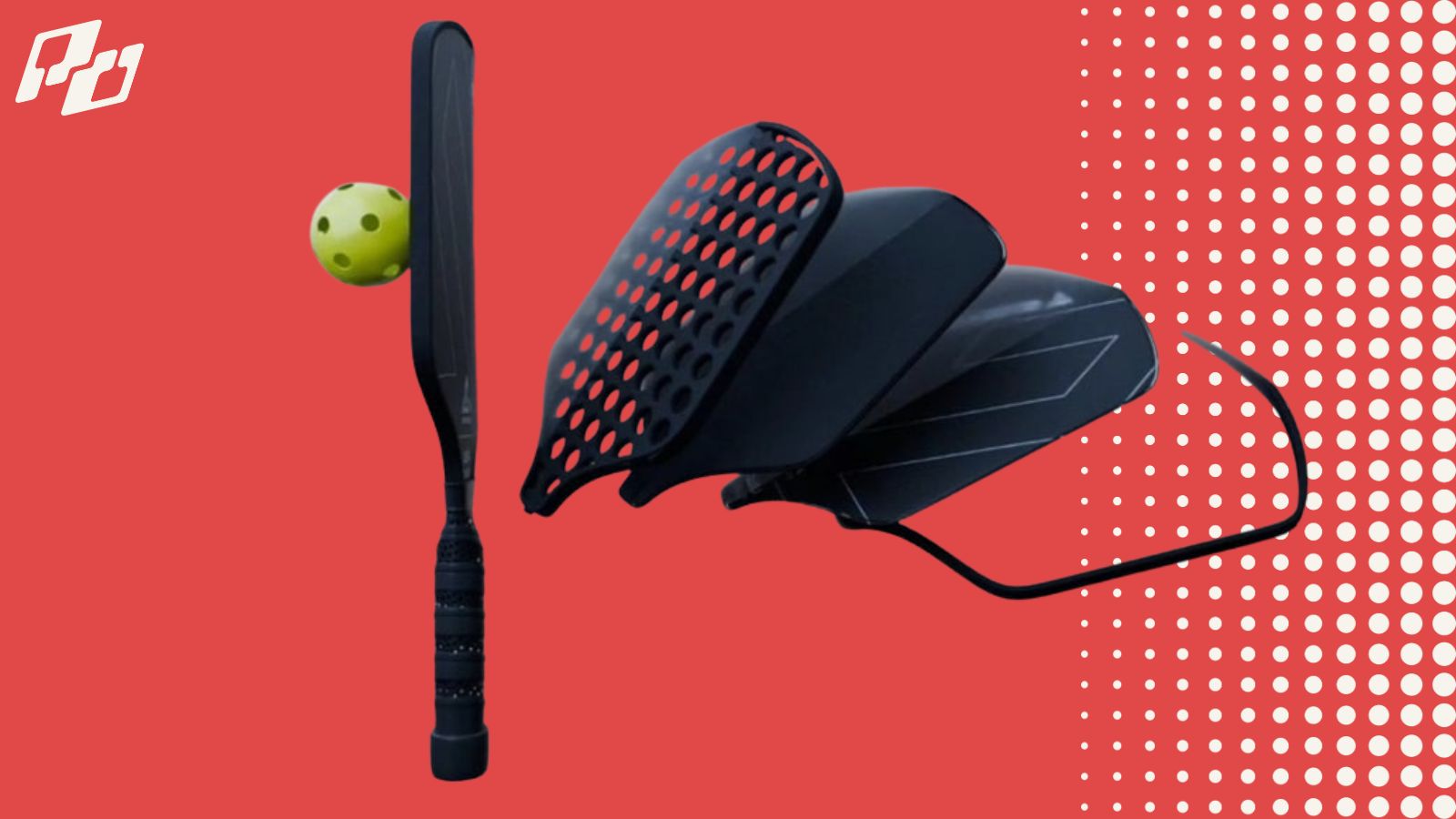
4. Smart Paddles — Cool, Not Critical (Yet)
- Sensors can track swing speed, consistency, and spin.
- Useful for improvement geeks and coaches.
- Optional for everyone else.
Which Paddle Tech Fits YOU? (Quick Decision Guide)
If you’re a consistency-first, soft-game player:
➡️ Foam-core / Gen-4 paddles
Bigger sweet spot, gentler feel, less punishment on mishits.
If you love driving, countering, and playing fast:
➡️ Thermoformed unibody paddles
Power + stability = cleaner offense.
If you’re a tennis convert who hits big topspin:
➡️ Kevlar blends or textured carbon
Best for shaping drives and roll volleys.
If you have elbow/wrist pain:
➡️ Foam-core or vibration-damped models
Much easier on the joints.
If you’re new and just want forgiveness:
➡️ Foam-injected edge paddles
Stable, predictable, low-hassle learning curve.
Real Court Scenarios That Show How Tech Changes Play
Scenario 1: The Wide Dink Stretch
Old honeycomb paddle: you catch the edge → ball dies into the net.
New foam-core paddle: off-center contact still lifts the ball → rally continues.
Scenario 2: Kitchen Counter Battle
Old paddle: you need a perfect block angle or it pops up.
Thermoformed paddle: stiff frame returns energy consistently → the ball lands deep without extra effort.
Scenario 3: The Topspin Drive
Older carbon paddle: spin is fine, but balls sometimes sail.
New Kevlar/carbon hybrid: more dwell + more friction = the ball dips inside the baseline even on firmer swings.
These aren’t theoretical differences — rec players feel them on day one.
The 3 Shots That Change the Most With New Tech
1. Counters at the Kitchen
Thermoformed stability = fewer mishits and deeper counterattacks with less swing.
2. Roll Volleys & Topspin Drives
Modern gritty faces help you bend the ball into the court instead of launching it.
3. Resets Under Pressure
Foam-core paddles absorb energy, making it easier to control the ball when you’re jammed or rushed.
These are the shots that immediately feel upgraded.
Budget Reality Check (Are You Overspending?)
Let’s be brutally honest: not every player needs a $250–$300 paddle.
Upgrade is worth it if:
- You play 3+ times a week
- Your paddle is 2+ years old or feels dead
- You want fewer mishits and more control
- Arm pain is creeping in
- You’re actively working to level up
Maybe hold off if:
- You’re still learning the basics
- You rarely use spin or power intentionally
- Your current paddle still feels lively and predictable
Think of paddle tech like running shoes:
If you use them often and hard → buy the good stuff.
If you play casually → your current pair is probably fine.
Hot Take: What Tech Won’t Fix
Even with all the Gen-4 stiffness, foam forgiveness, and Kevlar bite in the world, certain shot errors still come from technique and decision-making — not technology.
1. Mis-Timed Counters
If your counterattack is late, your paddle angle will open, and the ball will sail. Stability helps, yes — but counters live and die by timing, not materials.
2. Low-Ball Speedups
Attacking a ball below net height is still a losing proposition. More pop just means you’re sending a faster, easier put-away to your opponent.
3. Panic Dinks
Foam cores won’t fix dinks hit while leaning, reaching, or lifting from the elbow. Those floaters come from poor posture and tension, not lack of dwell time.
4. Poor Drops Under Pressure
If you scoop instead of swinging through the ball, or contact behind your body, no sweet spot will save the drop. Drops are footwork + shape, not paddle face tech.
5. Defensive Blocks Without Structure
A thermoformed frame gives you “free depth,” but if your paddle isn’t stable at contact — wrist soft, angle drifting — the ball will pop up every time.
A great paddle enhances clean mechanics but exposes the dirty ones. It won’t turn bad shot choices into winners — it just makes good habits more reliable.
So… Should You Upgrade? (The Real Answer)
If your current paddle still feels good, consistent, and comfortable, you’re not “behind.”
You’re just financially responsible — a rare trait in pickleball.
But…
If you want:
- A noticeably bigger sweet spot
- Easier spin
- More power with stability
- A softer feel for resets
- Better arm comfort
Then yes — the new tech will make your game immediately more fun and more forgiving.
Buy a new paddle because you’re ready to level up — not because the internet guilt-tripped you.