
At some point, almost every improving pickleball player has this moment:
You stop trying to end points…
and start trying to outlast them.
And suddenly — without adding spin, pace, or fancy shots — your results change.
That’s what people mean when they say:
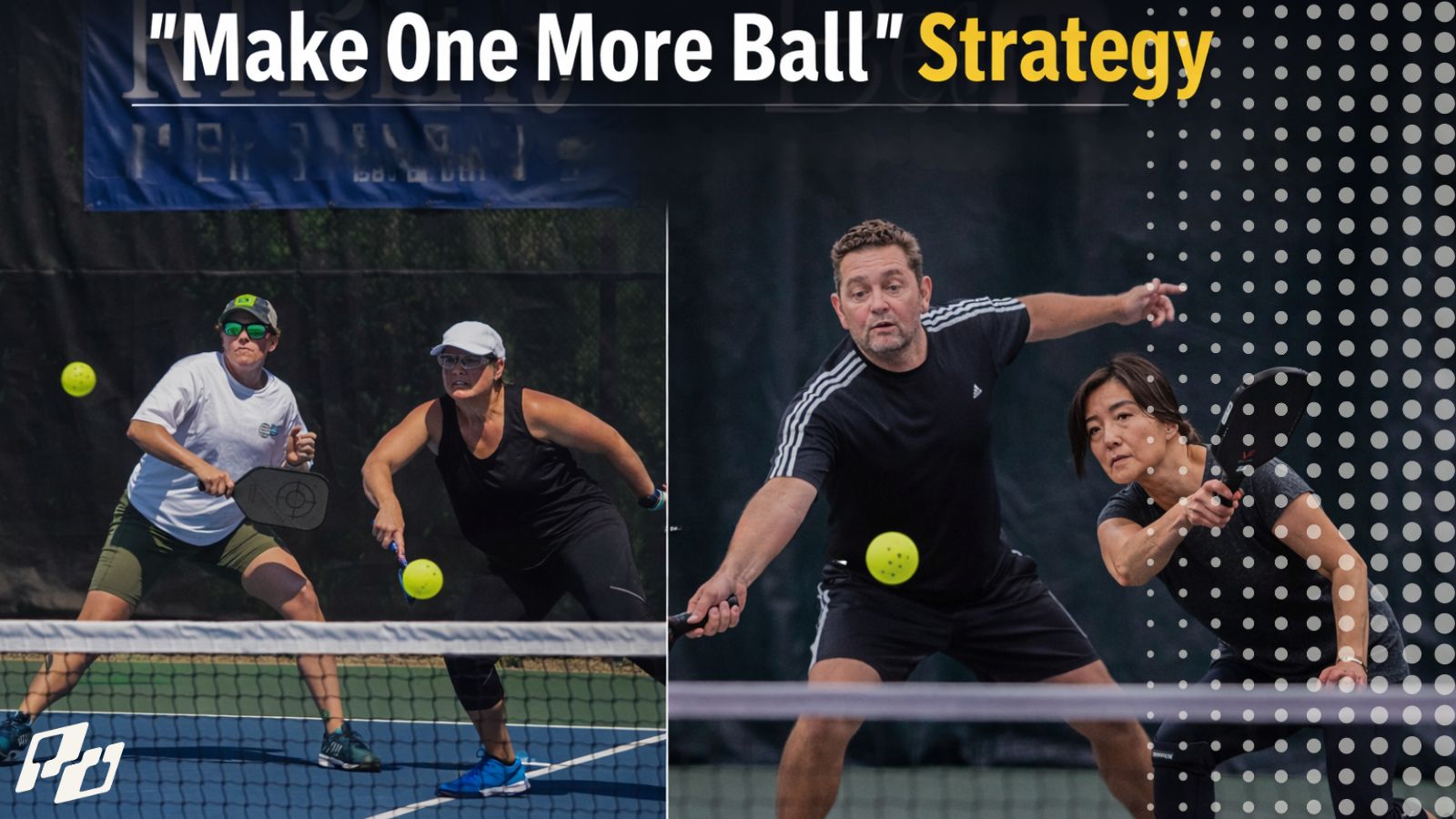
“You’re going to make 40 balls. We’re willing to make 50.”
On the surface, that sounds passive. Almost boring. In reality? It’s one of the most aggressive strategic decisions you can make in doubles pickleball — especially at the recreational level.
But most rec players misunderstand it completely.
➡️ This isn’t about “just dinking.”
➡️ It’s not about pushing the ball safely forever.
➡️ And it’s definitely not about refusing to attack.
It’s about choosing when not to attack, and understanding that most points in rec pickleball are lost, not won.
Let’s break this down properly.
Why This Advice Feels Wrong to Recreational Players
If you’re a rec player, especially with an athletic or tennis background, you’ve probably been told some version of:
- “Be aggressive.”
- “Don’t let them settle in.”
- “Finish high balls.”
- “Put pressure on them.”
None of that is wrong. It’s just incomplete.
Here’s the uncomfortable truth: most recreational players aren’t losing points because they’re too passive. They’re losing points because they’re too early.
✖️ Too early on attacks
✖️ Too early on pace
✖️ Too early on angles
✖️ Too early on “winners” that aren’t actually winners
When higher-level players say “make one more ball,” what they’re really saying is:
Delay your aggression until the ball actually deserves it.
That delay is where games are won.
What “Make One More Ball” Actually Means (And What It Doesn’t)
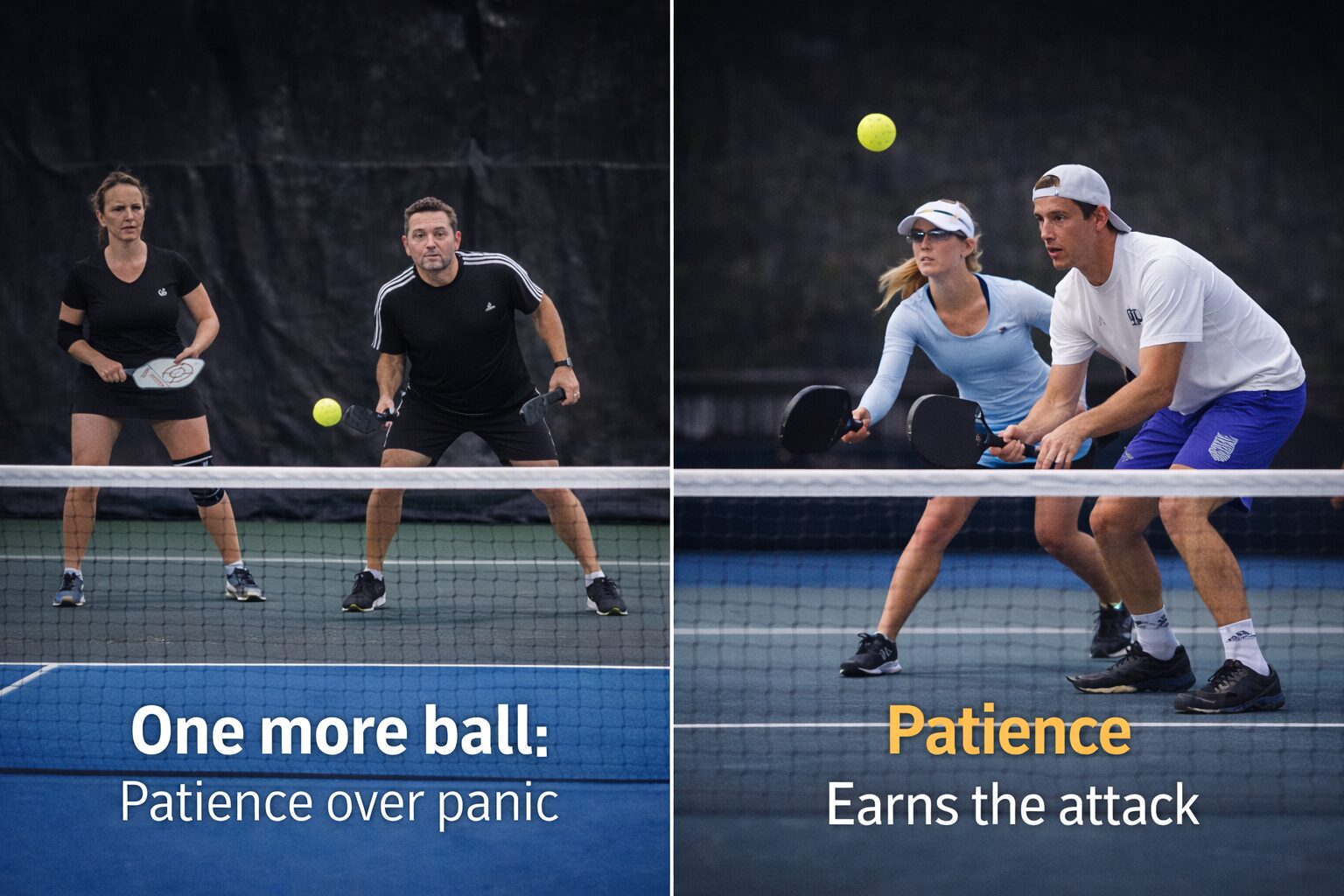
Let’s clear this up, because this phrase gets butchered on rec courts.
❌ What it does NOT mean
- Just hit it back safely no matter what
- Never speed up
- Never attack
- Play scared
- Be passive and hope they miss
✅ What it DOES mean
- Prioritize survivability over highlight shots
- Keep balls low, neutral, and unattackable
- Force opponents to hit extra shots under pressure
- Wait for high-probability attacks, not emotional ones
- Trust that rec players will eventually break first
This is not defensive pickleball. It’s disciplined pickleball.
Why This Works So Well in Recreational Doubles
At the pro level, rallies end because someone executes a perfect speed-up or counter.
At the rec level, rallies end because someone:
- Attacks a ball below net height
- Speeds up through the wrong lane
- Tries to “end it” off a neutral dink
- Panics under patience pressure
- Gets bored
So when you commit to “one more ball,” you’re exploiting the single biggest weakness of rec play: decision-making under patience.
You’re betting that:
- They’ll rush before you do
- They’ll miss before you do
- They’ll attack from a worse ball than you will
That’s a very good bet.
Where Rec Players Go Wrong With This Strategy
Here’s where things usually break down.
1. They confuse patience with passivity
They hit floaty, high dinks and call it “safe.” That’s not patience — that’s feeding.
Patience still requires:
- Low net clearance
- Intentional targets
- Ready position
- Pressure without pace
2. They wait too long
Some players adopt “one more ball” and never pull the trigger. Patience without recognition becomes hesitation.
The goal is not endless rallies — it’s earning your attack.
3. They don’t communicate with their partner
Nothing kills this strategy faster than one patient player paired with one trigger-happy partner.
We’ll fix that later.
How “One More Ball” Shows Up in Real Rec Doubles Points
Let’s walk through this phase by phase, the way it actually unfolds on court.
Serve & Return Phase: Set the Tone
This strategy starts earlier than most players realize.
Serve
- Deep, high margin
- Not flashy
- Not a winner attempt
You’re not trying to ace anyone. You’re trying to start a long point.
Return
- Deep again
- Middle preferred
- No low-percentage angles
If you rush a return winner and miss, you’ve violated the whole philosophy before the rally even started.
Third Shot: Where Patience First Gets Tested
This is where most rec players crack.
They see:
- A slightly high ball
- A slow ball
- A “maybe attackable” ball
And they swing.
The “one more ball” mindset asks:
Can I advance and stay neutral instead of attacking right now?
Often the answer is:
- Drop instead of drive
- Soft drive instead of full rip
- Reset instead of forcing
Not because you can’t attack — but because attacking now doesn’t give you an advantage yet.
Kitchen Line: The True Battleground of Patience
This is where the strategy fully lives. At the NVZ, most points are decided by:
- Who speeds up first
- From what ball
- To what target
“Make one more ball” means:
- You’re comfortable dinking 10, 20, 30 shots
- You’re not emotionally attached to ending the point
- You’re watching their paddle, not just the ball
You’re waiting for:
- A dink that pops just slightly
- A player leaning or reaching
- A ball that crosses the plane too high
That’s your green light.
Everything else? One more ball.
When Patience Turns Into Aggression (The Missing Piece)
This is critical, especially for rec players.
Patience is not the absence of attack. It’s the timing of attack.
A simple rule that works at rec levels:
Attack balls you can control, not balls you hope will work.
That usually means:
- Ball above net height
- Balanced feet
- Paddle already up
- Clear target (body, hip, or open space)
If even one of those is missing? One more ball.
The Mental Shift That Makes This Stick
This strategy only works if your definition of success changes.
Instead of:
❌ “Did I win the point?”
👉 Ask: “Did I force them to hit an extra shot?”
Instead of:
❌ “Why didn’t I finish that?”
👉 Ask: “Did I stay in a strong position?”
When players say “4.5+ taught me patience,” this is what they mean: higher levels don’t reward trying harder — they reward trying smarter.
What to Do When Your Partner Doesn’t Want to Play This Way
This is real life. Let’s talk about it.
Scenario 1: The aggressive partner
They want to speed everything up. They hate long rallies.
What helps:
- Don’t lecture mid-game
- Use phrases like:
- “Let’s build it one more ball”
- “Let’s wait for the pop-up”
- You play extra patient to stabilize points
Often, your calm slows them down naturally.
Scenario 2: The bored partner
They say, “This is boring,” or “We should attack more.”
Try reframing:
- “Let’s let them make the first mistake”
- “We’ll attack — just on better balls”
People resist patience when it feels passive. Show them it’s intentional, not timid.
Scenario 3: Mixed goals in rec play
One of you wants to improve. One just wants to hit. In this case:
- Pick one game to try it
- Don’t force it every session
- Accept that improvement and social play don’t always align
This strategy works best when it’s chosen — not imposed.
When to Break the Rule (Because Patience Has an Expiration Date)
At some point in a rally, patience stops creating pressure and starts creating comfort for your opponents. That’s the moment many rec players miss.
The goal of patience isn’t to avoid attacking. It’s to wait until attacking actually makes sense.
Think of patience as a filter — not a handcuff.
1. When the Ball Finally Earns It
Patience exists to buy you a better ball. When that ball shows up, the rule has done its job.
Break the rule when all three of these are true:
- The ball is above net height
- Your feet are balanced or easily set
- Your paddle is already up and prepared
If you hesitate here and keep dinking, you’re not being disciplined — you’re giving your opponent time to reset.
This is the cleanest green light in pickleball.
2. When Court Position Breaks Down
You don’t attack just because the ball looks nice. You attack when court geometry collapses.
Break the rule when you see:
- An opponent leaning or reaching
- Someone retreating or backpedaling
- A visible gap between partners
- A paddle dropping below chest level
In these moments, continuing to “make one more ball” actually helps the defense recover. High-level players strike here not because they’re impatient — but because the court finally opens.
3. When the Rally Becomes Too Comfortable
This one separates good rec players from advanced ones. If a rally stretches on and:
- Everyone is stable
- No one looks stressed
- Dinks feel automatic
- Nothing is changing
This is when a controlled, intentional speed-up makes sense — not to end the point, but to change the rhythm. A body speed-up or hip attack forces reactions and creates the next opportunity.
4. When Your Partner Needs You to Step In
Sometimes the right time to break the rule has nothing to do with the ball and everything to do with your partner. Break the rule when:
- Your partner is getting targeted
- Their confidence is slipping
- Long rallies are wearing them down
Strategic aggression in these moments isn’t reckless — it’s supportive. Patience in doubles is always a team decision, not just an individual one.
5. The One Question That Solves Most Doubt
When you’re unsure mid-rally, ask yourself this before swinging:
If this attack comes back, am I still in control of the point?
If the answer is yes, break the rule.
If the answer is no, patience still has value.
This single filter removes most low-percentage attacks without killing your offense.
How to Practice “One More Ball” Without Overthinking It
You don’t need fancy drills.
Try these in normal play:
- Rally goals: quietly aim for 15–20 shots before attacking.
- No first speed-up rule: let the other team speed up first for an entire game.
- Reset bias: any time you’re off-balance, reset instead of countering.
These build trust in the strategy without turning rec play into a clinic.
Why This Strategy Wins Tournaments (and Rec Games)
At higher rec levels and amateur tournaments, the teams that win aren’t usually the flashiest.
They’re the ones who:
- Miss less
- Stay composed
- Don’t give away free points
- Can play long without panicking
“You’re going to make 40 balls. We’re willing to make 50” isn’t trash talk. It’s a promise.