For a long time, we hear the same thing from recreational pickleball players:
“I’m not injured, but I don’t recover the same anymore.”
“I can still play well — I just can’t play this many days in a row.”
“Back-to-back days used to be fine. Now they aren’t.”
Nothing dramatic happens. You’re still competitive. You still enjoy the game. But stiffness lingers longer, tightness shows up more often, and long play stretches or tournaments suddenly take days to recover from.
This article is about that exact moment. We break down why this shift happens, what’s actually changing in your body, and how experienced pickleball players adjust their play and recovery so they can keep playing without breaking down.
If you’ve felt this creeping gap between effort and recovery, this guide is for you.
What’s Actually Going On (In Plain English)
Pickleball doesn’t look demanding, but biomechanically it’s repetitive and deceptive. Every session asks your body to absorb force over and over again:
- short accelerations followed by hard stops
- lateral shuffles, lunges, and reaches outside your base
- repeated split-steps and decelerations
- constant gripping, swinging, and wrist stabilization
Each of these movements is manageable on its own. The problem isn’t any single rally. The problem is how frequently the same tissues are stressed, often with very little variation or recovery spacing.
Here’s the key concept most recreational players never get explained clearly:
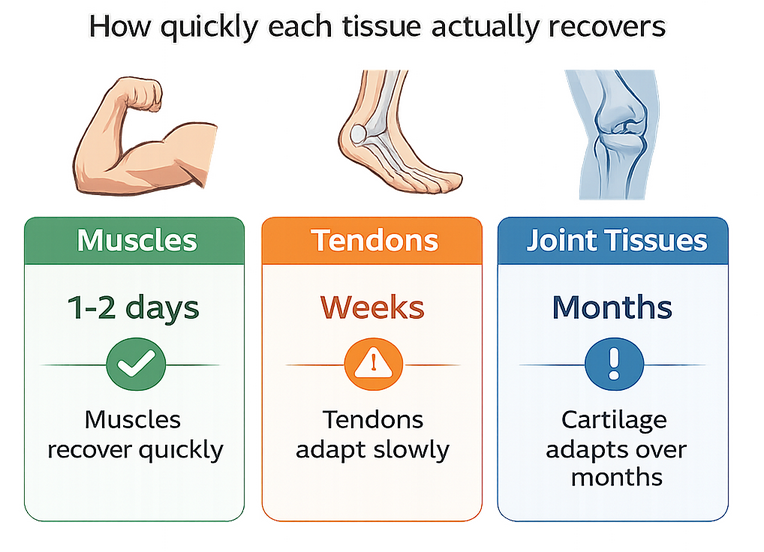
Muscles recover quickly. Tendons, ligaments, and joint tissues do not.
➡️ Muscles can bounce back in a day or two.
➡️ Tendons adapt over weeks.
➡️ Joint cartilage adapts over months.
When pickleball becomes a main activity — played often, sometimes daily — muscles keep up. Connective tissue quietly falls behind. That gap is what players feel as lingering soreness, stiffness, heaviness, and reduced tolerance to back-to-back play.
This isn’t injury. It’s accumulated load outpacing recovery.
Why This Hits “Good” Recreational Players First
Ironically, this problem doesn’t usually show up when you’re new to pickleball. It shows up once you start playing better.
As players improve, rallies get longer and movement gets sharper. Points don’t end as quickly, and sessions stretch because the games are competitive and fun. Without really noticing, pickleball shifts from something you do casually into your primary form of physical activity.
That’s where the mismatch begins.
As skill goes up, exposure increases faster than recovery capacity. You’re hitting more balls per rally, changing direction more often, reacting later, reaching wider, and spending more total time under load each week — even if each individual point still feels manageable.
Here’s the clarification that catches a lot of athletic players off guard:
Being fit does not change how fast tendons recover.
Cardio fitness, strength training, and past sports experience absolutely help performance. They let you move better, hit harder, and compete longer within a session. But they do not override the biological reality that connective tissue — tendons, ligaments, and joint structures — adapts more slowly, especially with age.
That’s why so many recreational players eventually say the same thing:
“I can still play hard — I just can’t play this often anymore.”
They’re not declining. They’re hitting a recovery ceiling — where performance is still there, but recovery between sessions is no longer automatic.
This is usually when players first notice that back-to-back days feel different, longer sessions linger in the body, and recovery — not skill — becomes the limiting factor.
The Pattern Almost Everyone Notices (Eventually)
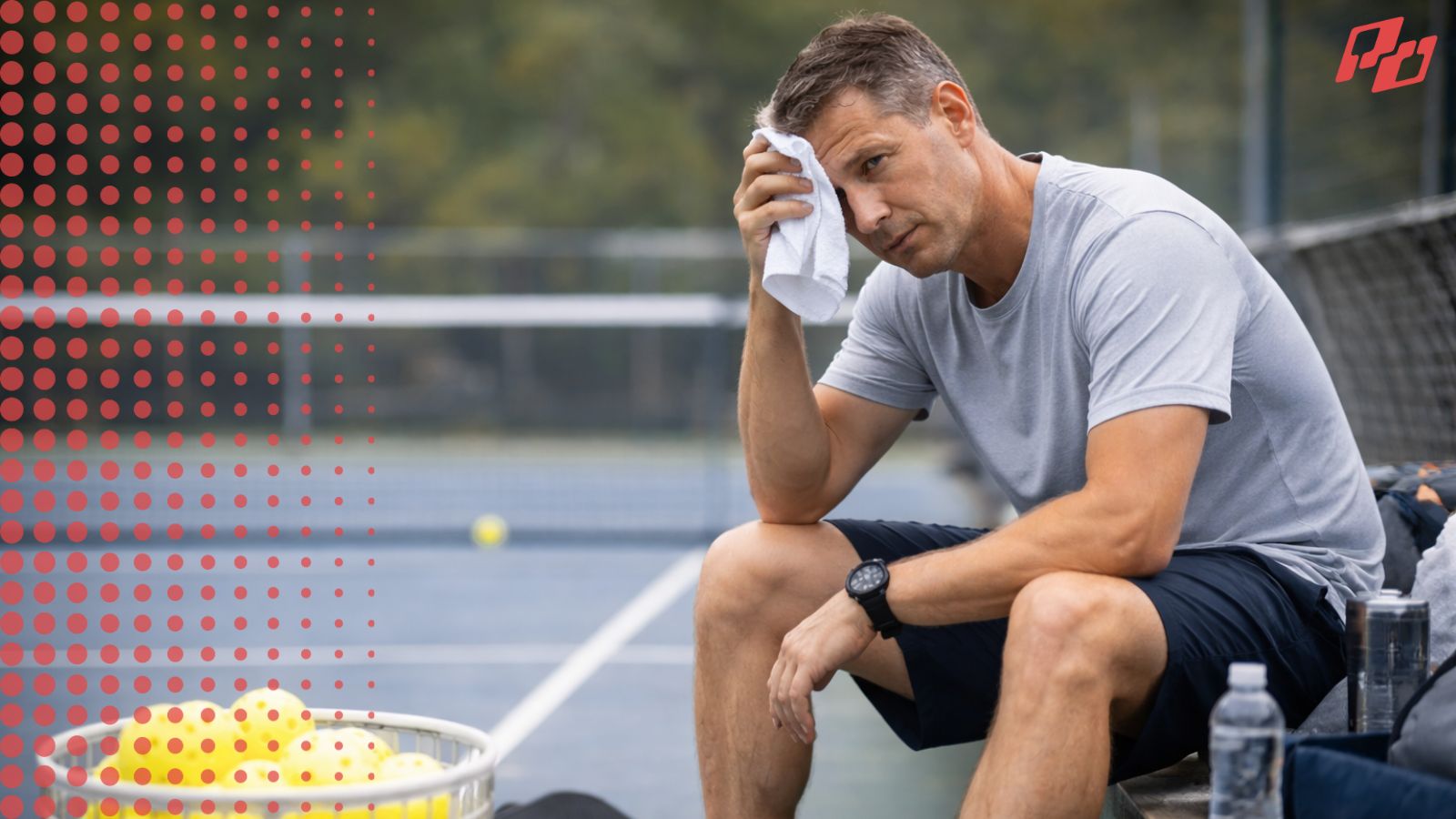
Most players dealing with this describe the same progression:
- One long or hard session feels fine
- Two days in a row is manageable
- Three or four days in a row creates soreness that sticks
This isn’t coincidence.
From a sports-medicine perspective, tissues respond to cumulative stress, not single efforts. When recovery windows shrink, micro-stress accumulates faster than the body can adapt.
Important clarification: trying to “push through” this phase does not build tolerance. In most cases, it shortens tolerance by keeping tissues in a constantly irritated state.
Why Pain Is the Wrong Signal to Use
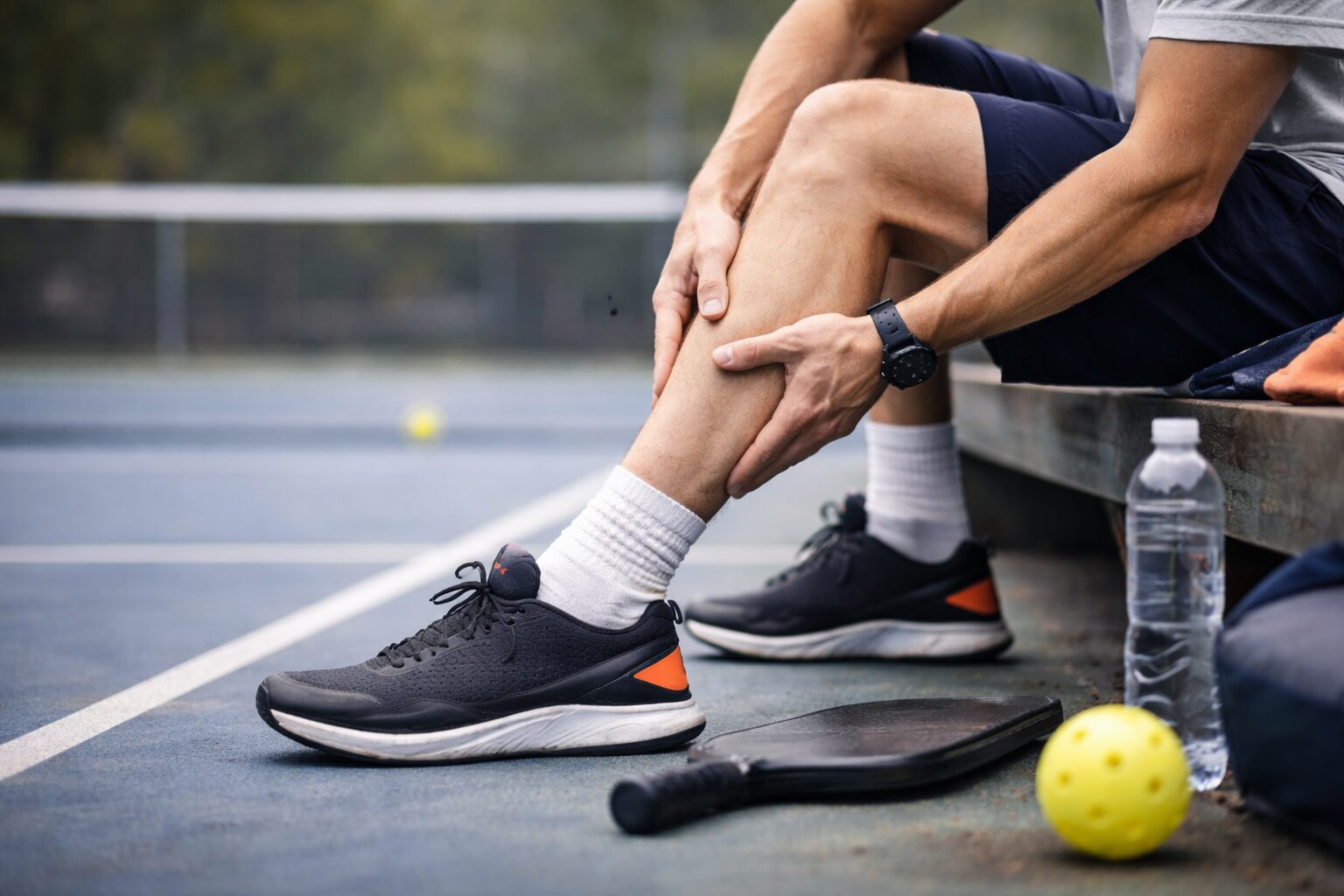
One reason this problem sneaks up on so many pickleball players is that pain usually isn’t the first warning sign.
Early overload rarely shows up as sharp pain during play. Instead, it appears in quieter, easier-to-dismiss ways:
- stiffness the next morning
- tight areas that only feel better after warming up
- slower or heavier movement early in a session
- soreness that lingers 24–48 hours instead of clearing overnight
These aren’t random aches. They’re signs that your tissues are still recovering when you load them again.
Pain tends to show up later, once tolerance has already dropped. By the time something hurts during play, the body has usually been under-recovered for a while.
That’s why experienced coaches and clinicians pay far more attention to what happens after you play than how you feel on court. They look at next-morning stiffness, swelling or heaviness, and how long it takes before movement feels loose and confident again.
If you feel fine during play but noticeably worse later that day or the next morning, that’s not bad luck. It’s information.
What Players Who Actually Solve This Change (And Why It Works)
When recreational players finally stop guessing and start responding to real patterns, the changes they make aren’t dramatic — but they are deliberate.
The biggest shift is this: they stop treating pickleball like isolated sessions and start treating it as repeated exposure over time.
1. They Stop Stacking Stress (Without Playing Soft)
Most players assume the issue is intensity. It usually isn’t.
The real issue is how close together the same tissues are loaded. Calves, Achilles tendons, knees, elbows, and shoulders don’t care how hard one rally was. They care how many times they were stressed before they had time to recover.
That’s why many players discover that every-other-day pickleball feels dramatically better than three or four straight days — even when the games themselves stay competitive.
This isn’t caution. It’s adaptation.
2. They Cap Sessions Before the Body Forces a Break
Players don’t usually break down because they played too hard. They break down because sessions went too long, too often.
From a recovery standpoint, session length matters more than most players realize. 60-90 minutes creates a very different recovery demand than two- or three-hour marathons.
Healthy players end sessions while movement still feels coordinated — not once footwork and reaction quality start slipping.
Ending early isn’t quitting. It’s protecting the next session.
3. They Use the Next-Morning Test to Make Decisions
Adrenaline hides fatigue. The next morning doesn’t.
Players who stay healthy pay attention to first-step stiffness, how long stiffness lingers, whether joints or tendons feel heavy or swollen, and whether confidence feels neutral or hesitant when they think about playing again.
They don’t panic — they adjust early.
Shorten the next session.
Add a rest day.
Reduce weekly volume if the pattern repeats.
This is how soreness stays short-lived instead of becoming chronic.
4. They Redefine What a Rest Day Is For
Rest days stop feeling like “doing nothing” and start feeling like keeping pickleball available.
A good rest day still includes movement — just not movement that stacks stress on already-loaded tissues. Light activity, targeted mobility, and controlled strength work build durability without fatigue.
Just as important is what they avoid: sneaky games, explosive movement, or turning recovery into another workout.
Skipping recovery doesn’t earn extra fitness. It usually borrows soreness from the future.
Pickleball Recovery Cheat Sheet (Save This)
| If You Notice This… | It Usually Means… | What to Do Next |
|---|---|---|
| Fine during play, worse later or next morning | Recovery lagging behind load | Shorten next session or add a rest day |
| Morning stiffness >20–30 minutes | Connective tissue under-recovered | Reduce weekly volume |
| Back-to-back days feel harder | Recovery ceiling reached | Space play days |
| Tournaments take days to recover from | Session length too high | Cap sessions |
| Tightness warms up then returns | Tissue irritation | Adjust early |
| Heavy or sluggish movement | Accumulated fatigue | Recovery-focused day |
| Needing meds/braces to play | Warning signs masked | Reassess schedule |
The Mental Shift That Makes This Sustainable
The players who keep playing long-term stop deciding whether to play based on opportunity and start deciding based on recovery.
❌ They don’t ask, “Is there a game?”
✅ They ask, “Has my body actually recovered?”
Soreness becomes guidance, not something to fight. That shift — choosing recovery quality over play frequency — is what keeps players on the court without cycling through breakdowns.
What This Guide Is Really About
This guide isn’t about playing scared or cutting pickleball out of your life.
It’s about understanding why a game that still feels fun and manageable can suddenly feel harder to sustain — and what actually fixes that.
When play frequency outpaces recovery speed, small structural changes matter more than any stretch, shoe, or supplement. Get those right, and pickleball starts feeling sustainable again.
If your body has been pushing back, it doesn’t mean your best days are behind you. It usually means your commitment has outgrown the way you’re structuring your play.
The players who make that adjustment don’t disappear from the courts. They keep playing — without constantly negotiating with soreness.