The tweener might be the most misunderstood shot in pickleball.
For some players, it’s a highlight move. For others, it’s reckless showboating. And for most recreational players, it sits in an uncomfortable gray area: a shot they know exists, secretly want to hit, but aren’t quite sure they should ever try in a real game.
That hesitation is healthy.
Because the tweener isn’t a “fun extra” you add once your game improves. It’s a problem-solving shot, and in rec play, that problem shows up far less often than people think.
The Tweener Moment: Why This Shot Feels So Tempting
Every tweener starts the same way.
➡️ The ball gets behind you.
➡️ Your eyes track it late.
➡️ Your feet hesitate.
➡️ And suddenly your brain compresses five options into one thought: “No time.”
Most often, that ball comes from a lob—but it can just as easily be a floating reset, a mishit drive, or a ball that carries deeper than expected.
This is where the tweener sneaks in.
Not because it’s the best shot—but because panic collapses decision-making. Adrenaline narrows your choices, and highlight culture fills the gap. You’ve seen the clips. You know the shot exists. In that moment, it feels decisive.
But decisive doesn’t mean smart.
Most rec tweeners aren’t born out of confidence. They’re born out of discomfort with turning, resetting, or conceding temporary position.
Why the Tweener Exists (and What It’s Actually Solving)
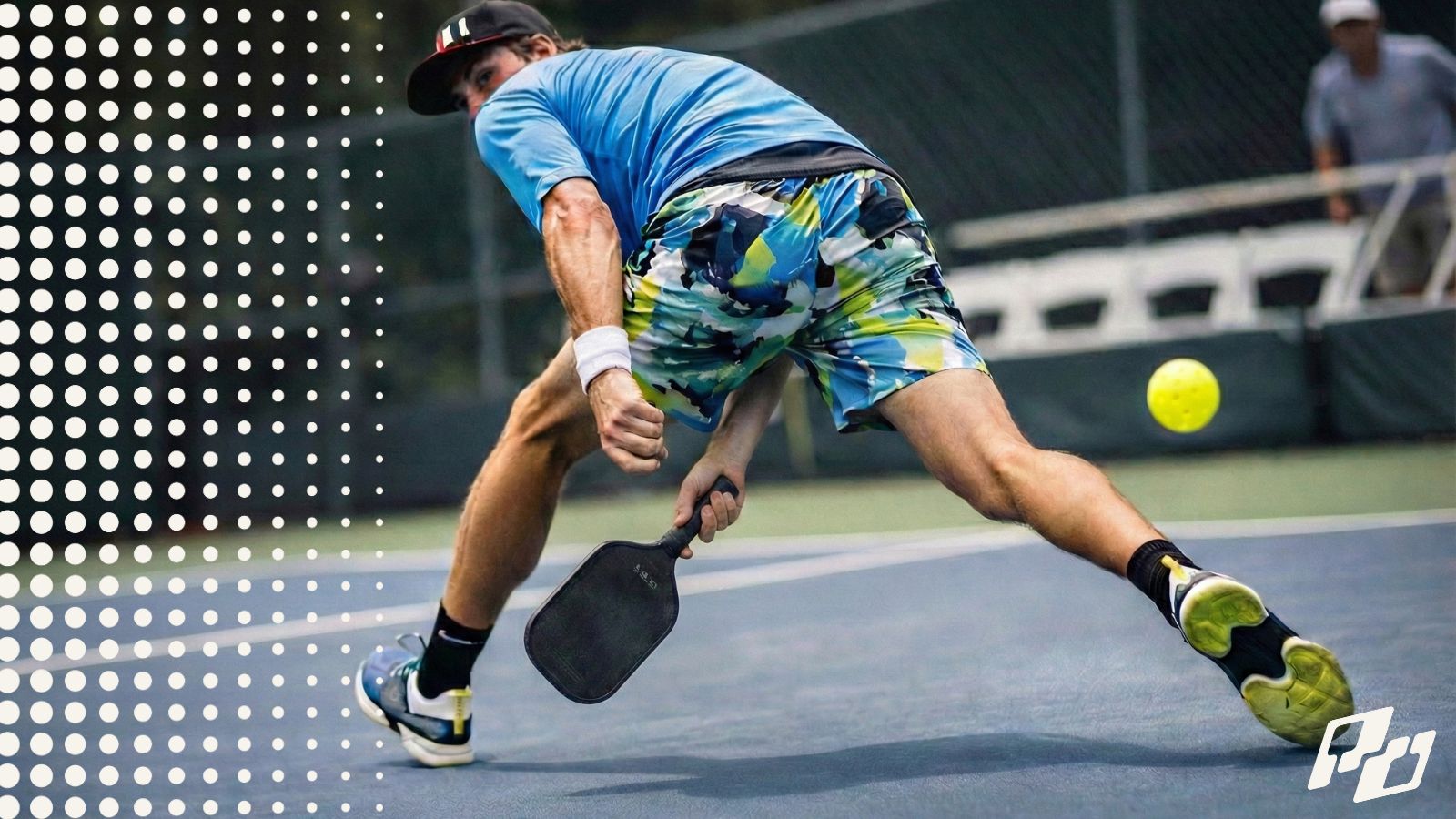
The tweener exists to solve a very narrow mechanical problem: the ball has passed your optimal contact zone, but it hasn’t bounced twice yet.
At that point, your normal shot options disappear. Turning fully, setting your feet, and striking the ball in front of your body is no longer realistic—not because of panic, but because of geometry and timing.
This is where the tweener lives. It is not:
- an offensive option
- a creative alternative
- a stylistic choice
It’s a last-window recovery shot designed for one purpose: getting the paddle on the ball after you’ve lost ideal spacing, but before the rally is officially over.
This framing matters because many recreational players misidentify the problem. They treat the tweener as a response to discomfort or surprise, when it’s actually a response to lost contact geometry.
In rec play, that geometry breaks down far less often than players assume. Balls carry deep more slowly, bounces are more forgiving, and turning late is still possible in many situations where players prematurely reach for the tweener.
The Biggest Mistake Rec Players Make
The most common tweener mistake isn’t mechanical. It’s attempting the shot while better options still exist.
If you still have time to:
- turn and hit a backhand
- run around the ball
- let the ball bounce higher and reset
then the tweener is already the wrong choice.
Key Reality: a tweener should feel like a last resort — not a creative decision.
Tweener vs. Turn-and-Hit: The Real Decision
Most rec players frame this choice incorrectly. Here’s the practical comparison that actually matters:
| Situation | Turning & Hitting | Tweener |
|---|---|---|
| You’re early to the lob | High margin, stable balance | Unnecessary risk |
| You’re slightly late | Still recoverable with patience | Low margin, panic-driven |
| You’re fully past the ball | Often impossible | Sometimes logical |
| Goal is survival | Strong option | Acceptable |
| Goal is a winner | Rarely | Almost never |
Turning late is still safer than tweenering early. That’s the line most rec players cross without realizing it.
Why Most Recreational Tweeners Fail Technically
Once rec players commit to the tweener, three predictable breakdowns appear.
1. Staying behind the ball
Players try to reach backward instead of outrunning the ball. A functional tweener requires your body to pass the ball so contact happens between or behind your legs. If the ball is still in front of you, the paddle face drives it straight into the net.
2. Trying to hit too hard
The tweener is not a power shot. Swinging hard closes the paddle face and kills margin. The goal is lift and clearance — not pace.
3. Standing too tall
Without lowering the hips and creating space, contact becomes rushed and awkward. This reduces consistency and increases injury risk.
These aren’t swing problems.
They’re intent problems.
The Intent Shift That Changes Everything
Here’s the adjustment that separates smart tweeners from wasted points:
A successful tweener is boring.
At higher levels, many tweeners are played as soft drops or high looping resets. They don’t surprise anyone. They don’t end the point. They buy time.
Recreational players often do the opposite — trying to finish the rally from the most compromised position possible.
If your goal is to win the point, don’t hit a tweener. If your goal is to survive the point, it might be the right tool.
The Social Cost of a Tweener in Rec Play
Pickleball is a social sport, and shot selection is always judged in context—whether we admit it or not.
A missed tweener doesn’t just lose a rally. It sends information. To your partner, it can look like a lapse in judgment rather than a simple execution error. That’s why the emotional fallout from a missed tweener often feels bigger than the point itself.
When a tweener fails, it can quietly:
- deflate partner confidence in your decision-making
- signal impatience or ego rather than problem-solving
- shift momentum by breaking rhythm at the wrong moment
This is especially true in doubles, where trust matters as much as shot quality. Partners aren’t thinking, “That was hard.” They’re thinking, “Was that necessary?”
And that’s where the distinction matters.
There’s a big difference between a fun miss and a trust-breaking miss. A fun miss happens in low-stakes moments—early in open play, with friends, when the rally outcome doesn’t affect much beyond a laugh. A trust-breaking miss happens when the situation calls for discipline and predictability, not creativity.
Here’s how that usually plays out in real rec environments:
| Context | How the Tweener Is Read |
|---|---|
| Open play, early game | Lighthearted risk |
| League or tournament | Questionable decision |
| Tight score late | Momentum killer |
| Strong partner already covering | Feels unnecessary or selfish |
This doesn’t mean “never try it.” It means read the room.
The same shot can feel playful in one setting and careless in another. Smart rec players understand that their partners aren’t judging difficulty—they’re judging decision quality relative to the moment.
And when in doubt, discipline almost always builds more trust than flash.
The Smartest Way to Learn the Tweener (Without Ruining Matches)
Learning the tweener does have value — if you do it right.
Step 1: Remove urgency
Start by dropping or lightly tossing the ball between your legs while stationary. This teaches contact height, paddle face awareness, and how much lift is actually required.
Step 2: Learn to outrun the ball
Most tweener failures happen because players are too close, not because their swing is wrong. Training yourself to let the ball get slightly behind you is the real skill.
Step 3: Add movement slowly
Use cooperative lob feeds and predictable reps. The goal is timing, not hero shots.
The irony: the better players get at practicing tweeners, the less they use them in games — because they recognize earlier when turning or resetting is smarter.
A Simple Mental Check Before You Ever Try One
Before attempting a tweener, ask yourself:
Am I truly late — or just uncomfortable?
Is my goal survival or style?
Will my partner thank me if this misses?
If those answers don’t line up, choose another shot.