
When the pace speeds up at the kitchen, most rec players don’t lose because they lack skill. They lose because their structure breaks down before the ball even arrives.
- They stand too tall.
- They drift back.
- They start doing more when the situation demands less.
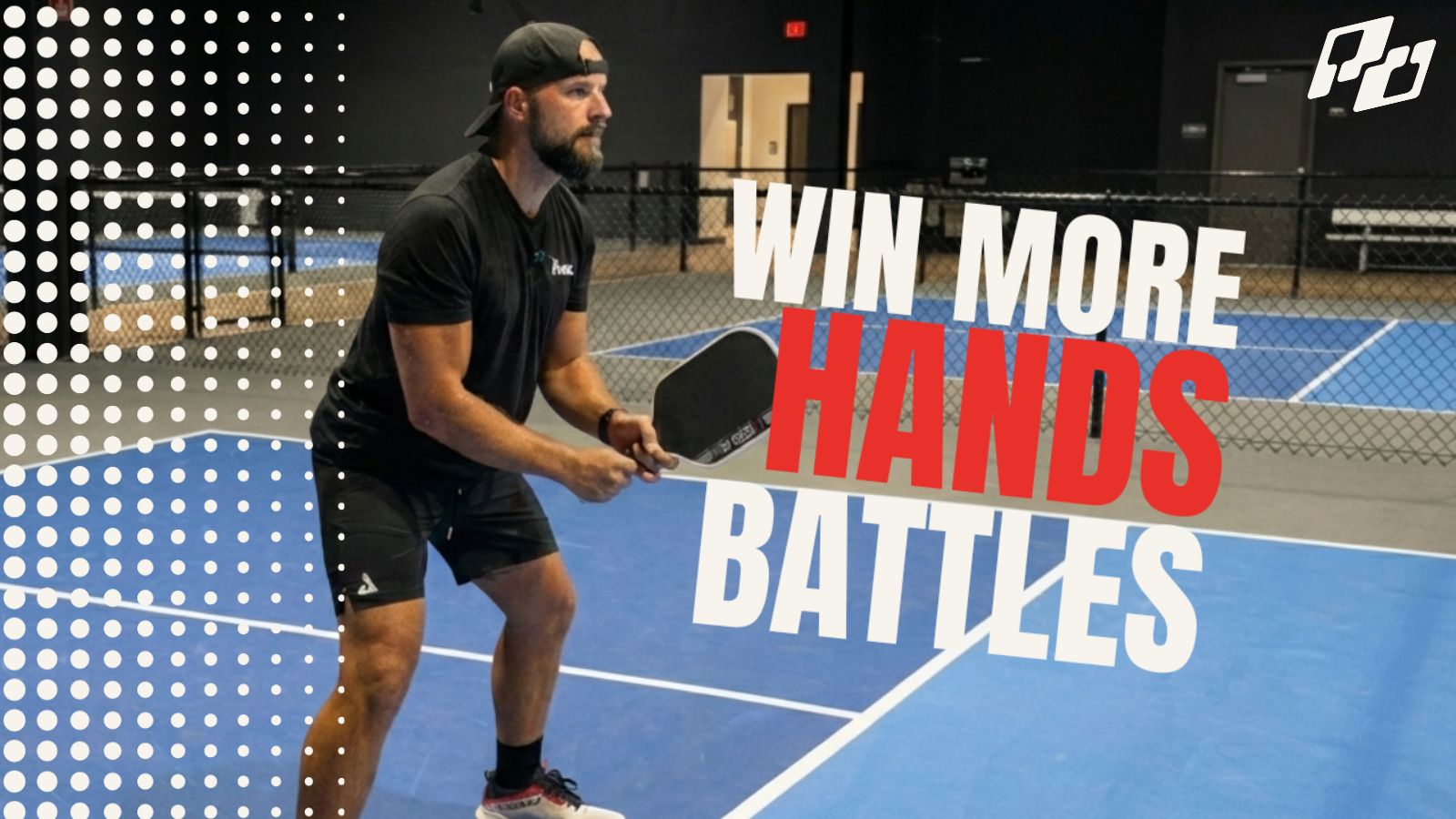
In a recent video we shot with pickleball coach Marko Grgic, he breaks down how to defend power at the kitchen in a way that actually holds up under pressure — especially for rec players who feel rushed, jammed, or pushed around.
Before we dive in, here’s the video so you can see the concepts in motion:
Video: Defending Power at the Kitchen Line
What Marko teaches aligns with what high-level coaches consistently emphasize:
Kitchen defense isn’t about fast hands. It’s about being in a position where fast hands aren’t required.
Let’s break down what that means in real rec-play situations.
1. Your Base Position Comes First (Everything Else Depends on It)
If your stance is off, no paddle tip or hand-speed cue will save you.
Marko’s first priority is how you’re standing before the ball is hit — because once the ball is coming fast, there’s no time to fix it.
What a strong base actually does
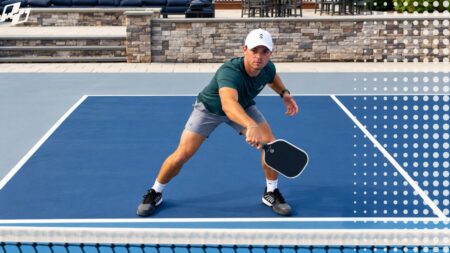
A wide, athletic stance:
- lowers your center of gravity
- makes you harder to push backward
- shortens the distance your paddle has to travel
This is why Marko recommends standing within about a foot of the kitchen line. Closer feels scary to rec players, but it’s actually safer.
What rec players often do instead
- back up to “buy time”
- stand upright to feel mobile
- narrow their stance to feel quick
Those choices feel logical — but they usually lead to pop-ups, late blocks, or getting jammed in the body.
Coach cue: Stability creates reaction speed. Instability kills it.
If you feel like the ball is knocking you off balance, your stance — not your hands — is the problem.
2. Build a Ready Position You Can Return to Automatically
A good ready position isn’t something you “hold.” It’s something you return to over and over.
Marko’s neutral position keeps you available for whatever comes next instead of guessing early.
What “neutral” really means
- Paddle comfortably out in front, not tight to the chest
- Paddle above net height, not dangling
- Elbows relaxed
- Hands centered so you can go forehand or backhand
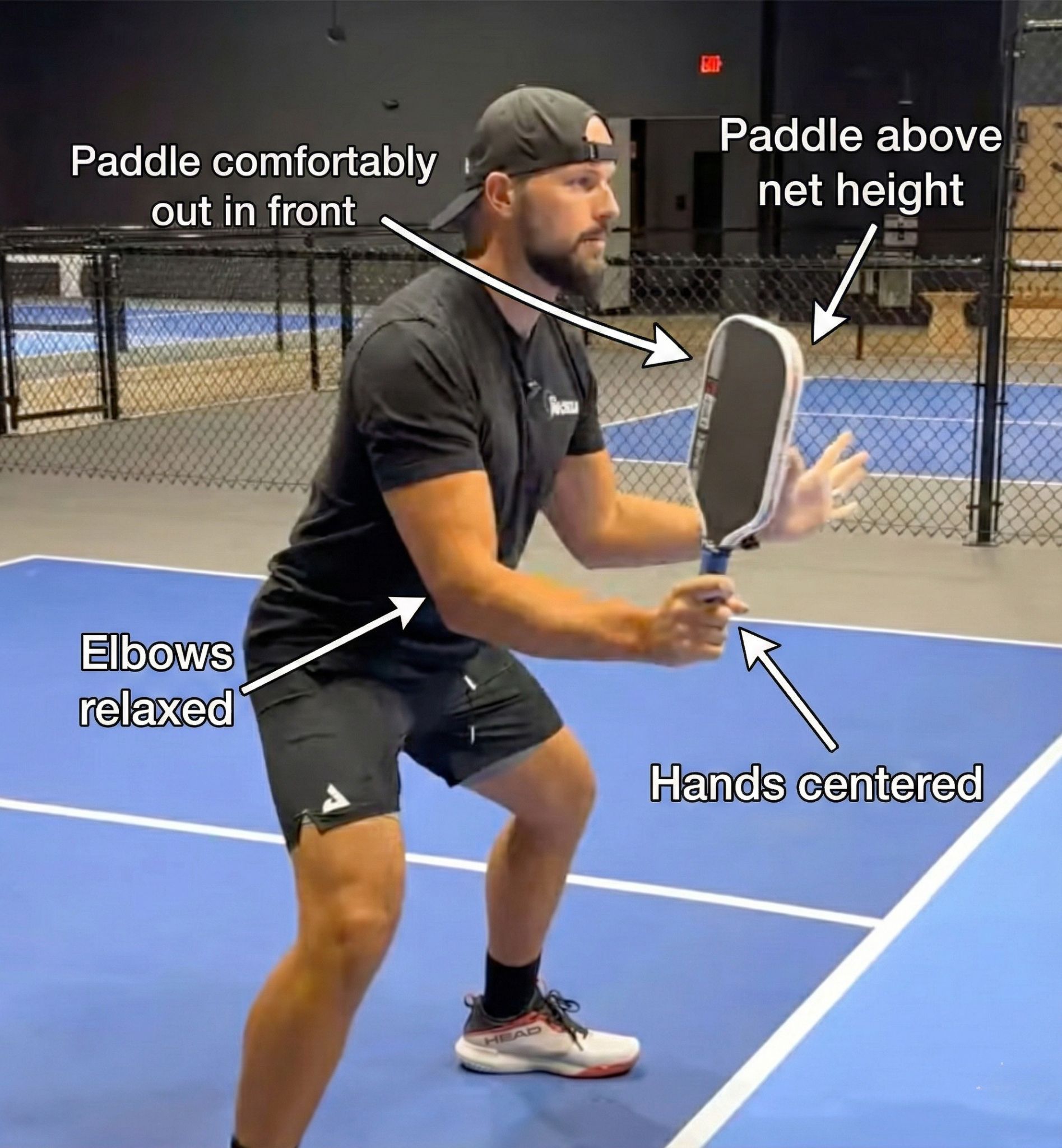
This setup isn’t about being aggressive — it’s about not getting stuck.
Where rec players get into trouble
They block one ball, feel relief, and:
- drop the paddle
- lean out of position
- stay locked on one side
That’s when the next speedup finds them late.
Neutral is home base. Learn to come back to it automatically.
3. Quiet Body = Faster Reactions
This is one of the hardest habits for rec players to accept. When rallies speed up, people instinctively:
- bounce on their toes
- shuffle side to side
- make constant micro-adjustments
It feels athletic — but it actually slows your reaction window.
What Marko wants instead
- head stays still
- weight balanced through the feet
- reactions happen from the shoulders and arms
A calm body gives your brain clearer information.
The quieter your body is, the more time you feel like you have.
If you feel rushed, ask yourself: Am I reacting to the ball — or reacting to my own movement?
4. Block With Jabs, Not Swings
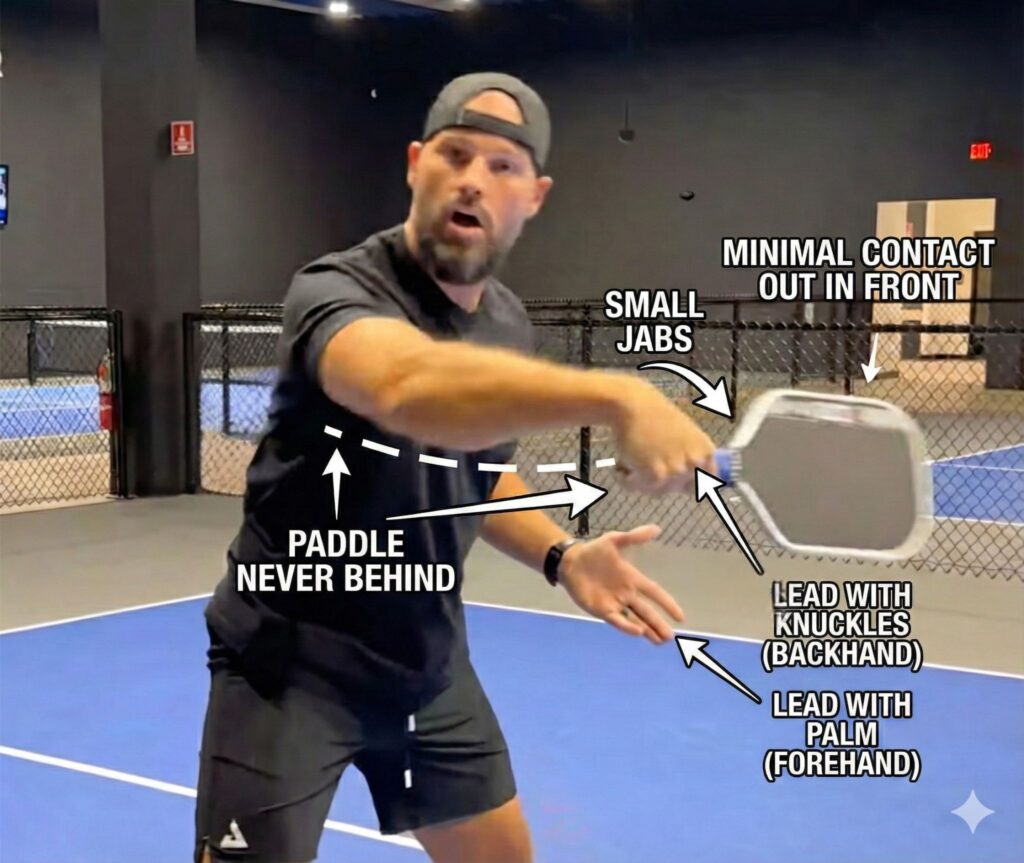
At kitchen distance, you don’t have time to “hit” the ball — only to intercept it. Marko’s boxing analogy is important because it resets intent.
What works at the kitchen
- short, compact motions
- minimal forward push
- firm but controlled paddle face
You’re not trying to win the point here. You’re trying to neutralize pace.
What usually goes wrong
- backswing creeps in
- paddle drops behind the body
- player tries to “counter hard”
That’s when blocks sail long or die in the net.
Red flag: If the paddle goes behind you, the swing was already too big.
5. Track the Ball With Your Paddle (Not Just Your Eyes)
This is a subtle habit that fixes a lot of late reactions.
Most rec players track the ball visually… but let the paddle lag behind. That separation is what creates panic reaches.
Marko’s cue
Wherever the ball goes, the paddle head follows.
This keeps:
- alignment clean
- angles simpler
- contact more predictable
When this matters most
- body speedups
- quick exchanges at the NVZ
- balls changing direction late
If you’re “seeing” the ball but still missing blocks, this is often why.
6. Why the Second Ball Is the One That Gets You
Most players think they’re defending the first speedup.
They’re not.
They’re defending the second one — and that’s where things fall apart.
Here’s what usually happens in rec play: you block a hard ball, feel a little relief, and your body relaxes just a fraction. The paddle drops. The stance narrows. Your weight shifts forward.
That tiny lapse is all your opponent needs.
Marko’s rule is simple: every contact is temporary. After you block or counter, immediately return to your neutral, balanced position — paddle centered, stance wide, body calm.
“Learn to live here.” — Marko Grgic
Neutral isn’t passive. It’s prepared. It keeps you available for whatever comes next, instead of scrambling because you assumed the danger had passed.
7. Why The “Simple” Drill Matters More Than It Looks
The drill Marko shows in the video doesn’t look impressive — and that’s exactly why it works.
It targets one of the biggest hidden problems in rec pickleball: players don’t reset fast enough after contact.
By forcing an immediate return to ready position after every contact, it trains automatic recovery — the ability to be prepared again without thinking about it. That’s what keeps defenders alive during fast exchanges, when there’s no time to consciously “get ready.”
The real value isn’t the drill itself. It’s the habit it builds:
Hit → reset → be available again.
That’s how defensive positioning holds up under pressure — not by reacting faster, but by recovering sooner.
What I Want You to Take Onto the Court
Here’s the mindset shift that helps most rec players immediately:
Your job at the kitchen isn’t to win the point.
It’s to survive the chaos long enough to regain control.
If you:
- stay wide and grounded
- keep the body calm
- use compact motions
- return to neutral every time
…the pace stops feeling overwhelming.
And once the game slows down in your head, you start seeing better balls — the ones you can attack safely.
That’s the real value of Marko’s advice.