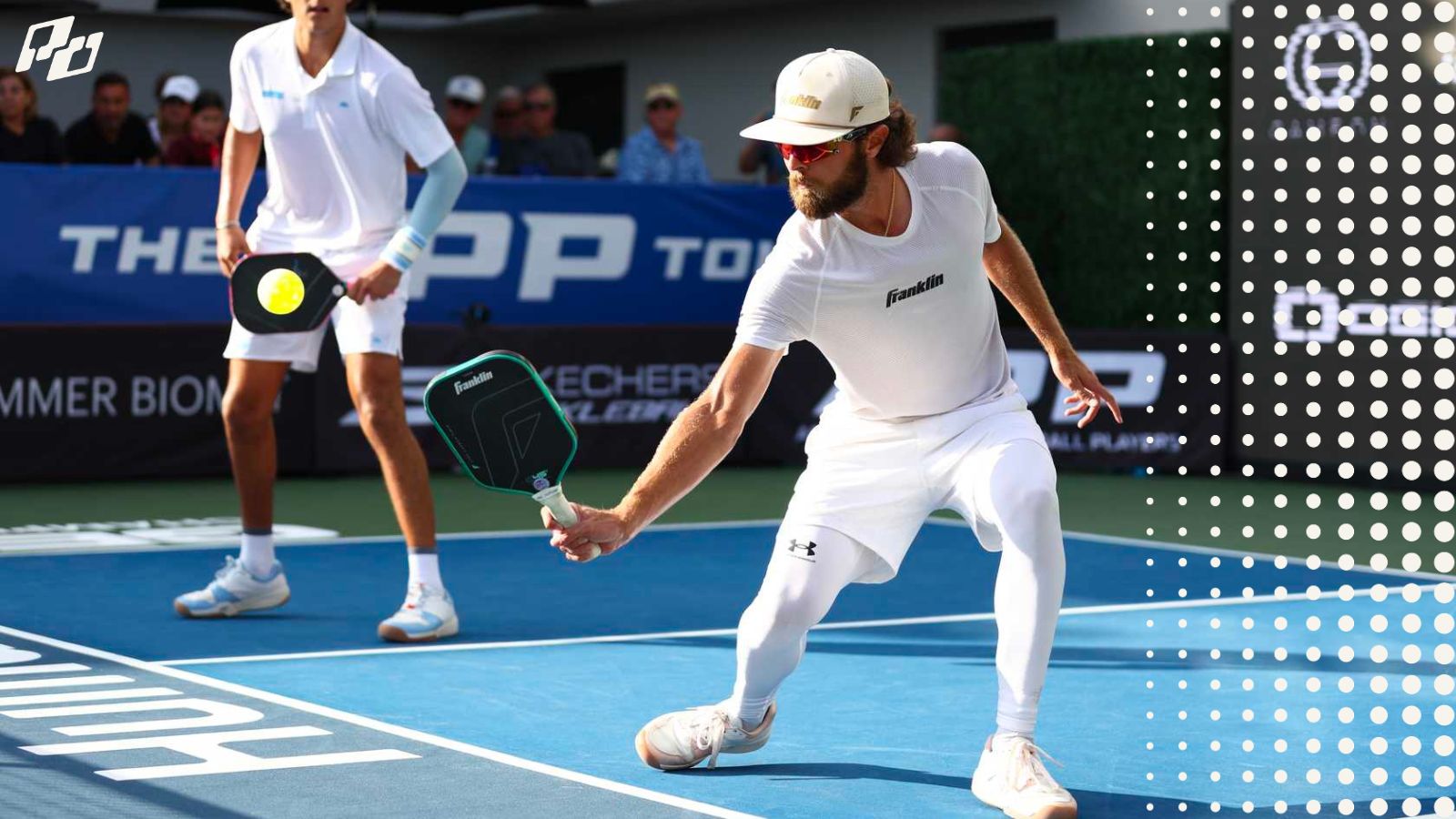
Every few months, a clip goes viral claiming someone found the ultimate kitchen cheat code – the backspin volley (some call it backspin drop shot).
This one?
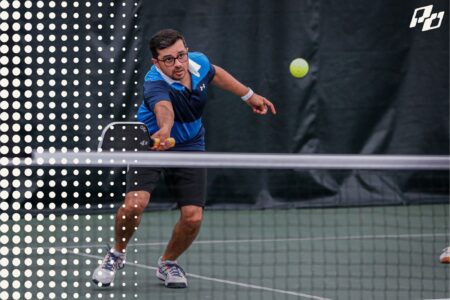
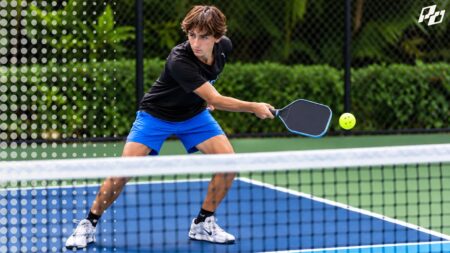
Instead of volleying a ball at the net, you get slightly under it, use a chopping motion with a slightly open paddle face, so it lands short and may even grab or pull back toward the net..
It looks unstoppable. It looks unfair. It looks like free points.
But here’s the real question:
👉 Does it actually work in recreational pickleball?
👉 Should you use it?
👉 And will your partner quietly hate you if you miss it?
Let’s break it down properly.
First, Watch It
Here’s the clip that sparked the debate:
Now let’s unpack what’s actually happening.
What This Shot Really Is (Technically)
This is essentially a soft, open-faced chop volley with underspin, played from above the net.
The goal isn’t power. The goal is:
- Heavy underspin
- Very short trajectory
- Bounce that dies or spins back toward the net
When executed perfectly, the ball:
- Drops into the kitchen
- Bounces low
- Either dies immediately or pulls back into the net
That’s why it looks like a “cheat.” But it’s not magic.
➡️ It’s physics.
The Mechanics: How to Execute It Correctly
This shot fails when mechanics are sloppy. It works when structure is tight.
Here’s the breakdown.
1️⃣ Ball Height Matters (Most Important)
This shot only works on:
- Balls slightly above net height
- Floating or slow-paced balls
- Soft pop-ups near the kitchen line
❌ If the ball is below net height, you’re gambling.
❌ If it’s coming fast, you’re late.
❌ If it’s dipping, abort mission.
Rec rule: Only attempt this when you feel early and balanced.
2️⃣ Paddle Face Position
Your paddle face must be:
- Slightly open
- Not dramatically scooped
- Stable at contact
Too open → ball floats.
Too closed → ball drives into the net.
Think: “Open enough to slide under the ball.”
Some videos describe this shot as “pointing the paddle to the sky and carving it.” That wording can be misleading. If the paddle is too open, the ball floats and becomes attackable.
The face should be only slightly open — just enough to slide under the ball while keeping the trajectory low. Think controlled carve, not scoop.
3️⃣ The Chopping Motion (But Controlled)
This is not a big swing. It’s:
- Short
- Compact
- Slight forward-and-down carve
- Minimal follow-through
You’re brushing under the back of the ball while slightly cutting down. The motion is subtle — not theatrical.
If your paddle wraps around your body, you’ve overdone it.
4️⃣ Contact Point
Contact should be:
- In front of your body
- Slightly above net height
- Stable base (knees bent, not reaching)
If you’re lunging or reaching, clean spin production becomes inconsistent.
5️⃣ Target
You’re aiming:
- Just inside the kitchen
- Not directly at the tape
- Slightly crosscourt often works best
The ball must clear the net by a small margin — not scrape it.
Does It Really Work?
Yes. But only under specific conditions.
✅ It works best when:
- Opponent is leaning forward expecting a speed-up
- Ball is slow and slightly high
- You’re balanced at the kitchen
- Opponent has weight forward
❌ It does NOT work when:
- Ball is below net height
- Opponent is already low and ready
- You try to force it
- You’re out of position
At 3.0–3.5 level? It can win outright points because opponents overreact.
At 4.0+? It becomes more situational and often just resets the point.
It is not a cheat code.
It is a tool.
Will It Annoy Your Partner?
Let’s be honest. If you attempt this:
- On a high-percentage putaway
- And miss into the net
- Or float it for an easy counter
Yes. It might annoy them.
Why? Because from their perspective, you turned a safe attack into a gamble. If you use this on balls that should be driven or placed safely, your partner may see it as “style over substance.”
Etiquette: Is It Rude?
No — it’s completely legal and absolutely a skill-based shot. There’s nothing unsportsmanlike about using spin and touch to win a point. That said, context matters in recreational play.
If you’re constantly attempting this as a flashy “trick” option — especially on balls that could be finished more simply — and you miss it repeatedly, it can disrupt the rhythm of the game and frustrate your partner. Rec doubles is built on percentage decisions and shared trust.
When a high-percentage volley turns into an unnecessary gamble, it can feel like you’re experimenting mid-rally instead of competing.
The key is discretion. Use it when the situation calls for it, not just because it looks cool.
Who Should Actually Use This Shot?
Great for:
- Players with soft hands
- Former tennis players with slice control
- Players confident at the kitchen
- 3.5+ players building variety
Not ideal for:
- Beginners still missing basic volleys
- Players struggling with paddle face control
- Anyone uncomfortable at the net
If you can’t consistently block first, this shouldn’t be your second option.
How to Drill It (Without Annoying Anyone)
Drill 1: Controlled Feed
Have a partner:
- Stand across at the kitchen
- Toss gentle floaters above net height
Your job:
- Chop softly
- Keep it short
- Count how many die in the kitchen
Goal: 7 out of 10 clean drops.
Drill 2: Target Box
Place a towel or cone 1–2 feet inside the kitchen. Try landing the ball on it using the chop.
Focus on:
- Paddle stability
- Short swing
- Controlled contact
Drill 3: Live Point Trigger
Play kitchen dinking. Only use this shot when:
- Ball rises above net height
- You’re balanced
- You call it mentally before swinging
This builds discipline.
The Real “Cheat Code”
Here’s the truth: The shot isn’t the cheat.
The timing is.
❌ If you telegraph it and over-chop, it’s predictable.
❌ If you disguise it inside normal volley rhythm, it’s deadly.
The deception comes from looking like you’re about to punch volley — then softening at the last second.