If you play long rec sessions, round robins, ladders, or tournaments, you already know the problem: you need energy, but the idea of eating a full meal between games sounds awful.
That is normal.
Between games, most players do better with lighter, easier-to-digest carbs, plus a little protein if they have enough time before the next match. Heavier meals with lots of fat or fiber tend to sit longer and can leave you feeling sluggish, bloated, or a little too aware of your stomach when the point gets long.
Mayo Clinic’s guidance is similar: big meals are better 3 to 4 hours before exercise, while smaller meals or snacks fit better 1 to 3 hours before, and carbs are the quickest energy source.
That is the big idea for pickleball players who hate heavy meals: stop trying to “eat lunch” between games. Start thinking in small, useful fuel doses.
Why heavy food feels so bad between games
Pickleball is stop-and-go, but it is still athletic. You sprint, brake, bend, react, and repeat. If you drop a burger, giant burrito, or greasy snack into that window, your body now has two jobs at once: digest a real meal and help you play. That is rarely a fun combo.
For most players, the sweet spot between games is food that is:
- mostly carbohydrate
- low to moderate in fat
- not too fiber-heavy
- easy to chew, swallow, and digest
- and small enough that you do not feel weighed down
In plain English: think banana, not burrito.
What your body usually wants between games
If your next match is soon, carbs matter most. Carbohydrates are the body’s main quick fuel for exercise, and if you are playing longer than about 60 minutes total or stacking multiple matches, small carb-rich snacks or drinks can help maintain energy.
Protein still matters, but mostly for recovery and for keeping hunger from crashing later. The trick is amount and timing. A little protein can be great if you have a decent break. Too much protein right before another game can feel heavy, especially if it comes packaged with a lot of fat.
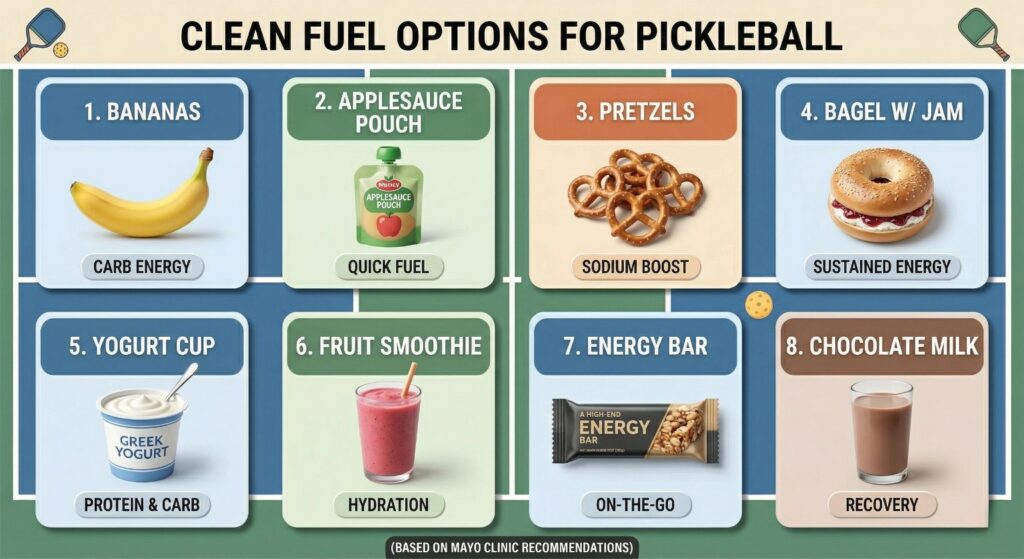
So the best between-games foods usually look like one of these:
- mostly carbs if you are going back out soon,
- carbs plus a little protein if you have a longer gap,
- fluids plus sodium if it is hot, humid, or you are a salty sweater.
The best between-games foods if you hate heavy meals
1. Bananas
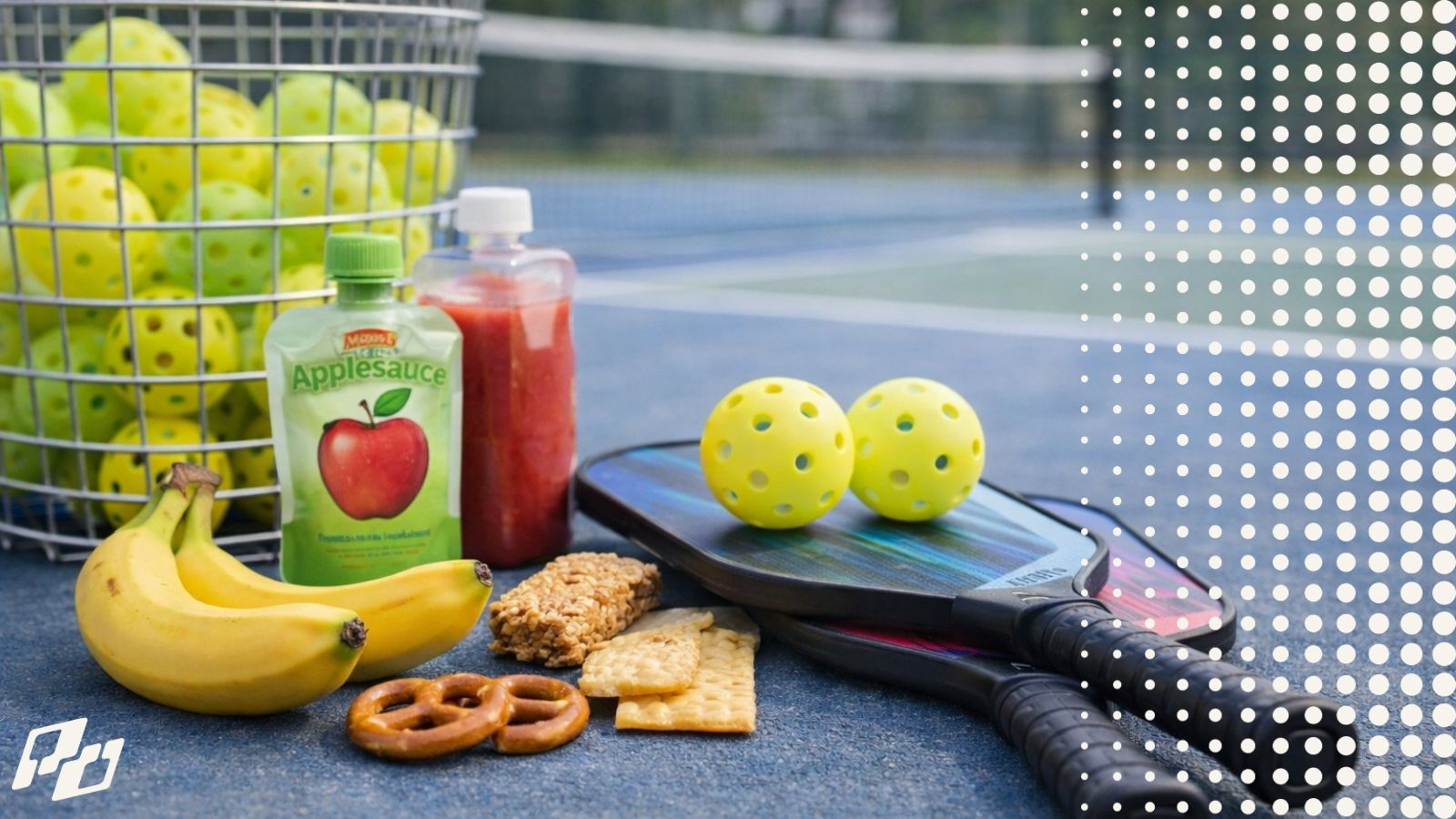
This is the classic for a reason. Bananas are portable, easy on the stomach, easy to eat fast, and mostly carb-based. They are one of the simplest options when you need fuel without feeling like you “ate.” Mayo Clinic specifically lists bananas among good pre- or during-exercise snack choices.
Best for: a short break, hot weather, nervous stomachs, early morning sessions.
2. Applesauce pouches
Not fancy, but very useful. Applesauce gives you quick carbs in a format that goes down easily, especially if you are too warm or too keyed up to chew much. For players who hate solid food between games, this is one of the easiest wins.
Best for: players who do not want to chew, kids, older players, or anyone with a tight stomach.
3. Pretzels or simple crackers
Pretzels are underrated pickleball fuel. They are light, easy to portion, and they give you carbs plus sodium, which can be helpful when you are sweating a lot. Mayo Clinic lists crackers among practical carb-rich workout snacks, and electrolyte replacement becomes more important with longer or hotter sessions.
Best for: hot days, doubleheaders, sweaty players, people who do not like sweet snacks.
4. Toast, half a bagel, or a small jam sandwich
These work because they are simple. Bread-based carbs are easy to digest for many players, especially if you keep the toppings light. If you have less than an hour before exercise, a small jam sandwich can work well because the focus should be on carbs.
Best for: longer sessions when you need something more filling than fruit but still light.
5. Yogurt
Yogurt is one of the better “middle ground” foods. It gives you carbs and some protein, and it usually feels lighter than a full meal. Mayo Clinic lists yogurt as a smart exercise snack and a good post-workout recovery option.
Best for: when you have 45 to 90 minutes before your next game, or after your final match if a real meal is still a while away.
6. Fruit smoothie
A smoothie is great when food sounds unappealing but you still need calories. Keep it simple between matches: fruit, yogurt or milk if you tolerate it, and not a ton of nut butter, seeds, or high-fiber add-ins.
Best for: hot days, players with low appetite, players who want both hydration and fuel.
7. Low-fat granola bar or simple energy bar
This is a practical “keep it in the bag” option. Just read labels: some bars are basically candy with marketing, while others are so high in fiber or fat that they feel like a brick between matches.
Best for: road trips, tournaments, long waits between games, emergency backup fuel.
8. Chocolate milk or drinkable yogurt after your last game
This is more “recovery snack” than “between-games snack,” but it is worth mentioning because it is perfect for players who hate heavy meals after playing. Mayo Clinic includes low-fat chocolate milk among good post-workout recovery choices because it gives you both carbs and protein.
Best for: after play, especially if dinner is still a while away.
What usually works best by break length
| Time Until Next Game | What to Aim For | Good Options | Main Goal |
|---|---|---|---|
| 15–30 minutes | Keep it very light | Half a banana, applesauce pouch, a few pretzels, sports drink, a couple crackers, a few bites of a granola bar | Steady energy without stomach drama |
| 30–60 minutes | Mostly carbs, with a little protein if tolerated | Banana plus a few pretzels, yogurt, half a bagel, toast with jam, fruit smoothie, granola bar | Light fuel with a little more staying power |
| 60–120 minutes | More substantial snack | Yogurt and fruit, half sandwich, bagel with a light spread, smoothie with fruit and yogurt, peanut butter sandwich if you digest it well | Refuel more fully without feeling too heavy |
If your next game is in 15 to 30 minutes
Keep it very light. This is not the time for a protein-heavy snack or anything greasy.
Think:
- half a banana
- applesauce pouch
- a few pretzels
- sports drink
- a couple crackers
- a few bites of a granola bar
Your goal here is not fullness. It is steady energy without stomach drama.
If your next game is in 30 to 60 minutes
Now you have more options. Carbs still lead, but a little protein is okay if you tolerate it.
Think:
- banana plus a few pretzels
- yogurt
- half a bagel
- toast with jam
- fruit smoothie
- all granola bar
If your next game is in 60 to 120 minutes
This is where you can eat a more substantial snack and actually feel better for it.
Think:
- yogurt and fruit
- half sandwich
- bagel with a light spread
- smoothie with fruit and yogurt
- peanut butter sandwich if you digest it well. (Mayo Clinic lists a peanut butter sandwich as an exercise snack, but this is usually better when you have more time because fat slows digestion.)
The “light but useful” rule for older players
For rec players over 50, this topic matters even more. Many older players do not want a heavy stomach on court, but they also feel energy dips harder if they underfuel. The answer usually is not a bigger meal. It is more strategic small snacks.
⮕ A banana at 9:30. Yogurt at 11. Pretzels and fluids at noon. Recovery drink after play.
That pattern often works better than skipping food, getting shaky, then crushing a giant lunch and feeling flat.
Hydration matters almost as much as food
Sometimes what feels like “I need food” is really part dehydration. it is recommended going into exercise hydrated, using electrolytes when workouts are longer than an hour or conditions are hot and humid, and paying extra attention if you are a salty sweater. ACSM’s hydration guidance also notes that electrolytes matter more in hotter conditions and for players losing a lot of salt in sweat.
A practical pickleball version:
- Water is fine for many casual sessions.
- Add electrolytes if the session is long, the day is hot, or your clothes show white salt marks after sweating.
- If you are playing for well over an hour with repeated games, some carbs during play can help too.
What to avoid between games
This is where a lot of players get into trouble. Try to be careful with:
❌ Fried food
❌ Big deli sandwiches
❌ Pizza between matches
❌ Huge protein shakes
❌ Lots of cheese
❌ Super high-fiber “healthy” bars
❌ Giant salads right before more play
❌ Too many nuts right before going back on court
None of those foods are evil. They are just usually better before the day starts or after the last match, not in the middle of a playing block.
A simple game-day formula
If you want one easy rule, use this:
✔ Before and between games, lean carb-heavy and light. After you are done, add more protein.
That lines up with mainstream sports-nutrition guidance: carbs are your quickest exercise fuel, and protein becomes more important as recovery takes over.
Easy sample setups
The player who gets nauseous with heavy food
Banana before play, applesauce between games, sports drink or water, yogurt after.
The player at a 3-hour round robin
Half bagel before play, pretzels and fruit between games, yogurt or smoothie midway through, recovery snack after.
The player who “forgets to eat” and fades late
Granola bar in the bag, banana in the car, electrolyte drink on court, chocolate milk or sandwich after.
One More Tip: Test Your Snacks Before It Matters
Do not wait until league night, a round robin, or a tournament to figure out what your stomach likes.
The smartest thing you can do is treat food the same way you treat paddles, shoes, or warm-ups: test it ahead of time. Try a banana before one session. Applesauce before another. Yogurt on a longer play day. Pay attention to what gives you steady energy, what feels too heavy, and what leaves you hungry again 20 minutes later.
Because the best between-games food is not just what sounds healthy. It is what you can digest easily, eat consistently, and play well on.
A little trial and error now can save you from that awful combination later: low energy, a sour stomach, and two more matches still to play.