There is a version of pickleball love that is charming. It is contagious in a good way. It makes other people curious. It makes the sport look fun, social, and easy to try.
And then there is the other version.
The version where every conversation somehow comes back to your paddle, your league, your DUPR, your latest kitchen battle, your court shoes, your funny meme, your “just one more game” story, and the three people in the group chat who very clearly did not ask for any of this.
If you are pickleball-crazed, you probably already know the line exists. The hard part is spotting when you have crossed it. That is especially tricky because hobbies are generally good for us: they are linked to better mental health and well-being, and hobby groups can reduce loneliness by keeping people socially connected. In other words, your obsession is not the problem. The delivery sometimes is.
That is why this topic matters. Most pickleball addicts are not trying to be annoying. They are trying to share something that genuinely makes their life better. And honestly, that impulse is human. Social identity research shows that people naturally build part of their sense of self around the groups they belong to.
The trouble starts when your enthusiasm stops feeling like an invitation and starts feeling like pressure, performance, or unsolicited coaching.
Why pickleball people can get annoying without meaning to
The first thing to understand is that over-sharing is usually not about arrogance. A lot of it is excitement, belonging, and a little anxiety.
When people find a hobby that gives them exercise, friends, routine, and joy, they naturally want to talk about it a lot. And pickleball is especially prone to this because it creates stories fast. There is always a weird bounce, a funny partner moment, a new paddle, a rec-play villain, or a dramatic “we were down 3-9 and came back” match.
Public pickleball meme pages are full of the same recurring themes for a reason: paddle addiction, “one more game,” partner drama, tournament vs. rec culture, and group-chat chaos are all so common that players instantly recognize them.
But your excitement is not the same thing as other people’s interest. That gap is where the awkwardness lives.
One useful piece of conversation research here is that people often misjudge how much they should talk and how much others actually want to hear. In plain English: when you are excited, it is easy to think, “I’m being engaging,” when the other person is quietly thinking, “We are still on this?” And when advice enters the picture, it gets even worse.
Multiple psychology sources note that unsolicited advice often backfires because it can make people feel judged, minimized, or controlled rather than helped. That applies on court, in texts, and in everyday life.
So the first mindset shift is simple: do not assume your enthusiasm automatically transfers.
Your job is not to make everyone care as much as you do. Your job is to share your love of pickleball in a way that leaves people more curious, not more cornered.
The real social rule: make pickleball feel like an offer, not a demand
This is probably the biggest practical principle in the whole guide.
If you want friends, family, coworkers, or followers to stay warm to your pickleball obsession, they need to feel free around it. Not recruited. Not corrected. Not trapped in a long explanation of why the kitchen rule is genius.
That is not just etiquette. It is psychology. Reactance research shows that when people feel their freedom is being pushed on or constrained, they often resist the message itself. In other words, the harder you push, the more likely people are to back away — not because pickleball is bad, but because pressure makes people protect their autonomy.
That is why a light invite works better than a sales pitch. It is also why the best public advice on getting friends into pickleball is consistently some version of: keep it casual, respect their limits, and let curiosity do some of the work.
This is where a lot of pickleball lovers accidentally lose the plot.
They think the mission is:
❌ “Get this person into pickleball.”
But the real mission is:
✅ “Make this person feel like trying pickleball would be easy, fun, and low pressure.”
That difference changes everything.
If your friend says, “Maybe sometime,” and you immediately send six links, court schedules, paddle suggestions, and a breakdown of stacking, you are not helping. You are making the sport feel complicated and socially expensive.
A better move is: “Totally — next time we do a chill beginner-friendly game, I’ll let you know.”
That keeps the door open without standing in it.
How to stop sounding like a pickleball missionary
If you are pickleball-crazed, this one is hard because the sport genuinely feels like one of the best things in your life. You probably do want everyone else to discover it.
But there is a reason “evangelical hobby person” is such a recognizable social type. The problem is not passion. It is when your passion starts flattening the other person’s reality.
One public pickleball guide put this beautifully: drop hints, not smashes. That should probably be the entire philosophy. Share a funny reel. Mention that you had a great time. Invite someone once in a low-pressure way. Then stop. If they are interested, they will lean in. If they are not, you do not need to keep converting them.
This is where self-awareness helps. Before you launch into a pickleball story, ask yourself one quiet question:
Am I sharing because this is relevant and fun, or because I need everyone to validate my thing?
That sounds harsh, but it is useful.
- Sometimes you are connecting.
- Sometimes you are performing identity.
- Sometimes you are filling silence with your favorite topic because it feels safe.
Those are not the same.
If you notice you are doing the third one, pause. Ask the other person something. Let the conversation breathe. Your hobby does not become less real just because you do not mention it for ten minutes.
Group chats: the easiest place to become “that person”
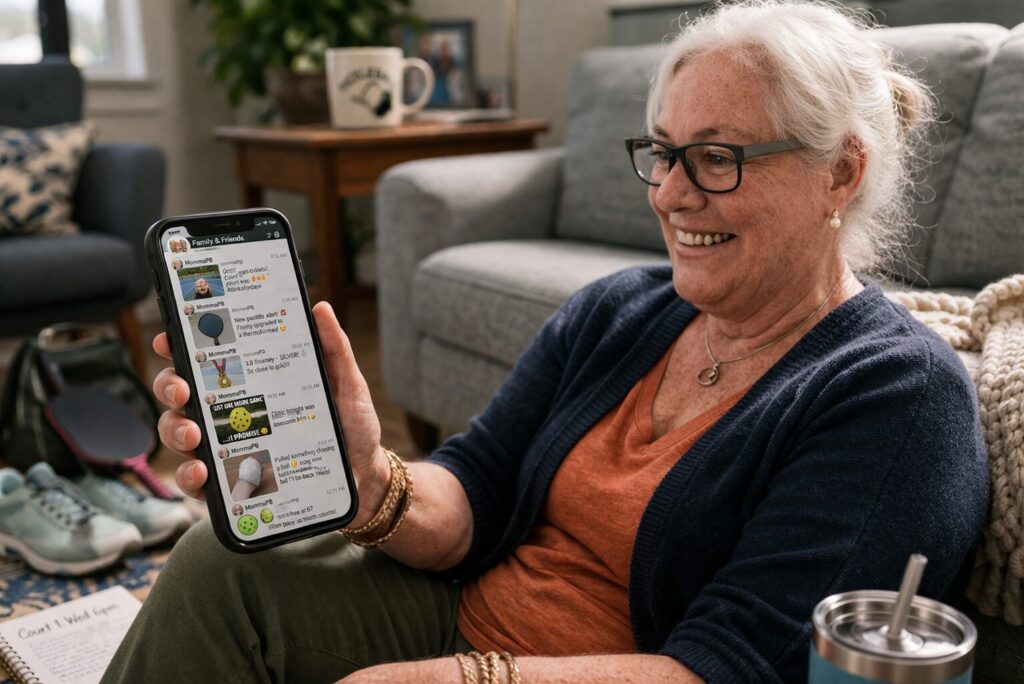
The pickleball group chat is sacred. The non-pickleball group chat is where trouble begins.
This is where a lot of enthusiasts accidentally become exhausting. They post every court selfie, every paddle purchase, every meme, every clinic, every tournament flyer, every injury update, and every “who’s free at 6?” message into mixed-audience spaces where not everyone opted into the obsession.
That does not mean never mention it. It means know which room you are in.
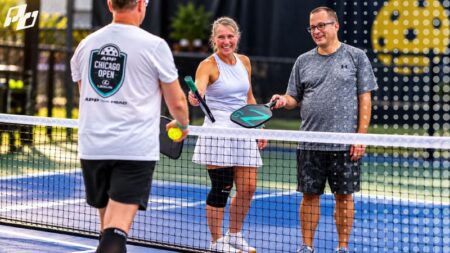
If the chat is your dedicated doubles group, go nuts.
If the chat is your family thread, your old college friends, or your work friends, use a little restraint.
A simple rule that works well is: one share, not a stream.
✅ A funny photo from a tournament? Fine.
✅ A genuinely hilarious meme? Fine.
❌ A running live blog of your Tuesday open play? Probably not.
This sounds obvious, but a lot of pickleball people miss it because the sport creates so many shareable moments. And to be fair, those moments often are funny.
Public meme pages thrive on exactly that: paddle addiction, “one more game,” overcommitted rec players, and group-chat energy are all part of the culture. The point is not to suppress your joy. It is to direct it to the people who signed up for it.
A good test is this: if you send a pickleball meme to one friend because they will genuinely laugh, that feels connective.
If you dump five memes into a general chat and wait for the room to validate your identity, that starts to feel needy.
Instagram and the soft art of not over-posting your hobby
Social media makes this even trickier because posting feels low-cost to you but can feel repetitive to everyone else.
And pickleball is especially easy to over-post because visually it has a lot of repeating beats: the paddle close-up, the sweaty selfie, the “great games today” caption, the tournament medal, the partner boomerang, the inspirational quote over a court photo.
Again, none of this is wrong. The issue is volume, repetition, and self-awareness.
One useful lens from social-media psychology is that online sharing can support connection, but it can also trigger comparison fatigue and tune-out when it becomes too polished, too constant, or too identity-heavy. People tend to engage more with content that feels real, specific, and socially generous than with content that feels like endless self-branding.
So if you are posting pickleball a lot, try these shifts:
- Make it more entertaining than self-congratulatory.
- Make it more specific than repetitive.
- Make it more about the shared moment than your personal mythology.
A reel of a funny rally, a very relatable rec-play fail, or a genuinely helpful beginner tip is more enjoyable than the tenth “locked in at the courts” post in two weeks.
The question to ask before you post is: would this feel fun to someone else, or is it mainly proof that I am a pickleball person?
You do not need to erase your hobby online. You just want to keep your feed from becoming one-note.
Gifts: sweet, funny, or a little much?
This is another place where pickleball love can go very right or very wrong.
✅ A funny pickle-themed gift for your pickleball friend? Great.
✅ A little jar of pickleball affirmations for someone who already loves the sport? Cute.
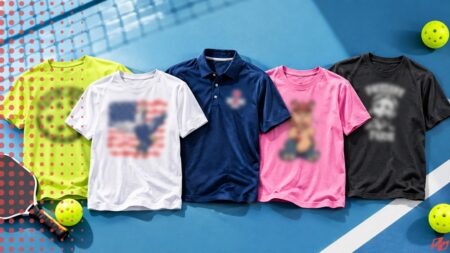
✅ A novelty shirt or paddle towel for a doubles partner? Totally fine.
But gifting becomes annoying when it is really a way of forcing your hobby into someone else’s life.
There is a difference between:
“I saw this and thought of you because you love pickleball too.”
and
“I need everyone around me to become part of my pickleball identity ecosystem.”
That line matters.
If someone is already in the world, gifts feel bonding. If they are not, too much pickleball gifting can feel like branding their personality without consent.
✅ So the better rule is: gift laterally, not downward.
Meaning: share pickleball gifts with fellow addicts, not as a conversion tactic for neutral civilians.
That keeps the energy fun instead of pushy.
The thing rec players will recognize immediately: unsolicited coaching
This one deserves its own section because it is one of the fastest ways to make your love of the game feel annoying.
A lot of rec players think they are being helpful when they hand out tips constantly:
“You should bend more.”
“You need to stop backing up.”
“You’re opening your paddle face.”
“You should try a hybrid shape.”
And sometimes the advice is even correct. That is not the point.
The point is that unsolicited advice usually lands badly unless the relationship and timing are right. Psychology writing on unsolicited advice consistently notes that it can make people feel judged, unheard, or subtly diminished — especially when what they wanted was company, not correction.
This is where a lot of pickleball obsessives accidentally become difficult to be around. They love the game so much that they cannot stop trying to improve everyone else’s experience of it.
But most people do not want to be optimized in the middle of rec play.
A much better script is: “Want one thought, or do you just want to play?”
That one line gives the other person control. And if they say no, you let it go.
Why finding your pickleball tribe actually helps you annoy fewer people
This sounds counterintuitive, but one of the best ways to stop overwhelming non-pickleball people is to have enough actual pickleball people in your life.
When you do not have a real outlet for your hobby, you tend to push it into every available social space. But when you have a healthy pickleball ecosystem — your rec crew, your doubles friends, your clinic people, your mixed-level social players — you no longer need your non-pickleball spouse, coworker, or cousin to carry all that energy.
This is one reason hobby groups are so good for people. They do not just improve mood and reduce isolation. They also organize identity in a healthy way by giving you a place where that part of you actually fits. The result is that you stop needing to over-signal it everywhere else.
So ironically, the cure for being too much about pickleball everywhere is not loving pickleball less.
It is having the right places to love it fully.
What sharing your love of pickleball should actually look like
If you want a better model, think of yourself less like a recruiter and more like a host.
A good host does not chase people around with appetizers. A good host makes the room feel easy to enter.
That means:
✔ You invite, but lightly.
✔ You share, but selectively.
✔ You joke, but read the room.
✔ You post, but with some range.
✔ You help, but mostly when asked.
✔ You let curiosity grow at its own pace.
The best pickleball ambassadors do not make the sport feel like a sermon.
They make it feel like a good time.
And that is what actually gets friends interested.