
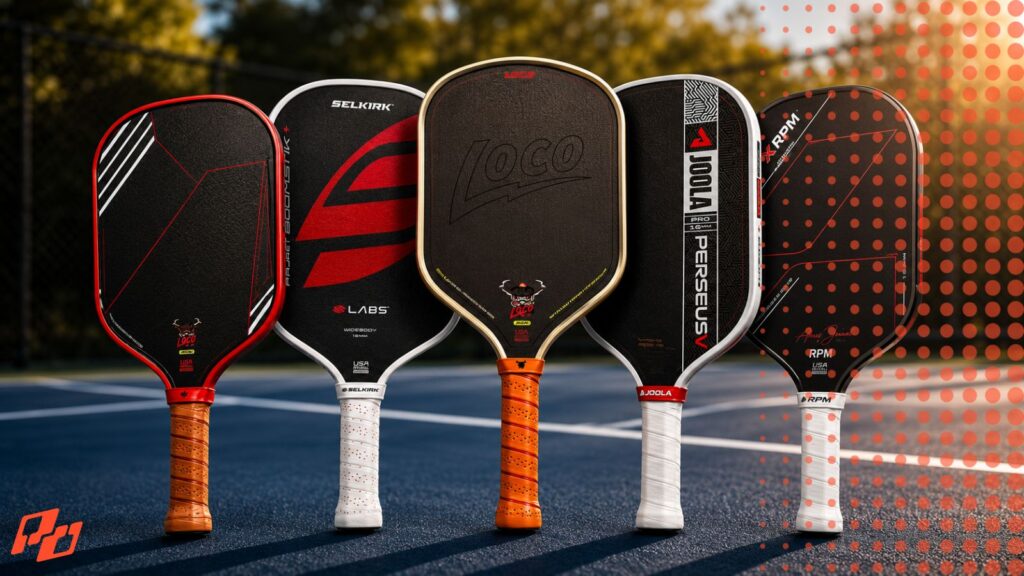
Power pickleball paddles do not always cost more than control paddles. Price usually reflects construction, materials, brand positioning, and demand. Sweet-spot size depends more on paddle shape, stability, and core design than on whether a paddle is labeled power or control.
If you’ve been shopping for a new pickleball paddle lately, you’ve probably noticed something. Many of the newest “power” paddles seem to carry premium price tags, while control paddles often look a little cheaper.
So is that actually true?
Not exactly.
After comparing current Paddle Lab listings and looking at what recreational players are discussing, the answer is much more interesting than “power costs more.”
The real story comes down to technology, demand, and marketing—not simply whether a paddle is labeled power or control.
The Market Is Moving Away From Pure “Control” Paddles
Many of today’s newer paddles no longer fit neatly into a simple power-or-control category. Instead, manufacturers increasingly design and market all-court paddles that combine usable power with better forgiveness, touch, and stability.
That shift matters because a modern control-oriented paddle may still produce strong exit speed. What separates it from a true power paddle is often not that it feels weak, but that its response is more predictable and easier to manage on drops, resets, blocks, and dinks.
In other words, a modern control paddle can still generate plenty of pace. The difference is that its power is easier to predict and manage on soft shots, blocks, resets, and dinks.
Do Power Paddles Actually Cost More?
Sometimes. But not because they’re power paddles.
Looking through Paddle Lab, you’ll find:
- premium power paddles over $250;
- premium control paddles over $220;
- excellent control paddles around $180;
- quality power paddles around $100-$130.
The price ranges overlap far more than many players realize.
If power alone determined price, you wouldn’t see so many affordable power paddles—or expensive control paddles.
So what actually explains the difference?
You’re Usually Paying for Technology, Not Power
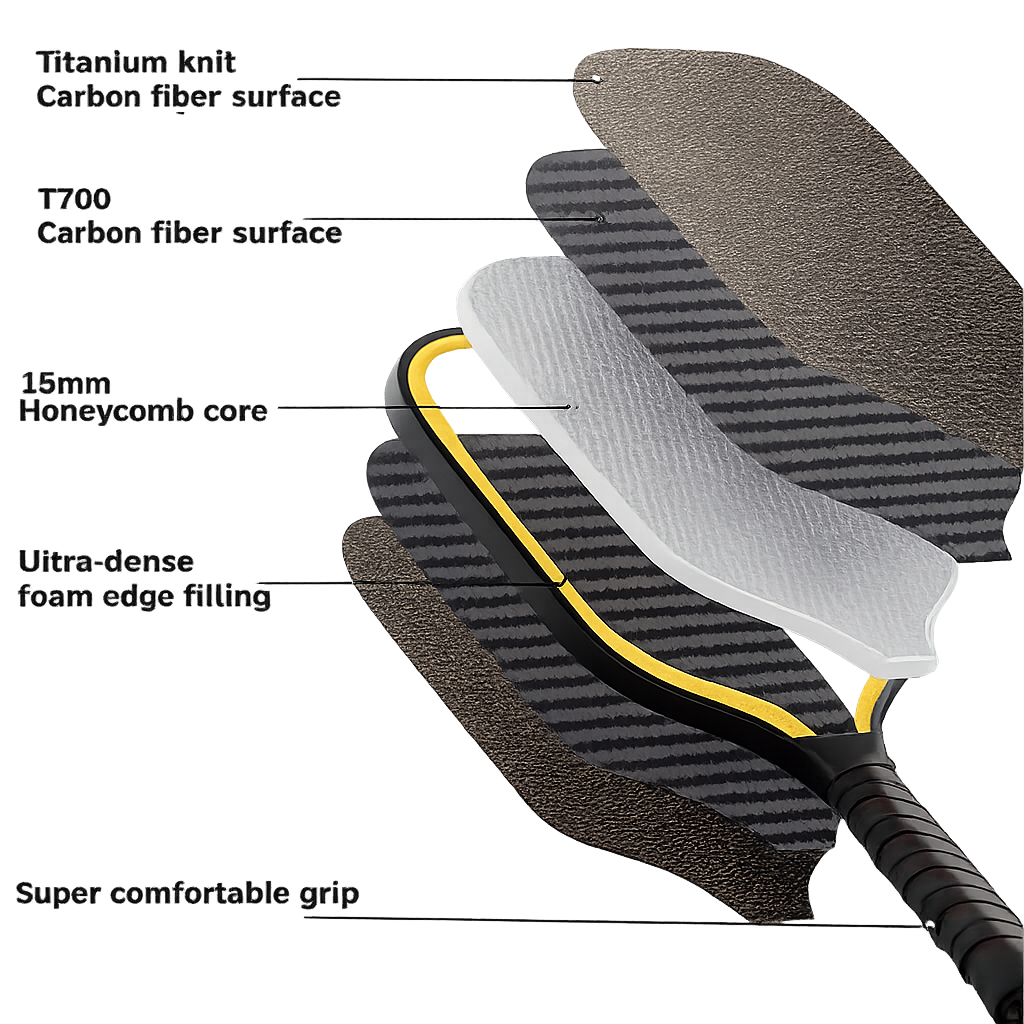
The biggest price increases usually come from construction. Modern premium paddles often include combinations of:
- thermoformed unibody construction
- foam-injected perimeter walls
- advanced carbon fiber layups
- proprietary surface coatings
- new core designs
Those technologies cost more to develop and manufacture. Many of the newest power paddles happen to use those same technologies, which creates the impression that power itself is expensive.
In reality, you’re paying for the engineering—not the extra miles per hour.
Demand Still Matters
Technology explains part of the story. Demand explains the rest.
Power sells.
Most recreational players enjoy hitting harder drives, faster counters and easier put-aways. Manufacturers know that, so premium launches often focus on maximizing power while still remaining within USA Pickleball performance limits.
Basic economics takes over.
If consumers are willing to pay more for the newest power-focused paddle, companies have little reason to price it lower.
That doesn’t mean power paddles cost more to produce. It means the market supports a higher selling price.
Does a Control Paddle Have a Bigger Sweet Spot?
Not necessarily. This is probably the biggest misconception.
A larger sweet spot comes primarily from:
- paddle shape
- twist weight
- core construction
- foam perimeter technology
- overall stability
A widebody control paddle often feels more forgiving than an elongated power paddle. But that’s largely because of its geometry—not because it says “Control” on the face.
Interestingly, many modern foam-core paddles combine surprisingly high power with very forgiving sweet spots, which is one reason so many players now describe them as all-court paddles rather than pure power or control models.
Why So Many Players Are Switching to All-Court Paddles
This may be the biggest shift in today’s paddle market.
Five years ago, the choice was fairly simple: Power or control. Today, that line has blurred.
Many newer paddles generate enough power on full swings while remaining soft enough for resets, dinks and drops.
That’s why so many experienced players are moving toward hybrid or all-court designs. They no longer feel forced to sacrifice one part of their game to improve another.
The Bigger Question Most Players Should Ask
Instead of asking, “Is this a power paddle?”
Ask, “Does this paddle help me hit the shots I struggle with more consistently?”
For many recreational players, that’s not a drive.
It’s the third-shot drop.
The reset.
The crosscourt dink.
The backhand block.
Adding five percent more power rarely changes those shots. Better forgiveness often does.
What I’d Check Before Spending $300
Power paddles aren’t automatically more expensive, and control paddles aren’t automatically cheaper. When you look across today’s market, there are plenty of exceptions in both directions.
The better question is why a paddle costs what it does.
Sometimes you’re paying for genuinely new construction. Sometimes you’re paying for a premium brand. Sometimes you’re paying because it’s the newest, most talked-about release.
Before spending another $250 or $300, ask yourself one thing: will this paddle solve a problem I actually have?
If your biggest weakness is resets under pressure, a slightly faster paddle probably isn’t the answer.
If you’re constantly mishitting the ball outside the sweet spot, a more forgiving shape or higher twist weight might make a bigger difference than another five percent of power.
The best paddle isn’t the one that hits the hardest. It’s the one that helps you play your best pickleball most often.