
A paddle is “USA Pickleball Approved” when it passes USA Pickleball’s limits on power, spin, glare and size, and carries the approval seal. The power test caps how fast the ball comes off the face, the spin test caps how much spin the face can put on it, and the rules say a paddle has to stay within those limits for its whole life, not just when it is new. Pro events add a second, stricter layer run by UPA-A.
None of those tests tell you whether a paddle suits your game. They tell you whether it is legal. Here is what each one measures, who runs it, and what it means for the paddle in your bag.
What USA Pickleball tests
USA Pickleball sets the rules for sanctioned amateur play. Its Equipment Standards Manual covers four things: power, spin, glare and size. A paddle has to pass all of them to make the Approved Paddle List.
Power: the PBCoR limit
PBCoR stands for paddle/ball coefficient of restitution. In plain terms, it compares how fast the ball comes off the paddle with how fast it went in. The higher the number, the more of the ball’s speed the paddle gives back, and the hotter it plays.
USA Pickleball caps it at 0.43 for paddles under the limit that took effect November 1, 2025, down from 0.44 a year earlier. The test protocol is published by the testing lab Element U.S. Space & Defense.
Speed out divided by speed in. Over 0.43, the paddle fails.
Spin: from rough faces to a spin camera
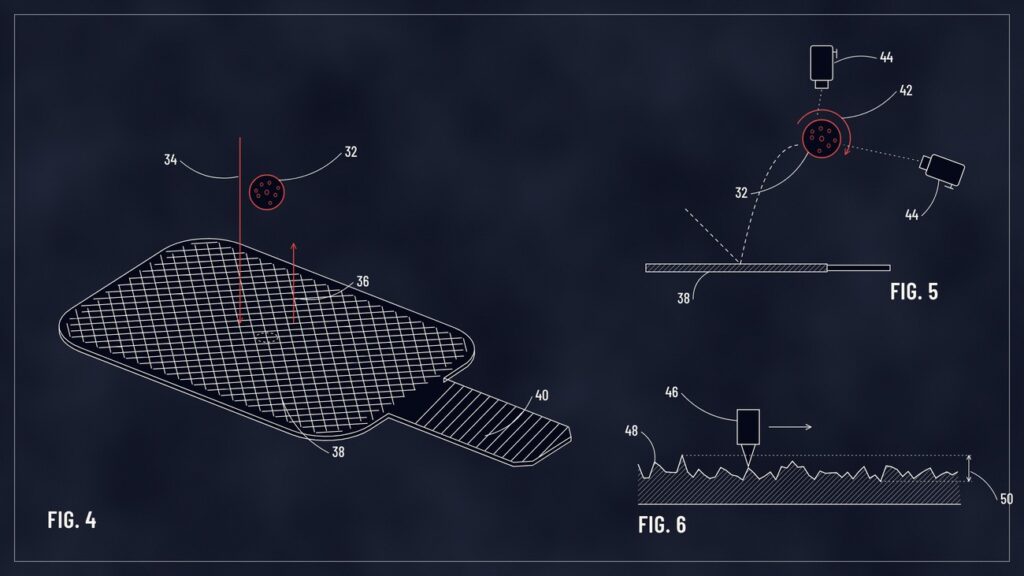
For years, USA Pickleball controlled spin indirectly, by limiting how rough a paddle face could be. A stylus tester measured each face in six directions, and the averages had to stay under 30 micrometers (Rz) and 40 micrometers (Rt), with a separate friction test on top. Anything sandy, rubbery or textured enough to add spin was out.
That changed on October 1, 2026. New paddles now go through a direct spin test: a two-camera system built with Image Systems measures how fast an instrumented ball, developed with Franklin, spins off the face, and the limit is 2,100 RPM.
Roughness and friction are still measured, but only as a measurement of record, not a pass-or-fail line (USA Pickleball’s spin test update).
If your paddle was approved before October 1, nothing changes for you: approved paddles are held to the standards they were certified under.
Since October 2026, spin is measured off the ball, not the face.
Glare and size
Two quick ones. The face and edge guard cannot be shiny enough to blind an opponent: no reading over 80 gloss units on a standard gloss meter. And the paddle’s length plus width cannot exceed 24 inches, with length capped at 17 inches. There is no limit on thickness or weight.
Staying legal as a paddle breaks in
This is the rule most players have never heard of. USA Pickleball’s manual says a paddle must stay within every limit over its “entire useful life,” including any break-in period or gradual change in performance. A paddle that passes when new but gets hotter with use is not compliant.
Manufacturers are also subject to ongoing testing to make sure the paddles they sell match the one that was certified.
Passing new is not enough. A paddle has to pass for life.
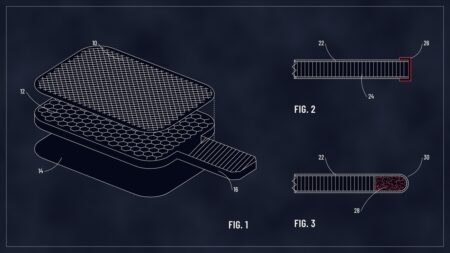
At its own national championships, USA Pickleball checks pros’ paddles on site. In 2025 that meant a roughness test and an ultrasonic scan for delamination, which its policy says finds “delamination, disbonding, and crushed core, which are leading contributors to higher deflection” (2025 Nationals testing policy).
If you want to know what “crushed core” means, start with how pickleball paddles are made.
How pro paddles are tested
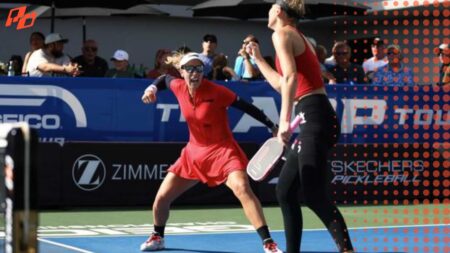
The PPA Tour and Major League Pickleball run their own certification through UPA-A. Its rules apply to every paddle used in professional UPA events, including PPA main draws and qualifiers and MLP; amateur divisions still go by USA Pickleball’s list. UPA-A certification became mandatory for pro play on September 1, 2025.
Under UPA-A’s paddle specifications, pro paddles face:
- A power limit measured as Paddle Efficiency Factor (PEF): 0.385 or less when new. Break-in can push that up to 0.405, but never higher over the paddle’s life.
- A spin limit of 2,100 RPM.
- Size and weight limits USA Pickleball doesn’t have: no heavier than 10 ounces and no thicker than 24 mm.
- Lab tests run by Pickle Pro Labs, UPA-A’s designated lab, including deflection testing before and after an accelerated break-in that simulates extended play.
- On-site testing at events, which rechecks deflection and surface roughness against the paddle’s certification readings. A paddle that reads more than 25% rougher than when it was certified is confiscated for lab review.
What the labs measure
Labs don’t decide what is legal. They measure how paddles play, so you can compare them. Two go by the same name, which trips people up:
- JustPaddles’ Paddle Lab, from the online retailer, measures exit velocity (power), swing weight, spin rate, twist weight, consistency and balance point for every paddle it sells. Our paddle quiz uses its data. Here is what each number means.
- The PPA Tour’s Paddle Lab is built on John Kew’s independent testing, with 818 paddles from 115 brands measured for swing weight, twist weight, balance, spin, power, pop and face stiffness (how they test).
Lab numbers are the closest thing to an apples-to-apples comparison. What they can’t tell you is how a paddle feels in your hand at open play, which is where play testing comes in.
How to check if your paddle is approved
- Look at the paddle. Approved paddles must show the brand, the model name or number and the “USA Pickleball Approved” seal.
- Search the list. USA Pickleball’s Approved Paddle List is the final word. Its rules put the responsibility on the player to confirm the paddle is listed as Pass before sanctioned play.
- Playing a pro draw? Check UPA-A’s list, too. A paddle can be USA Pickleball approved and still not UPA-A certified.
- Just playing rec? Approval only matters at sanctioned events. USA Pickleball still recommends approved equipment for all play.
Pickleball paddle testing FAQ
How are pickleball paddles tested?
For approval, USA Pickleball tests power (the PBCoR rebound test), spin (a camera-based spin test for paddles approved from October 1, 2026), glare and size. Pro paddles get a separate, stricter certification from UPA-A, including on-site testing at events. Labs such as JustPaddles’ Paddle Lab measure power, spin, swing weight and twist weight for comparison, but they don’t decide what is legal.
What does USA Pickleball approved mean?
It means the paddle passed USA Pickleball’s limits on power, spin, glare and size and is on its Approved Paddle List, so it is legal for sanctioned amateur play. The paddle must also stay within those limits as it wears in.
What is PBCoR in pickleball?
The paddle/ball coefficient of restitution: a measure of how much of the ball’s speed the paddle gives back. USA Pickleball uses it as its power limit.
What is the PBCoR limit?
0.43, under the limit that took effect November 1, 2025. It was 0.44 from November 1, 2024.
What is the spin limit for pickleball paddles?
2,100 RPM. USA Pickleball’s camera-based spin test applies to paddles approved from October 1, 2026, and UPA-A uses the same number for pro paddles. Paddles approved earlier are held to the roughness standards they were certified under.
Is there a weight limit for pickleball paddles?
Not under USA Pickleball rules, which limit only length and width. UPA-A caps pro paddles at 10 ounces.
Can I use a paddle that isn’t approved?
Yes, in recreational play. Approval only matters at sanctioned tournaments, though USA Pickleball recommends approved paddles for all play.
What is the difference between USA Pickleball and UPA-A approval?
USA Pickleball approval covers sanctioned amateur play. UPA-A certification covers professional draws at PPA Tour and Major League Pickleball events, with stricter tests and on-site checks. A paddle can have one without the other.
Sources
- USA Pickleball Equipment Standards Manual, January 2025
- USA Pickleball: Spin rate test update and timeline
- USA Pickleball National Championships paddle testing policy, 2025
- UPA-A: Paddle Specifications and Testing Requirements, v26.6
- PPA Tour Paddle Lab: How we test