
Beginner players are often told one simple rule: hit your drop and get to the kitchen. What usually gets skipped is how you’re supposed to move forward once that drop leaves your paddle.
This article breaks down the difference between rushing in unbalanced and advancing with control — using smaller steps, better timing, and a proper split step so you’re actually ready for the next shot instead of scrambling to survive it.
Why Rushing Feels Right (But Fails in Real Games)
Most rec players rush the kitchen for one simple reason: fear.
Fear that if they don’t get there immediately, they’ll “miss their chance.” Fear of being stuck in no-man’s land. Fear of giving opponents an opening.
So they run.
The problem is that sprinting forward does three damaging things at once:
- You arrive upright, not loaded
- You lose visual tracking of the opponent’s paddle
- You remove your ability to react to anything hit with pace
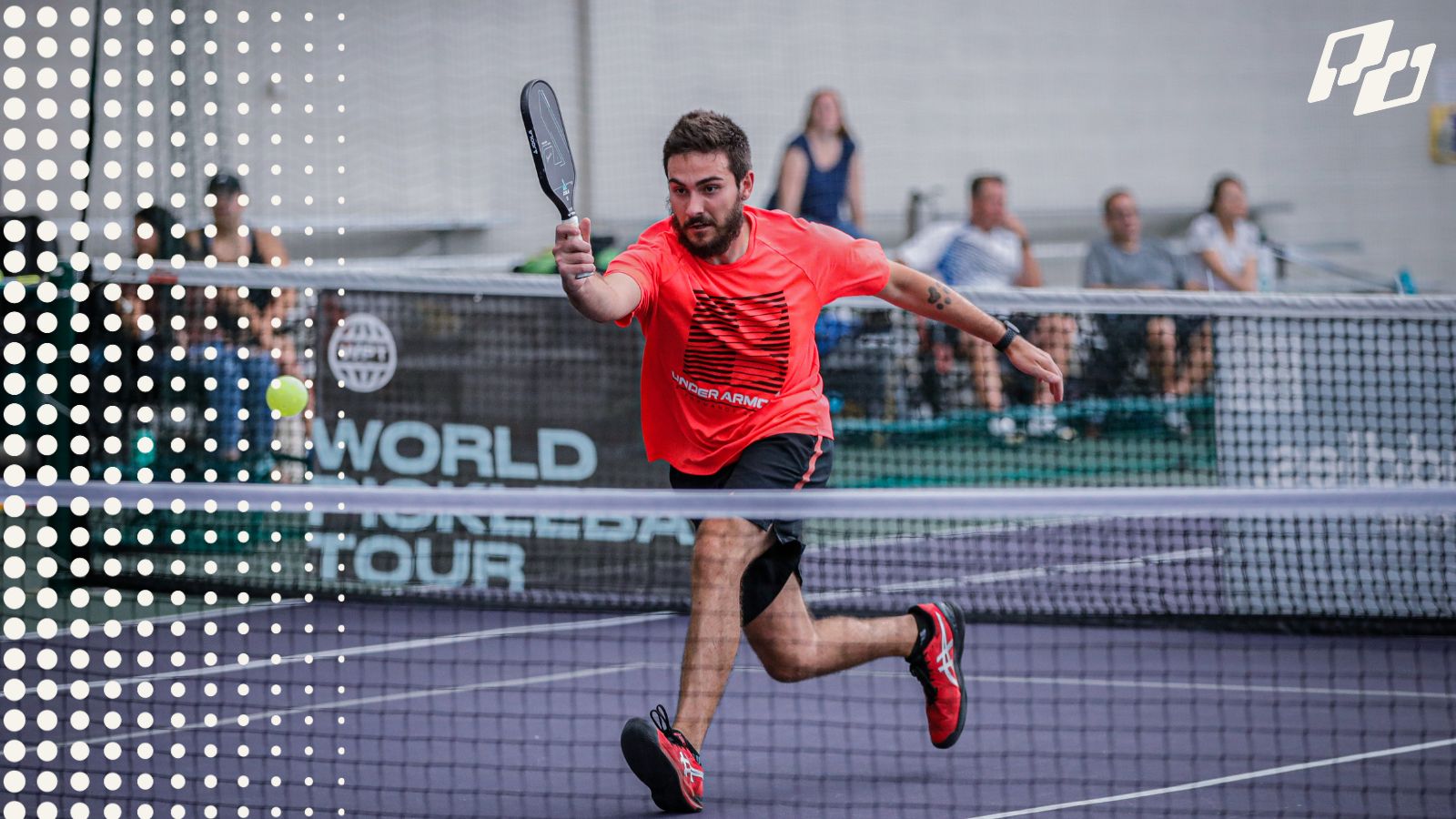
When the return comes fast — and it usually does — you’re still moving forward, weight high, feet narrow, paddle drifting. That’s how pop-ups, body shots, and reflex errors happen.
From the opponent’s perspective, this is easy pickleball: hit at the moving target.
The Real Goal After a Drop Isn’t the Line — It’s Balance
High-level players don’t think, “I need to get to the kitchen.”
They think, “I need to be ready for the next ball.”
That subtle shift changes everything.
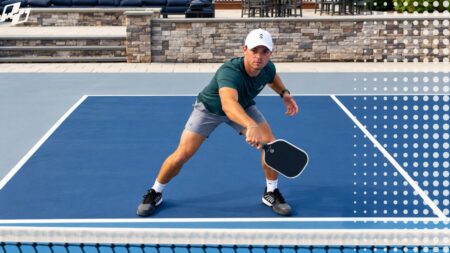
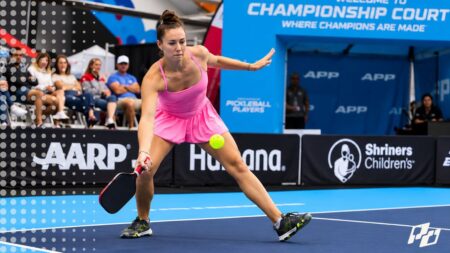
Instead of sprinting, they take controlled, progressive steps after the drop, staying athletic and waiting for information. If the reply is soft, they keep moving. If it’s fast, they stop and defend.
The key detail most rec players miss is when that stop happens.
It does not happen when the opponent strikes the ball. By then, it’s already too late.
Why the Split Step Is the Missing Piece for Rec Players
Most rec players understand the idea of a split step. Very few use it correctly after a drop.
The split step here isn’t about jumping. It’s about killing forward momentum early so your body is stable when the attack comes.
The correct timing is this:
👉 You should be fully stopped when your drop crosses the plane of the net.
Not when the opponent hits.
Not as they’re swinging.
Before.
That pause does three critical things:
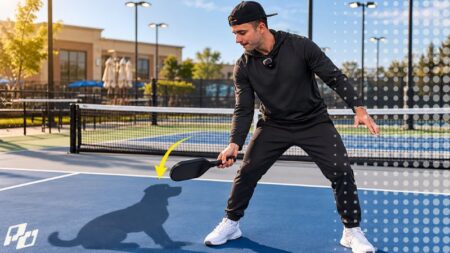
- It lowers your center of gravity
- It loads your legs to move in any direction
- It lets your eyes read speed and direction
If you’re still drifting forward when the opponent makes contact, you’ve already lost the exchange. You can’t change direction cleanly while your weight is moving the wrong way.
That’s why so many rushed approaches end with, “I didn’t even have time to react.”
You did — you just spent it running.
The Quiet Pattern Good Players Use Instead
After a drop, better players follow a simple rhythm:
Drop → small steps → read → split → react
They don’t assume the drop was “good enough.”
They don’t commit early.
They don’t rush to a spot that isn’t ready to receive them.
They move like someone expecting the ball back — because they are.
When you watch this on video (especially in slow motion), you’ll notice something important: their feet stop when their drop crosses the plane of the net — well before the opponent makes contact.
That’s where control lives:
Advanced Mistakes Rec Players Don’t Realize They’re Making
Beyond just “running too fast,” there are a few subtler errors that show up constantly at the beginner level.
1. Advancing Past the Decision Point
Many players decide how far to move before seeing the reply. They’re reacting to their own shot, not preparing for the opponent’s.
Good movement isn’t about intention — it’s about timing.
2. Standing Tall as They Arrive
Even players who slow down often arrive upright. That makes the first volley defensive and late.
Arriving low means you’re already prepared to block, counter, or reset.
3. Overstepping the Kitchen Line
Some players rush so hard they actually cross too deep into the NVZ, leaving themselves jammed with no retreat space.
Controlled steps keep you just outside the line — balanced and adjustable.
4. Assuming “Good Drop = Safe”
A drop can be good and still be attacked. Treating every drop like a guaranteed invitation to the net is a mental shortcut that gets punished.
Why This One Fix Changes So Many Points
When players slow their approach and split step properly, three things happen almost immediately:
- They stop popping up the first volley
- They defend speed-ups more comfortably
- They feel calmer during kitchen transitions
Not because they suddenly hit better shots — but because they’re ready when the ball comes back.
This is why pros and high-level rec players look unhurried. They aren’t slower. They’re just never caught moving the wrong direction.
The Reframe That Actually Works
Instead of thinking:
“I need to get to the kitchen as fast as possible”
Think:
“I need to arrive balanced when the ball comes back”
That one thought changes how you move, when you stop, and how well you handle pressure.
A good drop doesn’t end the point.
A controlled approach gives you a chance to win it.
And once you feel the difference — especially after watching yourself on video — it’s almost impossible to unsee how often rushing costs you points you never should’ve lost.