
Smart Backing Up for Intermediate Rec Players
For years, pickleball advice drilled one rule into everyone’s head: “Once you get to the kitchen line, never back up.”
That advice helped a lot of players stop camping in no-man’s land. But at the intermediate level, taking it literally starts to create a new problem.
Modern pickleball—especially at 3.5–4.0 rec speed—moves faster, hits harder, and punishes hesitation. The real skill now isn’t just getting to the kitchen. It’s knowing when staying there puts you in danger.
Backing up from the kitchen line isn’t failure. It’s a defensive decision.
And used correctly, it keeps you in rallies instead of getting handcuffed and burned.
Kitchen Myths That Get Players Killed
Let’s clear out a few phrases that sound smart but cause a lot of lost points.
“Never back up from the kitchen.”
This works only if you’re balanced, your team hit a good ball, and your opponent is under pressure. When none of those are true, staying put turns you into a stationary target.
“Hands win hand battles.”
Hands matter—but positioning matters more. If you’re too close with no reaction time, even great hands won’t save you from body shots.
“If you’re at the line, you’re winning.”
Position doesn’t equal control. You can be at the kitchen and still be losing the rally if your opponent has time, height, and balance.
These myths survive because they’re simple. Real pickleball decisions aren’t.
Situation 1: Your Team Pops Up a Dink (and You Feel It Instantly)
You’re in a dink exchange. Your partner hits a ball that floats just a bit—too high, too deep, or too slow. You know what’s coming before the opponent even swings.
This is where many rec players freeze at the line, hoping to guess the right angle or win a reflex exchange.
That’s the mistake.
When a dink pops up, the opponent has time and an upward paddle path. Staying glued to the kitchen gives you almost no margin. You’re reacting, not defending.
The smarter move is to take two or three quick steps back, lower your paddle slightly, and get balanced. That space buys you time to absorb pace instead of swinging at it. Once the attack is neutralized, you move forward again.
You’re not giving up the kitchen. You’re protecting yourself long enough to earn it back.
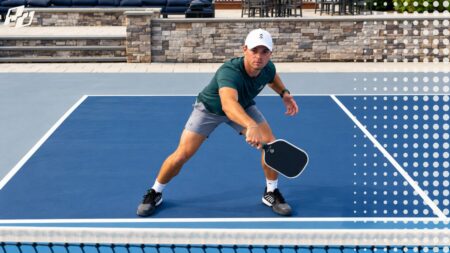
Coach Tanner Tomassi breaks this down in detail:
Situation 2: You’re Being Pulled Side-to-Side in the Dink Rally
If you’re dictating the dink exchange—moving your opponents, keeping balls low—holding the line makes sense.
But when you’re the one scrambling, reaching, or hitting while stretched, staying tight to the line works against you.
If you feel rushed before contact, your body already knows you’re defensive.
Backing up a step lets you reset from a stable base instead of lunging forward. And if the opponent chooses not to speed up, you still have time to move back in.
Good players don’t camp. They pulse.
Situation 3: You’re Facing a Trigger-Happy Forehand Attacker
Every rec court has one.
The player who speeds up anything with a little height on their forehand—especially from the middle. Against these players, hugging the line and hoping to guess right is a losing strategy.
If the ball is heading to their forehand side and it has any lift, assume offense is coming.
Backing up here does two important things: it gives you reaction time against body shots, and it prevents you from getting jammed at the chest.
Yes, your feet might be more exposed—but that’s often a better trade than eating a ball you can’t control.
Situation 4: You’re Leaning or Reaching at the Line
This one is subtle but deadly.
If you’re leaning forward, reaching across your body, or contacting the ball while off-balance, your defensive structure is already compromised. Any speed-up from that position is hard to handle cleanly.
Backing up before the opponent strikes allows you to square up, load your legs, and present a stable paddle face.
This isn’t about position. It’s about posture.
What Pros Do That Rec Players Miss
Watch high-level players closely and you’ll notice something important: they don’t “hold the line” the way rec players do.
They adjust constantly.
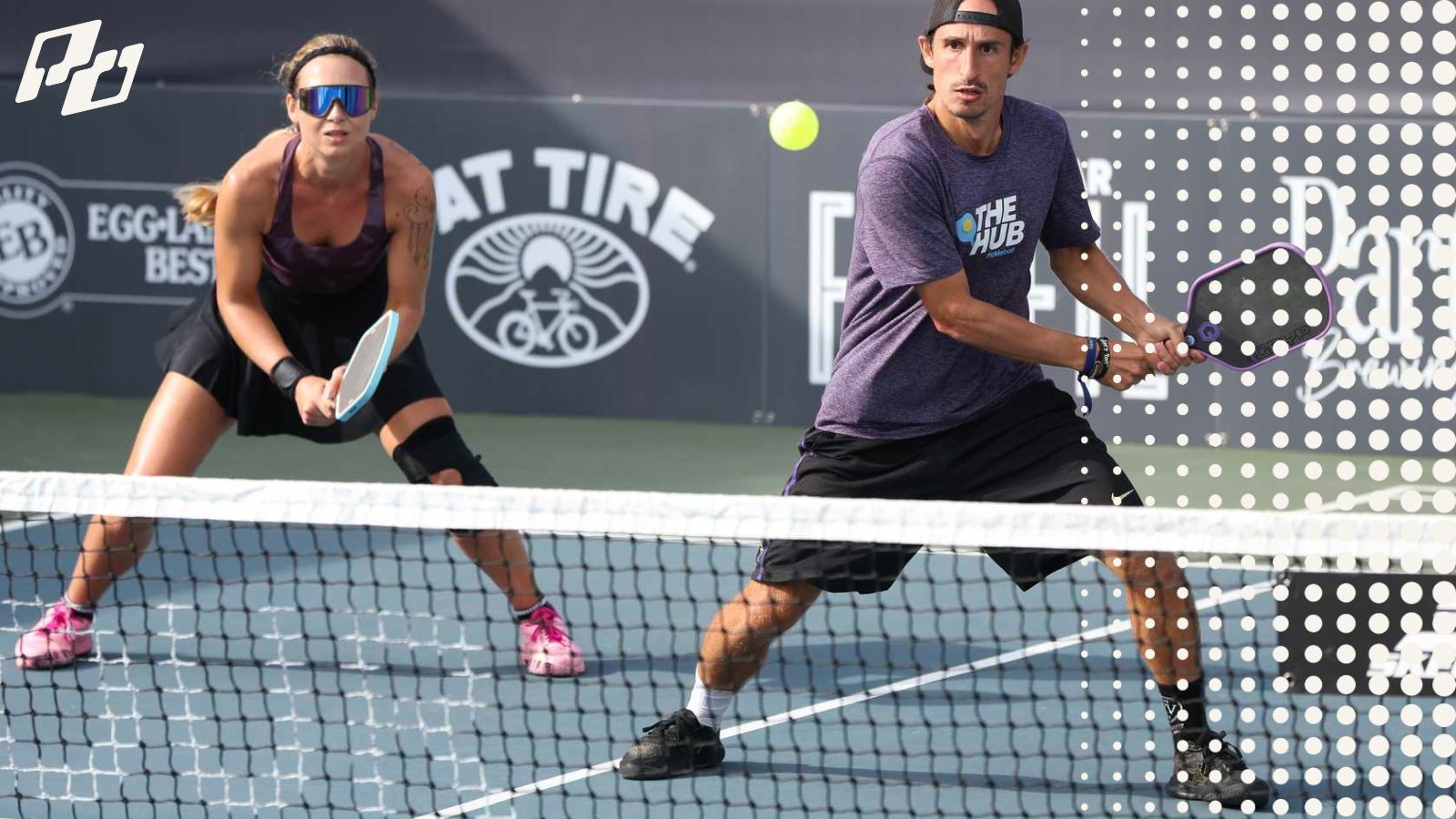
Pros back up early, not as a reaction. They read paddle path, contact height, and balance, and they create space before the ball accelerates.
They also don’t treat the kitchen as a fixed line. They treat it as a zone they manage—stepping off briefly to survive pressure, then reclaiming it immediately.
That fluidity is why they look calm. They’ve already made the decision before the attack happens.
When You Should Stay Put
Backing up isn’t automatic. You should stay anchored when:
- Your team hit a quality, low ball
- You’re balanced and not reaching
- Your opponent is hitting downward or off-balance
- You’re actively looking to attack a pop-up
Kitchen dominance still wins points. The difference now is knowing when dominance has shifted—and responding early instead of late.
Kyle Koszuta explains when backing up makes sense — and when it’s time to move forward again:
The Skill Most Rec Players Are Missing: Early Recognition
The biggest mistake isn’t backing up. It’s backing up too late. By the time the ball is already flying at you, the decision window has closed. The choice needs to happen off your partner’s paddle, not your opponent’s.
Watch for:
- Upward paddle paths
- Contact above net height
- Opponents who are set and balanced
Those cues tell you whether to hold ground or buy time.
Backing Up Is Temporary—Staying There Is Not
One final clarity point: the transition zone is not a place to live.
Backing up works because it’s brief and intentional. The moment you neutralize the attack, you move forward again. That rhythm—absorb, reset, advance—is what separates intermediate players from advanced ones.
If you never back up, you’ll get rushed.
If you back up without purpose, you’ll get pinned.
The skill is knowing when and why.