
Every few months, this argument comes back around in rec pickleball:
Is aiming at the upper chest a dirty shot?
It’s legal. Everyone knows that. But legality isn’t the real question rec players are arguing about.
The real tension is this: Where does competitive shot selection end and poor sportsmanship begin—especially in mixed-level rec play?
Higher-level players shrug and say, “It’s part of the game.” Lower-level or more social players feel like chest-high speedups are uncomfortably close to face shots—and unnecessary in rec play.
Both sides are right. And both sides are often talking past each other.
Let’s clear this up.
First: Chest Shots ≠ Face Shots (and That Distinction Matters)
One thing we all should agree on is this: deliberate face shots are not the goal.
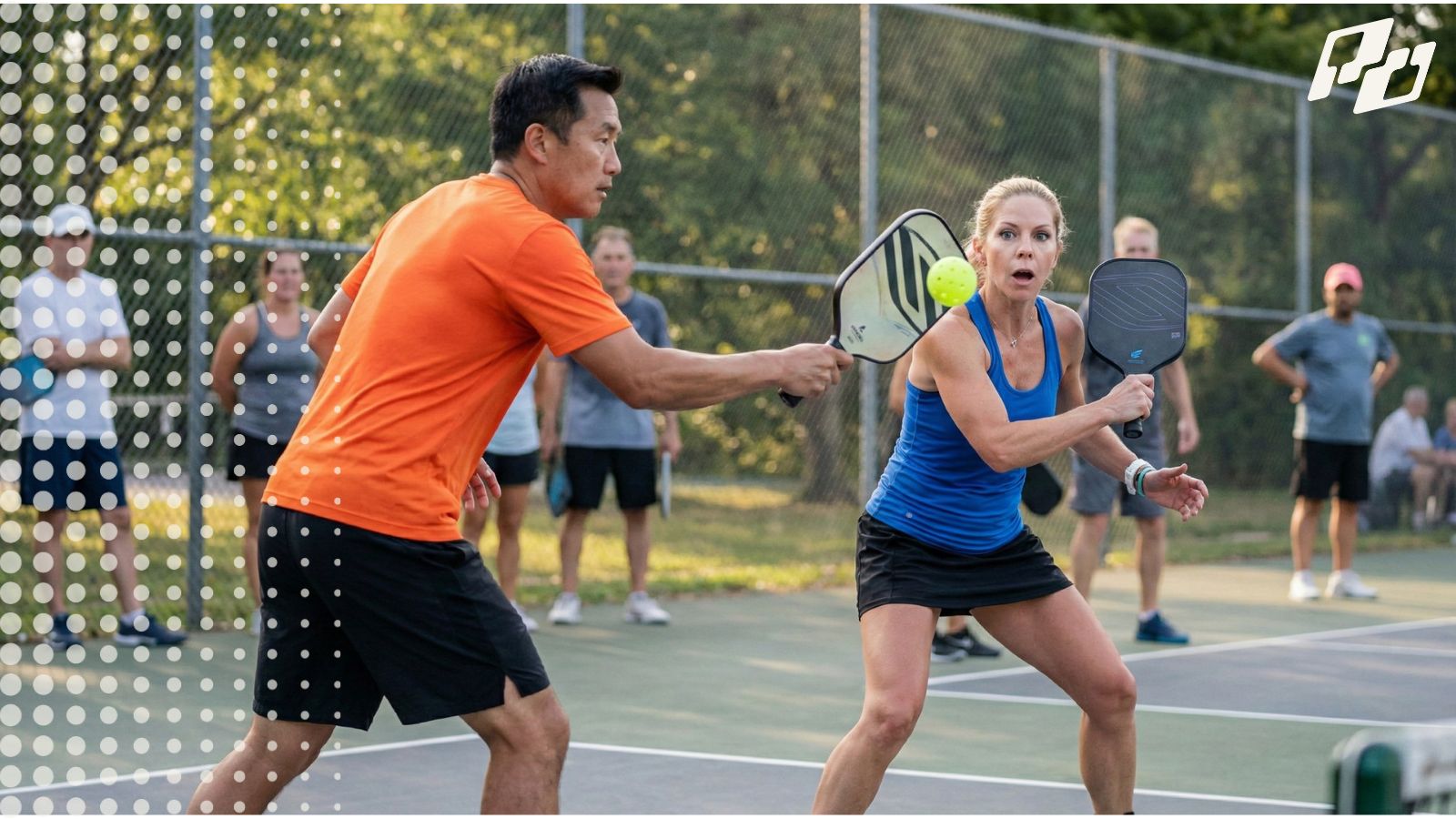
Even players who love body bags draw a line at the head. Most chest shots in rec play are not face-hunting—they’re the result of aiming for:
- the chicken wing (armpit / paddle-side shoulder),
- the hip-to-shoulder corridor, or
- the largest, least mobile blocking zone.
The upper chest is often only a few inches away from the chicken wing. Miss slightly, and the ball hits the sternum instead.
That doesn’t make it dirty. It makes it imprecise under speed.
At speed, especially in hands battles, chest contact is usually a byproduct—not malicious intent.
Why Chest Targeting Exists at All
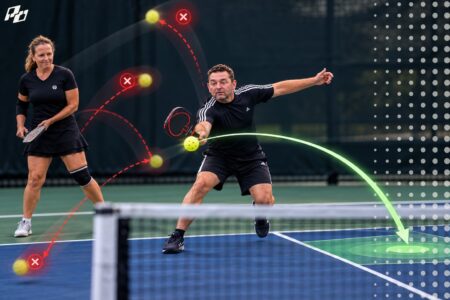
Chest targeting usually isn’t personal. It happens because pickleball gets fast—and options disappear.
- The body doesn’t move fast.
Feet can dodge and paddles can reach, but the torso reacts slower under pressure. - It jams the paddle.
Chest-high balls collapse the swing path and force weak, rushed blocks. - Angles vanish at the kitchen.
Down-the-line goes long. Crosscourt sits up. Sometimes the chest is the only ball that stays in.
The takeaway: at higher-paced rec play, chest targeting isn’t aggression. It’s often just the safest, most effective option in a tight exchange.
Where Rec Play Gets Messy: Level and Context
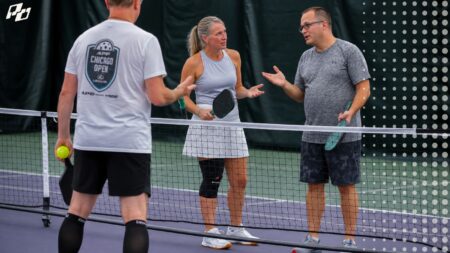
This is where things get complicated: rec play isn’t one thing.
A 3.0 open play court and a fast, invite-only 4.5 run may both be “rec,” but they’re completely different games. A chest speedup that feels normal and expected in one setting can feel reckless—or even hostile—in another.
That’s why context matters more than the shot itself.
A useful rule of thumb:
The more predictable the opponent’s defense, the more acceptable chest targeting becomes.
If your opponent:
- has fast hands,
- blocks confidently,
- counters speedups,
- and expects pressure,
then chest attacks are part of the game.
But when an opponent freezes, turns away, or flinches instead of blocking, repeated chest shots stop being strategy. At that point, you’re no longer testing skill—you’re exploiting a mismatch.
Legal? Yes.
Smart? Maybe.
Good rec etiquette? Often no.
Chest Targeting vs. “Body Bagging” as a Mindset
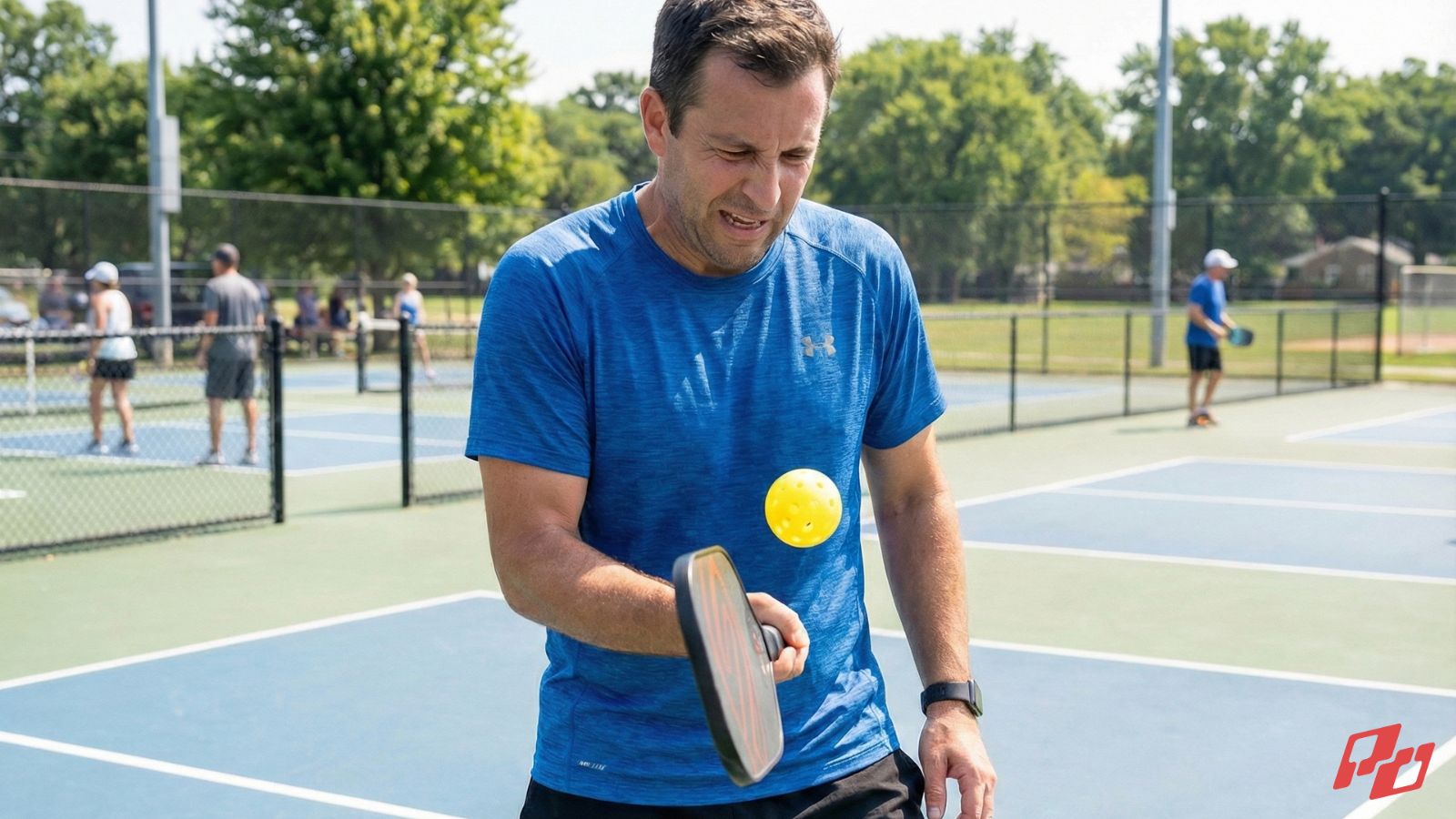
Targeting the chest is not the same as trying to bag someone.
Good chest targeting is:
- controlled,
- directional,
- and designed to force a weak reply.
Bad “body bagging” is:
- emotionally driven,
- repetitive,
- and focused on the hit, not the outcome.
That’s why some players say, “I only get mad at myself for setting them up.”
And others say, “If the same person kept doing it, maybe.”
It’s not the shot. It’s the intent and repetition.
Practical Rules for Rec Players (Use These)
If you want a clean framework instead of vibes and arguments, here it is:
Chest Targeting Makes Sense When:
- You’re playing similar or higher-level opponents
- Speedups are already part of the rally
- You’re aiming at the chicken wing / torso, not the head
- The shot is situational, not your default plan
- You’d be comfortable defending the same shot back
Chest Targeting Is a Bad Idea When:
- There’s a clear skill or reaction gap
- You’re playing casual or social rec
- Your opponent is turning away or freezing
- You’re hitting it because you’re annoyed
- You wouldn’t want that shot coming back at you
That’s not about being soft. That’s about being accurate about context.
What Coaches and High-Level Players Actually Teach
Most coaches don’t frame this as “Is it dirty?”
They frame it as:
- Target selection
- Margin
- Decision quality
Good coaching emphasizes:
- body targets below the shoulders,
- controlled pace over max power,
- and attacking space, not people.
Even pros who body-target constantly are aiming to:
- force a pop-up,
- jam the paddle,
- or create the next ball—not to score by impact.
And yes, almost everyone serious agrees on one non-negotiable:
👉 Wear eye protection.
Choosing not to protect your eyes doesn’t make legal shots unethical. It just makes risk management worse.
If You’re the One Getting Hit
At higher-paced rec play, some chest-high speedups are actually out balls—if you recognize them early. When players say “you can duck those,” they don’t mean every chest shot is going out. They mean that balls above the shoulders often sail long, but only if you see them in time.
Here’s the key distinction:
- If the ball is rising or clearly above shoulder height early → let it go. Stepping back or ducking is the right play.
- If the ball is flat and coming at chest level → that ball is likely in. Your job is to block, not dodge.
When players get hit repeatedly, it’s usually because the decision comes too late. A late split step, a low paddle, or slow recognition puts you in between—neither blocking nor getting out of the way.
That doesn’t mean you “deserve” to get hit. It means the shot exposed a timing or readiness issue—and that’s something you can fix.
Seen this way, chest shots aren’t just attacks. They’re feedback.
How I Think About It in Rec Play
Chest targeting in rec pickleball isn’t inherently dirty.
It’s also not automatically appropriate.
It’s a tool, not a personality trait.
Used thoughtfully, it’s smart pickleball. Used carelessly, it’s how rec games lose trust and flow.
If you want one sentence to take with you, make it this:
Play hard enough that your opponents respect your shots—but not so hard that they question why you’re hitting them.
That balance is what separates competitive rec play from rec play that just feels bad.