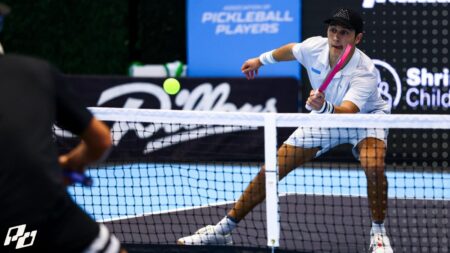
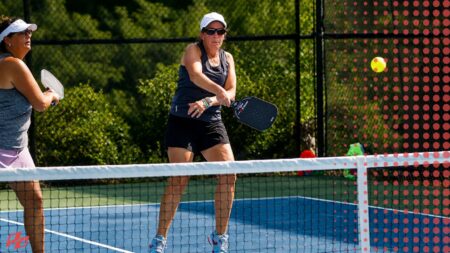
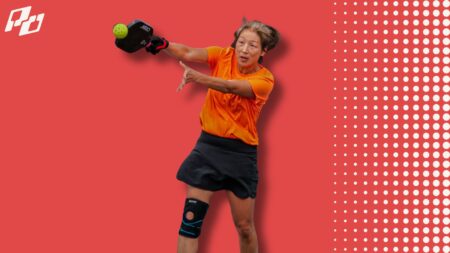
Pickleball has always lived in the space between friendly and fierce—but lately, that line’s getting harder to see. Case in point? The now-infamous moment at the 2025 U.S. Open, when Mariana Paredes ended a gold medal match with a Nasty Nelson, striking Evi Cruz in the face on match point.
Legal? Absolutely.
Strategic? Maybe.
Fair? That’s where things get messy.
It’s reignited a conversation many rec players know all too well: Are body bags and Nasty Nelsons just part of the game—or tactics that cross the line?
We tapped Coach Marko Grgic for his take on whether body bags and Nasty Nelsons belong in today’s game—and explored what you should (and probably shouldn’t) do when the setting is a rec court, not championship point.
The Incident That Lit the Fire: 2025 U.S. Open, Gold Medal Match
It ended not with a poach or an ATP, but with a Nasty Nelson—a serve intentionally aimed at the non-returning opponent, striking her in the face at match point.
Mariana Paredes delivered the serve. Evi Cruz took it—literally—in the jaw. Gold medal match, over:
But what made this moment explode across social feeds wasn’t just the point-ending hit—it was the post-serve fist pump, the stunned reaction from Cruz, and the ensuing debate that exposed a tension running through modern pickleball: is this still a gentleman’s game, or has it evolved into something else entirely?
What Are We Talking About Here?
Let’s define the two core terms under scrutiny:
- Body Bag: A groundstroke or volley intentionally aimed at an opponent’s body (often chest, shoulder, or paddle-side hip) during a rally. It’s a tactic used to reduce reaction time and force a weak pop-up or outright miss.
- Nasty Nelson: A serve that hits the non-returning player before the ball bounces, immediately ending the point in favor of the server. It’s rare, legal, and polarizing.
Both are strategically valid under USA Pickleball rules. But as the sport evolves, so does the context in which those strategies are applied—and that’s where things get complicated.
Strategic Legitimacy: Why These Shots Exist
Let’s be clear: neither body bags nor Nelsons are flukes or dirty hacks. They’re part of a calculated, high-level strategy set designed to exploit positioning, readiness, and mental lapses.
Why Body Bags Work
Body bags aren’t reckless—they’re strategic. When used right, they’re about timing, targeting, and disrupting rhythm.
They work best in fast-paced rallies, especially when your opponent is mid-transition, like during a third or fifth shot drop. That’s when they’re moving forward, paddle down, and slightly off balance.
Coach Grgic notes: “With my 5.0+ group, body bags are fair—but only when you read the moment. It’s not blind power; it’s precision jamming into the paddle-side shoulder, timing it to disrupt their reset.”
The best target? The paddle-side shoulder. It’s:
- High enough to jam their swing
- Low enough to avoid hitting the face
- Right in the zone that forces weak blocks or pop-ups
You’re not trying to hurt anyone—you’re aiming at a spot that gives you control of the point. At the 4.0+ level, this is a common tactic to interrupt resets and take early control before the NVZ exchange even begins.
Why Nasty Nelsons Exist
The Nasty Nelson isn’t about being sneaky—it’s about capitalizing on poor positioning.
Here’s when it makes sense:
- The non-returning player is too close to the NVZ
- They’re positioned too close to the service box or centerline, blocking or interfering with the server’s target zone
- They’re not in ready position—paddle down, eyes elsewhere
- They’re standing in the direct line of a legal cross-court serve
High-level servers spot these cues and take advantage. A well-placed Nelson hits the partner before the return, ending the point instantly and legally. It’s high risk—miss your target and it’s your fault. But if you hit? You just exposed a key weakness, and maybe turned the momentum of the match.
Marko adds: “I think the US Open scenario was hilarious. I don’t believe Mariana meant to nail Evi in the face—it was likely an accident. Still, Evi’s huge reaction made it legendary.”
Bottom line: It’s not about hitting someone. It’s about showing they weren’t paying attention.
Body Bag vs. Nasty Nelson: Are They the Same?
Some players argue there’s no difference—both are direct attacks on the opponent’s body.
Others push back:
- Body Bags: Usually happen during fast rallies. The opponent is actively engaged, has more time to react, and often has a paddle ready.
- Nasty Nelsons: Happen on the serve—when the non-returning player might be relaxed, unready, and not expecting contact.
“0% the same. For a lot of reasons.”
“One is defense-able. The other is a sneak attack.”
The difference lies in time-to-react, expectation, and the nature of the point.
Body Bag vs. Nasty Nelson – Tactical Comparison
| Feature | Body Bag | Nasty Nelson |
|---|---|---|
| When It Happens | During a rally | On the serve |
| Target | Opponent’s body (usually torso or paddle-side hip) | Non-returning player before the ball bounces |
| Legal? | Yes | Yes |
| Opponent Engagement | Actively engaged in the point | May not be fully ready or in defensive position |
| Risk of Injury | Medium (depends on location & speed) | High, especially if aimed near head or neck |
| Strategic Use Case | Jams opponent, forces pop-up or error | Punishes poor positioning, creates instant win |
| Rec Play Fit? | Sometimes (use with discretion) | Rarely used, generally frowned upon |
| Tournament Fit? | Common and expected | High risk, high reward—used selectively |
Where It Gets Ugly: The Ethical Dilemma
Here’s where the Mariana Paredes vs. Evi Cruz moment took a sharp turn: the celebration. Not only did Paredes end the match with a Nelson, but she celebrated—hard.
To some, it was confidence. To others, it was classless.
“Legal point, but shameful behavior.”
“You don’t celebrate hitting someone in the face.”
“If you’re not good enough to win the point cleanly, you go dirty.”
And yet others responded:
“She was flat-footed. That’s on her.”
“Don’t stand in a dumb spot and expect mercy.”
“Anyone mad about this clearly hasn’t played competitive sports.”
This divide reveals an ongoing shift: pickleball is maturing, and with that, the culture around competition is changing.
Marko’s warning: “Wild aggression from lower levels spoils the fun. AIMLESS body shots are dangerous and obnoxious—celebrate the point, not the fact you hit someone.”
Where Strategy Meets Sportsmanship: Four Core Factors to Consider
Let’s analyze the use of body bags and Nasty Nelsons through four lenses:
1. Intent vs. Execution
- Was the shot purely tactical, or was it delivered with intent to intimidate, humiliate, or hurt?
- In the Paredes incident, the fist pump muddied the waters. The shot may have been clean; the post-shot behavior wasn’t.
2. Opponent Awareness and Readiness
- If your opponent is crowding the NVZ, flat-footed, or not tracking the ball, they’ve created vulnerability.
- High-level players often exploit court geometry and body language, not just shot selection.
“She caught you lackin’”
“It’s like not covering your king in chess and being mad it got taken.”
3. Context of the Match
- Rec play? Body bags and Nelsons are mostly frowned upon unless agreed upon by all players.
- Tournament play? All tactics are fair game. As long as it’s legal, it’s playable.
- Match point in a gold medal final? Emotions run hot. High risk, high reward, high drama.
4. Post-Shot Conduct
- Celebrate the win, not the injury.
- Respect your opponent’s vulnerability, especially when the point ends in physical contact.
- Trash talk or visible gloating after a body shot or Nelson often undercuts your win in the eyes of fans and fellow players.
Strategic Shot vs. Poor Sportsmanship
| Behavior | Competitive Strategy | Poor Sportsmanship |
|---|---|---|
| Targeting the paddle-side shoulder | ✅ | |
| Aiming for the face or head | ✅ | |
| Using a Nelson after warning a crowding player | ✅ | |
| Celebrating after hitting someone in the face | ✅ | |
| Using a body bag in every rally | ✅ | |
| Mixing in body shots to vary attack patterns | ✅ | |
| Hitting a beginner repeatedly with body shots | ✅ | |
| Serving directly at a distracted player | Possibly ✅ | Often ✅ (context matters) |
How Should You Use These Tactics?
When to Go For It:
✔️ Opponent is crowding the NVZ and out of position.
✔️ High-stakes, competitive matches, especially with experienced players.
✔️ Opponent has demonstrated the skill and reflexes to defend themselves.
✔️ You’re using it as a strategic mix-up, not a go-to every point.
When to Avoid It:
❌ You’re playing with beginners or seniors.
❌ It’s a recreational or drop-in setting.
❌ Your opponent has a mobility or vision issue.
❌ You’re doing it to prove a point or embarrass someone.
Should You Use This Shot? Strategic Checklist
| Situation | Body Bag ✅ / ❌ | Nasty Nelson ✅ / ❌ |
|---|---|---|
| Opponent crowding the NVZ | ✅ | ✅ |
| Casual rec game with beginners | ❌ | ❌ |
| Tournament or league match | ✅ | ✅ |
| You’re frustrated or angry | ❌ | ❌ |
| Opponent not paying attention | ❌ (debatable) | ✅ (technically) |
| Opponent has elite reflexes | ✅ | Maybe |
| You want to test their reactions | ✅ | Risky |
| Your goal is to intimidate | ❌ | ❌ |
What to Teach Your Rec Group About Body Bags & Nelsons
If you organize play or just happen to be the most experienced player on the court, you help set the tone.
Whether you’re playing with regulars or mixing it up with newcomers, here’s how to keep things competitive and respectful when it comes to body bags and Nasty Nelsons:
1. Set the tone: Is this a fun game or a competitive one? Make sure everyone’s on the same page before the first serve.
2. Use good judgment: Body shots and Nelsons are legal—but in casual games, use them wisely. If things get too intense, check in and dial it back.
3. Stay ready: Newer players should know how to avoid getting hit: stay alert, paddle up, and don’t crowd the line—even if you’re not returning.
4. Lead the way: If you’re the better player, set the example. Play smart, not mean. Keep it competitive, but respectful.
Evolving Culture: What Kind of Pickleball Do We Want?
This debate is less about legality and more about what kind of sport pickleball is becoming.
- Is it a friendly backyard game or a serious sport?
- Should tactics that are legal but controversial be embraced or discouraged?
- Does intent matter more than outcome?
Pickleball is growing up. With increased competitiveness comes a need for new conversations around sportsmanship, culture, and community norms.
Maybe the right question isn’t “was it legal?”
Maybe the question is: was it worthy of the sport we want to grow?
Strategy With Integrity
Body bags and Nasty Nelsons are here to stay. They’re not cheats. They’re tools—powerful ones. Like any tool, it’s all about how and when you use them.
If you want to be a top-tier player, learn the shots. But if you want to be a respected player, master the nuance.
Winning the point doesn’t always mean winning the respect.
Use strategy. Use skill. Use judgment.
And above all—keep playing hard, fair, and smart.