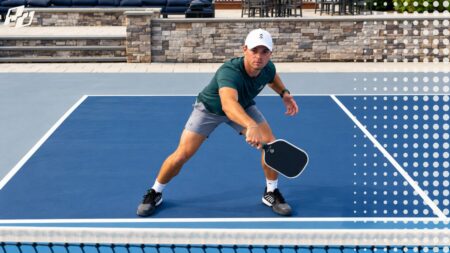
If you’re hovering around the 3.5 level, you probably recognize this feeling: you’re no longer a beginner. You can rally, you understand the kitchen, and you occasionally play points that feel really good. And yet… results still feel inconsistent, especially against stronger players.
That’s exactly why we teamed up with pickleball coach Marko Grgic to break down the three most common mistakes he sees 3.5 players make — not obvious errors, but subtle habits that quietly cap improvement.
Before we unpack each one in detail, watch the video below. Then we’ll break down why these mistakes show up and how to start fixing them in real games.
👉 Watch: The 3 Most Common Mistakes 3.5 Players Make
Why 3.5 Is the Hardest Plateau to Break Through
The 3.5 level is tough because it’s where ability outpaces decision-making.
At this stage, you can hit most shots — drives, drops, volleys, speed-ups. The problem is that pickleball now becomes less about what you can do and more about what you should do, and when.
This is why so many 3.5 players feel stuck. You’re not missing skills — you’re missing restraint.
- You attack too early because you can.
- You rush forward because you know the kitchen matters.
- You swing for pace because it sometimes works.
What Marko highlights in the video is that progress at 3.5 doesn’t come from adding weapons — it comes from cleaning up priorities.
And the three mistakes below all come from the same root issue: trying to do the right thing at the wrong time.
Mistake #1: Not Serving and Returning Deep Enough
This one feels basic — but it’s still the most common problem Marko sees.
At the 3.5 level, serves and returns often land short or mid-court. That might feel safe, but it actually hands your opponents the biggest advantage in pickleball: easy access to the kitchen.
Marko emphasizes that depth creates pressure before the rally even begins. A deep serve or return forces your opponent to hit their next shot while moving backward or from an uncomfortable position.
The key insight many players miss is this: depth comes from height, not speed.
Trying to hit harder usually leads to missed serves or floating returns. Instead, Marko recommends a smoother swing with more net clearance. A serve or return that crosses the net higher will naturally land deeper with far more margin.
On the return specifically, he also stresses the importance of movement. Hit the return out in front, then move forward immediately. The return isn’t finished when the ball crosses the net — it’s finished when you’re in position to handle the third shot.
👉 Watch: We filmed a video with Marko some time ago on how to hit deeper returns:
Mistake #2: Letting Opponents Walk Their Way Forward
Once the return is in play, many 3.5 players accidentally undo their good work by hitting balls that land short or sit up.
This is especially common on the fourth shot.
The serving team starts the point at a disadvantage. Your job is to keep them there — not help them advance. As Marko explains, depth after the return matters just as much as depth on it.
Whether you’re blocking a drive, countering pace, or taking a ball out of the air, the priority is the same: never short, always deep.
This is where patience becomes a skill. Many 3.5 players try to “finish” points too early, especially when they see an opening. Better players resist that urge. They use depth to force one more uncomfortable shot before attacking.
Mistake #3: Attacking From the Transition Zone Instead of Resetting
This is the mistake that most clearly separates consistent 4.0 players from stuck 3.5s.
The transition zone — sometimes called the “zone of death” — is where points go wrong. You’re too far back to dink comfortably and too close to trade hands safely. And yet, many players try to attack from here anyway.
Marko’s message is simple but powerful: if you’re back, hit soft.
The reset is the shot that allows you to neutralize the rally and safely earn your way forward. Instead of forcing a drive or speed-up, you drop the ball into the kitchen, regain balance, and advance behind it.
One practical cue Marko shares is to focus on contacting the ball between your feet, not while reaching. That small adjustment dramatically improves control and consistency when resetting under pressure.
What Better Players Do Differently (Without Hitting Harder)
One of the biggest takeaways from this video is that better players aren’t doing wildly different things — they’re doing the same things with better timing.
Compared to most 3.5 players, 4.0+ players:
- Use depth to delay opponents instead of forcing winners
- Reset first, then attack
- Treat the transition zone as temporary, not a place to fight
- Advance only after they’re balanced
It’s not flashier pickleball — it’s calmer pickleball.
A Simple One-Week Focus Plan (No Drills Required)
If you try to fix all three mistakes at once, nothing sticks. Instead, use awareness-based focus during regular play.
Days 1–2: Only think about serve and return depth. Don’t worry about the rally — just notice where those first two shots land.
Days 3–4: Pay attention to how often opponents reach the kitchen easily. If they do, ask yourself which shot helped them get there.
Days 5–7: Count how many times you reset from the transition instead of attacking. Even one or two good resets per game is progress.
No drills. No extra court time. Just intentional play.
The Part No One Tells You About Improving
Most 3.5 players don’t lose because they’re overmatched — they lose because they rush moments that don’t need rushing. A short return here, a forced attack there, one extra step forward before they’re balanced.
Here’s the bonus insight: progress at this level often feels boring before it feels better. The rallies where you don’t do anything spectacular — just deep, patient, and controlled — are usually the ones you win more often than you realize.
If you want a simple gut check next time you play, ask yourself this after a point:
“Did I make them uncomfortable… or did I make it easy for them?”
When you start winning the boring points, the flashy ones tend to show up on their own.