If you’ve been anywhere near a pickleball Facebook group lately, you’ve seen it.
“DUPR Reset is a money grab.”
“Finally, this fixes broken ratings.”
“You shouldn’t be able to pay to protect your number.”
“About time.”
The temperature around this topic is high — and honestly, I understand why.
Because DUPR ratings aren’t just numbers anymore. They determine who you can play with, which sessions you’re allowed into, what tournaments you qualify for, and in some cases… your entire pickleball identity.
So let’s slow this down and actually unpack it.
First: What DUPR Reset Actually Is (In Plain English)
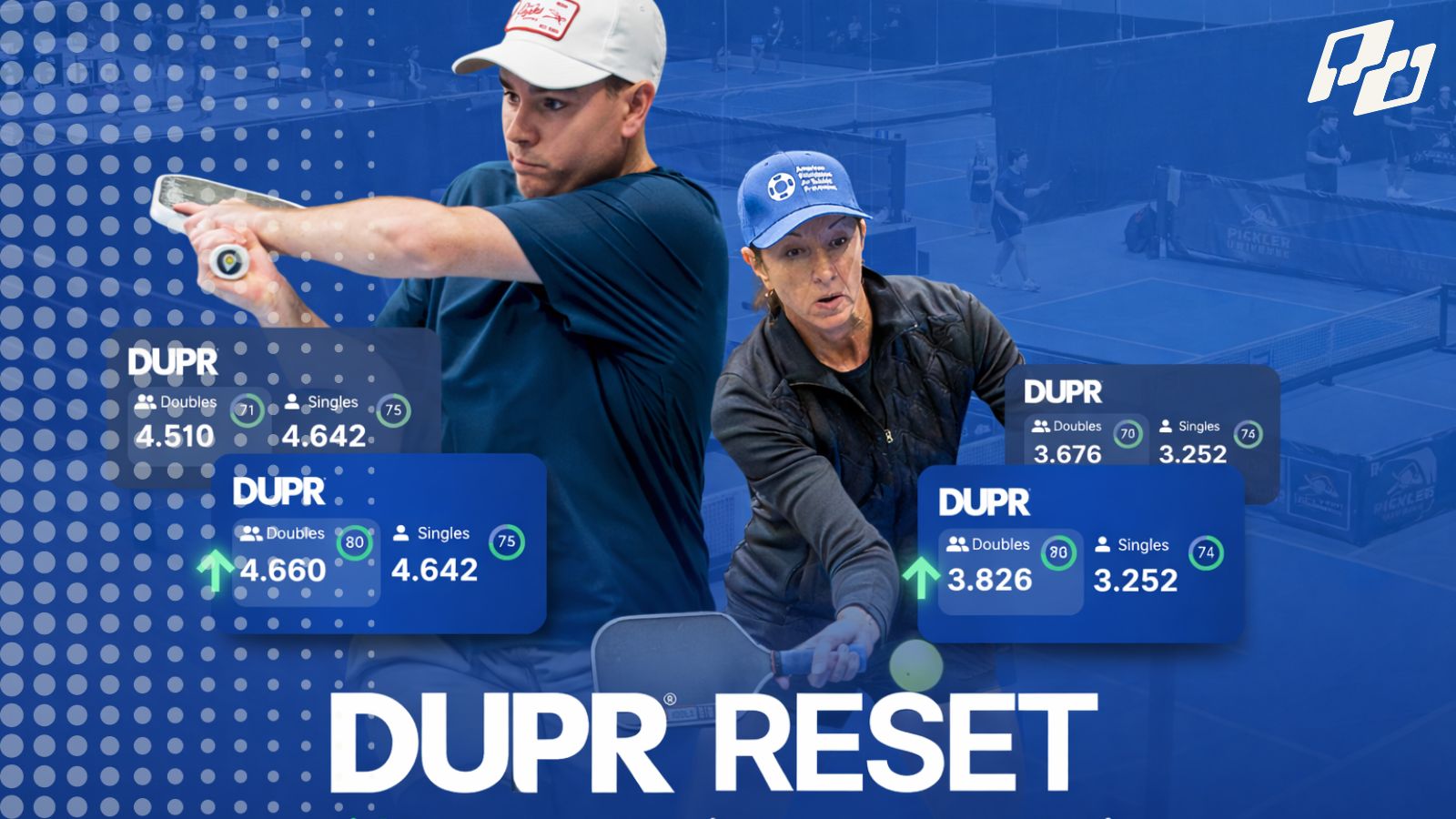
DUPR Reset is a paid, opt-in rating window.
During a set period, you play at least eight eligible matches (with partner/opponent diversity). DUPR calculates a separate “Reset rating” using only those matches.
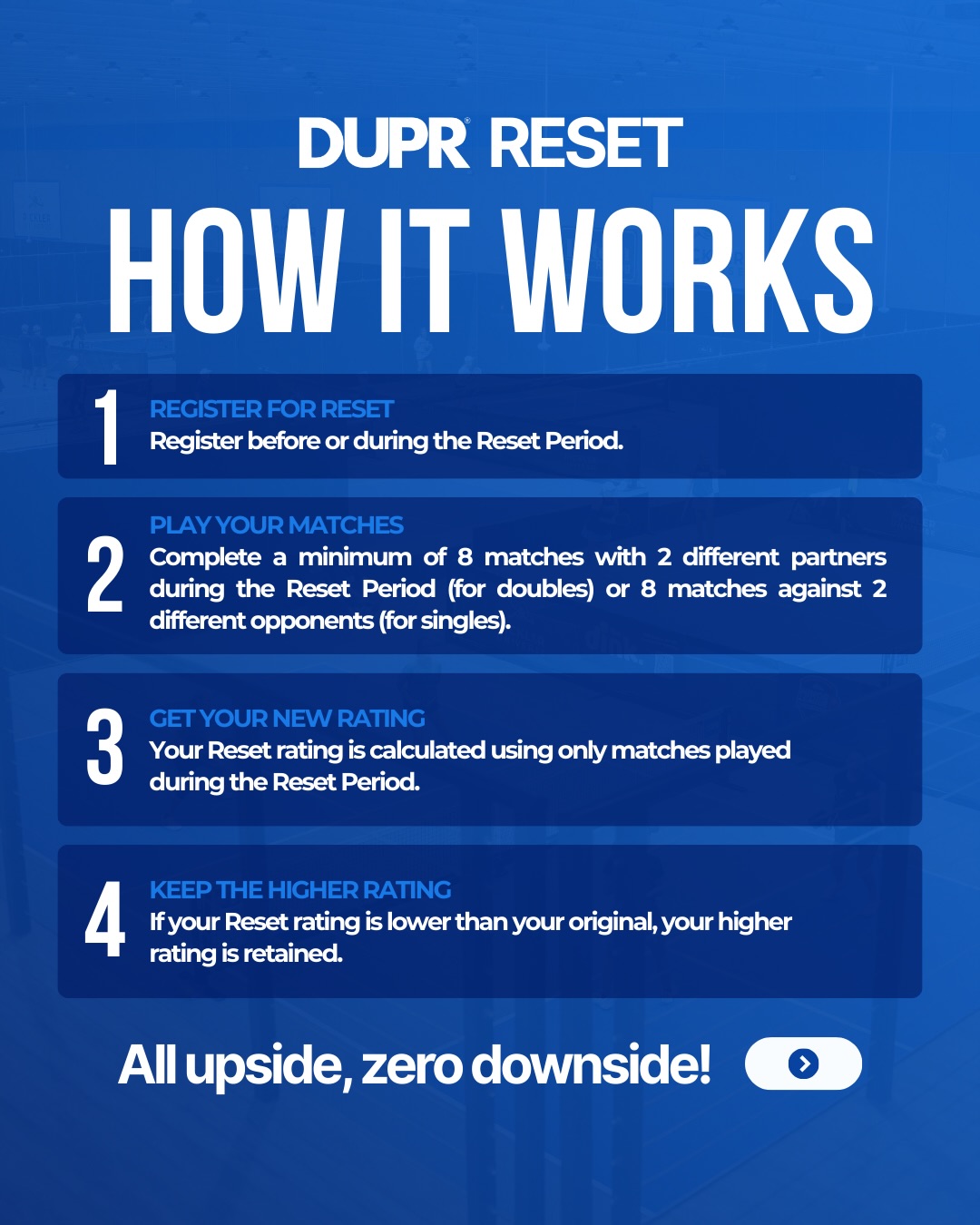
At the end of the window, your official rating becomes whichever is higher:
- Your original rating
- Or your Reset rating
Meaning: you cannot end up lower than where you started. That “no downside” clause is the lightning rod.
And it’s the part that makes this interesting.
Why DUPR Likely Created This
Here’s the uncomfortable truth: a lot of players are afraid to play rated matches. They don’t want their number to drop.
➡️ They avoid tournaments.
➡️ They avoid leagues.
➡️ They decline challenges.
That’s bad for participation. It’s bad for data accuracy. It’s bad for growth. So DUPR appears to be trying to remove the fear factor.
The pitch is simple: “if you think your rating is outdated, prove it — and we won’t punish you if it doesn’t go your way.”
From a growth perspective? That’s clever.
From a rating integrity perspective? That’s where it gets complicated.
Why Some Players Are Furious
The criticism isn’t irrational.
Rating systems traditionally include risk. If you perform poorly, you drop. If you perform well, you rise. That tension is what keeps ratings honest.
When you remove downside risk, skeptics argue you introduce inflation pressure. Even if inflation is small, the perception of inflation damages trust. And trust is everything in a rating ecosystem.
There’s also the optics problem: charging for it. When you combine:
- Paywall
- No downside
- Rating movement
You create a headline that writes itself: “pay $34.99 for a chance to go up.”
Even if that’s not technically what’s happening, perception matters.
Why Some Players Love It
Now let’s flip it.
There are players who created DUPR accounts when they were brand new. They logged messy early matches. They played with random partners. They didn’t understand strategy yet.
Six months later, they’re dramatically better — but their rating is anchored low.
In theory, ratings adjust over time. In reality? If you don’t have access to regular rated tournaments or leagues, movement can be slow. And in many clubs, that number is a gatekeeper.
No 3.5 rating? No 3.5 session.
No 4.0 rating? No advanced open play.
So for improving players stuck in rating purgatory, Reset feels like a practical correction tool.
➡️ Not ego inflation. Calibration.
The Real Tension: Accuracy vs. Emotion
Here’s the deeper layer most people aren’t talking about.
DUPR isn’t just math. It’s psychology.
People attach identity to ratings. They introduce themselves with it. They compare. They measure progress through it.
When ratings become social currency, any change — especially a paid change — feels political.
But we also need to acknowledge something else: some players genuinely believe they’re underrated… and they’re not.
Reset might clarify that in a very public way. And that can be uncomfortable.
Could This Inflate Ratings?
Possibly — but probably not dramatically.
Why?
- Because you still need real match results.
- You need multiple matches.
- You need partner/opponent diversity.
This isn’t a “click button, gain 0.3” scenario. It’s still performance-based. The bigger concern isn’t inflation. It’s trust erosion.
If players believe ratings can be gamed, the system weakens — even if the math remains solid.
Who Should Actually Consider DUPR Reset?

Let’s get practical. If you are:
- Someone who logged DUPR too early
- Someone stuck in a low-event area
- Someone blocked from sessions because of an outdated rating
- Someone confident you’ve improved significantly
Then Reset might be worth it.
If you are:
- Already playing regular rated tournaments
- Seeing steady movement
- Emotionally tied to a higher number for validation
Then Reset may not be necessary. The healthiest mindset is this:
➡️ Use Reset to improve matchmaking accuracy.
➡️ Not to chase status.
The “Play Down” Argument
One interesting side effect of this whole debate is how much rec players care about numbers. If you’re a 3.6 playing with 3.2s and dominating, your rating might not move much — but your actual development might stall.
The solution to that isn’t always Reset. Sometimes the solution is:
Play up.
Get uncomfortable.
Lose.
Adjust.
Ratings follow competition quality more than highlight moments.
My Honest Opinion
I don’t hate the idea. I do think the paywall plus “no downside” framing creates unnecessary controversy. If DUPR had introduced this as:
- A free once-per-year recalibration
- Or a feature tied to verified league participation
The reaction would likely be softer. That said, for rec players who truly improved and lack rated access, Reset could be a helpful correction tool.
But here’s the key: if your improvement is real, you don’t need a shortcut. The number will eventually catch up.