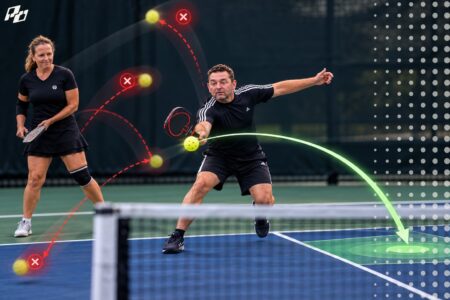
If you play rec pickleball long enough, you eventually have that moment.
You see the ball sitting just high enough.
You lean in.
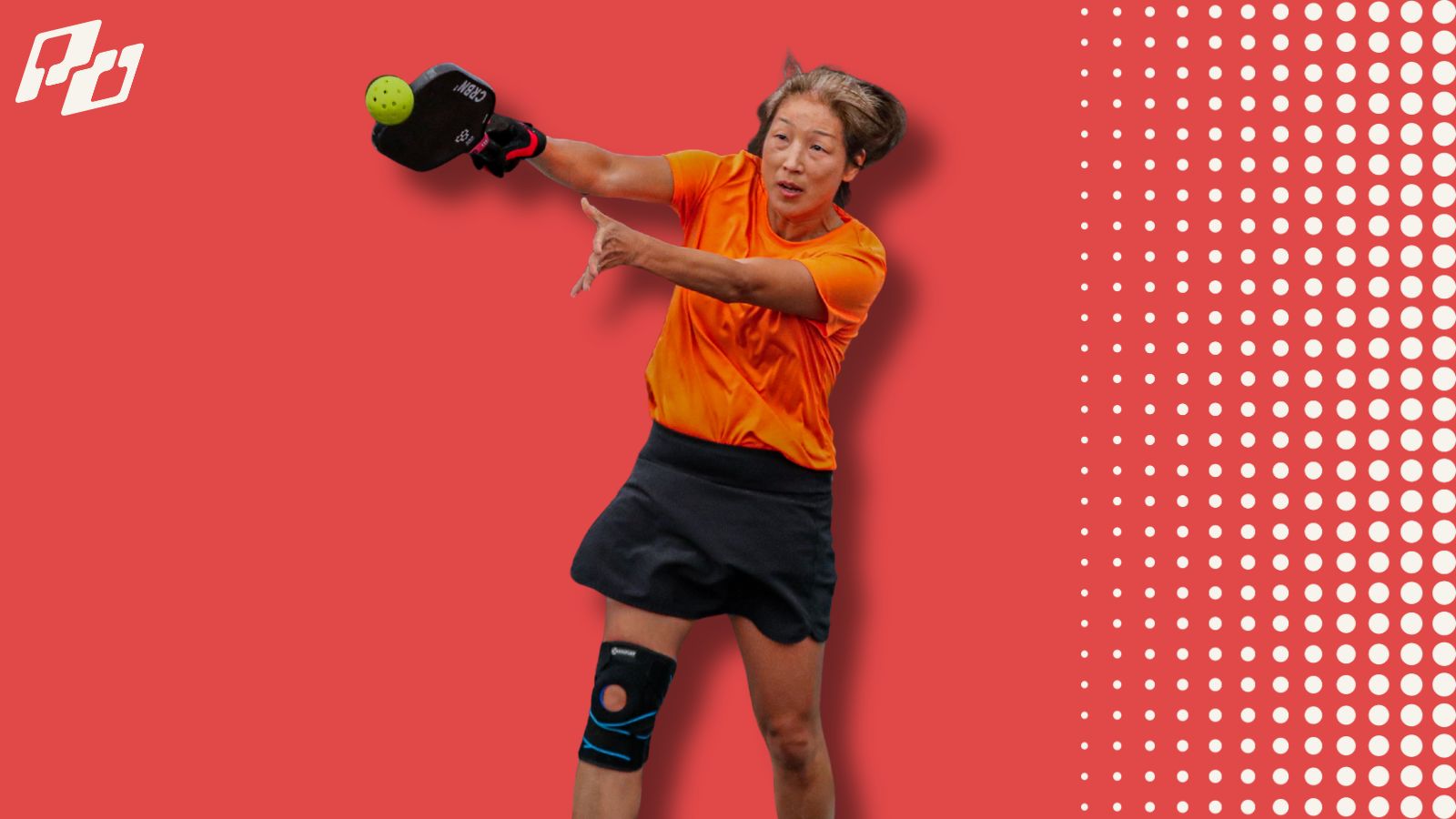
Your paddle accelerates.
You feel that perfect contact — crisp, clean, confident — and then… it hits a human being.
Right in the ribs.
Silence. A half-second pause as everyone waits. You’re not sure if you should apologize… celebrate… or run.
Welcome to the bodybag dilemma — one of the funniest, most awkward, and most misunderstood parts of rec pickleball.
And while the jokes write themselves, how you handle the moment reveals a lot about your mental game, your awareness, and your ability to keep a court fun and competitive at the same time.
Let’s break down what bodybags really mean in rec play, how to react, how to use them strategically, and how to avoid being that person.
Why Bodybags Happen (And Why They’re Not Mean)
Let me tell you a quick story.
A few weeks ago, I watched a 3.5 player accidentally tag his mixed partner on the third rally of the first game. She took the ball flush on the hip. He panicked, froze, then spun in a circle like he was rebooting. She burst out laughing. He nearly cried.
The funniest part? A few points later, she tagged him back — on purpose — and now they keep a running “friendly fire scoreboard.”
But here’s the important part: not all bodybags are accidents.
Sometimes you hit someone because the ball dictated it. Sometimes you hit someone because your opponent put themselves in the wrong spot.
And sometimes — especially in competitive rec — you hit someone because it’s the highest-percentage shot on the court.
Intentional bodybags aren’t dirty. They’re tactical.
When your opponent:
- crowds the kitchen
- reaches into your space
- leans middle early
- leaves their torso exposed
- jumps the line on a predictable dink
- gives you a chest-high ball from 7–10 feet
…the smartest play is the body.
Pros do this constantly. You’ve seen it: a tiny flick from two feet off the line, right into the right shoulder, because the player was leaning too far or left their paddle low.
This isn’t aggression — it’s geometry. It’s reading space, timing, and body position.
At intermediate levels, the body is often the ONLY high-percentage speed-up target.
Wide? Too risky.
Angle? Too sharp.
Feet? Too soft.
Paddle side? Too easy to counter.
The torso — especially the right shoulder — is the safest attack window.
So yes, bodybags happen by accident…but the intentional ones?
Those are part of real strategy. And how you handle those moments matters too.
Not with guilt. Not with celebration. Just with confidence, respect, and readiness for the next ball.
Because at the end of the day, a bodybag isn’t a personal attack. It’s a positioning problem — and a tactical solution.
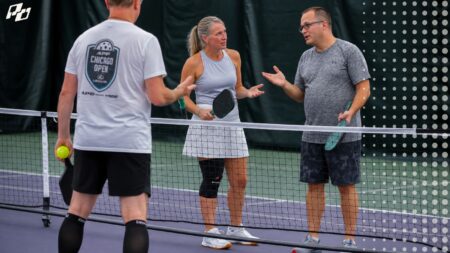
So… What Should You Say After You Hit Someone?
The golden rule:
Match your reaction to your relationship.
1. With strangers → Keep it simple and polite.
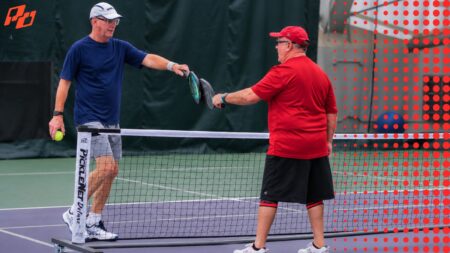
Hand up. Quick “You good?” Move on.
No over-apologizing. No awkward explanations. No “I didn’t mean it!” monologue.
2. With friends → Mild chaos is acceptable.
A smirk. A “my bad… kinda.” Maybe even the classic “earn your keep!” if they know you well.
Friends expect teasing. Strangers expect respect.
3. If it was truly dangerous → Be human.
Headshots, throat shots, ricochets off the tape — these call for actual concern: “Hey — seriously, you okay?”
4. If it was intentional in a competitive game → No apology needed.
If you aimed at the shoulder during a fast exchange and hit it, that’s just smart pickleball.
In rec play, you don’t need a full apology — a simple nod keeps the moment respectful without killing momentum.
The Psychology: Why People React So Differently

Some people laugh it off. Some get embarrassed. Some immediately want revenge. Some shut down emotionally and start playing worse.
Why?
Because a bodybag taps into three sensitive areas:
1. Visibility
Everyone saw it. The moment feels bigger than it is.
2. Vulnerability
Pickleball is social — nobody wants to look foolish in front of strangers.
3. Identity
Intermediate players know what they should do… so mistakes hit the ego harder.
Understanding this helps you navigate the moment with empathy instead of awkwardness.
How Bodybags Actually HELP Your Game
Here’s the cool part: bodybags aren’t just accidental chaos — they’re data.
1. They reveal footwork issues
If someone keeps getting hit? They’re leaning, not split-stepping.
2. They expose their defensive patterns
Players who guard too low leave shoulders open. Players who guard too high leave hips exposed.
3. They create hesitation
After taking one, most players become:
- more conservative
- more cautious
- more predictable
And predictable players are easier to beat.
4. They break momentum
A good bodybag disrupts rhythm — sometimes in your favor, sometimes not. But it changes things.
How NOT to React (Unless You Want Enemies)

Please don’t:
- celebrate like you won gold in Paris
- smirk at a stranger
- say “MOVE!”
- mock the person
- apologize sarcastically
- brag about it to the next group
Rec pickleball is a small world. Your reputation travels faster than your forehand.
Smart Tactics: When You Should Go Body
Let’s get into the fun stuff: When is a body shot actually the right play?
1. Right shoulder
This is the most effective attack in pickleball. Hardest to counter. Least angle to defend.
2. Paddle hip
Creates jams → leads to pop-ups → easy finishes.
3. Middle in mixed
Players often lean forehand, leaving the torso open.
4. Transition chaos
People sprinting forward can’t defend their chest.
5. Arms-up defenders
If someone raises their paddle too high, their torso becomes wide open.
All legal. All tactical. All high percentage.
How to Avoid Becoming the Next Victim
Everyone gets bodybagged eventually…but here’s how to reduce the frequency:
1. Paddle up in the “shield zone”
Between sternum and chin. Not knee level. Not floating at your hip.
2. Split-step every contact
If your feet are dead, you’re a target.
3. Stop leaning middle too early
Players don’t attack where you move to. They attack where you moved from.
4. Keep dinks short
Long, high, floaty dinks = bodybag invitations.
5. Keep your elbows down
High elbows = exposed ribs = yikes.
The Real Secret: Make It Fun, Not Awkward
A bodybag doesn’t have to ruin a game.
Handled well, it can:
- lighten the mood
- build relationships
- test resiliency
- teach court awareness
- boost competitive energy
Handled poorly, it kills the vibe for everyone.
The best players aren’t the ones who never hit someone. They’re the ones who handle the moment with calm, humor, and good sportsmanship.