JW Johnson has what many consider the fastest hands in professional pickleball.
While some players rely on flashy shots and theatrical celebrations, Johnson has mastered something far more deadly: the art of calm, efficient dominance at the kitchen line. His lightning-quick reflexes and unshakeable composure have made him one of the most quietly feared opponents on tour.
Let’s dive in to see what makes this 22-year-old a force to be reckoned with in professional pickleball.
JW Johnson’s Rise to Pickleball Stardom
Johnson’s path to professional pickleball began in Pittsburg, Kansas, where he grew up in a sports-focused family. In 2019, the entire Johnson family relocated to Naples, Florida, initially to pursue tennis careers for JW and his sister, Jorja. Instead, everyone got hooked on pickleball.
What makes their story unique is that mother Julie coaches both JW and sister Jorja, and all three now compete at the highest levels of professional pickleball.
Johnson’s professional career achievements speak for themselves:
| Achievement | Details |
|---|---|
| Youngest Singles Champ | Won a men’s singles title at age 19—youngest in pickleball history. |
| 2022 Medal Streak | Earned 47 medals in one year, including 3 Triple Crowns. |
| Top-Ranked Competitor | Consistently ranked in the Top 10 in singles, doubles, and mixed. |
| Sibling Duo | Teams with sister Jorja—one of the most successful sibling pairs in the sport. |
| MLP #1 Draft Pick | Chosen first overall in Major League Pickleball’s second season. |
| Franklin Athlete | Sponsored by Franklin Sports; helped design signature gear. |
| 2025 Mixed Doubles Win | Won the 2025 Carvana Mesa Cup in mixed doubles with Jorja. |
Watch JW and Jorja playing doubles:
What Makes Johnson’s Strategy So Special
The Deceptive Ready Position
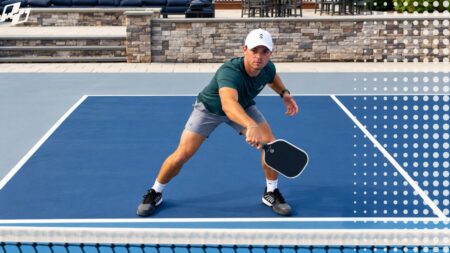
Johnson uses a ready position that fools opponents. His paddle appears “dropped” to his side, making him look casual or unprepared. But his legs stay engaged with knees bent, ready to explode into action.
This serves two purposes: it baits opponents into attacking (thinking he’s not ready) and generates explosive power from unexpected angles when he counters.
The Mental Edge
Johnson’s hand speed isn’t just physical. His calm, analytical approach makes him nearly impossible to rattle.
“I prefer to play rather than drill. I like doubles more than singles. I like the fast pace, and I like to play with someone.”
JW Johnson on his training preferences
Whether winning or losing, he maintains the same stoic demeanor and never drops his alertness, even between points.
The Underrated Advantage
Despite his incredible achievements, Johnson remains one of the most underrated players on tour.
His calm demeanor and lack of flashy celebrations mean he doesn’t attract the same attention as more theatrical players.
But this quiet approach is precisely what makes him so effective:
- Opponents underestimate his capabilities
- His composure creates psychological pressure
- He applies constant pressure without appearing aggressive
Watch JW Johnson’s explosive hand speed in action as he ends a point with perfect positioning and timing at the kitchen line:
How to Train Like JW Johnson
1. Hand Speed Development
Wall Practice
The foundation of Johnson’s hand speed comes from consistent wall work. Practice alternating between forehand and backhand volleys, focusing on compact movements rather than big swings.
Gradually move closer to the wall to decrease reaction time. Improving your reaction time is key for developing JW-level hand speed.
@tweenerking Probably my favorite wall drill: FAST HANDS ⚠️ Instructions are you start controlled and then slowly pick up the pace until you miss. Repeat. This is one of the best wall drills out there‼️ Follow and subscribe to my newsletter for more tips, tricks, and a monthly paddle giveaway 😲😆!! Link in bio ↖️
♬ original sound – Christian Alshon
Rapid Transition Drills
Set up cones or targets and practice switching between forehand and backhand volleys as quickly as possible.
This builds the rapid transition skills that make Johnson so effective at the kitchen line.
“Having fast hands is not about hitting the ball 100 miles an hour. It’s actually about hitting the ball down towards our opponent’s feet. If we can get the ball down in the hand exchange, it’s going to force our opponent to hit up on the next ball and give us an easy put-away.”
JW Johnson on the importance of shot placement
2. Mental Training
Pre-Point Routines
Develop consistent routines between points that help you reset mentally. Johnson’s calm composure comes from staying mentally engaged even during breaks in play.
Pressure Situations
Practice maintaining emotional control during high-pressure drills. Set up scenarios where you must execute under stress, like hitting targets while someone counts down.
Learning to handle aggressive dinks calmly is essential.
Analytical Observation
Train yourself to assess situations before reacting. Watch your opponent’s positioning and paddle angle to anticipate their next shot, just like Johnson does.
JW Johnson’s Gear Setup

High Spin: Textured carbon face adds serious spin.
Big Power: Thick core + heavy weight = strong hits.
More Reach: Elongated shape covers more court.
Comfy Grip: Cushioned handle feels natural.
JW Johnson’s choice of equipment plays a significant role in his performance. He uses the Franklin FS Tour Dynasty paddle, known for its balance of power and control. This paddle features a T700 raw carbon fiber surface, enhancing spin and shot-making capabilities.
It’s available in both 14 mm and 16 mm thicknesses, allowing players to choose based on their preference for power or control.
Johnson’s Impact on Professional Pickleball
JW Johnson’s calm, analytical approach and lightning-fast hand speed has fundamentally changed how the next generation thinks about elite pickleball.
Setting New Standards
Johnson’s success demonstrates that consistency beats flash, and steady excellence often trumps spectacular shots.
His calm composure under pressure proves that mental toughness matters more than raw athleticism.
Most importantly, his willingness to innovate technically shows that finding what works for your individual game is what pays off in the long run.
Changing How Players Approach the Kitchen Line
Johnson’s success has influenced how players handle pressure at the kitchen line.
His positional discipline shows the value of holding the kitchen line at all costs, while his technical innovations prove there are multiple approaches to close-range play.
Influencing the Next Generation of Players
Young players studying Johnson’s technique are learning that pickleball success comes from developing reliable, repeatable techniques and building consistent training habits.
They’re discovering that finding technical approaches that highlight individual strengths matters more than copying what everyone else does.
Johnson proves that in pickleball, controlled aggression often beats flashy displays. His quiet excellence may not always make highlight reels, but it consistently wins matches—and that’s what matters most.