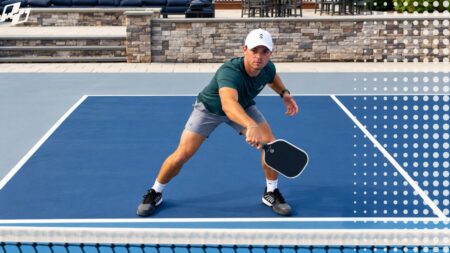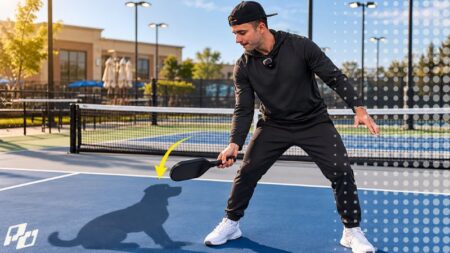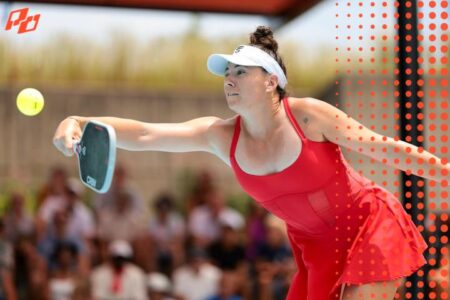


Let’s talk about a shot that’s quietly become a game-changer at all levels of pickleball: the forehand roll.
You might’ve heard the term tossed around in rec play or seen the pros whip it out mid-rally, adding vicious topspin to flip a neutral ball into an offensive opportunity. But unless you’ve taken time to really understand it, chances are you’re either under-using it or misfiring.
Today, we’re breaking down everything you need to know: what it is, why it works, when to use it, and how to hit it.
What Is a Forehand Roll in Pickleball?
The forehand roll is a topspin-heavy shot executed with a brushing, low-to-high paddle motion. It’s often used from the kitchen line to attack floaty dinks or neutral balls. It’s not a full drive—it’s faster than a dink, slower than a smash, but meaner than both when used right.
Imagine a hybrid between a flick and a topspin slap—designed to jam opponents, force weak pop-ups, or push them off the line.
Check it out:
And here’s the secret sauce: it doesn’t look like an attack until it’s too late.
Forehand Roll: Off the Bounce or in the Air?
You can hit a forehand roll off the bounce or out of the air—it works both ways!
1. Off the Bounce
This version is like a topspin groundstroke, great for pushing opponents back or adding spin to a slow ball. You’ll usually use it from midcourt or farther back.
Tip: Get low, drop your paddle under the ball, and brush up to lift it with spin.
2. Out of the Air (Roll Volley)
This one happens at the kitchen line. It’s faster and more compact—used to attack floaty dinks or disguise a speed-up.
Tip: Keep the paddle out front, use a short swing, and focus on quick topspin.
Both versions use the same brushing motion, but your setup and swing size will change based on where you are and how much time you have.
When Should You Use a Forehand Roll?
Timing and context are everything. This is not a “spray and pray” shot.
✅ Use it when:
- You’re at the kitchen and your opponent floats a slightly high dink.
- A neutral ball sits just low enough that a drive would be risky.
- You want to disguise your attack off a soft ball.
- Your opponent is leaning forward, expecting a dink—so you catch them by surprise.
🚫 Don’t use it when:
- You’re off balance or overreaching.
- The ball is well below net height.
- You’re out of position to recover for the next shot.
As pro player Collin Johns puts it, the forehand roll lets you attack balls you previously considered “unattackable”—but only if you’re in control and your setup is sound.
The Mechanics: How to Hit a Forehand Roll
Let’s break it down step-by-step:
1. Paddle Prep: Tip Down, Edge Down
Start with your paddle tip pointing down at a 45° angle or more. More importantly, the outside edge of your paddle should face the ground.
Why? This sets up the upward brushing motion that generates topspin and keeps the ball dipping into the court instead of sailing long.
2. Drop the Wrist and Brush Upward
You want a windshield-wiper-like motion. Drop your wrist below the ball and swing outward and upward. You’re brushing the back of the ball—like giving it a soft tissue massage, not slapping it.
Pro Tip: Think of the shot in three zones—when your opponent is back, finish your swing fully; when they’re in transition, shorten your finish; when they’re close, focus on contact and quick recovery.
3. Compact Takeback = More Control
One of the most common errors is over-swinging—especially for tennis players. Unlike tennis groundstrokes, the forehand roll requires a short, compact takeback. Think “elbow tucked, paddle out front”.
Pickleball coach Jordan Briones recommends a drill where you shadow swing with a ball in your armpit. This forces you to keep your arm tight and compact—ideal for quick, deceptive rolls.
4. Accelerate Through the Ball
Topspin isn’t created by how hard you swing, but by how fast you accelerate through contact. As coach Kyle McKenzie says, “the moment you decelerate, you lose all control.” So trust the swing, even if it feels short.
Here’s the guys at Playbook Pickleball showing you how to hit a forehand roll:
Smart Strategy: Adjusting Your Roll Based on Opponent Position
Opponent at Baseline:
- More takeback
- Full follow-through
- Hit 75–100% of the ball’s surface for depth and power
- Try to push them deeper or jam them at their right hip
Opponent in Transition:
- Shorter swing
- Focus on spin over power
- Hit just the back 25% of the ball
- Aim for their feet to generate a pop-up
Opponent at Kitchen:
- Roll rarely works here unless it’s disguised
- Keep your swing even tighter and more deceptive
- Blend it with dinks for surprise speed-ups
Target Zones: Where Should You Aim?
According to Collin Johns, the ideal target zone for a forehand roll is from a right-hander’s right hip to right shoulder—an awkward, jammed-up spot that’s hard to defend.
Also effective:
- At the opponent’s dominant-side foot
- Deep middle (to create confusion)
- Wide crosscourt (if pulling them off balance)
Drills to Groove Your Forehand Roll
Here are three drills you can try solo or with a partner:
1. Armpit Ball Shadow Drill
- Place a ball in your armpit.
- Shadow swing 5–10 forehand rolls without dropping it.
- Emphasize compact takeback and finish.
2. Reactive Roll Volley Drill
- Partner feeds from baseline or transition zone.
- You stay at NVZ and roll volleys back.
- Focus on adjusting swing size based on feed speed.
3. Roll & Reload
- Hit a forehand roll.
- Immediately reset paddle and prepare for next shot.
- Great for practicing “reload” mentality.
Mistakes to Avoid
- Too much wrist: Lock the wrist and use forearm for spin.
- Over-swinging: Shorter = more control and disguise.
- Contact too close to the body: Always strike out in front.
- Flat hits: You need topspin or you risk floating the ball out.
Quick Reference: Forehand Roll Cheat Sheet
| Element | Key Tip |
|---|---|
| Paddle Position | Tip down, edge toward ground |
| Swing Motion | Outward + upward, brushing like windshield |
| Takeback | Compact, elbow tucked |
| Finish | Out in front, modify based on opponent’s depth |
| Power Source | Legs and torso coil, not arm |
| When to Use | Slightly high dinks, neutral floaters |
| Where to Aim | Right hip/shoulder, feet, or deep middle |
| Common Mistakes | Over-swinging, wrist flicks, flat hits |
Make the Forehand Roll a Weapon, Not a Wish
The forehand roll isn’t just a “cool” shot—it’s a tactical weapon when used intelligently. From disguising speed-ups to jamming opponents or turning floaters into finishers, it adds dimension to your game.
But like any advanced shot, it takes:
- Reps
- Timing
- Situational awareness
So don’t spam it. Learn it. Master it. Use it with purpose. And the next time your opponent floats a dink a few inches too high, you’ll smile, load up your paddle—and roll it right past them.