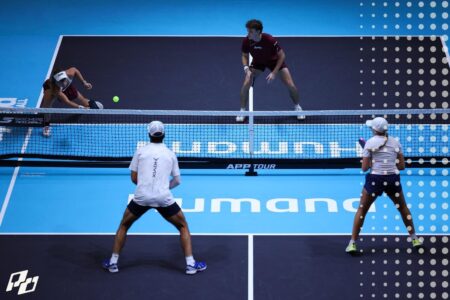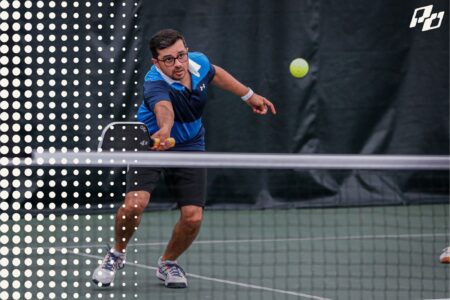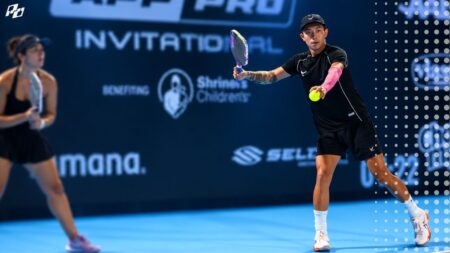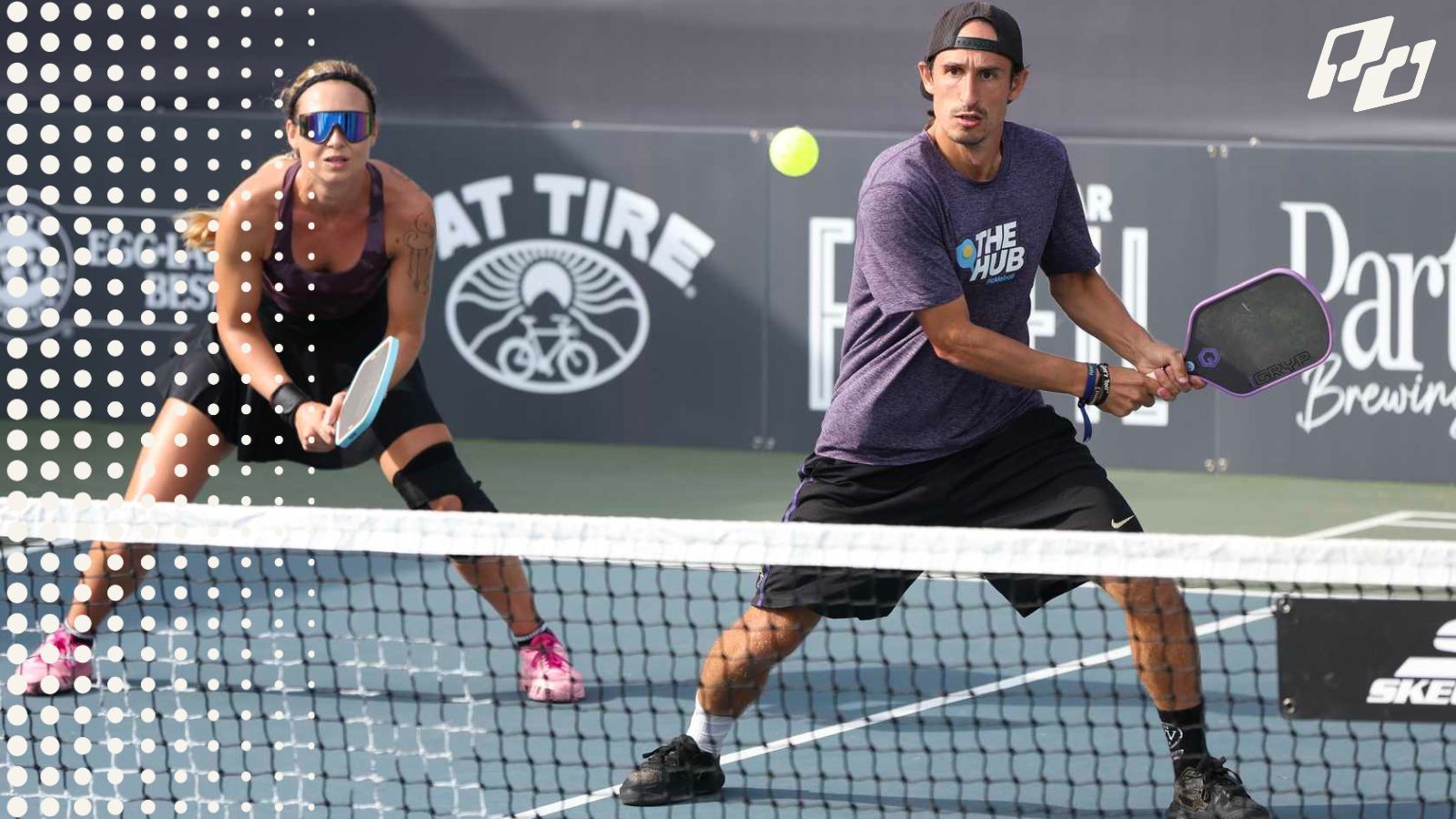
I’ll be honest — for years I treated footwork as background noise. I knew what “open stance” and “closed stance” meant, but I wasn’t really thinking about them mid-point. Then I watched slow-mo footage of my own game — and realized my feet were the silent reason for most of my misses.
Intermediate players already know the three stances — open, semi-open, closed. What separates solid players from the next level isn’t knowing them, but transitioning between them smoothly and intentionally.
Let’s unpack how each stance really works in live play, how pros blend them without thinking, and how you can make that same shift — literally and figuratively — in your own game.
The Hidden Skill: Transitioning, Not Choosing
Most rec players talk about stances like static positions: “use closed for drives,” “open for dinks.” But the best players don’t pick a stance; they flow through them.
A typical point might start in a closed stance (power), evolve into semi-open (balance), and finish in open (reaction). The pros aren’t guessing — they’re adjusting their base to match the ball’s timeline.
Here’s the rule I live by:
The faster the ball, the more open your stance should be. The slower the ball, the more closed you can afford to be.
That single concept explains almost every stance change on court.
The Real Job of Each Stance
Closed Stance gives you torque — hip rotation, weight transfer, drive. It’s perfect for baseline groundstrokes or third-shot drives where you have time to load. But it’s also a trap if you stay stuck in it too long.
Pickleball coach Maria Lopez puts it perfectly: “When you close your stance, you limit your options.” If your hips are locked sideways, you can only swing one direction — usually down the line. That’s great if that’s your plan, but fatal if your opponent is reading you crosscourt.
Semi-Open Stance is the pro’s comfort zone — a blend of power and readiness. You’re coiled enough for rotation but open enough to react. This is where most drives, thirds, and transition shots happen.
Open Stance isn’t just a defensive posture — it’s a survival tool. When you’re pulled wide or rushed at the kitchen, an open base keeps your chest facing the ball and your balance under you. From here, you can reset, block, or counter without wasting a recovery step.
The Stance-Choice Mindset
Instead of asking “Which stance should I use?” start asking:
“What happens after this shot?”
That question reframes everything.
If you’re about to follow your drive forward, a closed stance makes sense — it loads your back leg and sends your momentum through the shot.
But if you’re expecting a counter-attack, a semi-open stance helps you hit and recover instantly.
This is why pros rarely hit from deep closed positions in transition — it costs an extra recovery step. That’s a luxury they don’t have at high pace.
The Tell That Gives Away Your Shot
Here’s something subtle that coach Lopez pointed out in one of her clinic: if you see your opponent’s feet completely closed off, 90% of the time they’re going down the line.
Why? Because their hips are literally locked from rotating crosscourt.
You can use that same knowledge both ways — to read your opponent and to disguise your own intentions.
When you want to hide direction, use a semi-open stance. It frees your hips so you can still swing crosscourt or flick down the line at the last second.
The Semi-Open Advantage
Every pro I’ve watched — from Ben Johns to Catherine Parenteau — relies on semi-open footwork as their default stance. It’s the sweet spot between control and readiness.
Why it works so well:
- You can transfer weight without over-committing.
- You can change direction mid-rally.
- You stay visually connected to the ball and the opponent.
It’s the stance that lets you “live in transition” — hitting on the move, adjusting, improvising.
If you want one stance to build your game around, this is it. Everything else — open or closed — becomes an intentional variation, not a mistake.
Applying It on Court
Let’s say you’re returning serve. A semi-open stance gives you the quickest weight shift forward without locking your hips. You get depth and recovery speed.
As you move up, a deep, low ball might force you to close off for a power drive — fine, but now your next goal is to re-open immediately after contact to re-center.
At the kitchen, it’s all open stance — knees bent, chest forward, paddle ready. From there, you react, not rotate.
Every change in stance is like shifting gears in a manual car — the better you time it, the smoother the ride.
The Physics of Footwork
Think of your stance as your power transfer system.
- In closed, power travels linearly — back leg → front leg → ball.
- In semi-open, power spirals — hip rotation generates controlled acceleration.
- In open, power diffuses — you rely on quick hands and leverage instead of rotation.
Knowing which engine you’re using keeps you from “over-revving” in the wrong spot. Too much rotation in open stance? You’ll pop it up. Too little in closed? You’ll dump it.
The Hidden Stance: Split + Set
One stance that doesn’t get enough love is the split-to-set transition.
Before every shot, pros perform a micro-split step — a tiny bounce that resets balance and lets them flow into whichever stance they need.
Intermediate players skip this constantly. They hit flat-footed, never truly “set” between shots.
Add that small hop, and suddenly every stance feels faster, cleaner, and more controlled.
Pro Tip: Stance as Strategy
Use your stance to send messages.
If you want to bait your opponent into a certain shot, show one stance and switch late.
Example: square up (open stance) as if preparing to block — then close slightly to drive the counter. It’s a subtle way to disguise your plan and control tempo without taking bigger swings.
Pros do this instinctively — their feet sell fakes better than their eyes.
What I Learned (and What You’ll Feel Too)
You already know the three stances. The next level is learning how to flow between them.
In rec play, most points are won not by who hits harder, but by who recovers faster and stays balanced longer.
And that comes down to how your feet respond to what the ball — and your opponent — are doing.
So next match, don’t think “open or closed.” Think: “Am I ready for what comes next?”
Because great footwork isn’t about standing right — it’s about always being ready to move right.