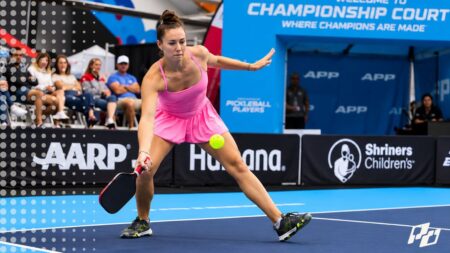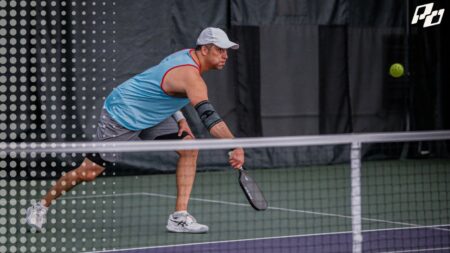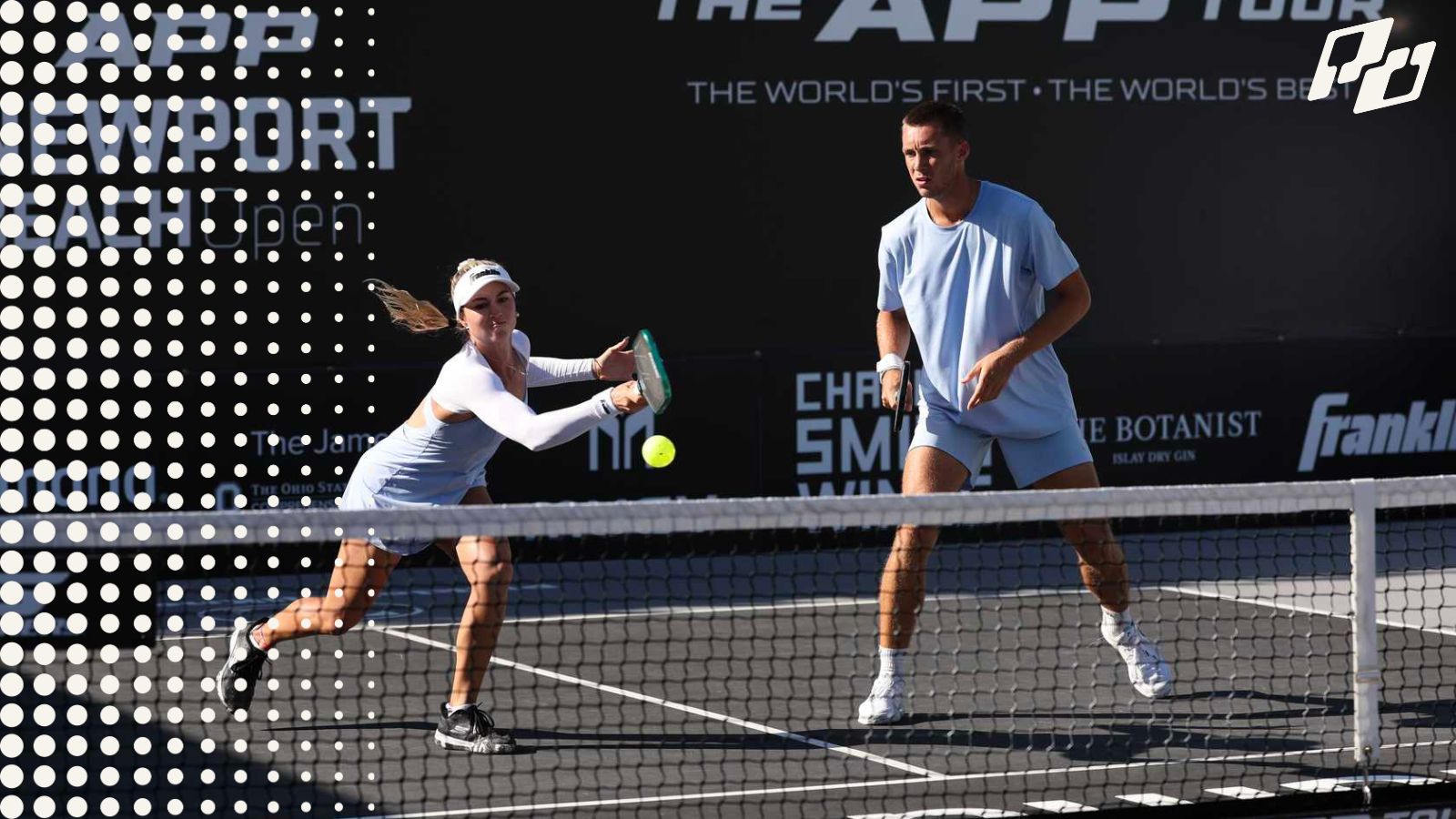
You hit a money 3rd. They don’t counter—it comes back as a soft, neutral 4th. Now what? This is where points are quietly won. The goal isn’t a highlight winner; it’s turning your good 3rd into easy fifths, clean NVZ ownership, and predictable patterns.
Below is a super reader-friendly (but still technical) playbook you can run today—packed with coach cues, pro-style tips, and real match scenarios.
TL;DR you can tape to your paddle
- After a true reset 4th, default to a 5th-shot drop (often a “shovel drop”) to the safer outside foot, then two-step close and split at the NVZ.
- Attack only when the 4th floats high/short. Hit down into feet/hip seam with a compact swing.
- Partner without the ball pinches middle and owns the first pop-up while the hitter calls the pattern.
- Win the line first. The fifth is about control and position, not glory.
What counts as a strong 3rd?
A third that forces defensive hands:
- Drive: heavy, late-dipping topspin into torso/backhand—produces a block or forced reset.
- Drop: soft, below net height that makes the volleyer reach down and forward.
Coach cue: Drive at ~70–80% so you stay balanced. You want a manageable 4th, not a counterpunch to your face.
Reading the 4th in one glance
- True reset (low/soft to the kitchen) → 5th = drop, close, split.
- Floaty/high & shallow → 5th = attack down to feet/hip seam.
- Firm/deep block to transition zone → 5th = re-neutralizing reset (off the rise if possible), then close.
The 5th-shot blueprint (after a reset 4th)
Technique: the high-percentage shovel drop
- Posture: Stay low from the drive; don’t pop tall between shots.
- Paddle presentation: Show a full face early. Slightly open if contact is a hair behind you; a touch flatter if it’s in front.
- Contact feel: Ball rides the face a beat—think shape over the tape, not a push.
- Margins: Aim ~30–45 cm above the net, land mid-kitchen. Perfection at the NVZ line = unforced errors.
Targeting: outside foot first
- Crosscourt outside foot is safest (lower net, longer diagonal).
- If both opponents drift wide, cap the middle.
Footwork: drop → two steps → split
- Start moving forward as you drop.
- Two decisive closes and split-step on their contact so you’re set for the dink—not walking through it.
Pro-style tip: The shovel drop likes contact closer to your body. If the ball sneaks on you, don’t panic—that’s the shot’s design.
Watch world #1 Ben Johns teach the shovel drop technique:
When the 4th floats: take the invitation (without overcooking it)
- Down-hit to big targets: feet, hip seam, or backhand elbow.
- Compact swing: think hammer, not whip.
- Partner’s job: already pinching middle to clean up the next ball. You attack the space they create.
Patterning the rally (plays that scale under pressure)
Pattern A — Drive, Shovel, Park
- 3rd: topspin drive to torso/backhand.
- 4th: true reset.
- 5th: shovel drop crosscourt outside foot → two-step close → arrive balanced → patient, heavy-knee dinks.
- Intent: own the line first; the winner will appear.
Pattern B — Drive Middle, Cap Middle
- 3rd: firm drive middle to jam comms.
- 4th: neutral reset middle.
- 5th: middle-cap drop; partner shades center for any float.
- Intent: split their coverage before the dink phase starts.
Pattern C — “Let the strong backhand lead” (Mixed/Rec)
- 3rd: standard crosscourt.
- Plan: partner with the stronger two-handed backhand crashes middle early.
- Why it works: you choke off the highest-value counter lane before it exists.
Pattern D — Down-the-Line 3rd to shrink the Cone (the wedge-shaped middle lane)
If crosscourt thirds keep opening a big middle lane, hit your 3rd down the line at the other player. Their best angle disappears and your 5th-shot drop to the outside foot becomes routine.
Reminder: The cone is the wedge-shaped attack lane through your middle when spacing misaligns. Prevent it with two-and-split footwork and a partner who pinches middle.
Decision table for the 5th
| What you see on the 4th | 5th-shot choice | Footwork/next step |
|---|---|---|
| Low, soft true reset to kitchen | Shovel drop to outside foot | Two steps in, split on contact |
| High/short float | Down-hit to feet/hip seam | Partner pinches; you finish to space |
| Firm/deep block to your midcourt | Reset (off the rise if you can) | Close behind it, then split |
| Opponent stretched/off balance | Dink to stretch further or attack if height allows | Take time; don’t force heat |
| You’re late/ball creeps behind you | More open-faced defensive drop | Accept one extra ball before kitchen |
Roles, spacing, and the dreaded Cone of Death
- Ball striker: loudest caller; sets target and finishes their own pattern (no freelancing).
- Partner: pinch middle on the drive, own the first pop-up, mirror spacing to erase the cone through the center.
- Both: shoulders stay square to contact, hands above net height, split-step on every opponent impact.
Coach tip: Most splits happen because one player races in on a too-high 3rd and opens the middle. If it keeps happening, try a DL 3rd or let your stronger-hands partner crash middle earlier.
Micro-scenarios you’ll actually see
- Wind at your back: add more shape on the 5th, land deeper mid-kitchen.
- Returner crowds middle: 3rd down the line to freeze them; 5th outside foot crosscourt.
- Both opponents backpedal after your drive: soft-land the 5th in the near kitchen corner and own the NVZ immediately.
- Lefty–righty pair: attack the two-backhand seam with your 5th; if they stack to hide it, cap middle.
- Fast courts (indoor wood): bigger net clearance and softer hands on the shovel.
- Slow/outdoor gritty: you can take 5th earlier and penetrate slightly more.
Common errors (and fast fixes)
- Auto-re-driving the 5th.
Fix: Default to the drop unless it’s clearly sitting up. - Over-closing (lobbed or split).
Fix: Two steps and split—don’t walk through the dink. - Flat, pushy fifths that sail.
Fix: Present the face earlier and add shape. - Telegraphing the middle.
Fix: Establish outside-foot dinks first; go middle only when you read separation. - Partner drift creates a center gap.
Fix: Agree that non-hitter owns first middle. Hitter finishes to open space.
Mixed & age-specific notes
Mixed (or any team with a standout backhand): let the better backhand lead the crash and own middle dinks early. Your 5th aims to feed that backhand—outside foot or a soft middle cap.
50+ adjustments:
- Prioritize balance over pace on the 3rd so your 5th is calm.
- Use the shovel’s body-close contact to reduce wrist stress.
- Add one extra shape ball before you challenge hands at the NVZ—fatigue hides in late footwork.
Practice progressions (10 minutes that change your fifth)
- Shovel Ladder (2 min): From midcourt, 8 balls to outside foot, 4 to middle cap—focus on posture and early face.
- Read & React (4 min): Feeder mixes true resets and floaters. Hitter must instantly choose drop or down-hit and take two steps, split.
- Cone Killer (4 min): Start with crosscourt 3rd. If the middle opens twice in a row, switch to a DL 3rd and repeat until the lane stays shut.
On-court call sheet (use short words)
- “Drop-outside!” (default plan)
- “Float—down!” (permission to attack)
- “Two and split!” (footwork rhythm)
- “I’ve got middle!” (partner pinch commitment)
- “Cap!” (middle cap dink)
- “DL next.” (shrink the cone)
What I’d Tell You Courtside
A strong 3rd followed by a composed, on-purpose 5th is grown-up pickleball.
Default to drop first, finish what they float, and you’ll win more points with fewer risks—and it’ll feel almost boring how effective it is.