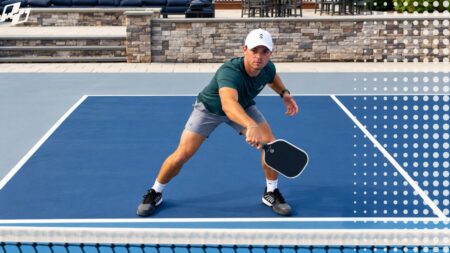

If you’ve been playing pickleball for a while, chances are you’ve either felt that sharp heel pain yourself… or you’ve watched a buddy hobble off the court rubbing the bottom of their foot.
Plantar fasciitis is everywhere in pickleball circles. And while doctors love to say “just rest,” we all know that’s not a realistic option when your league starts Tuesday, your tournament is Saturday, and your group texts are blowing up with “who’s in?”
So let’s talk about plantar fasciitis in a way that makes sense for pickleball players. What it is, why it happens to us so often, and what you can actually do to play smarter, heal faster, and avoid getting sidelined.
What Exactly Is Plantar Fasciitis? (Without the Medical Jargon)
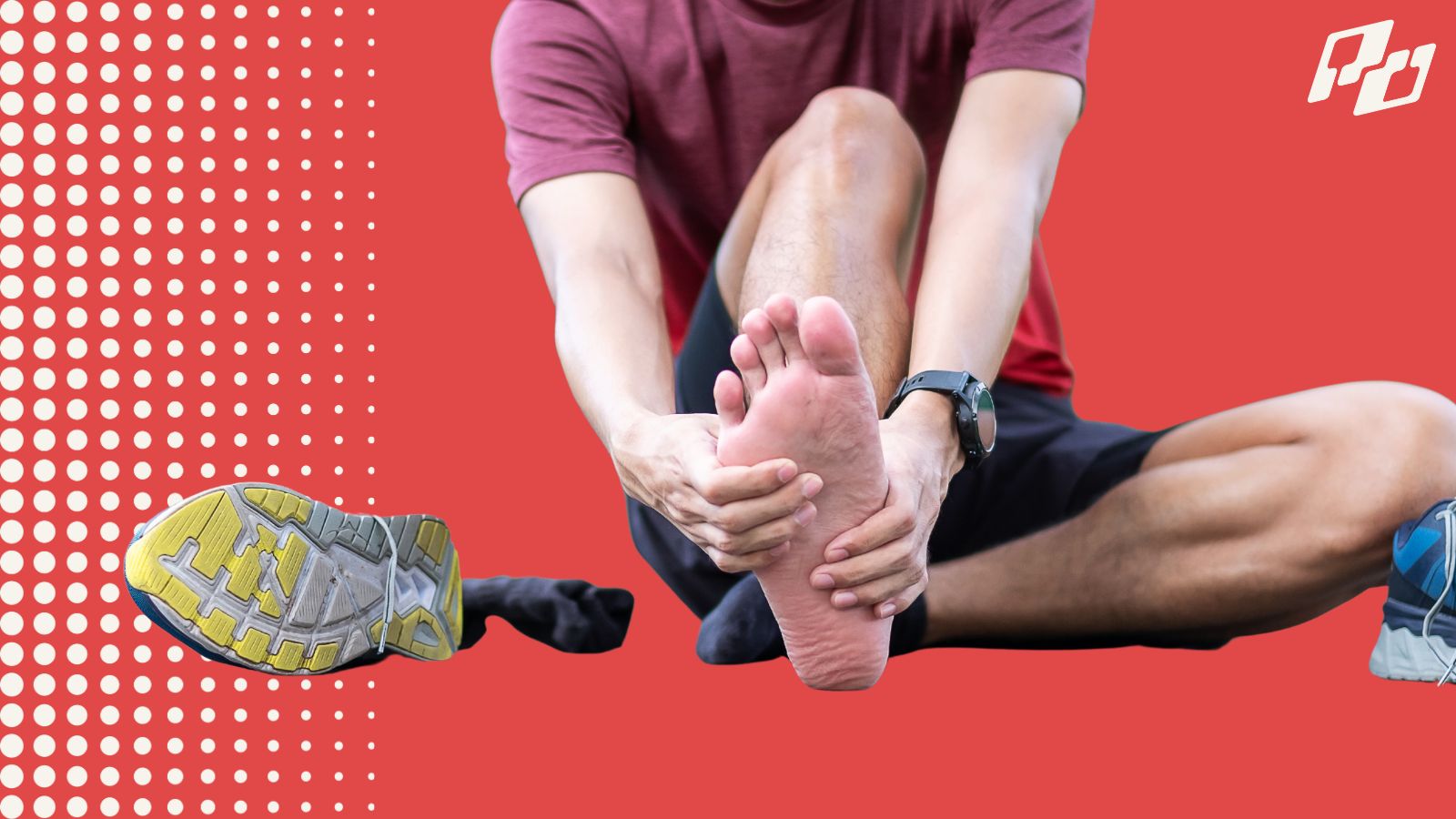
Think of your plantar fascia as a thick elastic band running along the bottom of your foot, connecting your heel to your toes. Every time you push off, lunge, or split-step, that band stretches and helps absorb impact.
When you overload it—too much play, old shoes, stiff calves, hard courts—it goes from elastic band to angry rubber band.
The result? A sharp, stabbing pain in the bottom of your heel, especially first thing in the morning or after sitting. It feels like you’re stepping on a rock with every step.
Why Pickleball Players Get It More Than Most
Here’s the brutal truth: pickleball is perfectly designed to irritate the plantar fascia.
- Hard courts: We’re pounding on concrete or asphalt with zero forgiveness.
- Stop-start bursts: Dinks, lunges, quick shuffles—pickleball footwork is loaded with small, repetitive stresses.
- Long sessions: “One more game” usually turns into five.
- Shoe issues: Court shoes give lateral stability, but if they’re worn down or too stiff under the heel, you’re in trouble.
Add in age (most rec players are 40+), calf tightness, or jumping into tournaments after months off, and you’ve got a recipe for heel pain.
The Telltale Signs
You’ll know it’s plantar fasciitis if:
- Your heel screams when you take those first morning steps, then “warms up” a bit.
- You get a dull ache after long rallies, especially near the inner heel.
- Your foot feels better with rest but punishes you the next day after play.
It’s not usually dangerous—but it is persistent. Ignore it long enough and it can drag on for months.
Can You Play With It?
Here’s the question we all ask: “Can I just keep playing?”
The honest answer: sometimes.
If your pain is mild (say a 3/10), doesn’t change your stride, and isn’t worse the next morning, you can often keep playing while managing it. But if it’s so bad you’re limping, compensating, or it spikes the day after, you need to hit pause.
Think of it this way: playing through mild irritation is like driving with a low tire. Playing through severe pain is like driving with the tire shredded—you’re only making the damage worse.
What Actually Works for Pickleballers
Forget the vague “rest and ice” advice. Here’s what works on the court and off it:
1. The Stretch That Matters
Most players stretch calves. That helps, but the money stretch is plantar fascia–specific:
- Sit down, cross your sore foot over your knee.
- Pull your toes back with your hand until you feel the band in your arch tighten.
- Massage along the fascia with your other hand.
- Do it before getting out of bed, before you play, and before bed.
This one’s been shown to beat general calf stretching for plantar fasciitis recovery.
Here’s how to do it:
2. Support Under the Heel
Don’t underestimate inserts. A deep heel cup + arch support combo can offload pressure and keep you in games while you heal.
You don’t need expensive custom orthotics—good over-the-counter options like Powerstep often do the trick:
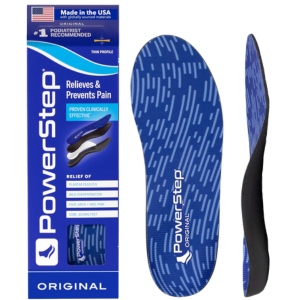
- Neutral arch support
- Relieves foot & heel pain
- Low-profile, everyday fit
- Made in the USA
3. Shoes Matter More Than You Think
Court shoes wear out faster than runners. If yours are past 80–100 hours of hard play, retire them.
Look for models with good cushioning in the heel (we recommend the Diadem Court Burst).

- Strong lateral stability
- Responsive Rebound X cushioning
- Secure 360° knit fit
- Available in wide sizing
4. On-Court Tweaks
- Play doubles instead of singles to reduce pounding.
- Shorten recovery steps instead of backpedaling hard.
- Use a “softer” split-step—stay light on your feet instead of crashing down on your heels.
5. Between Matches: Reset the Heel
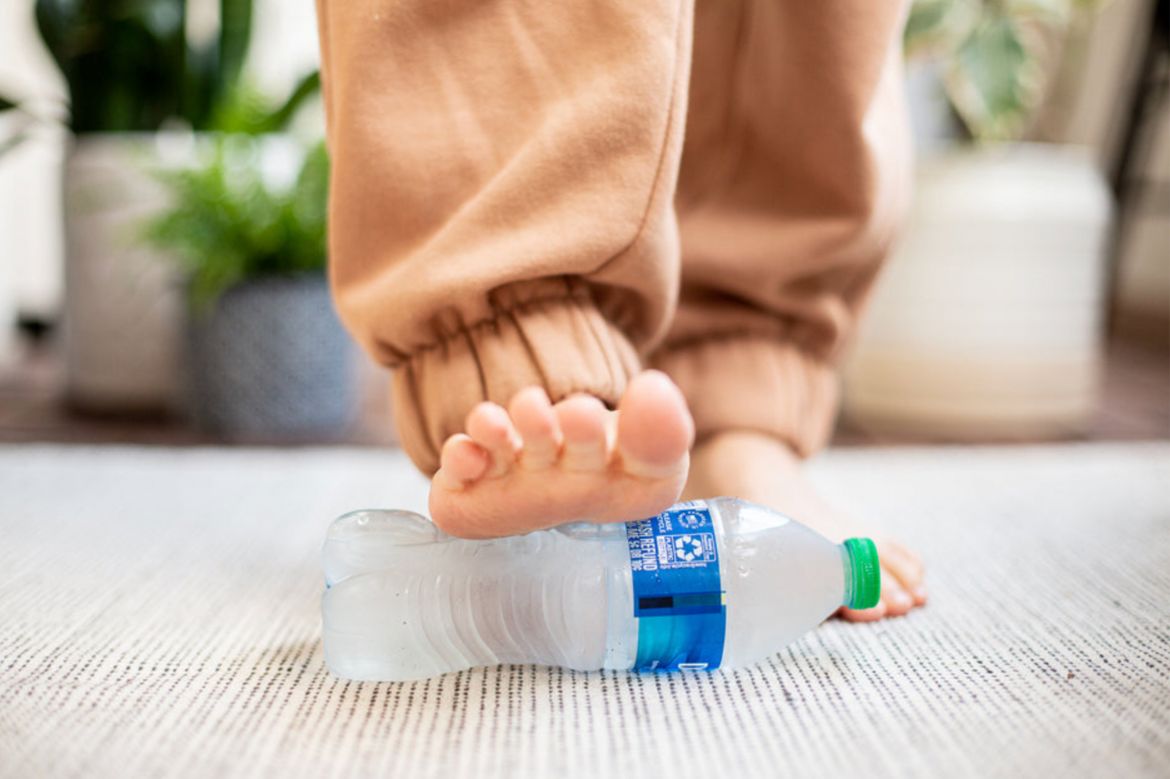
Roll your arch with a frozen water bottle for 5 minutes, stretch the fascia, and swap to a dry pair of shoes/socks.
It’s like a mini reset button for your foot.
What NOT to Do (The Fast Track to Months of Pain)
- Don’t push through knife-like pain. That’s not “toughing it out,” that’s damaging tissue.
- Don’t keep wearing dead shoes. If the outsole is smooth, the cushioning’s gone too.
- Don’t rely only on rolling or icing. They’re temporary relief, not solutions.
- Don’t ignore morning pain. It’s the clearest indicator of progress—or setback.
Advanced Options (If It Just Won’t Go Away)
Most players improve with smart stretching, better shoes, and load management. But if you’re months in and still hurting, ask about:
- Night splints (keep fascia stretched overnight, helps with brutal mornings).
- Taping (arch support for game days).
- Shockwave therapy (proven option for stubborn cases).
- Corticosteroid injections (short-term relief, used cautiously).
From One Player to Another
Plantar fasciitis is one of those things that can make you question whether the game you love is worth the pain. I get it—I’ve been there, and so have countless players around you. But here’s the truth: this doesn’t have to sideline your pickleball journey.
Stay proactive, listen to your body, and remember—every step you protect now is a rally you’ll enjoy later. The next time that heel twinge sneaks in, don’t spiral. Breathe, reset, and remind yourself: you’re in this game for the long haul.
Because pickleball isn’t about playing without pain—it’s about playing through life with joy, resilience, and just enough stubbornness to keep showing up. 🏓💚