

How many times have you found yourself hitting off your back foot, practically falling away from the ball, only to watch it dump into the net—or worse, float up perfectly for your opponent to crush?
If you’re like most players, especially in the 3.0–3.5 range, it’s happened more than you’d like to admit. And even at higher levels, it still sneaks in when you’re under pressure or just a step late.
The truth is, hitting off your back foot isn’t just a beginner mistake; it’s a part of the game. You can’t avoid it forever. But you can get better at managing it.
So let’s talk about what’s really going on when you’re stuck on your back leg… and more importantly, what to do about it.
Why Hitting on Your Back Foot Feels So Awful
You already know it doesn’t feel right—there’s no weight transfer, your timing feels off, and it’s like your paddle has no pop. That’s because:
- Your weight is moving away from the ball, not into it.
- Your balance is compromised, making your paddle control shaky.
- Your swing gets rushed or too long, often leading to mishits.
In tennis, you might get away with it thanks to string tension and bigger courts. But in pickleball? That short swing zone, the no-volley zone, and your solid paddle face all conspire against you.
So, let’s flip the script. Instead of flailing and hoping the ball gets over, you’re going to learn how to make solid, reliable choices from your back foot—even when the point feels like it’s getting away from you.
First, Redefine Your Goal: Survive, Don’t Snipe
Let’s be honest. When you’re hitting off your back foot, you’re usually on defense. This is not the time to go for a screaming winner or force a sharp angle.
You’ve got one job in that moment:
Get the ball back with margin and control. Reset the point. Give yourself a chance.
That’s a win.
Trying to go for too much from a compromised position? That’s how you turn a tough situation into a lost point. Instead, let’s choose the smart, controlled, high-percentage play—every time.
Build Your Back-Foot Toolkit: Balance, Compactness, and Paddle Awareness
Before we dive into shot types, let’s talk mechanics. You’ll improve these situations a lot just by tightening up a few core fundamentals:
1. Get a Solid Stance
- Widen your base a bit to stay stable.
- Keep your knees bent and your upper body centered.
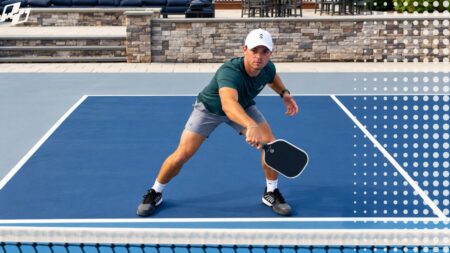
- Avoid “falling away” from the shot—try to stop, plant, and control the moment.
2. Tighten Your Swing
- No loopy, wind-up strokes here.
- Think compact, short, and efficient—a quick punch or redirection.
- Save the big swings for when your feet are under you.
3. Control Your Paddle Face
- Slightly open it for a soft drop.
- More vertical for a dipping topspin.
- Neutral for a flat, deep punch.
You don’t need to be perfect—you just need to stay consistent.
Your Go-To Shots When You’re On Your Back Foot
Let’s walk through the real options you have, depending on the ball and your situation.
1. The High-Arcing Drop (Your Safe Reset)
When to use: You’re pulled back, balance is shaky, and you just need to stay in the point.
How to hit it:
- Shorten your motion—no full swing here.
- Add extra loft to help the ball clear the net and fall softly into the kitchen.
- Use your legs to lift, not your wrist to flick.
Why it works: It neutralizes the rally and gives you time to reset your position. Don’t worry about it being perfect—just make it soft, high, and safe.
2. The Topspin “Dipper” (For Tennis Converts)
When to use: If the ball is waist-high or higher, and you’ve got some paddle control.
How to hit it:
- Hit after the bounce
- Compact, low-to-high swing path.
- Keep your wrist relaxed but firm.
- Follow through high—sometimes even above your head.
Why it works: This shot arcs up, then dives down fast. When placed crosscourt, it’s hard to attack and buys you time—even if you’re off-balance.
Watch Tyson McGuffin go dip… then rip:
3. The Half-Volley (Emergency Reset)
When to use: The ball’s coming fast and low—right at your feet—and you don’t have time to back up.
How to hit it:
- Keep your paddle low and slightly open.
- Let the ball bounce, then absorb the pace with a soft, still paddle.
- Stay very compact—almost no swing at all.
Why it works: You can take the sting off a tough ball and drop it gently into the kitchen. It won’t look pretty, but it does the job.
Stay compact, stay calm—here’s how to make it work:
4. The Punch Drive (Controlled Power)
When to use: The ball’s high enough to be attackable and you’re not totally off-balance.
How to hit it:
- Short backswing, neutral paddle face.
- Punch forward with a firm wrist.
- Aim for deep middle or crosscourt—nothing fancy.
Why it works: When done right, it forces your opponent to hit up on their next shot. But miss your timing, and it’s easy to overhit. Use sparingly.
Watch Coach Marko break down how to handle attacks at the kitchen—and flip the pressure right back on your opponents:
5. The Emergency Lob (Last-Ditch Effort)
When to use: You’re completely out of options, and your opponent is creeping up.
How to hit it:
- Open the paddle and send the ball high, ideally to their backhand.
- Use your whole body to lift the ball—shoulder and arm, not just wrist.
- Get it high enough to give yourself recovery time.
Why it works: It buys you a few seconds and flips the pressure. Just don’t lob short—or you’ll pay the price.
Quick Decision Guide: What Shot Do You Hit?
| Situation | Best Shot | Goal |
|---|---|---|
| Deep ball, you’re retreating | Lofted drop | Neutralize and reset |
| Fast, low ball at your feet | Half-volley block | Absorb pace, avoid pop-ups |
| Waist-high ball, decent contact | Topspin dipper | Arc and dip it crosscourt |
| High ball, good balance | Punch drive | Push them back, stay safe |
| You’re completely scrambled | Lob | Get back into the rally |
Footwork: Your Real Defense Against the Back Foot
Half of the time you’re hitting off your back foot, it’s because you weren’t ready. Here’s how to change that:
1. Read Early
- Watch your opponent’s paddle angle and body language.
- Anticipate depth—not just direction.
2. Use a Crossover Step, Not a Backpedal
- Backpedaling slows you down and messes up your balance.
- Cross-step to retreat faster and stay athletic.
3. Split Step to React Faster
- Time your split step with their contact—not too early.
- It sets your body to explode in any direction.
4. Plant Before You Hit
- If you can stop—even for a moment—you’ll gain paddle control.
- Hitting while drifting backward is one of the top causes of floaters and net balls.
Mindset Shift: The Point’s Not Over Yet
Here’s the mental trap a lot of players fall into:
“Ugh, I’m late… this point’s over.”
Not true.
If you can choose the right shot and keep your cool, you can turn a bad situation into a neutral one. And from there? You’re back in the rally—and maybe even in control again.
How to Practice This Stuff
Let’s make these shots part of your muscle memory. Try these drills:
- Back-Up & Drop: Have a partner feed you deep balls while you retreat. Focus on hitting lofted, controlled drops from a compromised position.
- Half-Volley Reset Drill: Practice absorbing fast, low feeds at your feet and dropping them gently into the kitchen.
- Topspin Roller Challenge: Hit waist-high feeds crosscourt with a vertical swing. Work on getting the arc and dip just right.
Master the Ugly Shot
Back-foot shots are messy, awkward, and uncomfortable—but they’re part of the game.
If you can master them—not make them pretty, just effective—you’ll win more rallies, frustrate your opponents, and elevate your pickleball IQ in ways most players never think about.
So next time you find yourself backpedaling or off balance, don’t panic. Just smile a little and think:
“Okay. I know this shot. Let’s get back in the point.”