If you win the pickleball coin toss, don’t automatically choose serve. Pick side first if sun, wind, glare, or distractions matter. If conditions are neutral, receiving is often smart in doubles because your team can return deep, get forward, and settle into the match quickly.
Most rec players treat the coin toss like a formality. Someone flips a coin, spins a paddle, or asks “serve or side?” and the winner blurts out the default answer:
“We’ll serve.”
That feels right. Serving first sounds like control. You get the ball first. You start the match. You feel like you’re taking charge.
But in pickleball, that is not always the smartest choice.
The coin toss is not just about who serves first. It can decide who serves, who receives, and which side each team starts on, depending on the format being used. Under standard rule guidance, the winner of a fair method such as a coin toss may choose to serve, receive, or select the starting end/side, with the opponent getting the remaining choice.
And that means the toss is your first strategy decision of the match.
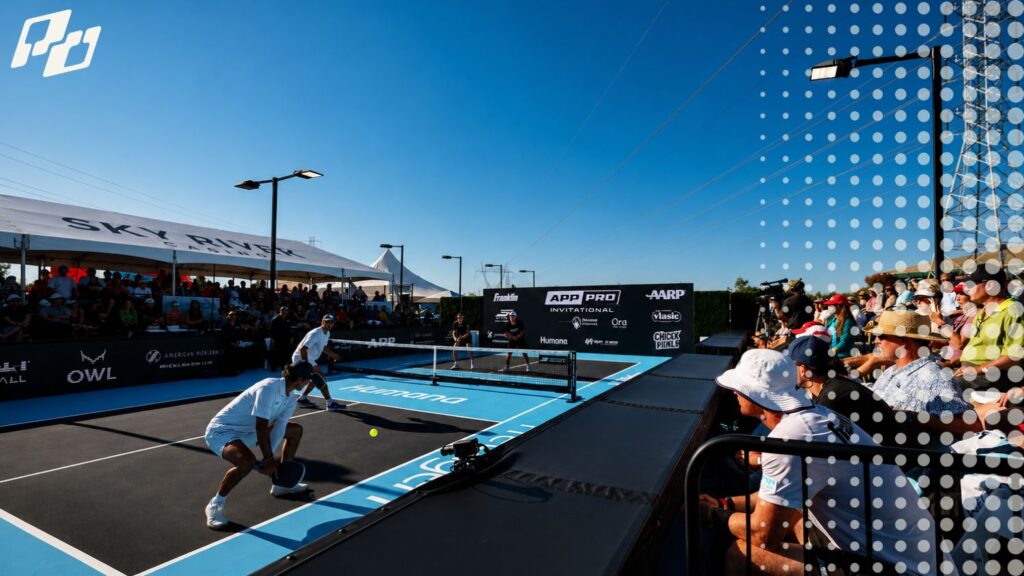
Pro player Mari Humberg made an interesting point recently, and we agree: if she gets first choice, she usually picks side first, especially after warmup when she can feel the wind, sun, shadows, and distractions. If side is not available, she prefers to receive first so her team gets the ball back quickly.
That is the big lesson for rec players: don’t automatically choose serve. Choose the advantage that matters most that day.
First, Know What You’re Actually Choosing
In most normal recreational and tournament-style starts, the toss winner usually gets one of the major choices:
- serve or receive
- starting side/end
- sometimes defer, depending on local format or event procedure
Different tournament formats can add extra details, especially in pro or team events. For example, Major League Pickleball’s rules include additional coin-toss choices beyond regular rec play, such as end, act/react, and match-order selections. That is not what most rec players deal with, but it shows the same principle: pre-match choices are strategic, not decorative.
For ordinary rec and club play, keep it simple:
If you win the toss, you are usually deciding whether the bigger advantage is first serve, first receive, or better side.
And the best answer depends on conditions, skill level, and match format.
Why Serving First Is Overrated
Here is the part that surprises newer players: serving first in pickleball is not the same as serving first in tennis.
In doubles pickleball, the starting team begins with only one server before side-out. After that, both players on each team serve during service turns. That means the opening serving team does not get a full two-server possession to start the game.
So while serving first can feel proactive, it is not always a huge advantage. Some strategy discussions even argue that serving first in games to 11 is not automatically advantageous, especially because the first serving team starts with that limited opening service sequence.
That does not mean serving first is wrong.
It means you should stop treating it as the obvious answer.
If conditions are neutral, teams are even, and you simply like starting with the ball, serving first is fine. But if one side has sun, wind, bad visibility, a distracting fence, or a weird court background, side selection may matter more.
Why Pros Often Choose Side First
This is where advanced players think differently. They know that the side of the court can affect:
- visibility
- wind
- sun glare
- background distractions
- court slope or surface feel
- shadows
- noise
- spectators
- space behind the baseline
- which team has to finish on the tougher end
Mari Humberg says that when she wins first option, she chooses side first, and she prefers to make that call after warmup so she can feel out the court. Her two major factors are wind and distractions. She typically likes starting with the wind behind her, and if one side has more distractions, she often prefers to start on that worse side.
That last part is smart.
If a match switches ends, starting on the worse side can let you finish on the better side. In tight games, that can matter more than who served first at 0-0-2.
The Side-Selection Checklist
Before the toss, you and your partner should already have an answer. Walk onto the court and quickly check:
Sun: Is one side looking into glare?
Wind: Is one side playing with or against the wind?
Background: Is one side visually messy with fences, trees, cars, spectators, or shadows?
Noise: Is one side near a loud court, road, or crowd?
Space: Does one baseline have less room to return deep balls?
Surface: Is one side slicker, cracked, shaded, damp, or uneven?
Finish: If you switch ends, which side do you want late?
You do not need a five-minute committee meeting. You just need a plan before someone asks, “Call it.”
A good partner script: “If we win, side first if sun or wind matters. If not, we receive.”
That one sentence prevents the panic pick.
Choosing to Receive: The Underrated Smart Option
If side does not matter much, receiving can be a very smart choice.
Why?
Because the return team has a natural early advantage in pickleball. The serving team must let the return bounce, while the returning team can return deep and move forward to the kitchen. That is why so much doubles strategy is built around deep returns and getting established at the non-volley zone.
A lot of pros say that if choosing side is not an option, receiving first can be the smarter play because the opponent serves first, but you get the ball back quickly and can settle into the match sooner.
For rec players, receiving first can make sense if:
✓ you return well
✓ your opponents have weak serves
✓ your team starts slowly when serving
✓ you want the first real attacking pattern
✓ you like getting to the kitchen early
✓ you want to make the other team handle opening nerves
It is also psychologically useful. A lot of rec players feel pressure serving first. They miss the first serve or play too safe. Receiving lets you settle into the point with a deep return and a simple job: get forward.
When You Should Choose Serve First
Serving first still has a place. Choose serve first if:
✓ you and your partner have strong, reliable serves
✓ the other team returns poorly
✓ you want to set tempo immediately
✓ you are playing rally scoring or a format where serve possession matters differently
✓ your local group expects the toss winner to choose serve and conditions are neutral
✓ you are confident starting cleanly
For beginners, serving first can sometimes help because it keeps the decision simple. You do not need to analyze wind, glare, or side-switch logic if you are still learning scoring. But even beginners should understand that serving first is not automatically “better.”
For intermediate and advanced players, serve first is best when it matches a clear plan.
Example:
“They return short. Let’s serve first and look for attackable thirds.”
That is a reason.
“Serving first feels cooler.”
That is not a strategy.
When You Should Choose Side First
Choose side first when conditions are meaningful. This is the biggest upgrade for serious rec players.
Pick side first if:
✓ one side has sun glare
✓ wind clearly favors one direction
✓ one background makes the ball harder to see
✓ one side has more distractions
✓ one baseline has less room
✓ one side is slick, shaded, wet, or uncomfortable
✓ side switching means you can finish on the preferred end
Wind and sun are the two biggest ones.
If one team is staring into low sun on overheads and returns, that can swing multiple points. If the wind pushes balls long one direction and knocks them down the other, that affects serves, returns, drops, lobs, and speedups.
Side matters.
And unlike serving first, side can affect every rally.
Wind: With It or Against It?
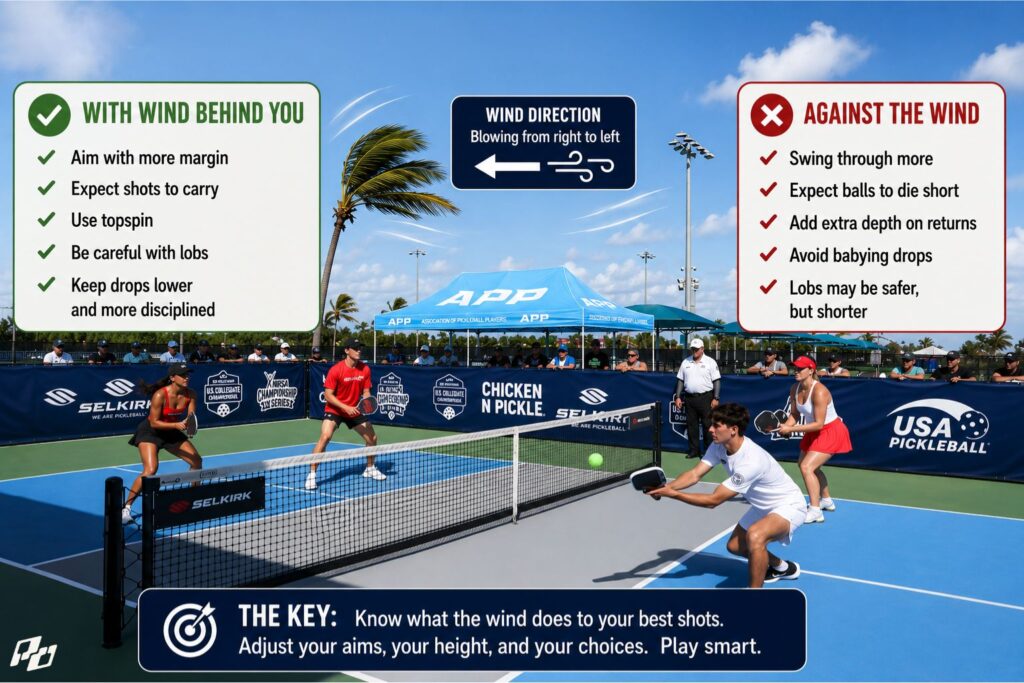
Many players prefer to start with the wind behind them.
That can be a good choice because wind at your back can help serves, drives, and deeper returns travel. But it also requires control. Balls may sail long. Drops may float. Lobs may carry too far.
For rec players, here is the practical version:
If you are a beginner, wind at your back can be dangerous because you may overhit. You may actually prefer the calmer-feeling side or choose the side where you can see better.
If you are intermediate, wind at your back can help if you understand margin. Aim a little shorter, use more topspin, and avoid over-lifting.
If you are advanced, wind becomes a weapon. You can use it to hit heavier serves, deeper returns, and more penetrating drives — while adjusting drops and resets.
With wind behind you:
✓ aim with more margin
✓ expect serves and returns to carry
✓ use topspin when possible
✓ be careful with lobs
✓ keep drops lower and more disciplined
Against the wind:
✓ swing through more
✓ expect balls to die short
✓ add extra depth on returns
✓ avoid babying drops
✓ lobs may be safer, but shorter
The key is not “always choose wind behind you.” The key is: know what the wind does to your best shots.
Sun and Visibility: The Most Underrated Rec Factor
Sun can be worse than wind because it changes your ability to track the ball.
If one side has direct glare, your serve return, overhead, lob defense, and high volleys can all suffer. If the background behind your opponent is cluttered, the ball can disappear for a split second. That split second is enough.
In rec play, choose the side with better visibility if:
✓ the sun is low
✓ one side has bright cars, windows, or fencing behind it
✓ shadows cut across the court
✓ you struggle tracking yellow balls against certain backgrounds
✓ you are playing with older eyes or prescription lenses
This matters especially for seniors and evening players. A side with better visibility may be worth more than first serve.
Distractions: Why Starting on the Bad Side Can Be Smart
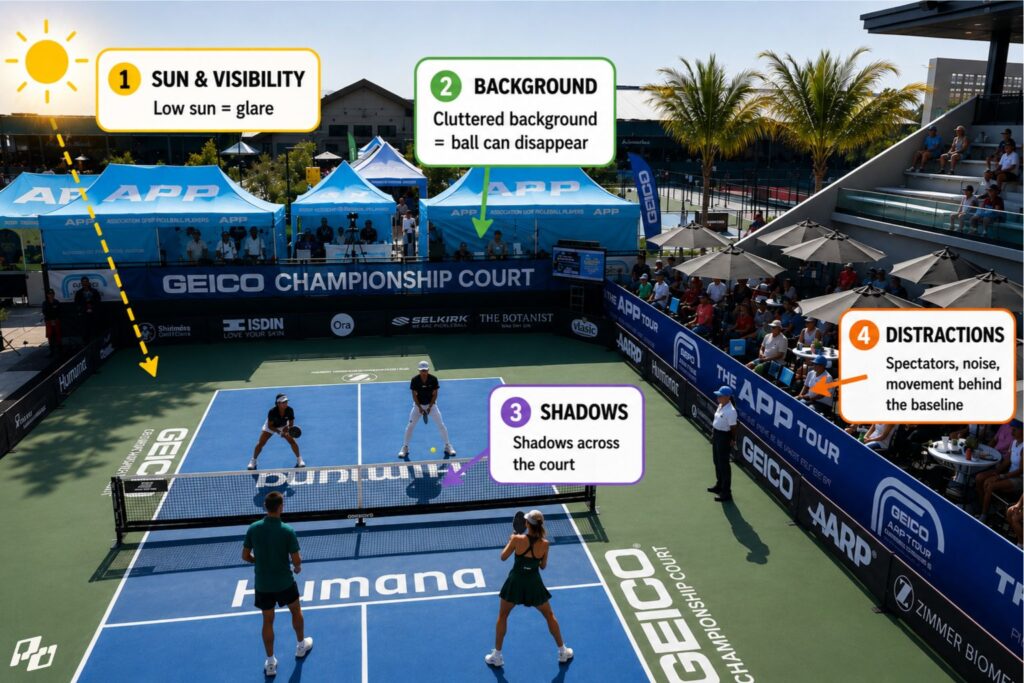
Starting on the more distracting side can be a smart match-management move. If one side is worse, you may want to get it out of the way early and potentially finish on the cleaner, more comfortable side.
For rec players, this is useful when:
✓ one side has spectators close behind it
✓ one side faces another loud game
✓ one side has traffic, walkers, or movement behind the baseline
✓ one side has poor background contrast
✓ one side feels mentally annoying
If you are playing a single casual game with no side switching, you may simply choose the better side.
But if you switch ends at a certain point, ask: do we want the better side early, or late?
In competitive games, late usually matters more.
What Should Beginners Choose?
Beginners should keep the toss simple. Your best default:
Choose the better side if conditions are obvious. Otherwise, receive.
Why not automatically serve?
Because beginners often miss serves under pressure, return teams naturally get to move forward first, and receiving gives you a simple opening job: return deep and get to the kitchen.
Beginners should choose side first if:
✓ sun is directly in your eyes
✓ wind is strong and obvious
✓ one side has terrible visibility
✓ one side feels unsafe or distracting
If not, receiving is a solid choice.
Beginner cue: “Bad sun? Pick side. No bad side? Receive.”
What Should Intermediate Players Choose?
Intermediate players should be more strategic.
Your best default: choose side first if conditions matter. If not, choose receive. Serve first only if you have a reason.
At 3.5–4.0, you should already understand that the return team often gets the first positioning advantage. You should also be aware enough to notice wind, sun, and background issues.
Intermediate players should choose receive if:
✓ conditions are neutral
✓ you trust your returns
✓ your opponents have weak third shots
✓ you want to get to the kitchen quickly
✓ your team starts better with a return pattern
Choose serve if:
✓ your serves create weak returns
✓ your opponents return short
✓ you want to test a nervous returner immediately
✓ you are using an aggressive serve-plus-third pattern
Intermediate cue: “Side if conditions matter. Receive if they don’t. Serve only with a plan.”
What Should Advanced Players Choose?
Advanced players should almost always think side first.
Not because serve/receive does not matter, but because advanced players can usually handle either. Environmental conditions, match flow, and late-game side advantage often matter more.
Advanced players should ask:
- Which side do we want at the end?
- Which direction helps our patterns?
- Where is the wind advantage?
- Which side affects my partner more?
- Does one opponent hate returning into sun?
- Can we force their weaker player into worse conditions?
- Do we want to receive first to pressure their opening serve turn?
Advanced players may choose serve first if they have a very specific reason, especially in certain formats or against a vulnerable returner. But “serve first” should be intentional, not automatic.
Advanced cue: “Use the toss to control conditions, not ego.”
Singles vs Doubles: Does the Choice Change?
Yes.
In singles, serving can feel more valuable because there is no partner and points can depend heavily on first-strike pressure, serve-plus-one patterns, and court position. But side still matters a lot because one player has to cover everything.
In doubles, receiving is often more attractive because the return team can get one player, then both players, established at the kitchen more quickly. The serving team has to work forward through the third and fifth shots.
For rec doubles, I would almost always prioritize:
- Side if conditions matter
- Receive if conditions are neutral
- Serve if your serve gives you a clear edge
For singles, serve may move up slightly if your serve is a weapon.
Tournament vs Rec Play
In casual rec play, nobody needs to overthink this. If you are just rotating games with friends, the toss choice is usually light.
But in tournaments, leagues, ladders, or challenge courts, it matters more.
Why?
Because one or two early points can change confidence. Wind and sun can create real runs. Starting or finishing on the wrong side can matter. Opponents may exploit your weaker returner or your partner’s discomfort with glare.
In competitive settings, talk before the toss. Do not wait until the ref or opponent asks.
Use this quick partner check:
“Wind?”
“Sun?”
“Bad side first or last?”
“If no side issue, receive?”
That is enough.
The Hidden Partner Strategy: Who Handles Conditions Better?
This is a subtle one. You are not choosing side only for yourself. You are choosing for your team.
If your partner struggles with sun more than you, prioritize their comfort. If your partner’s drops float badly with wind behind them, maybe choose differently. If your partner is nervous serving first, receiving may help. If your partner has a great return and crashes the kitchen well, receiving becomes more appealing.
Better teams do not ask: “What do I want?”
They ask: “What helps our team start and finish better?”
That is a higher-level mindset.
The Coin Toss Decision Tree
Step 1: Is one side clearly worse?
✓ sun glare
✓ wind
✓ bad background
✓ noise or distractions
✓ slippery surface
✓ less space behind the baseline
If yes, choose side.
Step 2: Will you switch ends later?
If yes, decide whether you want the better side early or late. In competitive play, many teams prefer starting on the tougher side and finishing stronger.
Step 3: If sides feel neutral, should you receive?
For many intermediate doubles teams, yes.
Step 4: When should you serve first instead?
✓ your serves create weak returns
✓ opponents struggle returning
✓ you want to establish tempo immediately
✓ your team has a strong serve-plus-third pattern
Best Choice by Player Type
| Player Type | Best Default Choice | Why |
|---|---|---|
| Beginner | Better side if obvious; otherwise receive | Keeps things simple and avoids opening-serve pressure |
| 3.0 rec player | Receive unless sun/wind is obvious | Return team gets easier early positioning |
| 3.5–4.0 intermediate | Side first if conditions matter; otherwise receive | Balances environment with tactical advantage |
| Advanced doubles player | Side first, especially outdoors | Conditions and finishing side often matter more |
| Strong serving team | Serve first if conditions are neutral | Can pressure weak returners immediately |
| Weak returning team | Consider serve or better side | Receiving first only helps if returns are reliable |
| Outdoor/windy match | Choose side first | Wind changes depth, drops, lobs, and returns |
| Indoor match | Receive or serve based on matchup | Side usually matters less unless lighting/background differs |
| Tournament match | Side first if any meaningful condition exists | Small edges matter more in competitive play |
My Practical Recommendation
For most rec doubles players, here is the best rule:
If conditions matter, choose side. If conditions do not matter, choose receive. If you choose serve, have a specific reason.
That is the cleanest decision framework.