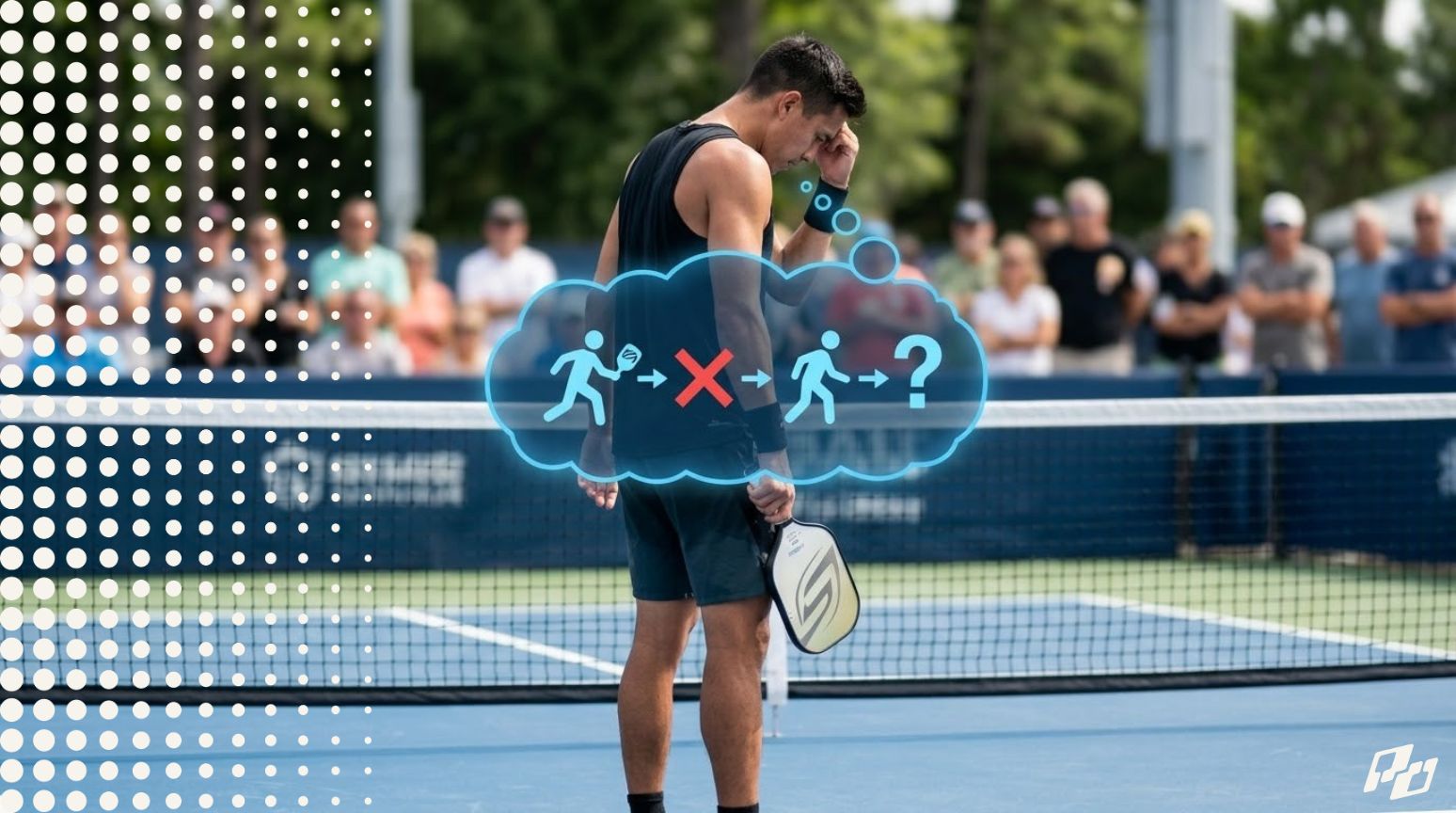
There’s a moment almost every pickleball player has experienced.
You’re in a dink rally. You see a ball that looks just high enough. You go for it—speed it up.
Your opponent counters. Clean winner.
And just like that, something changes.
You don’t speed up again for the next five minutes… maybe the rest of the match. It feels logical in the moment. You tried something, it didn’t work, so you adjust.
But here’s the problem: you didn’t actually adjust. You overcorrected.
And that’s where a lot of recreational players quietly lose control of matches.
The Lesson Most Players Get Wrong
Pickleball is full of quick feedback.
Every point gives you an immediate result—win or lose. And because that feedback is so instant, it’s easy to assume it’s also accurate.
It’s not.
One point doesn’t tell you if a decision was right or wrong. It just tells you what happened that time.
Pro player Zane Navratil explains it in a way that really flips your perspective:
“Just because a shot didn’t work doesn’t mean it was wrong. And just because it worked doesn’t mean it was right.”
That’s a tough idea to accept, especially in the middle of a match. But it’s one of the biggest separators between players who plateau and players who keep improving.
The Speed-Up That “Didn’t Work”
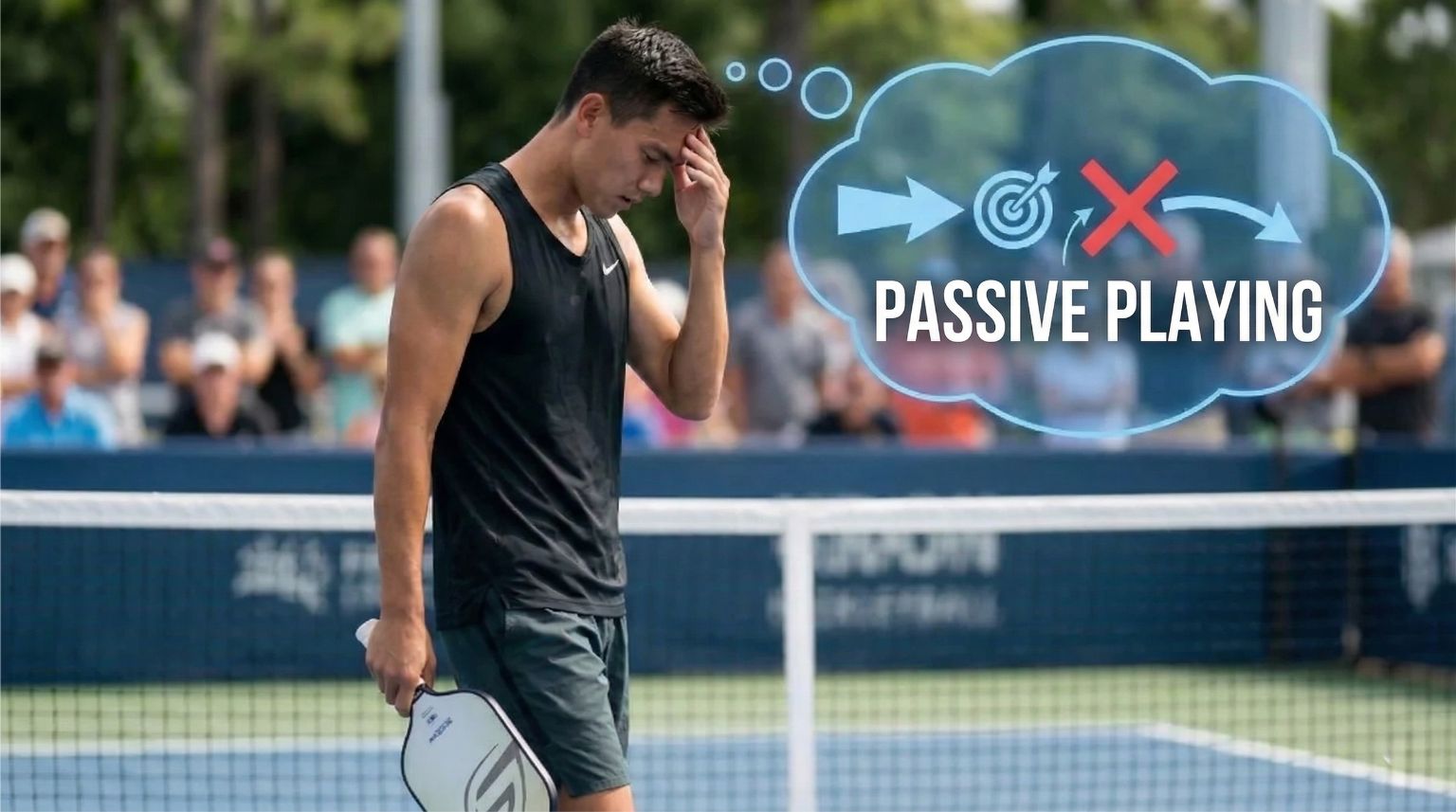
Let’s go back to that speed-up. You attacked. You lost the point. Most players walk away thinking:
- “That was a bad decision.”
- “I shouldn’t attack from there.”
- “I need to play safer.”
But what actually matters is something else entirely: was it the right ball?
- Were you balanced?
- Was the ball above net height?
- Were your opponents in a neutral or defensive position?
If the answer is yes, then it was probably a good speed-up—even if you lost the point. And here’s where things get interesting.
At the pro level, players don’t stop attacking after getting burned once. In fact, Zane points out that players like Ben Johns and Anna Leigh Waters will continue attacking the same pattern if it’s the right one.
They trust the decision—not the outcome.
Why This Happens (And Why It Feels So Real)
There’s a reason this mistake is so common. It’s not a skill issue—it’s a thinking issue.
Our brains are wired to remember negative outcomes more strongly than positive ones. So one failed speed-up sticks with you more than five good ones. That leads to what you see all the time in rec play:
- a player attacks once, gets countered
- they immediately become passive
- they start dinking everything, even attackable balls
From the outside, it looks like they’re being “patient.” In reality, they’ve just lost their ability to recognize opportunities.
The Difference Between Good Players and Better Players
If you watch stronger players closely, they don’t necessarily hit harder or move faster all the time. But they make cleaner decisions—especially under pressure.
They understand that pickleball isn’t about winning the current shot. It’s about shaping the next one.
That’s a subtle but important shift.
A speed-up isn’t always meant to win the point outright. Often, it’s designed to force a weaker reply—a pop-up, a slightly high counter, a ball you can attack again.
So when a good attack gets countered, better players don’t panic. They recognize it as part of the pattern.
Recreational players, on the other hand, often treat every lost point as a warning sign. And that’s where the gap starts to grow.
Where This Really Shows Up: The Transition Zone
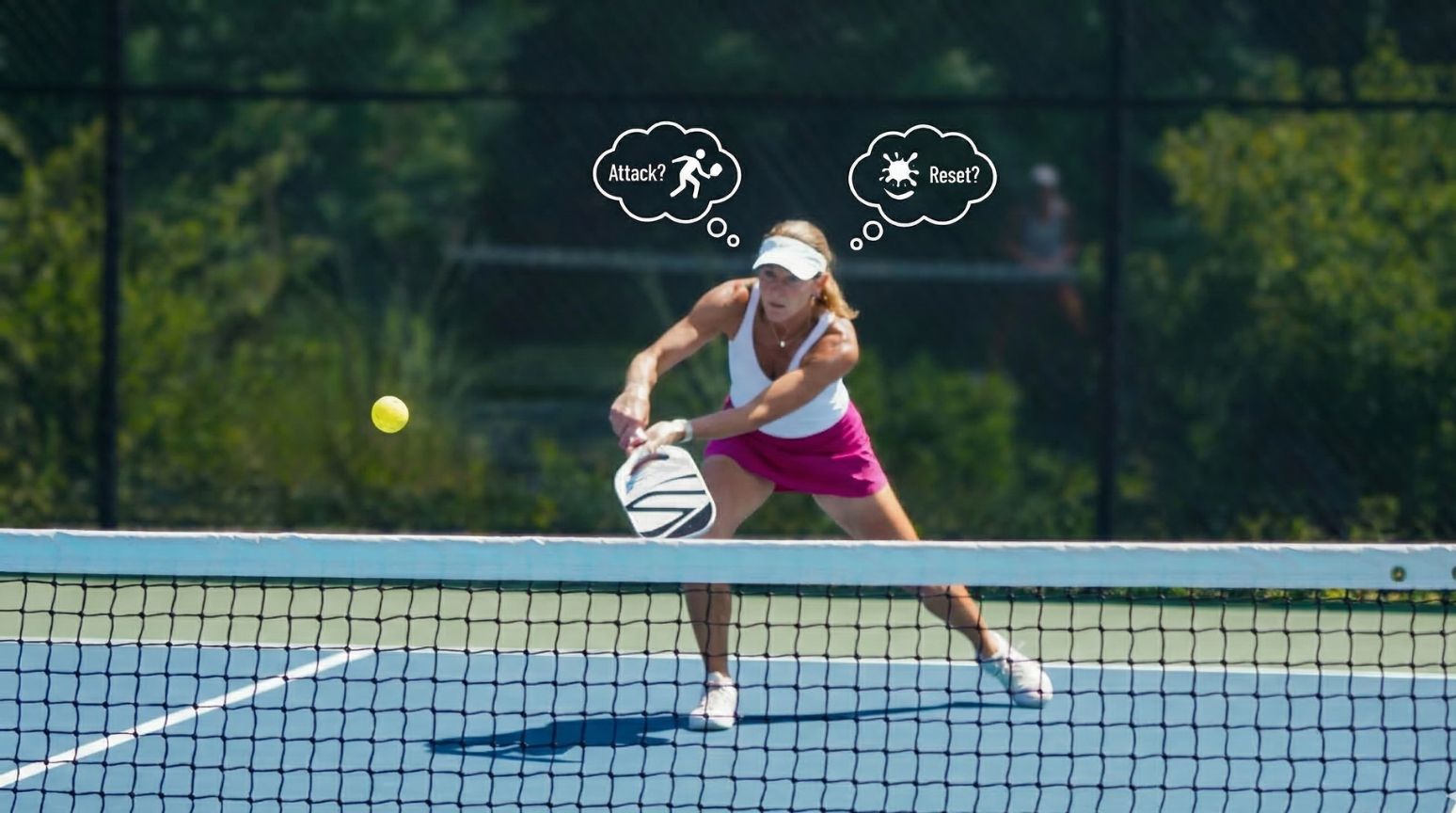
This idea becomes even more important in the transition zone—the most uncomfortable part of the court for many players.
You’re moving forward. The ball is coming faster. Decisions have to happen quickly. This is where hesitation shows up.
You get a borderline ball. You’re not sure whether to reset or attack. And if you’ve just lost a point attacking, you’re far more likely to choose the safer option—even when it’s not the best one.
That’s exactly where “building core IQ” happens. Because at higher levels, the transition zone isn’t about reacting—it’s about recognizing.
Recognizing:
- which balls are attackable
- which balls need to be reset
- and trusting that decision even if the last one didn’t go your way
When You Should Actually Change Your Strategy
So if one bad point shouldn’t change your strategy… when should you adjust?
Here’s the key: you don’t adjust based on a single outcome. You adjust based on a pattern.
One speed-up getting countered doesn’t mean anything. But if you start noticing the same thing happening repeatedly—your attacks getting read early, your opponents countering cleanly, or your shots not creating any pressure—that’s real information.
That’s when a change makes sense. But even then, the adjustment isn’t “stop attacking.” That’s where most players go wrong. A smarter adjustment looks like:
- being more selective with which balls you attack
- changing your target (middle instead of line, or vice versa)
- adding shape (topspin roll instead of flat hit)
- setting up the attack with one more controlled shot
You’re not abandoning your strategy—you’re refining it. A simple way to think about it during matches:
- one point = ignore
- two similar outcomes = pay attention
- three or more = adjust
This keeps you from overreacting while still staying adaptable.
A Better Way to Think Between Points
If you want to improve this part of your game, you don’t need a new technique. You need a better question. Instead of reacting emotionally to the result, start asking:
“Was that the right decision… or just a lucky/unlucky outcome?”
That small shift changes everything. After a point, instead of thinking:
- “I missed that” try thinking:
- “Was that the right ball to attack?”
Instead of:
- “That worked great” ask:
- “Would that work over and over again?”
Over time, you start building something that doesn’t show up on the scoreboard right away—but it shows up in your consistency.
Why This Matters More in Tournaments
In rec play, mistakes are easy to brush off. In tournaments, they stick.
You remember them. You replay them. And if you’re not careful, you adjust your entire strategy based on one or two points. That’s where players start tightening up.
They stop attacking the right balls.
They hesitate.
They give control back to their opponents.
And suddenly, the match feels like it’s slipping away—even though nothing dramatic actually changed.
This is why experienced players talk so much about “trusting your game.” What they really mean is: trust your decisions, not your last result.
The Takeaway Most Players Miss
If you zoom out, this whole concept comes down to one simple truth: one point is not enough information.
Not to change your strategy. Not to abandon a pattern. Not to decide what kind of player you are that day.
Better players understand this. They think in sequences, not moments. They know that if a decision is correct, it will pay off over time—even if it fails once or twice.