In pickleball, deception starts before you hit the ball. While most players obsess over paddle angle and wrist disguise, advanced players know the truth: what your eyes do before contact is just as important as what your paddle does during it.
Enter the “Eye Freeze” move—a technique used by elite players like Ben Johns and Anna Leigh Waters to disrupt opponent timing by intentionally controlling where (or if) they look before hitting the ball. It’s about sending no signal—or sending the wrong one.
What Is the Eye Freeze?
The “Eye Freeze” is the act of deliberately holding your gaze in a neutral or misleading direction during the pre-contact phase of a shot. It removes anticipation cues that opponents typically read to prepare their movement.
“The longer you hide your intent, the later your opponent reacts. That’s time you can use to shape the point.”
Mark Renneson, Coach & Analyst, Third Shot Sports
The Science Behind It: Visual Cue Deception
Elite players are trained to read:
- Paddle face orientation
- Shoulder line
- Foot alignment
- Eye direction
According to research in the Journal of Sports Sciences, eye direction is the fastest visual cue the human brain processes—within 200–300 milliseconds. In a game where rallies are won or lost in under a second, that’s massive.
When you “freeze” your gaze, you deny your opponent access to that cue. You rob them of pre-motion prep. As a result, they often:
- React late
- Shift weight the wrong way
- Commit to a shot you didn’t hit
Biomechanical Implications: Stillness = Ambiguity
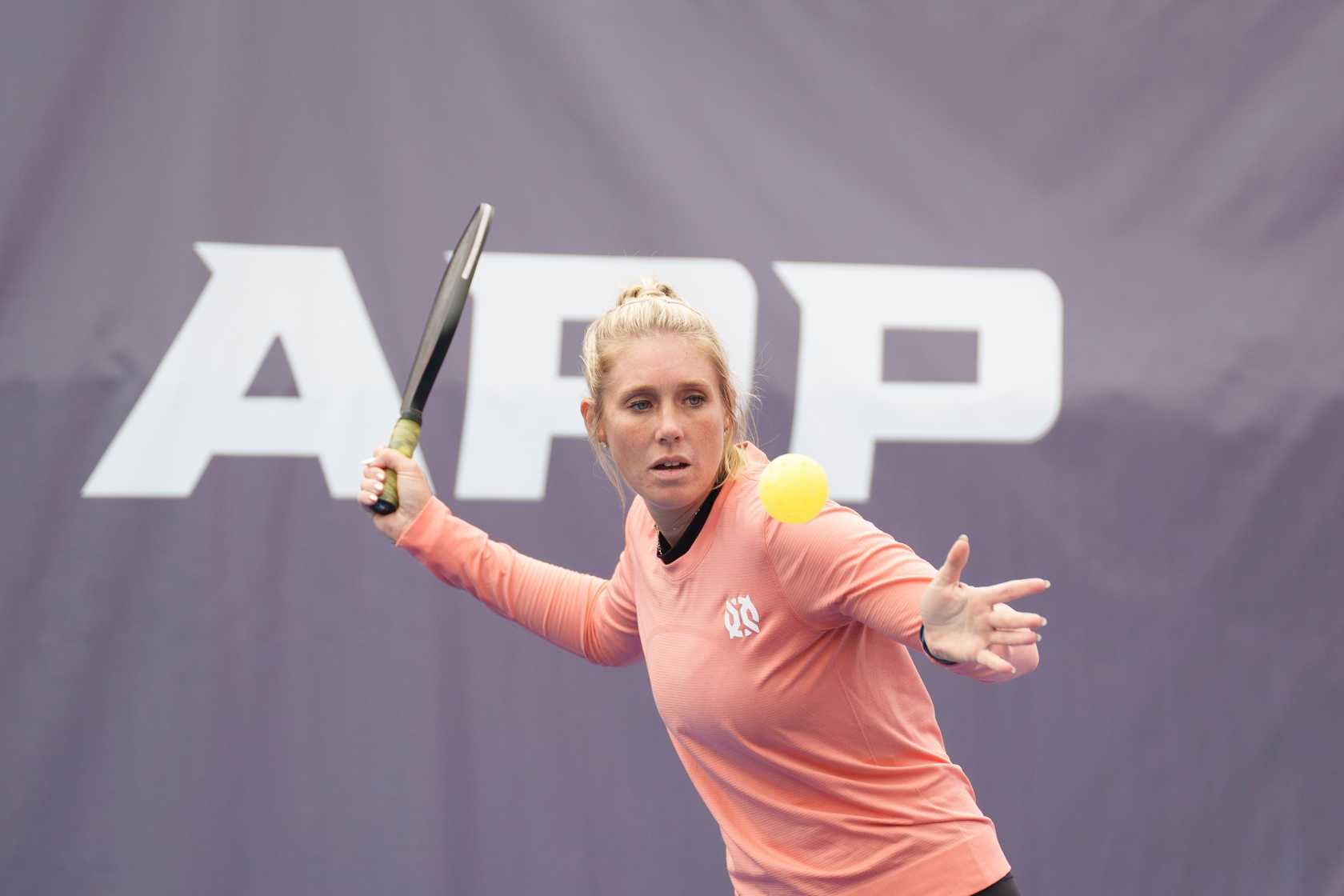
When your gaze stays fixed, your head, shoulder line, and core remain neutral, allowing:
- Better shot disguise
- Faster directional changes
- More efficient follow-through
This mirrors deceptive techniques used in martial arts (e.g., no-look strikes) and quarterback footwork in football—minimize telegraphs to increase unpredictability.
In pickleball, this gives you two tactical advantages:
- Freeze-frame delay: Your opponent doesn’t move until after contact.
- Direction ambiguity: They can’t guess where you’re hitting based on your visual target.
When to Use the Eye Freeze
The Eye Freeze is not an every-shot tactic. It’s a selective deception tool best used when anticipation matters most.
✅ Ideal Scenarios
| Situation | Why It Works |
|---|---|
| Dink rallies | Prevents opponent from jumping the line or poaching |
| Flick attacks from the kitchen | Hides sudden change in pace or angle |
| Midcourt transition flicks/resets | Delays their counter-movement |
| Speed-ups during hand battles | Gives you the first move advantage |
| Drop + roll shot patterns | Disguises whether you’re resetting or counter-attacking |
“If they can’t see where your eyes are going, they can’t load their body to respond. That split-second indecision is everything.”
Morgan Evans, Pro Player & Commentator
Eye Freeze vs. “Keep Your Eyes on the Ball”: Are They Really Opposites?
If you’ve ever been coached in any racquet sport, you’ve heard the golden rule: “Never take your eyes off the ball.”
So how does that line up with the Eye Freeze, where you’re deliberately not looking toward your target?
Let’s clear this up: Eye Freeze is not about taking your eyes off the ball. It’s about where you direct your gaze, not where you direct your visual attention.
Peripheral Focus vs. Direct Gaze
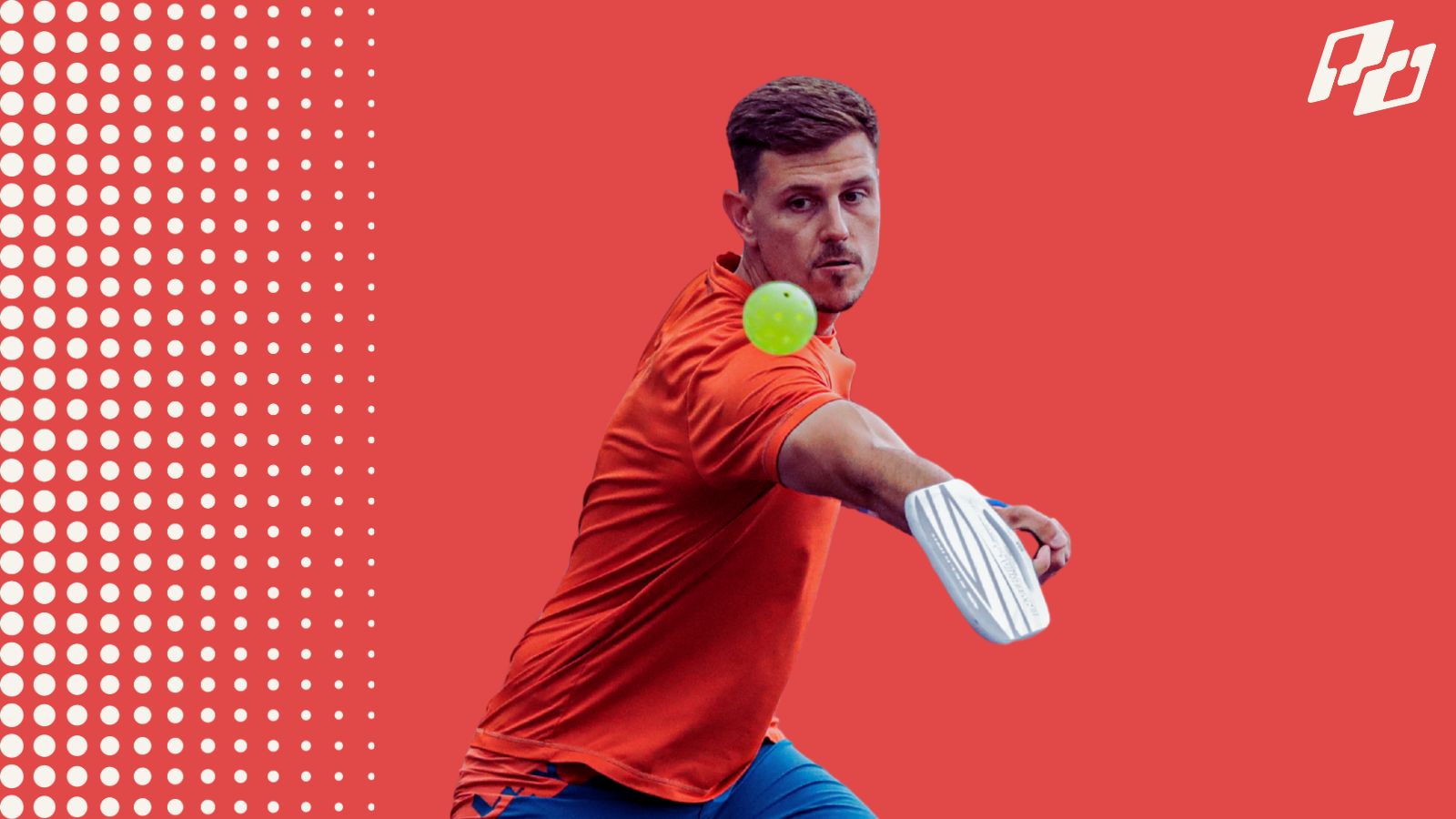
In Eye Freeze, you’re still tracking the ball—just not with a hard, direct stare.
Your peripheral vision stays locked on the incoming shot. Your brain can still process speed, spin, and location through side-eye tracking while your gaze remains neutral or deceptive.
This is similar to how elite quarterbacks scan a defense while keeping defenders frozen, or how soccer players pass without looking. The body reads the situation even when the eyes don’t signal it directly.
“I don’t stop seeing the ball—I just stop showing where I’m sending it.”
Tyson McGuffin, on disguising directional intent
The Visual Discipline Shift
Eye Freeze doesn’t contradict visual fundamentals—it evolves them. It asks you to develop:
- Visual discipline: Being aware without giving away
- Peripheral processing: Letting your subconscious read the ball
- Delayed commitment: Executing cleanly while withholding directional signals
Think of it as deception layered on top of tracking, not in place of it.
Bottom Line: You’re not ignoring the ball. You’re hiding your intentions. And if you train it properly, Eye Freeze won’t cost you vision—it’ll cost your opponents time.
Tactical Layering: Combine with Other Deceptive Tools
The Eye Freeze works best when integrated into a deception stack—a set of tactics layered together to overload your opponent’s anticipation system.
Combine With:
- Still paddle pre-contact
- Neutral shoulder alignment
- Late paddle acceleration
- Delayed wrist flick
- Body fade or misdirection step
Used together, these eliminate tells and force your opponent into reaction-only defense.
How to Train the Eye Freeze
1. Call & Guess Partner Drill
Have a partner stand across the net. You freeze your eyes in a neutral position and hit one of two shots (e.g., cross dink or line flick). Partner must guess based on body cues only. Track success rate.
2. Wall Reaction Drill
Tape two targets on a wall (left and right). Freeze your eyes center, then randomly hit each target without giving away intention. Helps with peripheral alignment and clean shot execution.
Common Mistakes
Even advanced players can misuse the Eye Freeze if they’re not intentional. It’s a subtle skill, and like all subtle skills, small missteps can kill its effectiveness.
Here are the most common mistakes players make when trying to implement Eye Freeze—and how to fix them before they backfire.
| Mistake | Fix |
|---|---|
| Staring too long and losing ball focus | Keep gaze neutral, not detached. Peripheral vision still tracks ball. |
| Over-freezing and looking robotic | Blend stillness with natural movement. Don’t stiffen. |
| Using Eye Freeze on every shot | Use it situationally to maintain unpredictability. |
| Eye Freeze without paddle disguise | Combine with paddle neutrality for full deception. |
Tactical Gaze Control in Action
Eye discipline isn’t one-size-fits-all. In some situations, a frozen gaze creates perfect ambiguity. In others, a well-timed fake-out is the better weapon.
Knowing when to hold your eyes still and when to sell something false is what separates high-level disruptors from predictable shot-makers.
Here’s how to apply Eye Freeze—and when to tweak it—for maximum effect.
| Shot Type | Best Approach | Why |
|---|---|---|
| Dink crosscourt | Freeze gaze center | Hides whether you’re dinking or attacking |
| Roll volley in transition | Freeze gaze short | Keeps opponent guessing between drop or flick |
| Sideline flick | Freeze gaze down the middle | Prevents opponent from loading to chase angle |
| Lob from kitchen | Freeze gaze on paddle | Prevents early drop step or poach attempt |
You don’t have to flinch, fake, or feed them clues. Let your paddle talk—but keep your eyes quiet. In a game where milliseconds matter, stillness isn’t passive—it’s pressure. Hold your gaze. Hold your nerve.
Let them blink first.
TL;DR Summary
- The Eye Freeze is the act of holding your gaze in a neutral/misleading direction to mask shot intent.
- It prevents opponents from reading your visual cues and anticipating your shot.
- Best used in flicks, dinks, and midcourt transition shots.
- Combine with paddle stillness and body control for elite-level deception.
- Train with mirror, partner, and wall drills.
- Don’t overuse it—deploy it strategically to create doubt and delay.