We recently shot a video where we broke down the eight core strategies that have helped us and countless other players win more games. These aren’t gimmicks or shortcuts, they’re real, tested tips that work at every level of rec play.
Why should you listen to us? Because these are strategies we’ve tested on the court ourselves, and we’ve seen how quickly they can elevate your game.
In this article, we’ll expand on what you’ll see in the video — not just repeating the tips, but adding context, examples, and extra advice so you know exactly why these strategies matter and how to use them.
Watch the Video First
Here’s the full video where we break down these strategies on court. Give it a watch before you dive into the expanded notes below — it’ll help you see the techniques in action and then apply the extra detail we cover here.
1. Play High-Percentage Pickleball
Most points in pickleball don’t end with a highlight-reel winner; they end with an error. That means you don’t have to paint the lines or hit 100% power. You just need to play with margins.
Give yourself room over the net, aim for safer zones like the middle, and focus on placement over pace. Consistency frustrates opponents more than flashy shots.
Common mistake we see: Players swinging for the sidelines on low-percentage balls — like trying to rip a passing shot from below the net, aiming for a sharp crosscourt angle while off-balance, or going for the baseline when you’re on the run.
Application: Imagine your “safe zone” as three feet inside the lines and six inches above the net tape. Live in that zone until you’ve created a true opening.
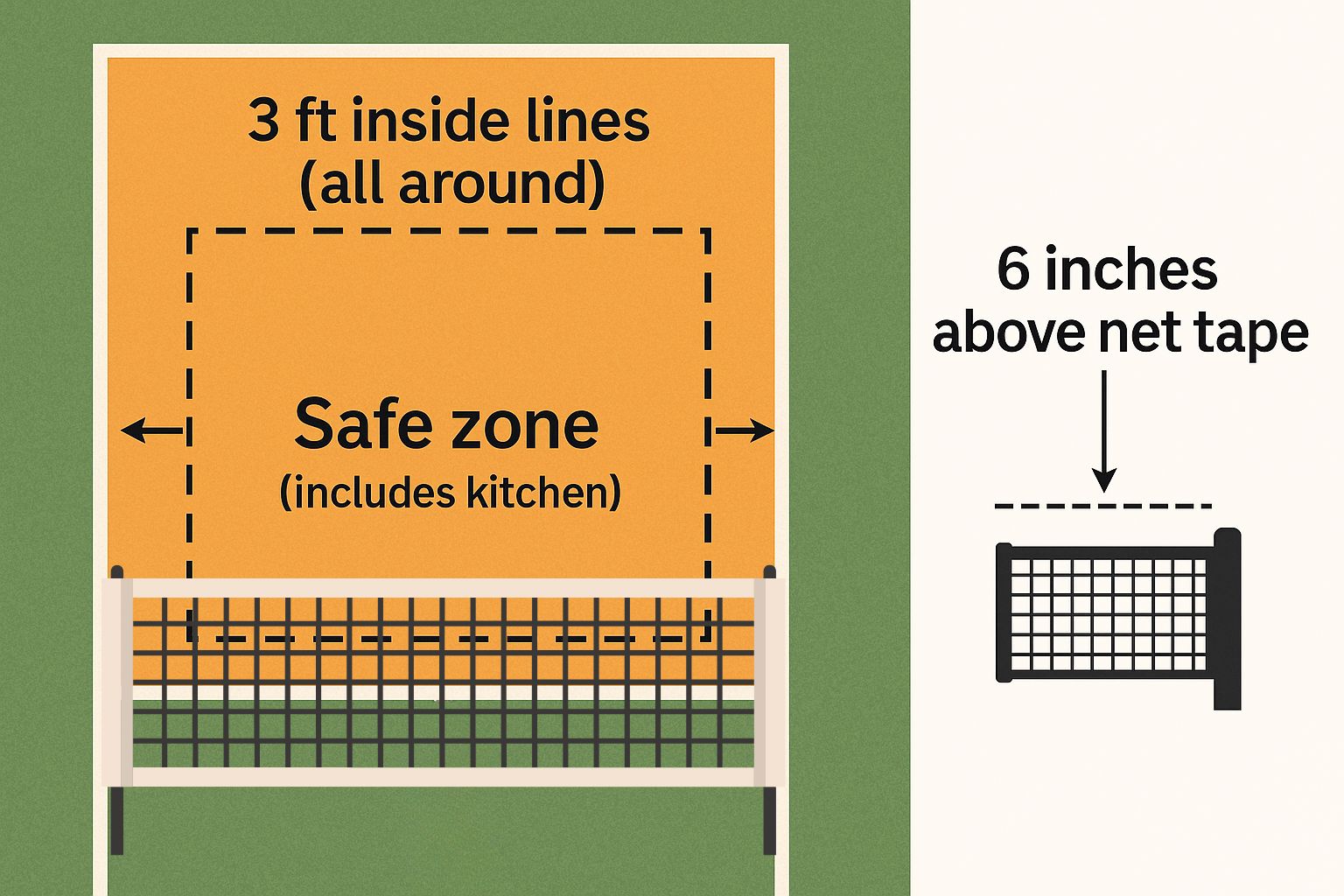
Extra tip: Think of your rally tolerance as a muscle. Challenge yourself to stay in a dink rally three more shots than feels comfortable. You’ll notice your opponents blink first.
2. Communicate Early and Often
Pickleball is a doubles sport first, and nothing sinks a team faster than silence. Short calls like “mine,” “yours,” or “out” prevent hesitation. A quick strategy chat between points can reset your team’s focus.
Common mistake we see: Partners both lunging for the same ball or worse, neither going for it.
Application: Develop “default rules.” For example: forehand takes the middle, or player on the left covers lobs. These quick rules prevent hesitation in the moment.
Extra tip: Talk before the ball is struck, not during. Early calls give your partner confidence to focus on their own zone.
Common calls and default use:
| Call | Meaning | Default Use |
|---|---|---|
| Mine | You will take the ball | Used when both players could reach; claim responsibility early |
| Yours | Partner should take it | Used when ball is clearly in partner’s stronger zone |
| Out | Ball is heading out | Call immediately if you see it long/wide so partner doesn’t swing |
| Switch | Change court sides | Used after a lob or pulled wide so you don’t collide |
| Middle | Aim at center | Quick reminder of strategy between points; default safe target |
| Lob | Warn about opponent lob | Early alert so partner can retreat and cover |
These simple defaults reduce hesitation and make your team function as one unit.
3. Master the Third Shot Drop
It’s called the most important shot in pickleball for a reason. The third shot drop is your bridge to the kitchen line. It doesn’t need to be perfect — it just needs to land soft enough to give you time to advance.
Common mistake we see: Players driving every third shot, which leaves them stranded in “no man’s land” if it comes back fast.
Application: Use the third shot drop as a tool, not a trophy. The goal isn’t to hit a magical winner — it’s to buy yourself real estate at the kitchen.
Extra tip: If your drops are landing too high, exaggerate your knee bend and finish with the paddle tip up. Visualize dropping the ball into a bucket just over the net.
4.0+ strategies:
- Mix in drop-drives: Use a disguised drive occasionally (a shot that looks like you’re preparing for a soft drop, but at the last second you accelerate through and drive the ball) on the third to keep opponents guessing, then return to your drop rhythm. This makes them less comfortable anticipating only one look.
- Target the backhand: Aim your third shot drop to your opponent’s weaker side, especially their backhand dink, to set up easier fourth shots.
- Blend height and spin: At higher levels, adding topspin to your third shot drop helps the ball dip sooner, making it harder to attack.
- Partner coordination: Communicate before the serve — if you plan to drop crosscourt, your partner can shift slightly to cover the middle in case of a counter.
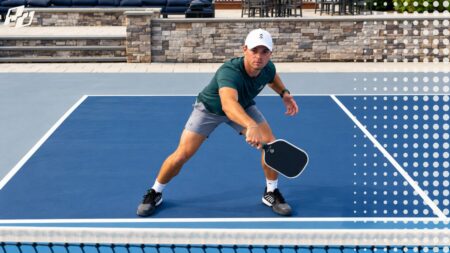
We recently broke down how to disguise your speedups, and the same tricks work beautifully for hiding your drives too. Take a look:
4. Hit More Balls Down the Middle
The middle is the safest shot in pickleball. It reduces angles, forces your opponents to decide who takes it, and lowers your chance of hitting out wide.
Common mistake we see: Players trying for sharp crosscourt winners when a steady ball to the middle would extend the rally.
Application: On defense, aim middle to neutralize. On offense, fire down the middle in fast hands battles — it shortens your opponents’ reaction time.
Extra tip: Change your pace when you go middle. A slow roll volley middle often creates confusion, while a quick flick middle can jam both opponents.
Higher-level insight: At 4.0+, the middle is also about disguise. Start your paddle path as if you’re going crosscourt, then send it middle at the last moment — it freezes opponents.
Another pro-level tactic is to attack the seam (the narrow gap between your opponents’ paddles — not always dead-center, but wherever their coverage overlaps and communication is weakest).
Even advanced teams argue for half a second over seam balls, and that’s all the time you need to earn a weak reply.
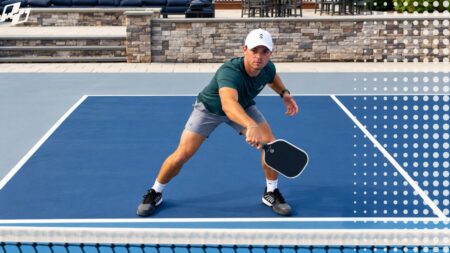
What about defending the middle? Here’s our guide on covering the mid court in doubles pickleball.
5. Always Expect a Speed-Up
Getting caught off guard by a speed-up is one of the most common rec-level mistakes. Train yourself to assume your opponent will attack — that way you’re never surprised.
Common mistake we see: Players relaxing their paddle down by their waist during dink rallies. By the time the speed-up comes, it’s too late.
Application: Keep your paddle in “ready position” — chest high and out front. Think of it as a shield that’s always there to block or counter.

Extra tip: Watch your opponent’s shoulders. If you see a slight rise or paddle tip lift, expect a flick or speed-up.
6. Use the Soft Game to Set Up Attacks
Dinks and resets aren’t passive — they’re weapons. By moving your opponents around with controlled soft play, you create openings for attacks.
Common mistake we see: Players getting impatient and speeding up too soon, often from below net height.
Application: Work the dink like a chess player, not a poker player. Move opponents side to side, push them back, then pounce when the ball floats high.
Extra tip: Mix in a few intentional “probe dinks” — balls placed slightly higher than a standard dink (around net height rather than inches below it) and aimed wider toward the sidelines. If your opponent over-commits, you’ll know where their weak spots are.
Think of probe dinks as test shots: they aren’t designed to win the rally outright, but to gather information. If your opponent lunges awkwardly or pops the ball up, you’ve found a pressure point you can exploit later.
If they handle it easily, you know to change the target. Over time, probe dinks help you map your opponents’ strengths and weaknesses without taking big risks.
7. Reset When You’re Scrambling
Out of position? Don’t go for the hero shot. Reset. A soft ball into the kitchen neutralizes your opponent’s attack and buys you time.
Common mistake we see: Players slapping hard from the transition zone when they’re off balance. Nine times out of ten, it floats out.
Application: When scrambling, lower your center of gravity and soften your grip pressure. That allows the paddle to absorb pace instead of adding to it.
Extra tip: If you’re pulled wide, aim your reset over the middle of the net strap. It gives you more margin and less angle for your opponent to counter.
Higher-level insight: A quality reset isn’t just about survival — it flips momentum. Advanced players use resets not only to stay in the rally but also to bait their opponents into overhitting.
Think of the reset as a pressure valve: you’re cooling down the rally, forcing opponents to hit one more ball. Often, they’ll press and make the mistake for you.
The best defenders also disguise resets, showing drive preparation before softening at the last second to keep opponents guessing.
Still uncertain when to speed up or reset? Read more here.
8. Get to the Kitchen Line — Smartly
The kitchen line is where games are won. But don’t sprint there blindly. Move up behind good shots and pause behind bad ones.
Common mistake we see: Players rushing in after a high third shot, only to eat a drive at their feet.
Application: Advance in stages. After your serve, hit your third, then take two shuffle steps forward. If the return is attackable, keep moving. If not, stop and defend before resuming.
Extra tip: When moving forward, stay low and keep your paddle out front. That way, even if your opponent attacks, you’re ready to block.
Why These Strategies Matter
You’ve probably heard some of these tips before — play high percentage, communicate, get to the kitchen. But here’s the thing: the difference between players who know these ideas and those who live by them is night and day. These aren’t throwaway clichés. They are the foundation of winning pickleball.
Every rally you play is a test of patience, discipline, and smart decision-making. Flashy winners feel good in the moment, but consistency and strategy are what keep you climbing levels.
These eight strategies take what you already know and sharpen it into habits you can rely on under pressure. That’s when the game changes: when you stop guessing and start playing with intention.
We can tell you from experience, once you start applying even one or two of these consistently, the game feels calmer, your confidence grows, and your opponents feel the squeeze.
That’s why we made the video — not to give you new gimmicks, but to help you use the tools that actually move the needle.
Apply them, trust them, and you’ll see your results change almost immediately!