
Pickleball players often buy new paddles because of FOMO, social proof, price expectations, and the hope that gear will fix a weakness. Smarter buying starts with one question: what exact problem are you trying to solve? Then test whether a new paddle actually changes that miss.
There’s something strange happening in pickleball. Players complain that a $300 paddle is too expensive… and then immediately want the newest $300 paddle.
They’ll ignore a perfectly good model because it came out six months ago, buy what everyone at their club is carrying, and sometimes spend more time comparing foam density and swing weight than fixing the shot they’re hoping the paddle will improve.
A recent Reddit thread from a frustrated sporting-goods store owner captured this perfectly. He described customers aggressively haggling over prices, refusing unfamiliar brands, and treating paddles more than a few months old as undesirable—even when those paddles were still excellent.
One commenter summarized the contradiction beautifully: players often don’t want the right paddle. They want the popular paddle—just not at the popular-paddle price.
That sounds irrational.
Psychologically, though, it makes a surprising amount of sense. And understanding why may save you a few hundred dollars.
The Paddle Market Isn’t Just Selling Performance. It’s Selling Certainty.
Imagine you’ve spent three months trying to improve your third-shot drop. Some days it feels great. Other days it floats chest-high.
Is your technique wrong?
Are you late?
Is your grip pressure changing?
Is the paddle too poppy?
Would a larger sweet spot help?
You don’t really know.
Then a new paddle appears promising more dwell time, a larger sweet spot, improved control and effortless power.
Suddenly there’s a very clean explanation for your messy problem: maybe I need the new paddle.
That is enormously appealing.
Training is uncertain. Equipment is concrete. You can’t order better footwork on Tuesday and have it arrive Friday. You can order a paddle.
That may explain one of the funniest comments in the Reddit discussion: manufacturers continually introduce new cores, construction methods and textures while marketing implies that the newest design might fix the rec player’s weak drop or lack of power.
That doesn’t mean equipment doesn’t matter. It absolutely does.
Paddles genuinely differ in rebound, sweet-spot behavior, spin capability, stability, maneuverability and feel. Engineering research has even measured meaningful differences in rebound behavior depending on paddle and impact location.
The psychological mistake is different: we tend to overestimate how much of our problem belongs to the paddle.
Why $300 Starts Feeling Like It Must Be Better
There’s another bias working against us. Price becomes information.
In a series of six consumer studies involving 2,842 participants, higher prices reliably increased people’s expectations of quality and liking. Interestingly, once participants actually experienced the products, those higher expectations didn’t consistently translate into greater perceived quality.
That distinction matters in pickleball.
Before hitting with a $300 paddle, your brain already knows: premium.
So the first clean drive feels powerful.
The first soft reset feels plush.
The paddle suddenly feels “special.”
Meanwhile, a $120 paddle has to prove itself.
That doesn’t mean expensive paddles are bad purchases. Some legitimately contain more sophisticated construction or offer performance characteristics you may value.
But price should be evidence of price—not evidence that the paddle fits your game.
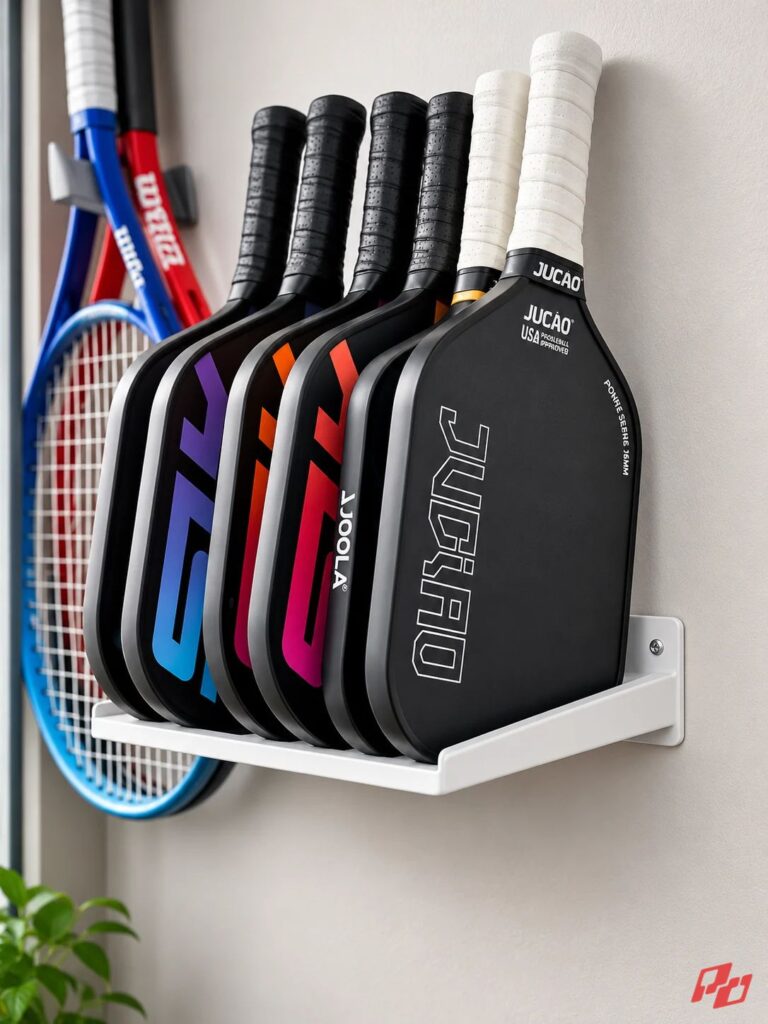
Even current paddle guides point out that the newest technologies are not automatically superior for everyone. Foam paddles, for example, can offer stability and consistency, but their feel varies widely, and the broad “Gen 3” and “Gen 4” labels themselves aren’t standardized performance guarantees.
Then Your Friends Show Up With One
Now things get more interesting.
Five players at your court have the same new paddle.
You notice.
Three people recommend it.
You notice more.
Your favorite reviewer loves it.
Now suddenly not buying it feels like the risky decision. That’s social proof.
Research on consumer decision-making shows that other people’s purchases, reviews, likes and popularity signals can meaningfully influence what enters our consideration set and what we ultimately buy.
In pickleball, this happens in an unusually visible environment. Everyone can see your paddle. Nobody knows what golf ball is in your bag from 30 feet away. Your paddle is right there at the kitchen.
Brand.
Shape.
Color.
Model.
Limited edition.
That turns equipment into something slightly different: part tool, part social signal.
The Reddit thread got surprisingly close to this. One player suggested people sometimes pay premium prices partly because they become attached to brands and can show the paddle off. Another discussion about cheap knockoffs eventually landed on an even sharper observation: some buyers may value the appearance of belonging to the premium club almost as much as the underlying product.
That’s where “everyone at my club has one” should make you more cautious, not less.
Popularity tells you a paddle is popular. It does not tell you why your backhand reset keeps sailing long.
The Market Has Also Created a Choice-Overload Problem
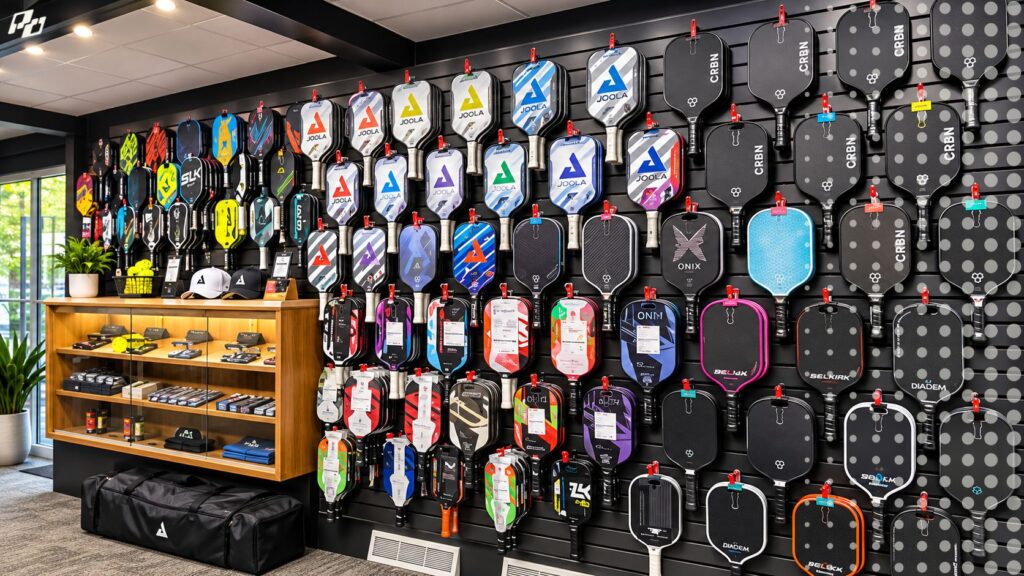
Here’s the part I think gets underestimated. There may simply be too many plausible good paddles.
- Carbon.
- Kevlar.
- Titanium mesh.
- Foam.
- Honeycomb.
- Hybrid.
- Elongated.
- Widebody.
- 14mm.
- 16mm.
- High swing weight.
- Low twist weight.
- Raw carbon.
- Molded texture.
- Thermoformed.
And before you finish researching one generation, another launches.
Consumer research suggests choice overload becomes especially likely when four things increase: the complexity of the options, difficulty of the decision, uncertainty about what you personally prefer, and the effort required to compare everything.
That is almost a perfect description of paddle shopping.
And choice overload produces an interesting behavior: when comparison becomes difficult, people gravitate toward options that are easy to justify.
✔ The pro uses it.
✔ My friends use it.
✔ It won Paddle of the Year.
✔ It costs $300.
✔ It just launched.
All of those shortcuts remove the uncomfortable burden of deciding among 50 paddles that might all be perfectly good.
This may be why longtime reviewer Chris Olson of Pickleball Studio recently told players that if they already have a paddle from roughly the past six months and genuinely like it, they probably don’t need another one. He also argued that paddle performance has become more evenly competitive than it used to be.
That is terrible news for FOMO. And excellent news for your wallet.
Beware the “Two Percent Better” Purchase
One Reddit commenter described watching players chase a paddle that might be “2% better” while paying another $100 for it. That might be the most useful concept in the whole discussion.
Because advanced equipment decisions should not be: Is Paddle B better than Paddle A?
They should be: Is it better in a way I can actually exploit?
Suppose a new paddle gives noticeably more power. Great. But you already hit returns long. That improvement may make your game worse.
Suppose another paddle has a higher swing weight and tremendous stability. Excellent. But your biggest weakness is being late in hand battles.
Again: wrong improvement.
A paddle can be objectively impressive and still be a bad upgrade. That’s why the increasingly useful question is not “How good is this paddle?”
It’s:
What happens to my misses when I use it?
That is a much harder question for marketing to answer for you.
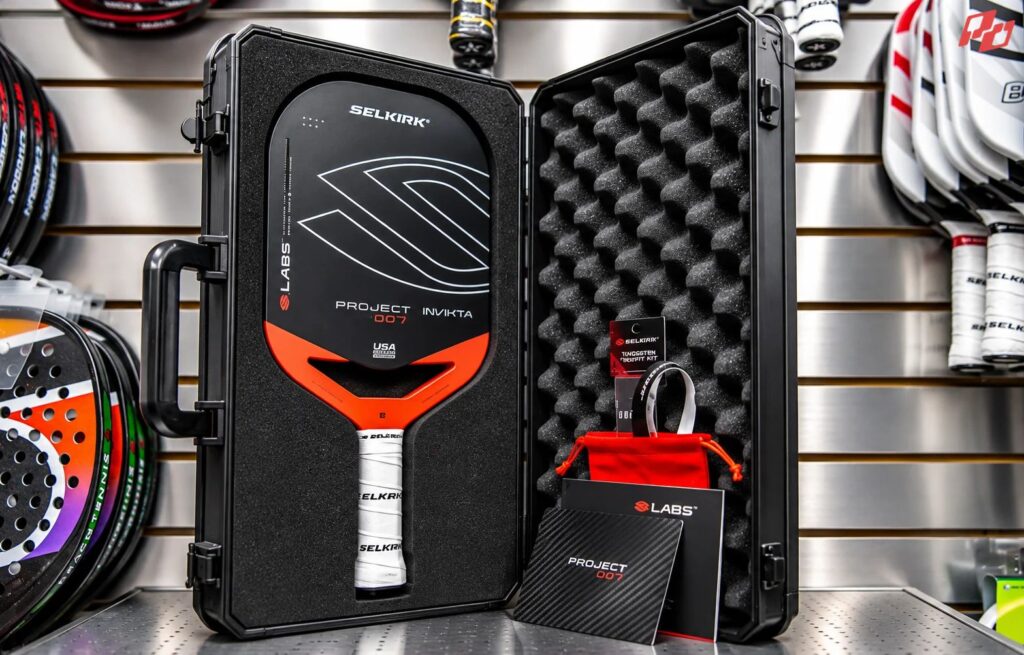
Demo for Misses, Not Highlights
Here’s a test I wish more players used.
When demoing a paddle, stop paying so much attention to your best shots. Most good paddles feel amazing when you hit the sweet spot. Instead, watch what happens to the balls you normally mishit.
Hit 20 resets.
Where do the bad ones go?
Hit backhand counters.
Are you late more often?
Hit drops while moving.
Does the paddle punish contact outside center?
Try defending hard balls at your body.
Can you reposition it quickly?
Now you’re testing whether the paddle changes your error pattern. That is much more useful than deciding: “Wow, that drive felt incredible.”
Another Warning Sign: You Suddenly Dislike Your Current Paddle
This sounds ridiculous, but psychology research suggests there may actually be something behind it.
Studies on product upgrading found that simply having an appealing upgrade available can make consumers behave more carelessly toward products they already own—partly because deterioration helps justify replacing them.
Translated into pickleball:
Your paddle was fantastic in September.
A major brand launches something shiny in November.
Suddenly your sweet spot feels smaller.
The spin seems weaker.
Maybe it has “lost its pop.”
Sometimes that’s real. Paddles wear. But before buying anything, ask yourself: did my paddle change—or did my reference point change?
That one question can save you from an awful lot of imaginary paddle failure.
Why New Gear Feels So Good—and Then Stops Feeling New
There’s also simple adaptation. Research on consumer products shows people tend to underestimate how quickly the excitement of ownership fades.
That first session with a new paddle is fascinating.
You notice every sound.
Every drive.
Every dink.
Two weeks later?
It’s your paddle.
Which means players who love the feeling of upgrading can accidentally confuse that excitement with actual improvement.
Then the excitement disappears. So they research another paddle. That cycle can run indefinitely.
The Sensible-Paddle Test
Before spending another $150–$300, I’d run one test. Not “Do I want it?” You already know the answer.
Ask these instead:
1. What exact ball am I trying to improve?
Not “control.” Say:
“My backhand resets from mid-transition pop up when I’m stretched.”
That is a real equipment question.
2. What paddle characteristic would realistically help that problem?
More forgiveness?
Lower swing weight?
Less pop?
More stability?
Longer handle?
If you cannot connect the problem to a characteristic, stop shopping.
3. Is my current paddle actually preventing me from doing it?
Borrow something different. Hit the same shot. If nothing meaningful changes, you just diagnosed a technique problem for free.
4. What gets worse with the upgrade?
Every paddle trade-off matters.
More power may cost control.
More stability may cost hand speed.
More reach may reduce maneuverability.
A buying decision becomes dramatically clearer when you force yourself to name the downside.
5. Would I still buy it if nobody at my club could see the logo?
That question is intentionally uncomfortable. And extremely useful.
If the answer changes, congratulations: you just discovered part of what you’re actually buying.
Our Take
We don’t think pickleball players should stop buying nice paddles.
Gear is fun.
Trying technology is fun.
And the right paddle absolutely can make certain parts of your game easier.
But there’s a difference between buying performance and buying hope. The smartest paddle purchase usually begins with a boringly specific problem:
“I need more stability when blocking pace.”
Not:
“Everyone says this thing is incredible.”
- Know the miss.
- Know the characteristic that could help it.
- Demo the ugly shots.
- Name the trade-off.
- Then buy.
Because once you can explain exactly why you need a different paddle, you’re probably ready for one.
Until then?
You may not be shopping for a better paddle at all. You may just be shopping for a more comfortable explanation.