
Walk onto almost any pickleball court and you’ll see it within the first few rallies.
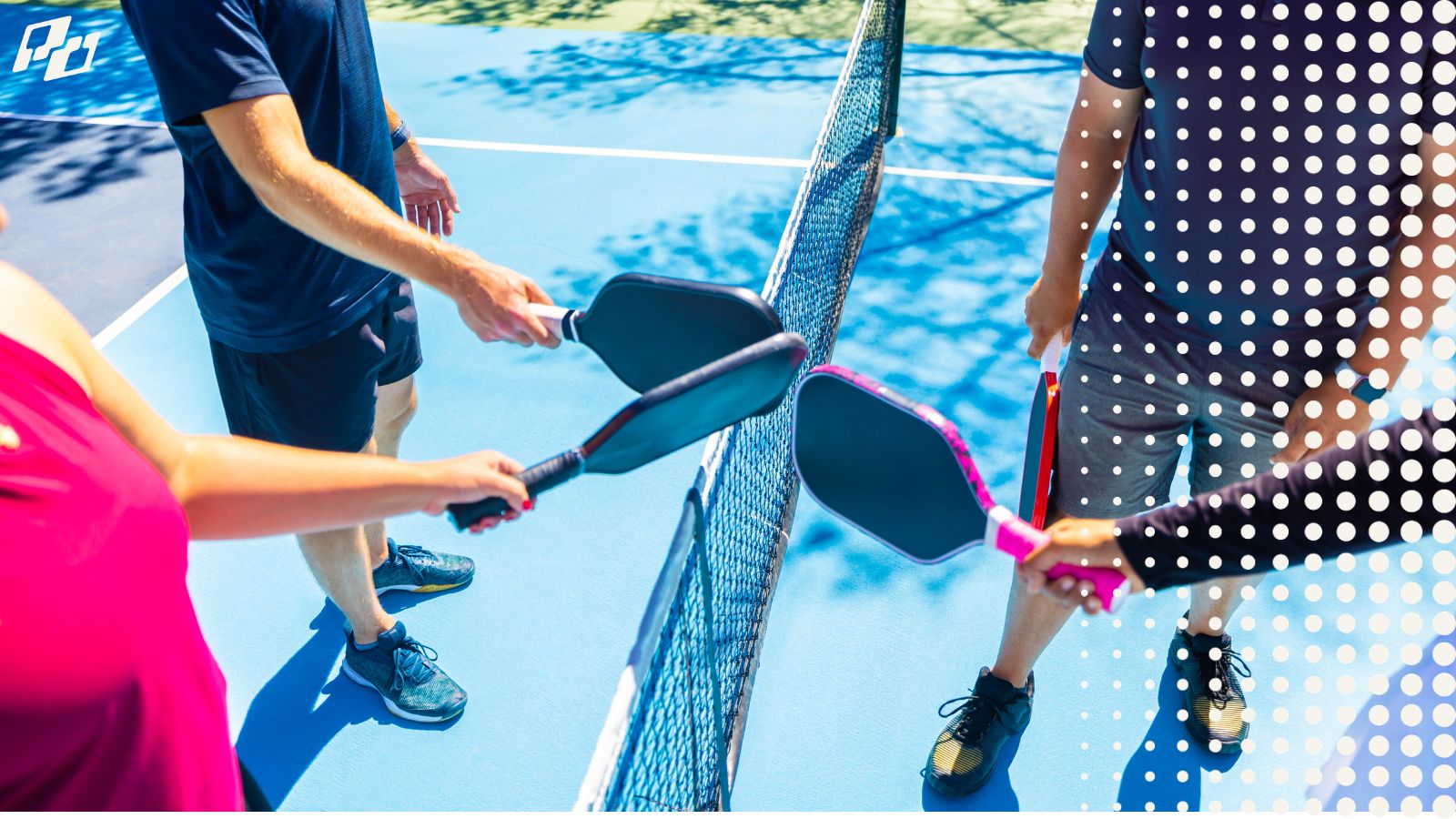
A quick paddle tap between partners after a nice shot.
A reassuring tap after a mistake.
Sometimes even a tap after nearly every point.
For years, paddle taps have been one of the sport’s unofficial rituals — a tiny moment of communication between teammates.
But recently, something interesting has started happening across recreational courts and pickleball social media.
Some players love paddle taps. Others say they’re overused, awkward, or even unnecessary.
And if you read enough online discussions or listen to enough post-game conversations at the courts, you’ll hear the same questions popping up again and again:
Do we really need to tap paddles after every rally?
Is it weird if I don’t do it?
And am I supposed to tap after a mistake too?
So what’s the real etiquette now?
Are paddle taps still part of pickleball culture — or are they quietly evolving into something different?
Why Paddle Taps Became a Pickleball Tradition
To understand the paddle tap debate, it helps to understand where it came from.
Pickleball has always leaned heavily toward social sportsmanship. In many communities, the sport grew out of rec centers, retirement communities, and open-play sessions where the atmosphere mattered just as much as the competition.
Unlike many competitive sports, recreational pickleball encourages:
- friendly interaction
- encouragement between partners
- celebration of good shots
- supportive communication after mistakes
In tennis doubles, players might give a quick high five between points. In volleyball, teammates constantly slap hands after rallies.
Pickleball simply adapted that idea with paddles. At its best, a paddle tap is the pickleball equivalent of saying:
“Nice shot.”
“All good, we’ll get the next one.”
“I like that idea—keep going.”
And those small moments matter more than people think.
In doubles especially, partner energy plays a huge role. A teammate who gets visibly frustrated after a missed shot can drag down the whole game. A quick paddle tap can reset that emotional moment.
That’s why paddle taps became such a natural part of pickleball culture.
The Debate: Are Paddle Taps Getting Out of Hand?
Where things get interesting is when taps become automatic rather than meaningful.
If you spend enough time at rec courts, you’ll start noticing a pattern. Some players tap paddles occasionally. Others tap after every single rally, almost like it’s part of a scripted routine.
That’s where some players begin to push back. The biggest criticism isn’t that paddle taps exist — it’s that they sometimes feel forced.
Many players say they’re perfectly happy with taps after:
- a great shot
- a long rally
- a partner’s mistake
But tapping after every point — including routine points or obvious errors — can feel excessive.
I’ve seen games where partners tap paddles 20 or 30 times in a single match, and eventually the gesture loses its meaning. Instead of feeling like encouragement, it starts feeling like something players are doing simply because they think they’re supposed to.
And interestingly, several players say that constant tapping can even disrupt the natural rhythm of play.
Pickleball is a quick sport. Points come fast, especially in rec games where players want to keep rotations moving. When partners stop to tap paddles after every rally, it can slow things down just enough to feel awkward.
Again, the issue isn’t the paddle tap itself. It’s overuse.
The Expensive Paddle Problem
Another surprisingly common reason some players are skipping paddle taps?
Modern paddle prices.
A decade ago, most paddles cost around $60–$100. Today it’s completely normal to see paddles priced at $200 to $300 or more.
Carbon fiber faces, thermoformed cores, and raw surfaces are amazing for performance — but they’ve also made paddles something players protect more carefully.
In many discussions we heard, players mention concerns like:
- edge guards scraping paddle faces
- accidental cracks during enthusiastic taps
- surface wear on expensive carbon fiber paddles
Even if the risk is small, people start thinking about it when their paddle costs as much as a nice dinner out.
As a result, some groups have started quietly shifting toward alternatives like:
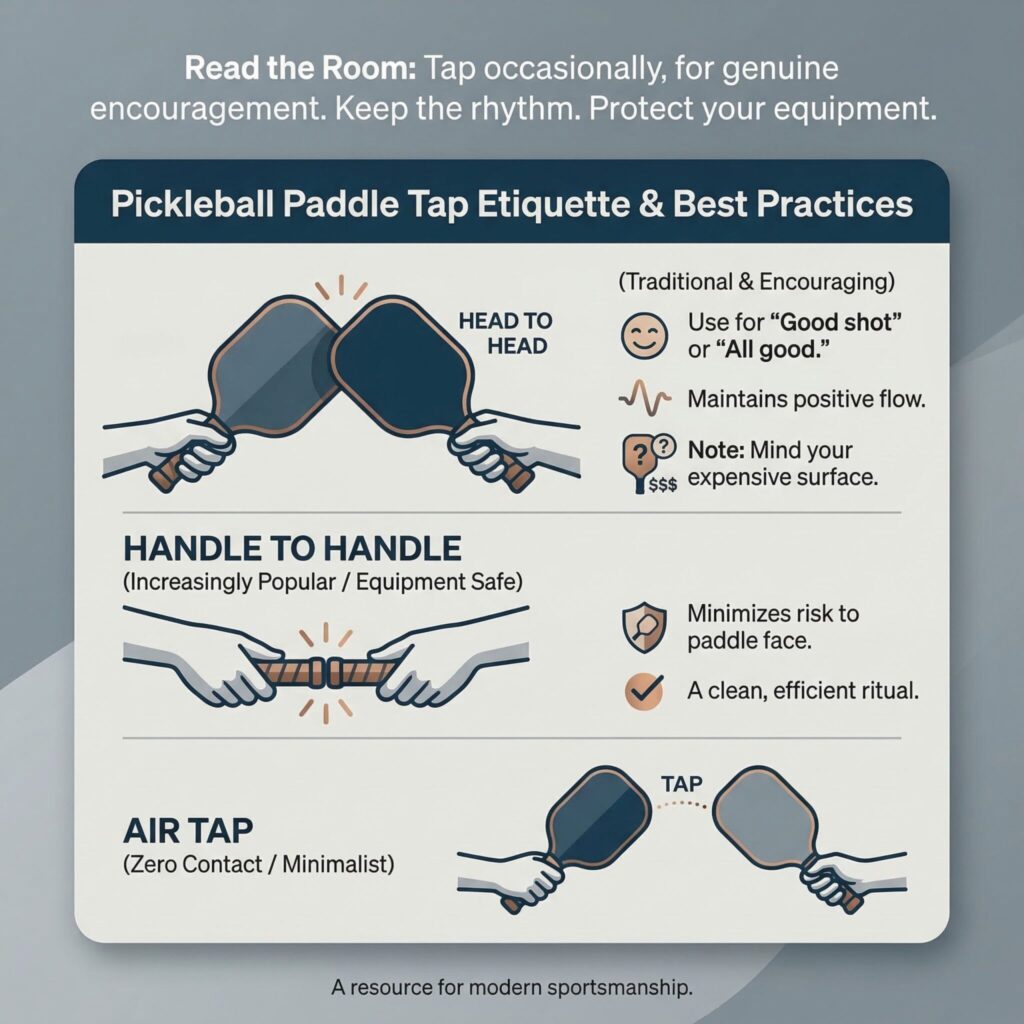
- handle taps instead of paddle-face taps
- air taps (a quick tap gesture without contact)
- verbal encouragement instead
It’s a subtle change, but it shows how equipment trends are influencing etiquette.
What Pro Players Actually Do
If you watch professional pickleball carefully, you’ll notice something interesting. Yes — pros still tap paddles.
But they do it much less frequently than many recreational players. Professional players typically tap paddles in a few specific situations:
- after a big shot
- after a partner makes an error
- after a long rally
- between games
What they don’t do is tap after every routine point. In pro matches, paddle taps are used intentionally, not automatically.
And because they happen less often, they actually feel more meaningful.
What Most Recreational Players Actually Do
Across most recreational courts, paddle taps are still extremely common. But the way players use them tends to fall into three general styles.
1. The Encouragers
These players use taps as positive reinforcement. If their partner misses a shot, they tap paddles to say “No problem.” If their partner hits a great dink or drive, they tap again to celebrate.
These players tend to be great partners because they help keep the mood positive.
2. The Ritual Players
Some players tap paddles after nearly every rally, regardless of what happened. It becomes a routine.
Win a point? Tap.
Lose a point? Tap.
Serve return error? Tap.
For some people this feels natural. For others, it starts feeling mechanical.
3. The Minimalists
These players rarely tap paddles at all. Instead they use quick phrases like:
“Nice shot.”
“All good.”
“Next one.”
They still encourage their partner, just without the physical gesture.
None of these styles are inherently right or wrong — but they can create awkward moments if partners expect different things.
The Real Rule of Paddle Tap Etiquette
If there’s one universal guideline that seems to emerge from all these conversations, it’s this:
Read the room.
Pickleball etiquette has always been flexible because the sport brings together players from wildly different backgrounds.
Some players are highly competitive. Others are purely social. Some love constant encouragement, while others prefer a quieter style of play.
The best approach is to stay adaptable.
➡️ Tap occasionally, not constantly.
➡️ Use taps for encouragement or genuinely good plays.
➡️ Avoid celebratory taps when opponents make obvious mistakes.
➡️ If your partner seems uncomfortable with taps, switch to verbal encouragement.
And if you’re ever unsure?
A simple “nice shot” works everywhere.