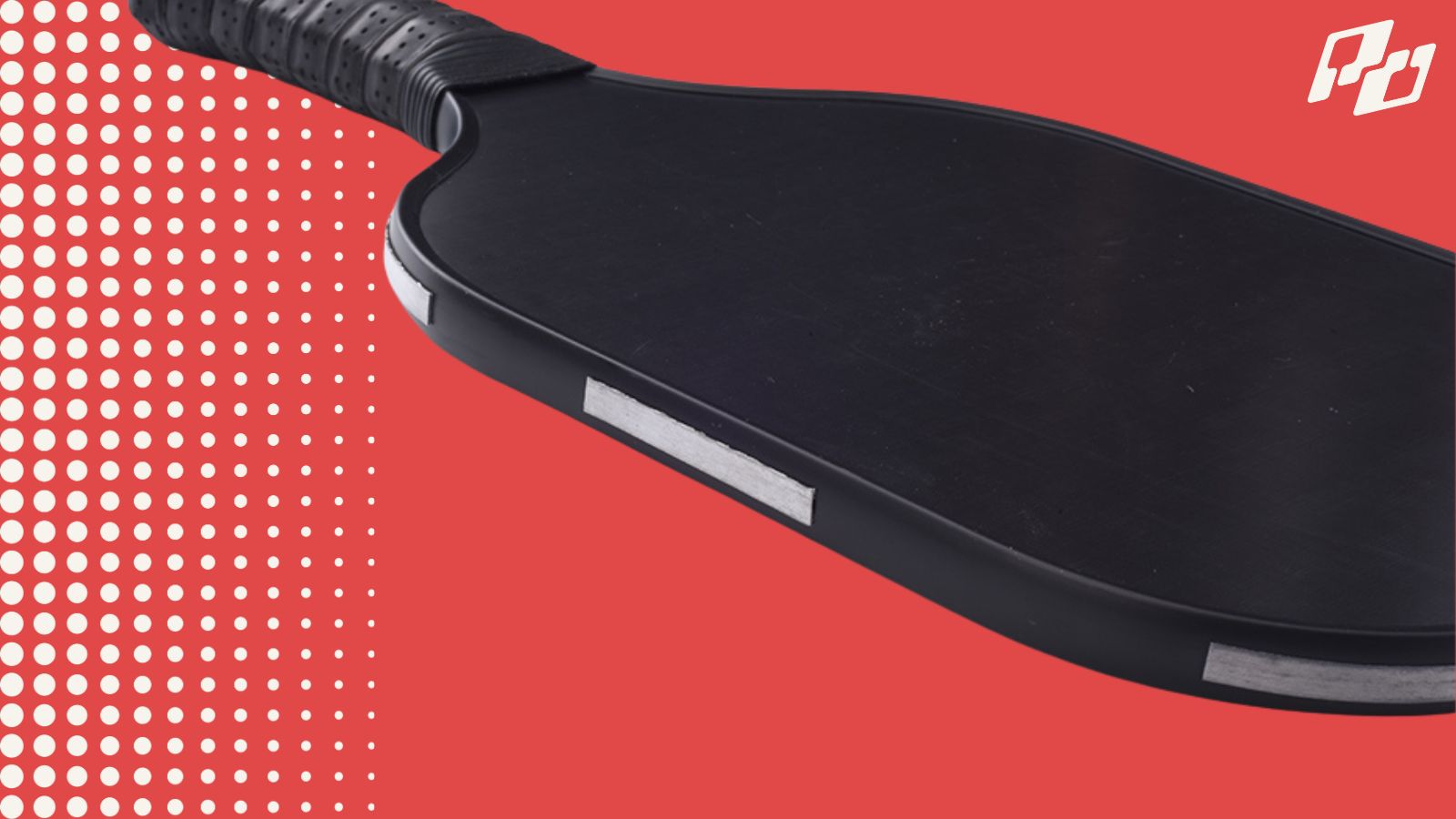
If you’ve ever added lead tape to your paddle and thought, “Wow… this feels amazing,” only to wonder two games later why your resets are popping up or your hands feel late—you’re not imagining things.
Paddle weighting works.
But not for the reasons most people think.
New to pickleball? Start with our beginner paddle picks, picked with lab data and 3,600 player survey responses.
Let’s clear up the biggest myths, explain what’s really happening from a physics and biomechanics standpoint, and—most importantly—help you decide whether adding weight actually helps your game or quietly hurts it.
Ten questions, three paddles matched to how you play, scored on lab data.
First, a Quick Reality Check
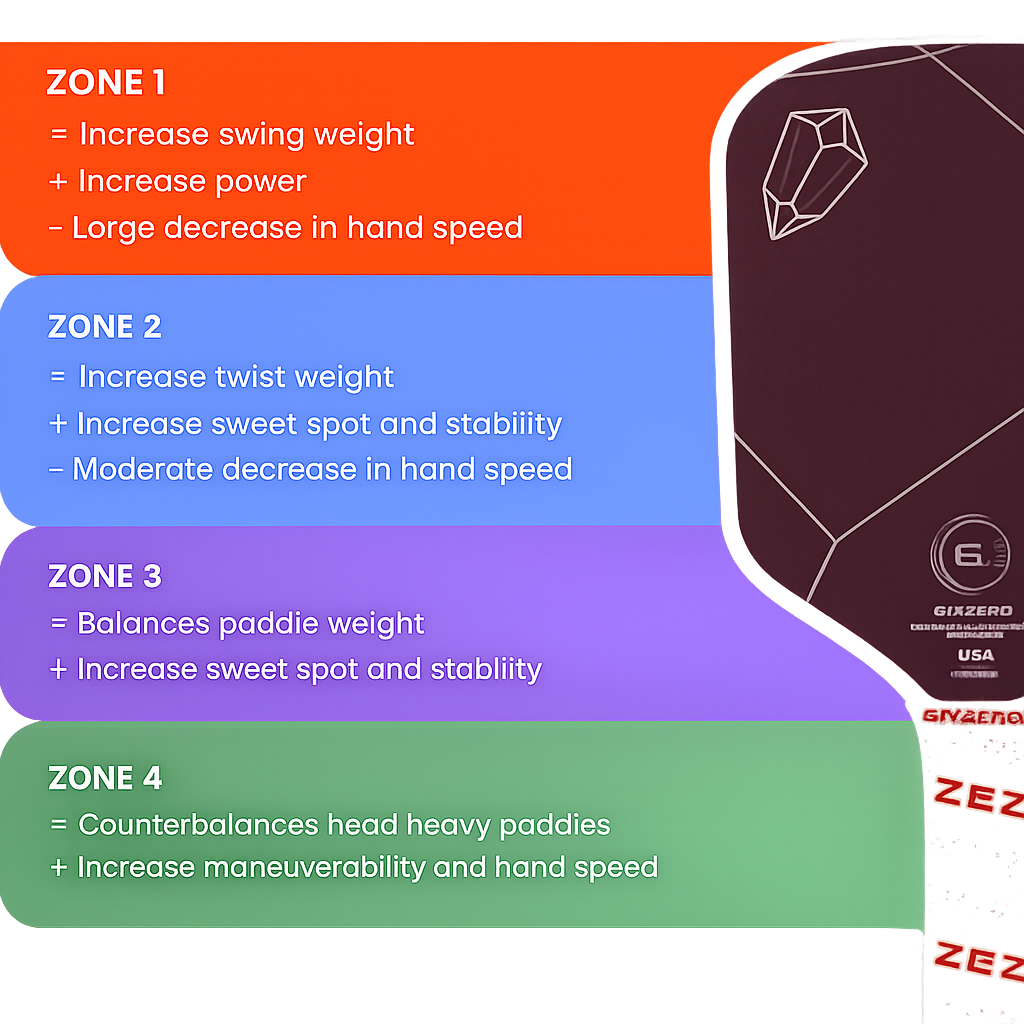
Adding weight to a pickleball paddle does not magically:
- Create spin
- Fix poor timing
- Expand your sweet spot infinitely
- Turn a control paddle into a power paddle
What it does is change:
- Balance point
- Swing weight (rotational inertia)
- Vibration behavior
- How your brain perceives timing and stability
That distinction matters. Now let’s tackle the myths.
Myth #1: “More Weight = More Power”
The Truth: Weight changes how power is delivered—not how much you have.
Yes, a heavier paddle can transfer more momentum if your swing speed stays the same. That’s the key part most advice leaves out.
In real rec play:
- Many players swing slightly slower with added weight
- The ball feels heavier off the face because of reduced paddle deflection, not added force
What players interpret as “more power” is often:
- A quieter face
- Less twisting on off-center hits
- A firmer response on blocks and counters
That’s stability, not raw power.
Practical takeaway: if you’re adding weight to “hit harder,” you’re probably solving the wrong problem.
Myth #2: “Weight Automatically Increases Spin”
The Truth: Weight doesn’t create spin—your mechanics do.
Spin in pickleball comes from:
- Brush angle
- Swing path
- Contact timing
- Surface texture
Adding weight can make the paddle feel more solid, which may:
- Improve confidence
- Reduce mishits
- Make your existing spin more consistent
But physics-wise? Weight alone does not increase RPMs.
Why the myth persists: players add weight → mishits decrease → spin looks better → paddle gets credit.
Practical takeaway: if your spin improved after weighting, you were already capable of it.
Myth #3: “Weight Is Weight—Placement Doesn’t Matter”
The Truth: Placement matters more than total grams.
This is where things get interesting. Where you place weight affects:
- Swing weight
- Torsional stability
- Hand speed
- Touch vs. drive balance
Let’s break it down simply:
| Weight Location | What It Improves | What It Costs |
|---|---|---|
| 12 o’clock (top) | Power, reach | Slower hands, harder resets |
| 3 & 9 o’clock | Stability, forgiveness | Reduced finesse |
| Throat | Touch, balance | Less pop |
| Handle | Comfort, fatigue reduction | Minimal performance change |
Most rec players default to edge weighting—because that’s what everyone recommends. But edge weighting increases rotational inertia, which means:
- Slower reactions at the kitchen
- More effort on fast exchanges
- Higher fatigue over time
Practical takeaway: weight placement is a strategic choice, not a universal upgrade.
Myth #4: “A Heavier Paddle Has a Bigger Sweet Spot”
The Truth: Poor weighting can actually shrink your usable sweet spot.
Yes, weight can reduce twisting on off-center hits. But when weight placement is uneven or excessive, it can:
- Create dead zones
- Change face response across the paddle
- Make certain contact points unpredictable
What players feel as “forgiveness” is really torsional stability, not sweet spot size.
Practical takeaway: stability helps mishits—but only when balance remains neutral.
Myth #5: “If It Feels Better in Warm-Up, It’s Better”
The Truth: Weight often feels best before fatigue sets in.
This is one of the most common traps. In the first 20–30 minutes:
- Heavier paddles feel rock solid
- Blocks are cleaner
- Drives feel confident
But over longer sessions:
- Hand speed drops slightly
- Reaction time suffers
- Resets get floaty
- Late-game errors creep in
This matters even more for 40+ players, during long rec sessions, and on tournament days when multiple matches quietly drain your legs and timing.
Practical takeaway: judge weighting changes after Game 3—not Game 1.
Myth #6: “Weight Fixes Mishits”
The Truth: Weight often masks footwork and timing issues.
Extra mass can stabilize the paddle after contact—but it won’t save you from late positioning, poor spacing, or the habit of reaching instead of moving.
In fact, over time it can:
- Encourage lazier footwork
- Delay correction of timing flaws
- Create dependency on equipment instead of technique
Practical takeaway: if weight “fixes” everything instantly, be suspicious.
Myth #7: “More Stability Means Better Resets”
The Truth: Over-weighted paddles often make soft shots harder.
Here’s the counterintuitive part. Added mass increases carry-through, meaning:
- The paddle keeps moving after contact
- Soft shots travel farther unless you actively decelerate
That’s why some players suddenly:
- Pop up resets
- Miss drops long
- Lose touch on dink exchanges
Practical takeaway: stability helps blocks—but hurts touch if you overdo it.
Myth #8: “Once You Find the Right Weight, You’re Done”
The Truth: Your optimal weighting changes with how you play.
Weighting should reflect:
- Your role (driver vs. resetter)
- Your opponents (bangers vs. dinkers)
- Your physical condition
- Even indoor vs. outdoor play
Pros adjust setups constantly. Rec players rarely do—but should.
Practical takeaway: think of paddle weighting as situational, not permanent.
The Big Truth Most Advice Misses
Paddle weighting doesn’t upgrade your game—it shifts your tradeoffs.
✅ You gain:
- Stability
- Predictability
- Confidence
❌ You lose:
- Reaction speed
- Fine touch
- Fatigue margin
The goal isn’t “more” or “less” weight. It’s intentional balance.
Practical Guidelines for Rec Players
If you’re going to experiment, do it smart:
- Start with 1–2 grams, not 5–10
- Change one location at a time
- Play multiple games, not just drills
- Evaluate performance late in sessions
- Remove weight before adding more
And most importantly:
If you don’t know why you’re adding weight, you probably shouldn’t.
The Constraint You’re Actually Installing
When you add weight to a paddle, you’re not “upgrading” it.
You’re installing a constraint.
From a motor-control and biomechanics standpoint, added mass narrows your usable timing window. The paddle becomes more resistant to last-second corrections—especially at the wrist and forearm. That resistance is exactly why blocks feel cleaner… and why flicks, emergency resets, and late reactions quietly suffer.
Before you spend a dollar on this, take the paddle quiz: ten questions, three paddles matched to how you actually play.
In other words: weight doesn’t make the paddle more forgiving. It makes your movement pattern more predictable.
That can be an advantage if your mechanics are repeatable and your spacing is clean. It’s a liability if you rely on improvisation, wrist saves, or late adjustments at the kitchen.
This is why advanced players often feel locked in with added weight—while intermediates feel powerful at first, then rushed later. The paddle is asking for earlier decisions and better preparation. If you don’t give it that, it takes away your escape routes.
So the real question isn’t whether a weighted paddle feels stable. It’s whether you’re ready to play a game that demands:
- Earlier reads
- Cleaner spacing
- Fewer last-moment saves
If that tradeoff fits your game, weighting can be a genuine advantage. If it doesn’t, the paddle isn’t “too heavy”—it’s just revealing where your margin actually lives.
That’s the part most advice leaves out.