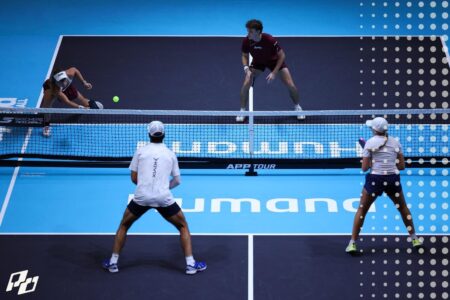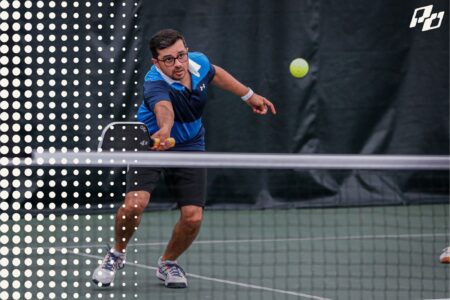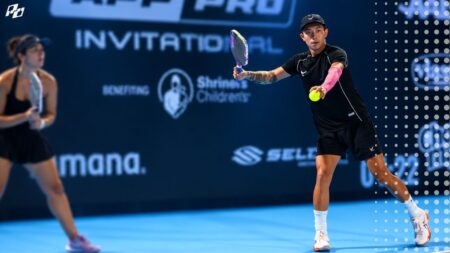


If you’ve ever found yourself in a blur of paddle flicks, half-volleys, and frantic hands battles at the kitchen line—only to wonder why you lost the point—this one’s for you.
Pickleball Union’s Coach Marko Grgic‘s video tutorial breaks down one of the most underutilized tools in a player’s tactical toolbox: The Traffic Light Spectrum. It’s not just catchy—it’s a decision-making framework designed to help you stop guessing and start choosing the right shot during high-speed exchanges.
And this isn’t just for 4.5+ players. Whether you’re a 3.0 learning to survive firefights or a 4.0+ trying to create more offensive opportunities without making unforced errors, mastering this framework can seriously elevate your game.
The Traffic Light Spectrum, Explained
Why Does the Traffic Light Spectrum Matter?
In fast-paced rallies, you don’t have time to think through shot mechanics. You’ve got maybe half a second to make a decision—and in that moment, guessing wrong can mean popping the ball up for an easy putaway or giving away control of the point.
This system helps:
- Recreational players avoid panicking and popping up low balls
- Intermediate players develop smarter attack timing and better resets
- Competitive players reduce unforced errors and set traps with smarter choices
Think of it as a visual aid that trains your instincts. Instead of reacting emotionally (“This ball feels attackable!”), you’re responding strategically (“This is a red-zone ball, I need to reset.”).
🟥 Red Zone: Reset or Regret
Zone: Floor to Knee
Default: Reset
When the ball is low—below your knees—you’re in the red. It doesn’t matter how confident you feel; attacking from this zone is almost always a losing bet.
Why resetting here matters:
- You’re hitting up on the ball, giving your opponent time and height to counter.
- If you’re off-balance, you’ll likely float the ball or mishit it.
- Your paddle face is naturally more open here, which is great for resets—not speedups.
What you should do:
- Soften your grip (think 3 out of 10 pressure).
- Keep your paddle in front and use a short, compact motion.
- Gently reset the ball into the kitchen to neutralize the rally.
This is the zone where patience wins points. If you can become more comfortable resetting low balls, you’ll frustrate aggressive players who are looking for the quick putaway.
🟨 Yellow Zone: The Decision Zone
Zone: Knee to Waist
Default: Read & React
This is where most players get tripped up—not because they don’t have the skills, but because they don’t slow the game down mentally. The yellow zone isn’t a green light. It’s a flashing caution.
So… attack or reset?
Ask yourself:
- Am I balanced?
- Is my opponent off-guard or out of position?
- Is the ball rising, or already dropping?
If you’re balanced and the ball’s rising into your strike zone, a roll or flick might be your best option. But if you’re jammed or reaching, a controlled dink or neutral drop will keep you alive and give you the next look.
Smart yellow-zone plays:
- Topspin roll to their backhand
- Body shot to jam them up
- Flip dink to change the pace and make them move
Great players don’t force a green-light decision here—they read the moment. That’s your goal.
🟩 Green Zone: Time to Go
Zone: Waist and Above
Default: Attack
This is where you feast.
Any ball that’s at or above net height—assuming you’re balanced and in good court position—is a go. You don’t need to crush it, but you do need to commit.
Why this is your moment:
- You can hit down on the ball, increasing your margin for error.
- You’re often ahead in the rally or have just earned a high ball from your reset.
- Most green-zone shots don’t require guesswork—just execution.
Best shots from here:
- Down-the-line drive
- Crosscourt angle roller
- Chest or hip-level body bag
- Punch volley into space
Remember: don’t overhit. A smart, well-placed attack is harder to defend than a hard-but-sloppy one.
Going Deeper: What the Spectrum Doesn’t Say (But You Should Know)
1. Your feet matter as much as the ball height
Even a green-zone ball is dangerous if your feet are moving or your paddle’s too low.
Likewise, a yellow-zone ball becomes much more attackable if you’re planted, loaded, and reading your opponent well.
2. The red-yellow-green zones shift slightly depending on paddle skill and hand speed
Elite players can attack balls others would dink. Why? Because they can control their attacks and anticipate the counter.
So don’t try to mimic pro attacks unless you’ve got the resets and hand speed to match.
3. Attack doesn’t always mean drive
You can “attack” with a flick, a speed-up dink, a surprise lob, or a well-placed off-speed roller. The key is intention, not just velocity.
Drills to Internalize the Traffic Light Framework
Don’t just understand the zones—train them.
Red Zone Reset Drill
- Partner fires balls at your feet
- Focus on soft hands and resets into the kitchen
- Add movement to simulate pressure
Yellow Zone Decision Drill
- Partner feeds variable height balls from knee to waist
- You choose whether to reset or attack based on ball trajectory and your balance
Green Zone Attack Drill
- Partner lobs or floats high balls
- Focus on hitting down with margin, not just pace
- Target feet, hips, or gaps
These drills help shift the decision-making from conscious thinking to instinctive reaction—so you’re not panicking mid-rally.
Smarter Decisions Win Points
Understanding when to hit hard, when to hit soft, and when to just survive is what separates good players from great ones. And Marko Grgic’s Traffic Light Spectrum gives you a simple way to build that awareness.
This framework is important for every player who’s ever:
- Lost points to unforced pop-ups
- Got burned in a hands battle
- Didn’t know whether to go for it or hold back
By training your brain to recognize the zone you’re in—and pairing it with court awareness, balance, and smart shot selection—you’ll win more rallies without having to hit any harder. Just smarter.