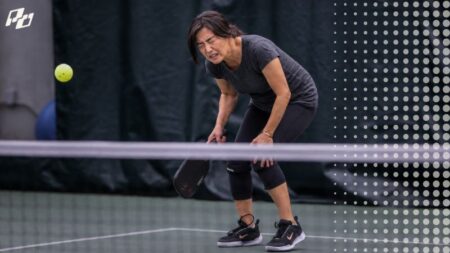

The first time I took three weeks off pickleball, I thought nothing of it. Life had piled up—work deadlines, a family trip, the usual chaos. When I finally stepped back on court, I expected to pick up where I left off. Instead, my dinks floated, my drops were late, and my legs felt like I was dragging sandbags. By the end of the second game, I was winded and frustrated.
That’s when it hit me: pickleball doesn’t wait for you. Take enough time off, and the game moves on without you.
But here’s the real question: how much time off is too much? At what point does your game start sliding backwards—and how long does it take to claw your way back?
The answer depends on science, age, and most importantly, what you do during and after the break.
The Science of Regression
Sports science has a brutal but honest principle: reversibility. In plain English—what you don’t use, you lose.
- Endurance (VO₂ max) dips quickly. You can lose around 5 % within just two weeks off training, and up to 20–25 % after 4–11 weeks.
- Muscle strength is more resilient. Studies show minimal strength loss during three weeks off, and even up to 12 % force reduction after 8–12 weeks.
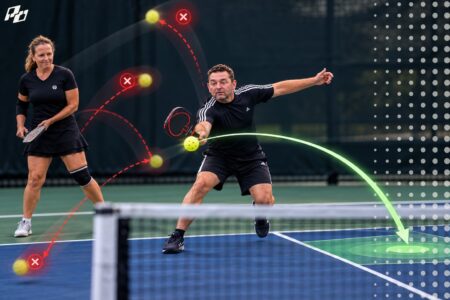
- Skill coordination and timing, like your third-shot touch, degrade subtly—but noticeably—within a week or two without practice, thanks to weakening neural pathways.
A Regression Curve You Can Feel
Imagine your game on a chart. Week one off? Barely a dip—you’ll be fine. By week two, your soft game begins to rust. Week three? Stamina dips sharply, and reactions at the kitchen feel half a beat late. Stay away for two months, and you might feel like you’ve dropped an entire level.
I’ve lived this curve. At two weeks, I’m just shaking off rust. At a month, I’m scrambling in transition and missing easy resets. At two months? I’m practically relearning my timing from scratch.
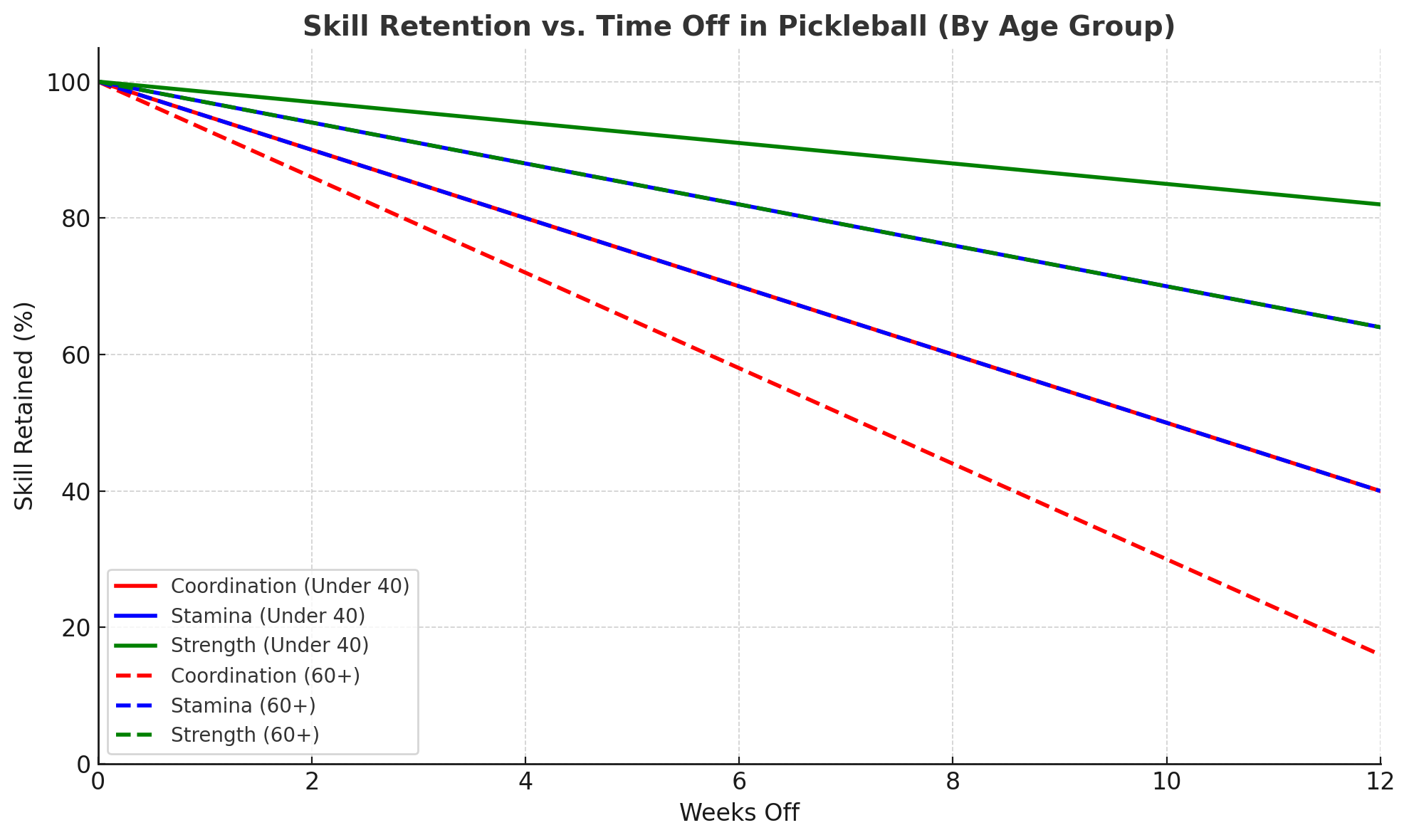
Here’s a simple graphic showing skill retention vs. time off—coordination sliding quickest, stamina a steady slope, strength holding longest.
Breaks Come in Different Flavors
Not every pause hits you the same way.
The “Life Happens” Pause
Vacations, work deadlines, a stretch of bad weather. One to two weeks off doesn’t cost you much.
Three or more, though, and you’ll notice—your third shot feels clunky, and your lungs complain by game three.
The Injury Layoff
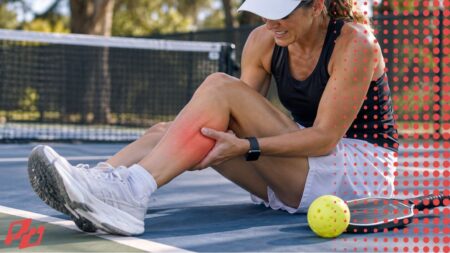
This one cuts deepest. An ankle sprain or shoulder tweak forces not just time off but lost confidence in movement. I know a player who took six weeks off for knee rehab. When she came back, her strokes were fine—but she froze every time she had to lunge wide.
That mental hesitation was harder to shake than the physical recovery.
Seasonal Breaks
Some players simply stop for months at a time—snowbirds in the winter, or those who avoid the summer heat. These breaks are long enough to feel like you’re starting from scratch.
A two-month layoff doesn’t just dull your skills; it strips away your rhythm and your confidence in pressure points.
Age Changes the Equation
Pickleball’s magic is its wide age range—but age also dictates how fast you regress.
- Under 40: You bounce back quickly. Even a month off might only cost you a few games to reset.
- 40–60: This is the danger zone. A three-week pause often means slower footwork and more fatigue. You’ll need 3–5 solid sessions before your body and hands are in sync again.
- 60+: The window shrinks further. Two weeks may feel like four. Stiffness sets in faster, recovery takes longer, and it may take 6–10 games just to feel “normal” again.
One 65-year-old told me: “I used to take a month off and bounce back in a weekend. Now, two weeks off feels like I’ve aged two years.”
The Mental Game of Coming Back
Here’s what no one warns you about: regression isn’t just physical—it’s psychological.
Players often walk back on court expecting their old selves. When the body doesn’t cooperate, frustration explodes. I’ve seen players quit mid-session, muttering about being “washed up,” when in reality, they just needed patience.
The key is reframing. Instead of “I’m back,” think “I’m rebuilding.” Instead of judging yourself on wins and losses, judge on progress: Did you move more fluidly today? Did your drops land closer to the kitchen than yesterday? That shift protects your confidence.
Recovery Hacks by Age
So how do you speed up the climb back? Tailor your recovery by age.
Under 40:
- Reset reaction speed with fast hands drills.
- Throw in sprint intervals to get lungs firing again.
- You’ll feel sharp within 2–3 sessions.
40–60:
- Prioritize cardio and footwork (ladder drills, shuffles).
- Add strength work to protect joints.
- Plan on 3–5 sessions to feel in rhythm.
60+:
- Stretch and mobilize daily to fight stiffness.
- Use resistance bands or light weights during breaks.
- Ease in with dinks and drops before firefights.
- Give yourself 6–10 sessions to rebuild confidence.
How Long Does It Take to Get Back?
Here’s a rough map:
- 1 week off: Shake it off in a warm-up.
- 2–3 weeks off: Expect a session or two of rust.
- 4–6 weeks off: Stamina and timing dip hard; budget 3–5 sessions.
- 2+ months off: Treat it like preseason—you’ll need drills plus 6–10 games to feel whole again.
Checklist for Smarter Comebacks
Before you charge back onto court, ask yourself:
- How long was my break?
- Did I do anything off-court—stretching, shadow swings, light workouts?
- Am I easing back with drills, or jumping into a firefight?
- Have I told my partner I’ll be rusty?
- Do I have reset goals (movement, rhythm) instead of just wins?
Check at least three boxes? You’re ahead of the curve.
Pickleball vs. Other Sports
If you feel rusty after just a couple weeks, don’t panic—it’s not just pickleball.
- Tennis players lose serve timing after 2–3 weeks away.
- Runners see VO₂ max drop 10% in two weeks.
- Golfers say “feel” disappears within 7–10 days, even if mechanics remain.
Pickleball’s no different. The body is wired for consistency, not long pauses.
When the Game Waits for You
I’ve taken breaks that felt like an eternity and others that barely left a mark. Every time, I’ve learned the same lesson: pickleball doesn’t punish you for resting—it punishes you for rushing back without a plan.
The silver lining is this: skills return faster than they’re built. Your body remembers. Your hands remember. You just have to give them the chance.
Extra Tip: Treat your first few sessions back as rehearsals, not performances. Focus on rhythm, movement, and reconnecting with the ball—not the scoreboard. Wins will come later, once your foundation is back in place.
So don’t fear the pause. Respect it, prepare for it, and use it as a chance to remind yourself why you love this game. Because in pickleball, staying in the game long enough to grow is the biggest victory of all.