

Pickleball’s journey to becoming a mainstream sport in the US does still have a few bumps in the road: its noise problem and the failed merger between the PPA and MLP to name a couple.
The absence of an overall standardized rating system is another inconsistent factor. As the sport has expanded, so too have the tools, resources, and credibility within the professional realm. Various pickleball organizations have crafted distinct rating systems, differing in methodology, numerical scales, and accessibility.
A Pivotal Role of Rating Systems
As Kelly Campbell reported on the TrackItHub blog, some systems offer deeper insights into player skill than others. These ratings play a pivotal role in the sport’s development, effectively categorizing athletes by skill level, thereby encouraging healthy competition.
A standardized ranking system holds immense importance. It enables pickleball players to identify suitable tournament levels readily, locate similarly skilled opponents, and make accurate comparisons with fellow athletes.
While these rating systems have already influenced major tournaments, the issue lies in their diversity; different tournaments employ distinct systems.
Several viable pickleball rating systems exist, but the critical need remains for a unified standard. Such standardization is pivotal for the sport’s progression into a fundamental professional endeavor.
Here are the current leading pickleball rating systems, their methodologies, and the advantages and disadvantages associated with each.
1. UTR Pickleball Rating (UTR-P)
USA Pickleball has endorsed and partnered with UTR-P and will officially employ the UTR-P rating for its tournaments, leagues, and recreational activities,
UTR-P, developed by UTR Sports, is a new system extending the Universal Tennis Rating to pickleball, offering a global platform for player progress tracking, tournament organization, and fostering level-based play. This free system, accessible through their mobile app and website, is celebrated for its adaptability, precision, and inclusivity, marking a significant advancement in pickleball.
It calculates ratings from 1.0 to 10.0, reflecting every aspect of a player’s game based on performance in both sanctioned and casual matches, including singles and doubles. New players receive a provisional rating, updated dynamically with each match to ensure accurate skill representation.
| Pros | Cons |
|---|---|
| Universal Standard Employed by USA Pickleball: UTR-P provides a global rating system, making player levels comparable worldwide. | New System Challenges: Being relatively new, it may face initial hurdles in adoption and recognition among players familiar with other rating systems. |
| Dynamic and Accurate: Ratings are updated regularly to reflect recent performances, ensuring a current and precise measure of skill. | Dependence on Participation: Players need to consistently participate in recorded matches to establish and maintain their rating. |
| Free Access: The system is accessible at no cost, making it available to players of all levels, from beginners to professionals. | Limited Initial Data: New or less active players start with provisional ratings, which may not immediately reflect their true skill level. |
| Comprehensive Evaluation: It considers performances across both singles and doubles play. | Adjustment Period for Ratings to Reflect True Skill: New and infrequent players might find that their UTR-P ratings take time to accurately reflect their skill levels, particularly if they do not regularly participate in rated matches. |
Who should Choose UTR-P?
This system is especially suited for individuals who participate in both singles and doubles matches and appreciate the value of having a universally accepted rating that spans across different types of play.
It’s ideal for those who seek a system that provides provisional ratings for newcomers or less active players, allowing everyone to have a fair and accurate assessment of their skills.
Moreover, UTR-P appeals to players who are looking for a rating system that is updated dynamically, ensuring that their rating is a current and true reflection of their performance.
Check out our in-depth article on UTR-P here.
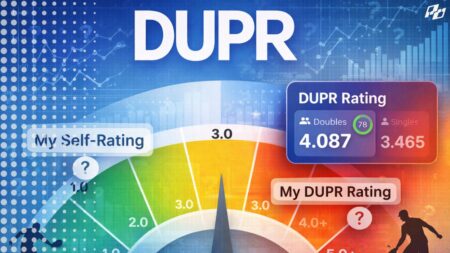
2. Dynamic Universal Pickleball Rating (DUPR)
DUPR is a standardized rating system that has gained a lot of traction in the pickleball community over the last few years. It’s free for all players and includes a player dashboard that can be accessed via their app, which is available on the App Store and Google Play.
DUPR ratings are calculated by the margin of victory in matches, match outcomes, and the type of result (tournament play, league play vs. recreational).
DUPR currently partners with PPA, MLP, and NYC Pickleball, amongst others.

| Pros | Cons |
|---|---|
| Free and Accessible: DUPR is open to everyone, not just tournament players. Participants have access to detailed records, including win-loss tallies, ratings, match histories, and analyses. | Relative Newness: As a newer system, DUPR has faced some criticism regarding rating accuracy. Early-stage teething problems are common as the system calibrates and improves. |
| Comprehensive Match Impact: Unlike systems that focus solely on wins vs. losses, DUPR considers the points within each match. | Website Reliability: Users have reported issues with the DUPR website’s reliability. This can hinder access to ratings, player matches, and other features. |
| Skilled Player Matching & Universal Scale: The DUPR database simplifies the process of finding similarly skilled players. DUPR rates all players, regardless of age, gender, location, or skill level, on the same 2-8 scale. | Community Acceptance: The effectiveness of DUPR heavily relies on widespread community acceptance and usage. Resistance or slow adoption by key segments of the pickleball community could limit its potential benefits. |
| Objective Ratings: Players are rated purely based on their performance in leagues, tournaments, and organized play that DUPR oversees. | Equity and Inclusion: Ensuring the DUPR system is equally accessible and fair to all players, including those in less populated or underserved regions, remains a challenge. Efforts to broaden its reach and applicability are essential for its long-term success and legitimacy. |
Who should Choose DUPR?
Competitive players seeking to gauge their progress and find evenly matched opponents, tournament organizers and club managers aiming for fair event seeding and effective player development, and recreational players looking to connect with peers of similar skill levels will all find DUPR particularly beneficial.
Newcomers to the sport are also well-served by DUPR, as it provides a clear understanding of their skill level and helps integrate them into the local pickleball scene.
Check out our in-depth article on DUPR here.
3. International Pickleball Teaching Pickleball Association (IPTPA)
The International Pickleball Teaching Pickleball Association (IPTPA) has been a longstanding choice among pickleball players and instructors seeking consistent and objective ratings.
This system has established partnerships with notable organizations such as ProPickleball, Gamma Sports, USPTA, and US Open Pickleball. IPTPA offers two membership options: individual and club.
Individual memberships, priced at $25, enable IPTPA-certified rating specialists to assess individuals in groups of one, two, or three, utilizing an already-rated player as a benchmark.
On the other hand, club memberships cater to long-term affiliations for pickleball clubs. Additional details about these memberships can be accessed here.
| Pros | Cons |
|---|---|
| Objective and Consistent: The IPTPA rating system is known for its objective and consistent approach to player assessment, minimizing subjectivity in ratings. | Designed for Tournament Competitors: The system primarily targets players who compete in sanctioned tournaments, which may limit its applicability for casual or recreational players. |
| Global Recognition: IPTPA ratings are recognized both nationally and internationally. | Membership Fees: Players must pay for IPTPA membership to receive a rating, which could be a barrier for those unwilling or unable to invest financially. |
| Certified Specialists: Ratings decisions are made by certified specialists rather than volunteers, ensuring a professional and knowledgeable evaluation of players’ skills. | Lengthy Testing Sessions: The assessment process can be time-consuming, with testing sessions lasting up to an hour and a half, which might be inconvenient for some players. |
| Integrated with Teaching Programs: The IPTPA rating system is designed to work in conjunction with the association’s teaching programs, allowing instructors to provide targeted instruction based on a player’s rating. | Complex Rating Process: Compared to other systems, the IPTPA’s rating process can be less straightforward and accessible, potentially deterring players who prefer simplicity. |
Who should Choose IPTPA?
Players deeply invested in the competitive side of pickleball, those seeking recognition on a national and international stage, and individuals who value rigorous, objective evaluation methods should consider aligning with IPTPA.
IPTPA integrates its rating system with teaching programs, ideal for players who are not only looking to be rated but also to improve their game under the guidance of certified instructors.
Check out our in-depth article on IPTPA here.
4. World Pickleball Ratings (WPR)
Pickleball Tournaments, a renowned tournament hub within the pickleball community, introduced the WPR (World Pickleball Rankings) in 2021.
This system draws upon players’ performances in major annual tournaments and tours, including the likes of the APP and PPA Tours, USA Pickleball Nationals, and US Open Pickleball Championships.
WPR utilizes the Glicko-2 rating system for its calculations. Ratings are presented in a four-digit format for singles, doubles, and mixed doubles matches across genders. Additionally, at the close of each calendar quarter, two-digit ratings are generated based on players’ existing four-digit ratings.
Players can access their ratings and historical results via their profiles on pickleballtournaments.com.
| Pros | Cons |
|---|---|
| Cost-Free: The WPR system is accessible at no charge. | Tournament Exclusive: WPR ratings are solely based on tournament performance, limiting the system’s applicability to casual or recreational players who may not participate in tournaments. |
| Automated Tournament Entry: Tournament results uploaded to pickleballtournaments.com are automatically factored into WPR ratings, eliminating the need for manual result submissions. | Gender Designation Requirement: For a tournament to contribute to a player’s WPR, it must have a gender designation, which could exclude certain mixed or open events from rating consideration. |
| Broad Tournament Inclusion: WPR considers results from both sanctioned and unsanctioned tournaments. | Dependence on Tournament Participation: Players’ ability to improve their WPR is directly tied to their participation in sanctioned or unsanctioned tournaments, which could disadvantage those unable to attend events regularly. |
| Reduces Sandbagging: By removing self-rating and basing tournament qualifications on WPR, the system effectively minimizes the practice of sandbagging. | Accessibility Issues: Players without easy access to tournaments, whether due to geographic location, financial constraints, or other barriers, may find it challenging to establish or improve their WPR. |
Who should Choose WPR?
This system is particularly attractive to those dedicated to tournament participation and who aim for recognition and progression within the structured framework of competitive pickleball.
It’s an excellent choice for those who appreciate the convenience of automatic match result integration, as WPR draws directly from a comprehensive database of tournament outcomes, significantly reducing the need for manual entry.
Check out our in-depth article on WPR here.
5. Visually Assessed International Rating (VAIR)
VAIR, which is affiliated with the Xtreme Pickleball League (XPL), is an advanced technology specifically designed to revolutionize how pickleball ratings are determined by leveraging visual perception and deep learning algorithms.
It meticulously analyzes pickleball rating scorecards and videos to provide a detailed understanding of player performance and game dynamics. VAIR’s strength lies in its ability to break down and analyze every aspect of a match—each shot, player movement, and strategy—by processing visual and video data.
The cost for VAIR player rating assessments varies depending on the type of session chosen. VAIR Rating Group Clinic session costs $65.00 and is conducted in a group setting.
Private Player Rating Assessment is available at $125.00. This option offers individualized attention from a Certified Ratings Coach, focusing specifically on the player’s skills and areas for improvement.
| Pros | Cons |
|---|---|
| High Accuracy: Utilizes state-of-the-art visual testing techniques for precise player assessments, reducing the reliance on subjective judgments or less reliable algorithms. | Cost: The personalized assessment sessions, especially the private one-on-one evaluations, can be more expensive than traditional rating methods. |
| Tailored Feedback: Offers both group and private sessions, providing personalized feedback. | Accessibility: Might be less accessible to players in areas without VAIR Certified Ratings Coaches or those unable to attend the locations where VAIR assessments are conducted. |
| Comprehensive Evaluation: The assessment covers all aspects of a player’s game, with on-court analysis followed by a detailed discussion. | Time Commitment: Requires a commitment of about an hour for the assessment, which might be challenging for players with tight schedules. |
| Certified Coaches: Assessments are conducted by Certified Ratings Coaches, ensuring a professional and standardized evaluation process. | Technology Dependence: The effectiveness of the system is heavily reliant on the accuracy and reliability of the visual testing technology and AI algorithms used. |
Who should Choose VAIR?
VAIR is tailor-made for players committed to refining their game through detailed feedback that goes beyond traditional rating systems.
It’s also a great fit for players who value objective assessments over self-rated or peer-rated systems, ensuring that their rating accurately reflects their current abilities and areas for growth.
We also compared some of the rating systems on this list, including DUPR vs. UTR-P.
Which Pickleball Rating System is the Best?
Choosing the “best” pickleball rating system from the diverse options like UTR-P, DUPR, IPTPA, WPR, and VAIR truly depends on what you’re looking for in your pickleball journey. Personally, after considering all the information, I find myself leaning towards UTR-P (Universal Tennis Rating for Pickleball) for its comprehensive, inclusive approach and dynamic updating feature. Plus, it’s now the official rating system employed by USA Pickleball.
What sets UTR-P apart for me is its adaptability and the seamless integration of technology. It appeals because of its ability to cater to players of all levels, from novices to professionals, and its commitment to providing a universal standard. The fact that it’s dynamically updated to reflect the latest match results means it continually offers an accurate representation of a player’s skill. This is invaluable for someone like me who appreciates seeing immediate feedback on performance improvements.
Moreover, it’s free!