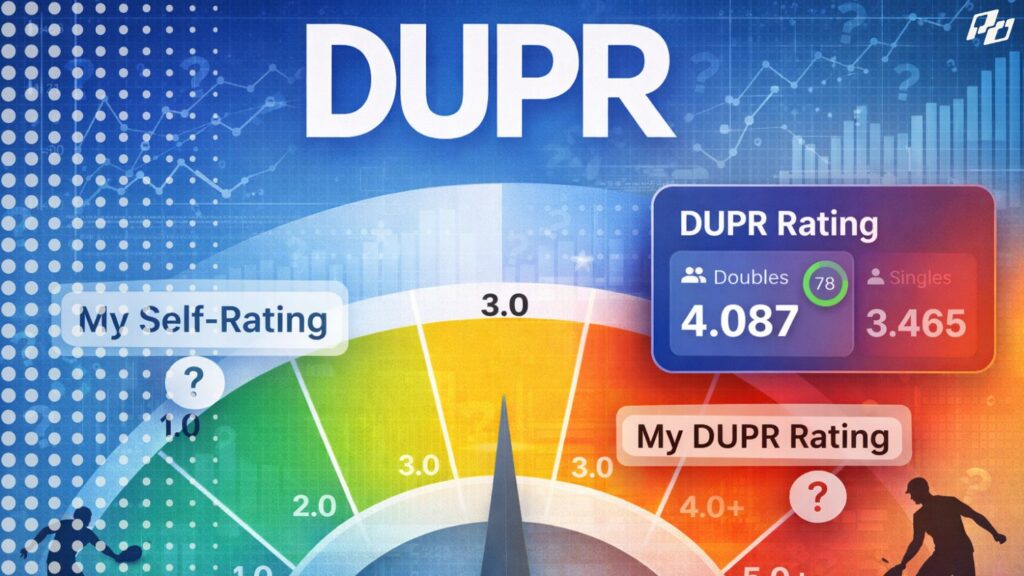
Your self-rating and DUPR often do not match because they measure different things. Self-rating reflects how you view your skills, while DUPR is based on actual match results and performance versus expectation. Many rec players rate themselves by their best shots, but DUPR reflects what their game really holds up under pressure.
If you have ever looked at your DUPR and thought, “There is no way that number is me,” you are definitely not alone.
Some players think DUPR is too low. Some think it is too jumpy. Some think it makes no sense that they can win and go down or lose and go up. And some are still treating self-rating and DUPR like they should be saying the exact same thing, all the time.
They should not. That is the first thing to understand.
Your self-rating is a starting point. It is your best honest estimate of your skill based on what shots you can execute, how consistently you can execute them, and how well you understand the game.
USA Pickleball’s skill-level system is built around knowledge and proficiencies, not match results. DUPR is different: it is a match-results rating that now updates based on performance versus expectation, not just wins and losses. That shift became official in July 2025, and DUPR says the goal is to reflect how you actually performed relative to the score the system expected from the players involved.
That is why your self-rating and your DUPR can feel like they live on different planets.
And for rec players, the mismatch is not always a bug. Sometimes it is the most honest thing in your whole pickleball life.
Why this topic matters more now
Because DUPR is no longer some optional niche number that only tournament junkies care about.
USA Pickleball now calls DUPR the official exclusive rating system used across all USA Pickleball-owned events, and its ratings page says players now create a DUPR profile to get a rating for verified play.
USA Pickleball also still maintains its own self-assessment and skill-level materials, which means recreational players now live in a world where both systems are visible at the same time: one built on skills and self-assessment, the other built on results and algorithmic rating updates.
So naturally, people compare them. And naturally, that creates confusion.
Because one system is asking: “What level do your skills and decision-making look like?”
The other is asking: “What do your recent match results say you actually are right now?”
Those are related questions.
They are not identical questions.
Why players feel “underrated” so often
Because most of us rate ourselves by our best version, not our average version. That is the uncomfortable truth.
When rec players self-rate, they often think about:
- the best drive they can hit
- the days when their drops are working
- the game where they beat someone “better”
- the fact that they know what a reset is
- or the shots they can make when they are balanced and feeling good
USA Pickleball’s skill-level framework is more demanding than that. Its official descriptions are based on the ability to consistently execute various shots and apply game strategy, not just occasionally flash them. Its self-assessment and level details are specifically meant to help players evaluate where their real game stands, not where their favorite highlights live.
That gap between what I can do sometimes and what I actually do in real matches is where a lot of the pain starts.
DUPR does not care very much about your best Tuesday.
It cares a lot more about what your match history says over time.
And that is why many rec players feel offended by their number: their self-rating is often based on identity, while DUPR is based on evidence.
What changed in DUPR that caused so much criticism?
The biggest flashpoint was the July 2025 algorithm update.
Before that change, the simplified version was basically what players expected: win and go up, lose and go down. DUPR changed that. It now says ratings move based on performance versus expectation.
Every match has an expected score based on the players’ ratings. If you score more than expected, your rating can go up — even in a loss. If you score less than expected, your rating can go down — even in a win. DUPR’s own example says that if a team is expected to win 11–3 but instead wins 11–8, that team’s rating can go down while the losing team’s rating can rise.
You do not need to be a genius to understand why that annoyed people.
A lot of players hear “rating” and think “reward system.” DUPR explicitly says it is not a reward system — it is a rating system meant to estimate skill and predict future performance. That is a very different philosophy, and DUPR has directly responded to criticism by saying a win should not automatically raise your rating if you performed below what the system expected from your current number.
That explanation may or may not make you feel better emotionally. But it does explain why the mismatch got louder.
Because now even players who win can walk away feeling “underrated,” “punished,” or just confused.
So is DUPR broken — or are players reading it wrong?
Honestly, a little of both, depending on the situation.
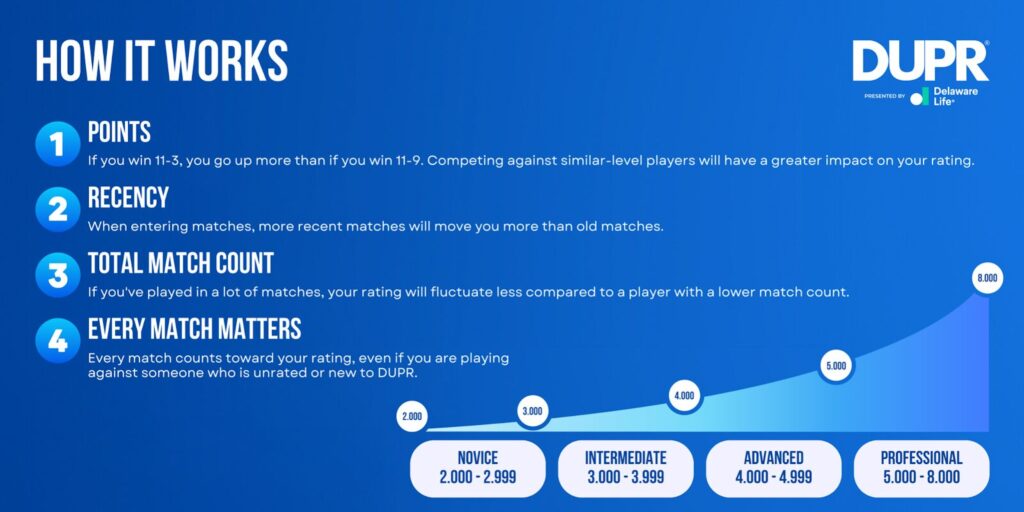
DUPR’s logic is not random. Officially, it uses a modified Elo-style system and considers performance versus expectation, match type, verification level, match count, and recency. It also says player-reported matches count less than director-reported matches, and USA Pickleball says verified events count more than ordinary results.
So on paper, the system is trying to do something reasonable: not just reward wins, but estimate your actual level.
The problem is that rec players are often reading a DUPR number like it should behave like a medal count or a batting average. They expect it to say:
- “I won, therefore I’m better.”
- “I know 4.0 shots, therefore I am 4.0.”
- “I played great for a set, therefore my number should jump.”
DUPR is not built to agree with that emotional logic.
At the same time, the criticism is not imaginary. Even DUPR’s own Q&A acknowledges that players were upset by going down after wins.
So the fair take is this: DUPR is not purely broken.
But many rec players do not yet understand what it is actually trying to measure.
And that misunderstanding creates a ton of frustration.
Why your self-rating may still be useful
Because self-rating answers a different question.
USA Pickleball still offers a self-assessment questionnaire and skill-level descriptions because self-rating is useful for:
- getting started
- finding roughly appropriate groups
- identifying your skill gaps
- and understanding what different levels are supposed to look like
That matters, especially for newer or less-competitive rec players who do not yet have enough verified results for a stable data-based rating.
In other words, self-rating is not fake.
It is just incomplete.
It is a starting estimate based on how your game looks. DUPR is a results-based estimate based on how your game performs.
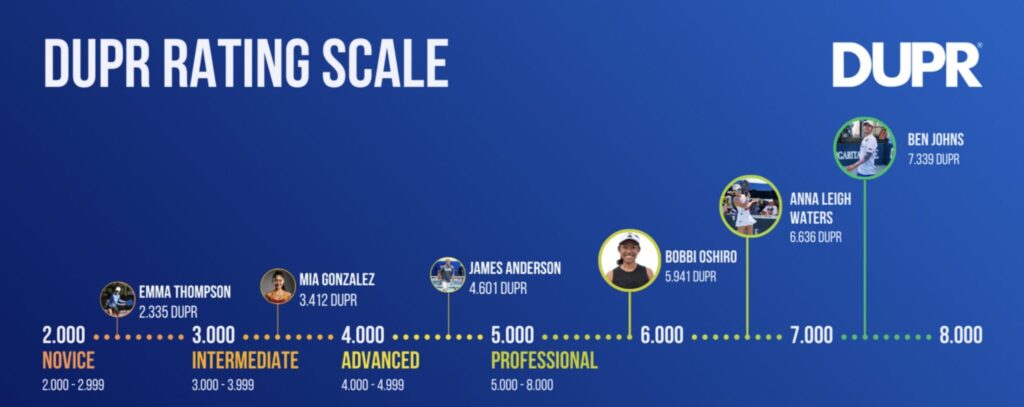
That means a player can honestly self-rate as a 3.5 based on skill descriptions and still have a DUPR that is lower because:
- they do not play enough verified matches
- they lose a lot of close points
- they partner unevenly
- they have a few holes that get punished under pressure
- or their “3.5 skills” do not yet hold up against actual 3.5 match patterns
That is not hypocrisy. That is normal.
The most common reasons self-ratings and DUPR don’t match
1. You rate yourself by shots, but DUPR rates you by outcomes
You may have 4.0 hands in warmups, 3.0 transition resets, and 3.5 decision-making. Self-rating often blends that into a flattering average. DUPR does not care what part of your game you love most; it sees what your results keep saying.
2. Your match sample is too small
DUPR says one result is enough to get started, but it also says 10–20 match results make the rating more accurate, and that ratings with fewer or older matches can move more because the system is still learning.
So if you have only a handful of reported results, your number may feel unstable or unconvincing.
3. You mostly play with or against the same people
That can create a weird little ecosystem. If your whole group is self-rated a certain way but the verified results do not line up with broader competition, your DUPR may not match your local reputation.
DUPR works best when it has varied, recent, connected match data. DUPR and USA Pickleball both emphasize verified play and regular activity as keys to accuracy.
4. You are better in drills than in matches
This one hurts, but it is real.
Some players can hit all the right shots in practice, then tighten up under pressure and lose shape, patience, or decision quality when the score matters. DUPR will expose that faster than self-rating ever will.
5. You think your ceiling is your level
It is not. Your level is usually closer to what survives:
- when the rally gets fast
- when the transition gets ugly
- when your partner is shaky
- and when you are tired
That is why rec players so often feel “underrated.” They are comparing DUPR to their upside, not to their average match reality.
Why some players go down even when they win
Because in the current system, DUPR is asking: “Did you perform better or worse than your rating said you should?”
Not: “Did you collect the win?”
DUPR’s own materials are crystal clear on this. If you are expected to dominate and you barely squeak by, the system may decide that your current number was too generous. That is why players can win and still go down.
DUPR says that is necessary if the system is going to stay accurate and balanced rather than becoming a one-way reward ladder.
Emotionally, players hate this.
Practically, it explains a lot.
It also means a lot of rec players are learning a new lesson: close wins against weaker-rated opponents are not always rating-positive.
That is one reason players can feel like their DUPR is “harsh,” especially if they keep entering matches as favorites and not dominating the way the system expected.
What should rec players actually do with this information?
First, stop treating self-rating and DUPR like they are rivals. Use them together.
Use self-rating for diagnosis
Self-rating is still great for asking:
- What shots do I actually own?
- Where am I inconsistent?
- What level description sounds like my current game?
- What skill gaps are keeping me from the next level?
Use DUPR for reality checks
DUPR is useful for asking:
- What do my actual match results say?
- Am I holding up against similar-level players?
- Do I overperform, underperform, or collapse under pressure?
- Is my recent match history moving up, stalling, or dropping?
That combination is much healthier than blindly trusting either one.
How to self-rate more honestly
Here is the key mental shift: do not self-rate by your favorite shot. Self-rate by your weakest repeating problem.
That sounds harsh, but it is useful. When you self-rate, ask:
- How often do I miss routine balls?
- Do my drops hold up when rushed?
- Can I reset from transition under pressure?
- Am I a reliable partner at this level?
- Do I understand when to speed up and when to reset?
- Do I stay organized when the game gets messy?
That is much closer to how USA Pickleball skill levels are written. They are built around consistency, strategy, and level-appropriate execution, not just shot vocabulary.
The 4.0 skill assessment, for example, includes not only shot competence but partner awareness, moderate poaching effectiveness, understanding of stacking, resets, and identifying opponents’ weaknesses.
That should tell rec players something important:
your rating is not hidden in one beautiful forehand drive.
It is hidden in the total shape of your game.
What should you do if your DUPR feels too low?
The honest answer is: play more verified matches before you panic.
USA Pickleball says ratings are snapshots based on verified play, and DUPR says more recent, more plentiful results make ratings more reliable and less volatile. It also says self-posted matches count less than director-reported club or tournament results.
So if your DUPR feels low, do this before you start a conspiracy thread:
- Get more verified results.
- Play a wider mix of opponents and partners.
- Stop rating yourself by your best day.
- Check whether your match scores actually support your self-image.
- Watch your own video, especially in transition and at 8–8.
That last one is huge. A lot of players are shocked when they watch themselves. They thought they looked like a composed 3.5 or 4.0. Video often reveals a different story.
What is the healthiest way to think about all this?
Think of self-rating as a coaching tool and DUPR as a competitive measurement tool. That keeps each one in its lane.
Self-rating helps you say: “This is what my game should be working toward.”
DUPR helps you say: “This is what my results currently support.”
Those two numbers may not match perfectly. That is not necessarily a problem. In fact, the gap can be useful.
If your self-rating is higher than your DUPR, that may mean:
- your skills are ahead of your results,
- your confidence is ahead of your consistency,
- or your self-image is ahead of reality.
Those are not all the same thing. But they are all useful things to know.