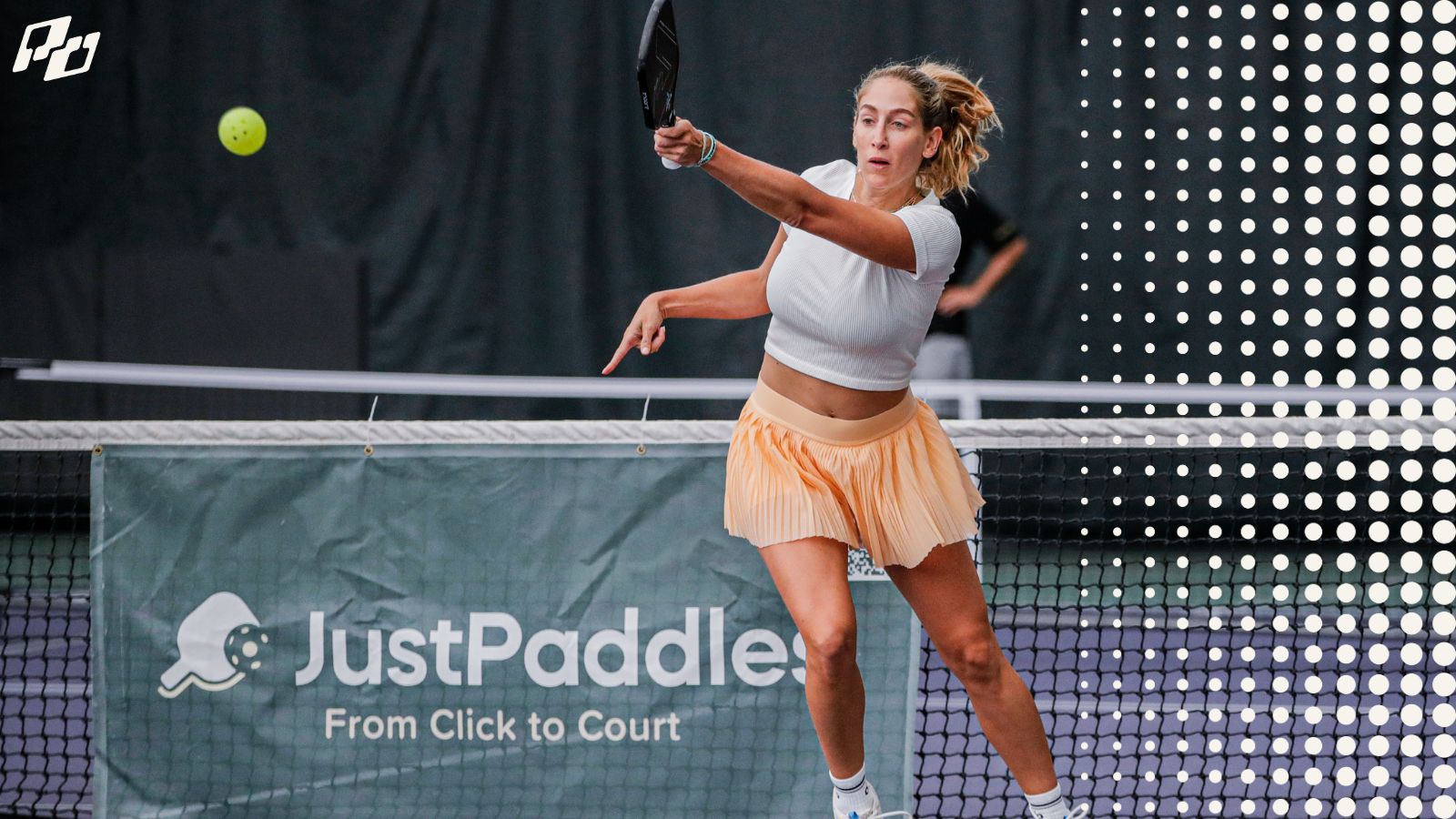
If you’ve been playing pickleball for a while and your serve keeps sailing long, this guide is for you.
Our friends and coaching partners at RacketPro recently tackled this exact issue, and they shared a simple tip that’s surprisingly effective:
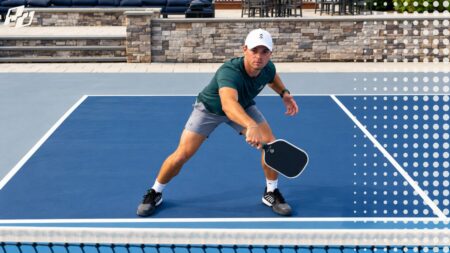
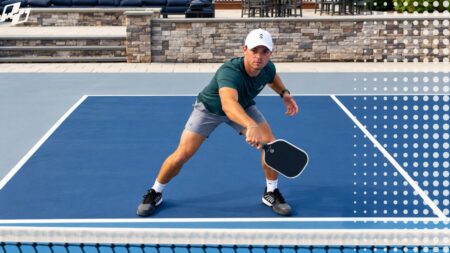
👉 Take one big step back from the baseline before serving.
It sounds almost too easy—but there’s real mechanics behind why this works.
Let’s break it down.
The Simple Fix: Step Back to Gain Control
Most players stand right on—or even slightly over—the baseline when serving. That creates a hidden problem:
You have very little margin for error.
When you contact the ball, especially if you’re hitting with even moderate pace, your natural swing path sends the ball slightly forward and upward. From the baseline, that often means:
- balls drifting long
- flatter serves flying out
- inconsistency under pressure
By stepping back just one big step, you instantly:
- give the ball more court to land in
- increase your margin for error
- reduce the need to “guide” the serve
And that last point matters most.
Because most missed serves long aren’t mechanical breakdowns—they’re overhit, rushed, or forced.
Why This Works (Mechanically)
Let’s get a bit more technical. When you serve in pickleball, your paddle path is typically:
➡️ low to high
➡️ forward through contact
From the baseline, that forward component becomes risky. You’re essentially hitting toward the back line with no buffer.
Stepping back changes two things:
1. It Adjusts Your Contact Geometry
You’re now hitting from slightly farther away, which naturally brings your target “deeper into the court.” You don’t need to artificially slow your swing.
2. It Reduces Tension
When players miss long, they often try to “fix it” mid-match by:
- decelerating
- steering the ball
- overthinking mechanics
That’s where serving yips come from. Stepping back lets you swing normally again—and that’s huge.
Watch the Tip in Action
Here’s the quick tip from RacketPro that explains it perfectly:
What Other Coaches and Pros Emphasize
If you listen to high-level coaches, they all agree on one thing: serving consistency is about margin—not perfection.
Let’s layer in a few additional insights that complement this tip.
1. Depth Comes From Shape, Not Force
Many rec players think:
“If I want a deep serve, I need to hit it harder.”
That’s backwards. Top players focus on:
- arc (net clearance + depth)
- spin (especially topspin for control)
A slightly higher, shaped serve that lands deep is far more reliable than a flat, driven one.
👉 Practical cue: “Lift and roll, don’t drive.”
2. Contact Point Controls Everything
A huge reason serves go long is late contact. When contact drifts:
- too far back → ball launches high and long
- too far forward → you lose control
👉 Better players consistently contact: slightly in front of their body, at a comfortable height:
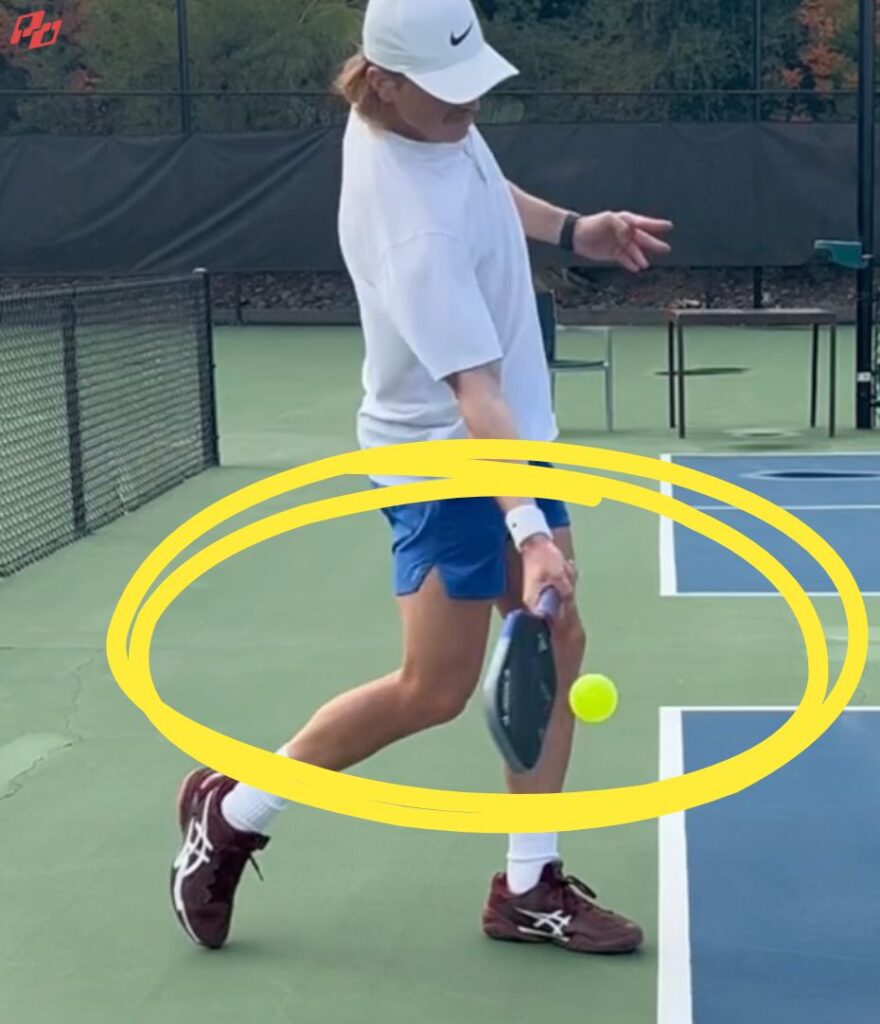
Stepping back actually helps here too—it gives you more time and space to organize your swing.
3. Your Miss Pattern Matters
If your serves are going long, that’s useful information. It tells you:
- your paddle face is likely too open
- your swing is too flat
- or your contact is too high
Instead of changing everything, make small adjustments:
- slightly close the paddle face
- add a bit more upward brush
- aim with more arc
4. Don’t “Fix” Your Serve Mid-Match
This is where most players spiral. You miss two serves long… and suddenly:
- you change grip
- slow your swing
- overthink everything
That’s how consistency disappears.
The RacketPro tip works so well because it’s a non-invasive fix. You’re not changing your mechanics—you’re changing your environment.
5. Build a Reliable Pre-Serve Routine
Pros don’t guess on serves—they repeat. A simple pre-serve routine might be:
- bounce the ball
- take a breath
- visualize the target
- swing freely
This helps eliminate the emotional reaction after a miss.
A Simple On-Court Adjustment Plan
Next time your serve starts drifting long, don’t panic. Do this instead:
1️⃣ Take one step back
2️⃣ Add a little more arc
3️⃣ Focus on smooth, relaxed swing
4️⃣ Commit to your normal motion
That’s it.
No overthinking. No mechanical overhaul.
The Bigger Lesson
This tip highlights something important:
- Most rec players try to fix problems by changing technique.
- Better players first adjust spacing, timing, and margin.
Serving isn’t about hitting the perfect ball. It’s about hitting a repeatable, stress-free ball—every time.