
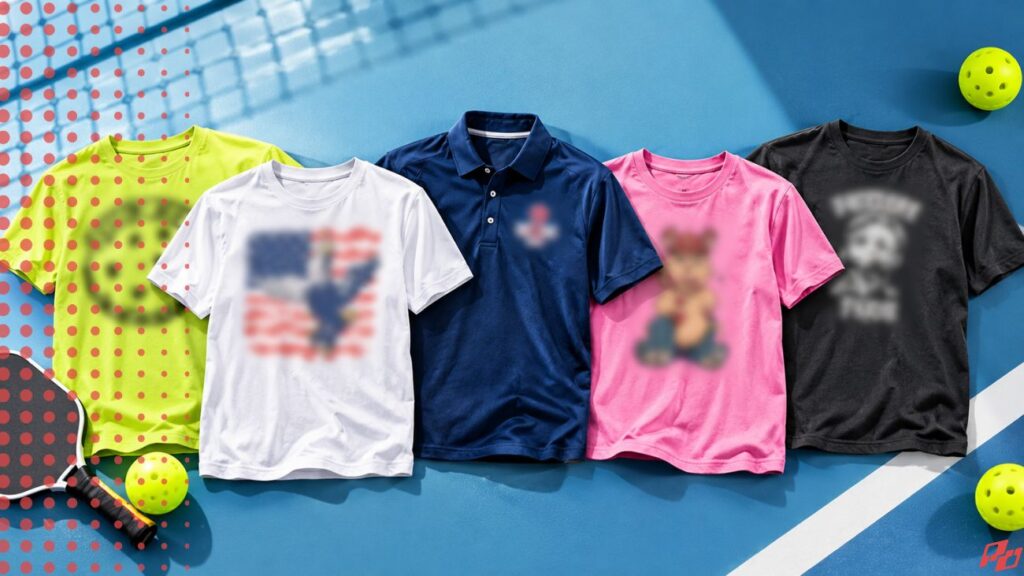
For pickleball, avoid anything that hurts traction, visibility, movement, or safety. Choose court-specific shoes, breathable clothing, and real impact-rated eye protection. Skip ball-colored outfits, slick or dirty soles, heavy sweat-soaked fabrics, and accessories that distract you—or everyone else.
Pickleball has one of the loosest dress codes in sports.
Tennis skirt? Fine.
Basketball shorts? Fine.
Golf polo? Fine.
We recently saw a guy show up in work boots, dirty Carhartts, and a flannel shirt—and then absolutely destroy a court full of 4.0 players.
So no, this isn’t an article telling you that your socks don’t match. But pickleball does have an unwritten dress code.
And it goes something like this: wear whatever you want—until what you’re wearing becomes somebody else’s problem.
That distinction produces a surprisingly useful list of things experienced players would rather you leave at home.
1. Don’t dress like the ball
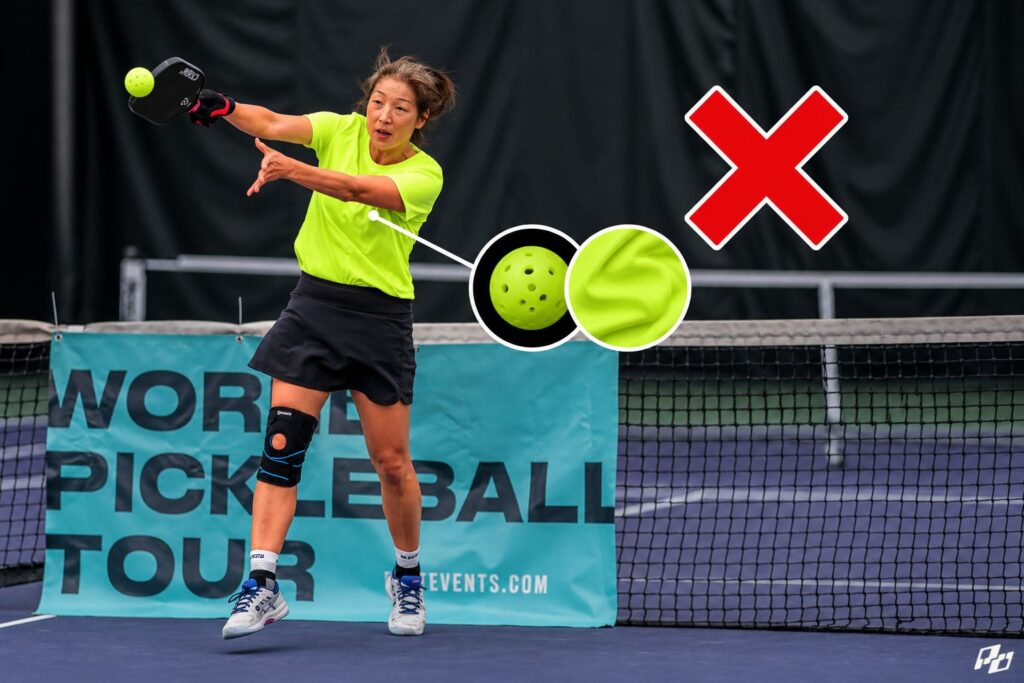
If you’re playing with a fluorescent yellow-green ball, the matching fluorescent yellow-green shirt may look fantastic.
It may also make your torso function as camouflage.
USA Pickleball has explicitly addressed this issue. Its apparel rules allow tournament officials to require a player to change clothing considered inappropriate, including apparel that approximates the color of the ball. The reason given when the rule was adopted was straightforward: matching clothing can make the ball harder for opponents to visually track.
Recreational players notice it too. In a recent discussion, players described neon yellow or green apparel as distracting enough that opponents sometimes complain; another player said even a neon-green paddle overgrip bothered opponents enough that he changed it.
This is less about legality at Tuesday open play and more about an unwritten courtesy: if your shirt is almost exactly the color of today’s ball, pick another shirt.
Especially in competitive play.
You aren’t gaining tactical sophistication by making the ball disappear against your chest. You’re just becoming that person.
The easy test
Hold the ball against your shirt from several feet away. If part of the ball visually disappears, wear something else.
And if you’re entering a tournament, throw a second shirt in your bag. Problem solved.
2. Don’t wear your cushiest running shoes
This one actually matters more than the shirt.
Running shoes feel comfortable because they’re designed to absorb repeated forward impact. Pickleball asks them to do something completely different.
Shuffle.
Plant.
Cut sideways.
Stop.
Reach.
Change direction again.
Sports-medicine guidance consistently favors court or cross-training shoes over running shoes because pickleball requires lateral stability. A sports-medicine review specifically notes that court shoes are preferable because of pickleball’s rapid side-to-side movement.
The American Medical Association recently made the same point: court shoes provide firmer lateral support, whereas running shoes typically provide more cushioning but less side-to-side stability, increasing concern about rolling an ankle during sudden movements.
And a Houston Methodist sports-medicine specialist puts the distinction nicely: running shoes are engineered for forward, linear motion, while pickleball requires lateral and diagonal stability.
Rec players we recently talked to were almost comically united on this one. One 4.5 player called actual court shoes “non-negotiable,” while another said switching from unsuitable minimalist footwear to tennis shoes made a dramatic difference in stability.
What you’re actually looking for in a pickleball shoe
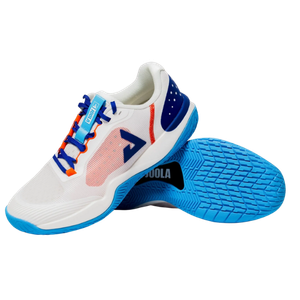
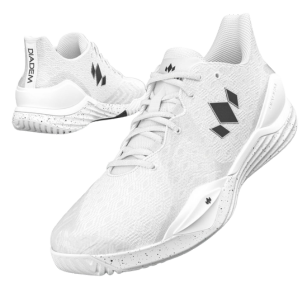
For regular pickleball players, a pickleball-specific shoe is a very sensible choice because it is built around the movement patterns the sport actually demands: short sprints, abrupt stops, lateral shuffles, pivots, and repeated direction changes.
Look for:
- a wide, stable base
- strong lateral support
- a secure heel and midfoot fit
- enough cushioning for hard-court impact
- durable outsole rubber
- and traction designed for the surface you actually play on
That last point matters. Outdoor pickleball chews through soles, while indoor courts may need a cleaner, non-marking outsole with a different traction pattern.
A good pickleball shoe is also usually built lower and more stable than a running shoe, which helps when you plant hard or change direction quickly.
|
Best Overall
|
Best for Speed
|
Best Value

|
|
Pros:
|
Pros:
|
Pros:
|
- Grippy traction
- Comfort that lasts
- Built just for pickleball
Tennis shoes can still work very well because the movement demands are similar. But if you play pickleball several times a week, choosing a shoe designed specifically for pickleball can make sense because manufacturers can tune the fit, cushioning, durability, and lateral support around the sport’s stop-start movement.
A $180 running shoe can still be the wrong tool.
Comfort while standing is not the test. Stability while stopping sideways is.
3. Don’t bring your filthy outdoor court shoes onto a gym floor
This is one of those things regulars notice immediately. You may own perfectly good court shoes.
But if you’ve spent three months grinding them across dusty outdoor asphalt and then walk onto a polished basketball floor, you’ve brought the outside court with you.
Indoor facilities commonly want clean, non-marking soles, both to protect the floor and maintain traction. USA Pickleball’s official apparel requirements specify that footwear must not mark or damage the playing surface.
Experienced indoor players often solve this in the least glamorous way possible: they have indoor shoes.
They arrive in normal shoes and change courtside. You don’t need two expensive pickleball-specific pairs.
But if your regular facility has a wood or synthetic gym floor, having one clean pair that never goes outside is good etiquette—and usually gives you more predictable grip too.
4. Don’t wear ball-colored shoes just because “it’s only my shoes”
This is the advanced version of the fluorescent-shirt problem. Players often assume the ball-color issue applies only to shirts.
Not necessarily.
At tournaments, officials have enough discretion over distracting apparel that competitors have occasionally been asked to cover or alter shoes whose bright color closely resembled the ball. A 2025 player discussion circulated video of exactly that situation and sparked debate over how broadly the rule should apply.
Would I worry about a tiny fluorescent logo on your shoe?
No.
Would I intentionally buy almost completely neon-yellow shoes for tournament play where the tournament ball is neon yellow?
Also no.
There are too many other colors in the world.
5. Don’t wear sunglasses just to look cool—and assume your eyes are protected
Sunglasses can absolutely make you look good on court. They can cut glare. They can make bright outdoor play more comfortable. But if that is all they do, don’t mistake style for protection.
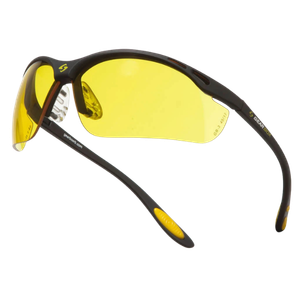
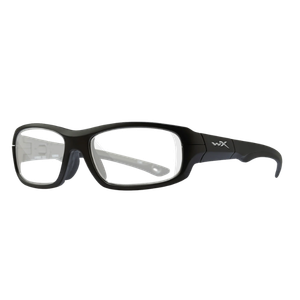
A pickleball can reach your face fast, and ordinary fashion sunglasses are not automatically designed to take that kind of impact. If the lenses or frame are not impact-rated, you may be wearing something that looks protective without actually giving your eyes meaningful sports protection.
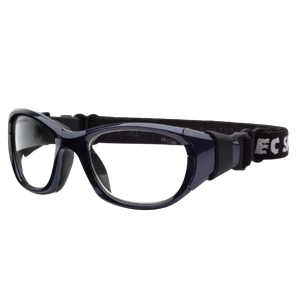
That matters even more for older recreational players. Ophthalmology guidance on pickleball injuries recommends protective eyewear—ideally wraparound designs with impact-resistant lenses—and highlights players around 60–70 years old, people with high myopia, and people who have had cataract surgery as groups that deserve particular attention.
|
Best Overall Pick for Pickleballers
|
Best for Prescription Lenses
|
Best for Maximum Protection & Coverage
|
|
Pros:
|
Pros:
|
Pros:
|
- ASTM F803 impact protection
- Anti-fog lenses
- Anti-scratch coating
- UV400 protection
- ASTM F803 impact protection
- Shatterproof polycarbonate lenses
- Prescription-ready
- Adjustable sports strap
- ASTM F803 impact protection
- Prescription-ready
- Helmet-compatible fit
- 100% UV protection
So if you are already going to wear glasses on court, make them do more than complete the outfit.
Look for eyewear designed for racket sports or other high-impact activity, with an appropriate impact-resistance standard.
Ordinary prescription glasses are not automatically sports goggles. And “sporty-looking” sunglasses are not necessarily impact-rated either.
Looking cool is fine. Looking cool while gambling with your eyes isn’t.
6. Don’t wear headphones during an actual game
This is less a fashion rule than a social one. You need to hear things.
The score.
“Out.”
“Mine.”
“Ball!”
Someone behind you warning that another court’s ball is rolling toward your feet.
A player discussion about court music made a good point: earbuds may keep your music from bothering everyone else, but they’re a poor solution during actual play because players need to hear calls and communication.
During warmup?
Fine.
Between games?
Obviously.
During a live doubles match?
I’d leave at least both ears available to the court.
The person shouting “BALL!” may be trying to save your ankle, not interrupt your podcast.
7. Don’t wear the cotton shirt that becomes a wet towel
Cotton isn’t illegal. It isn’t even necessarily bad. But if you’re someone who sweats heavily, a thick cotton shirt can become surprisingly unpleasant after an hour.
Moisture-wicking tops can be a better choice because cotton gets heavy and sticky once it’s saturated—and a soaked shirt can even start interfering with your swing.
That’s not an argument that everybody needs $90 technical apparel. Quite the opposite. Cheap athletic shirts work.
The useful test is simply: what happens to this fabric after I sweat through it?
If it sticks under your armpits, gets heavy across the shoulders or requires you to constantly pull it away from your body before serving, stop wearing it to play.
Pickleball doesn’t need its own fashion category. Generic breathable gym clothing works perfectly well.
8. Don’t wear something designed to get a reaction
This is the closest pickleball comes to an actual style etiquette rule.
Funny shirt?
Absolutely.
Ridiculous socks?
Please do.
A kilt?
Apparently several players already have you covered.
But there is a difference between being memorable and deliberately making other people uncomfortable.
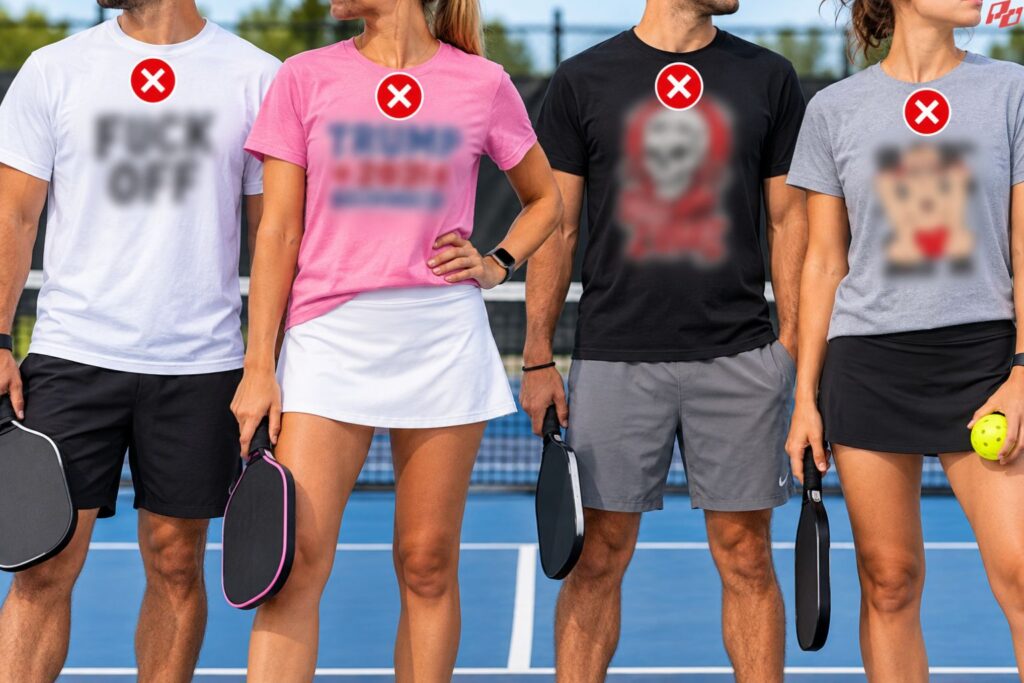
USA Pickleball’s apparel rules require graphics, insignias, pictures and writing on competition clothing to be in good taste, and tournament directors have authority over inappropriate apparel.
At recreational open play, the rule is simpler. You’re sharing a court with strangers who may be 16, 45 or 78.
Profanity, aggressively political slogans, offensive graphics or something obviously chosen to provoke people adds absolutely nothing to your pickleball.
You don’t have to dress boring. Just don’t turn your torso into the fifth player on court.
The real pickleball dress code
Here’s the funny thing. Nobody actually cares whether your shorts are made for tennis, running, basketball or pickleball.
Plenty of strong players wear generic gym gear, Costco clothing, basketball shorts, and basic athletic shirts—and play just fine.
And that’s probably the healthiest part of pickleball culture. You don’t need the uniform. You need clothing that disappears once the rally begins.
So before walking onto court, use this test:
| Don’t wear… | Because… |
|---|---|
| Clothing nearly identical to the ball color | It can make the ball harder for opponents to track |
| Soft, tall running shoes | They’re designed for forward movement, not hard lateral stops |
| Dirty or marking outdoor shoes indoors | They can damage the floor and compromise traction |
| Fashion glasses you assume are safety glasses | Glare protection and impact protection are not the same thing |
| Headphones during live play | You need to hear calls, partners and safety warnings |
| Heavy cotton if you sweat through it | It can become wet, heavy and restrictive |
| Clothing designed to offend or distract | Shared-court etiquette still applies |
And here’s the unofficial rule underneath all seven: nobody cares what you wear until they have to deal with it.
That’s probably the perfect pickleball dress code.